‘It’s ridiculous’: Maro Itoje dismisses Sir Jim Ratcliffe’s ‘colonisation’ comments

The England captain Maro Itoje has piled into the ruck surrounding Sir Jim Ratcliffe’s comments about immigration, dismissing the Manchester United co-owner’s views as “ridiculous”,Itoje, whose parents both came to Britain from Nigeria, has criticised the phrasing and accuracy of Ratcliffe’s remarks,Itoje, who recently missed the start of England’s pre-Six Nations training camp to attend his mother’s funeral in Nigeria, did not hold back when asked about Ratcliffe’s opinion on the eve of his side’s Calcutta Cup showdown at Murrayfield,“Obviously I don’t condone the language he used,” said Itoje,“I was born in this country of Nigerian descent and I think it’s ridiculous to say Great Britain has been colonised by immigrants because that is so far from the truth.
I think it’s wrong.” Itoje acknowledged that Ratcliffe has since sought to clarify his words – “If I’ve read correctly he has apologised for his comments” – but the 31-year-old clearly remains seriously unimpressed.Ratcliffe, Britain’s seventh-richest man, sparked the controversy in an interview with Sky News on Wednesday, in which he questioned the number of people receiving state support and relocating to the UK from abroad, saying: “You can’t afford … you can’t have an economy with nine million people on benefits and huge levels of immigrants coming in.The UK is being colonised by immigrants, really, isn’t it?”The Prime Minister, Keir Starmer, has said Ratcliffe, who relocated to tax-free Monaco in 2020, should apologise and the Football Association are looking into whether the billionaire petrochemical executive has brought the game into disrepute.Ratcliffe subsequently said he was sorry his “choice of language has offended some people in the UK and Europe”.
The furore has certainly irked Itoje, who has a degree in politics from the School of Oriental and African Studies, University of London and is also still dealing with the shock – “It’s been very up and down” – of losing his mother, Florence, who moved to England from Nigeria with her husband in the early 1990s and initially ran a butcher’s shop in north London.“Going for the burial in Nigeria was deeply emotional but at the same time, there was a sense of peace that we found.It felt right.Grief looks different for different people but it’s definitely been a journey and with time I’m sure it will get easier.”There remains intense family pride that Itoje leads an England side on a 12-Test winning streak.
“It’s been great to be back with England; it’s one of the things my mum loved.I don’t come from a traditional rugby family but my parents became rugby people through and through.She always loved the fact that I was a representative of this team.”
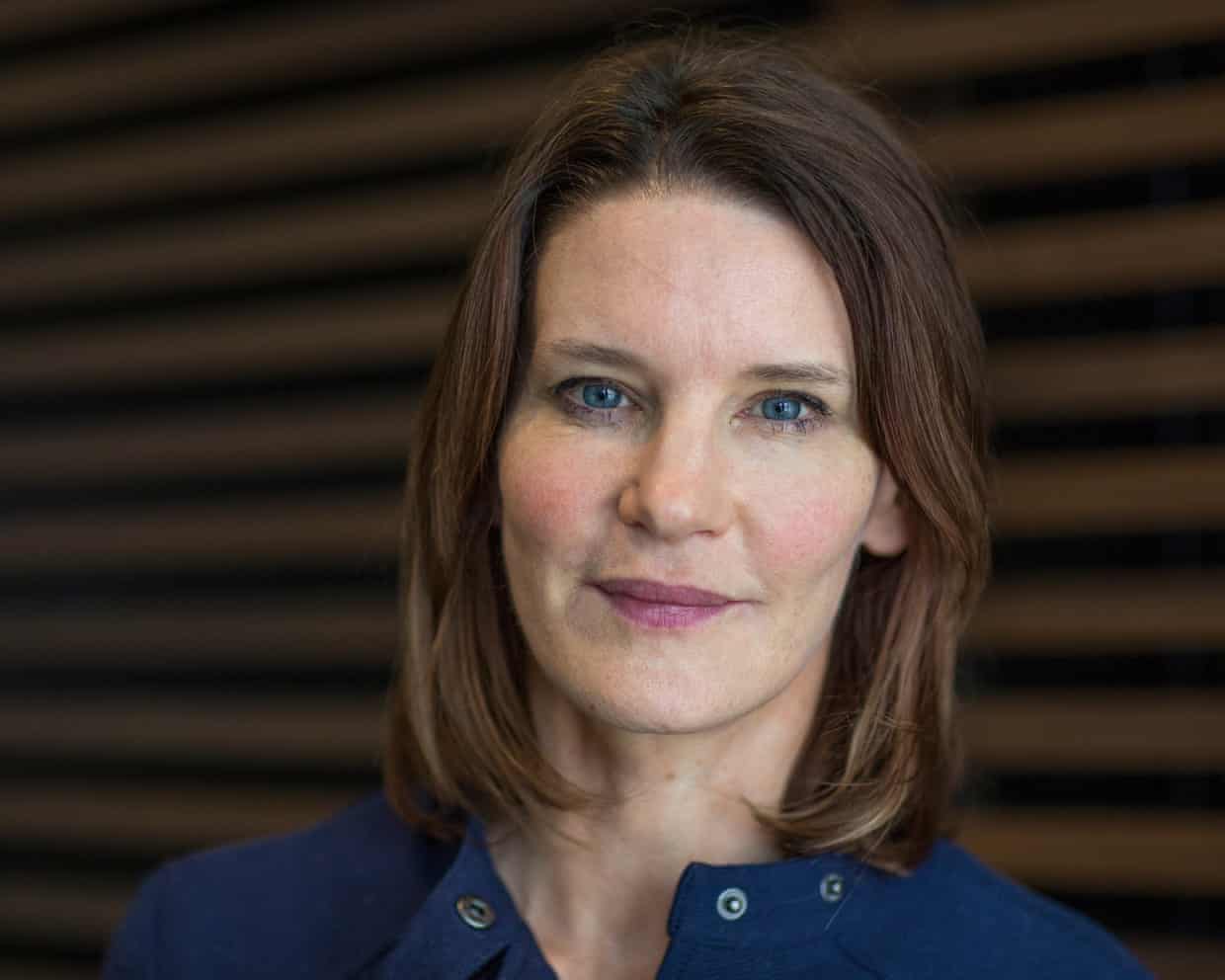
Children’s vocabulary shrinking as reading loses out to screen time, says Susie Dent
Children’s vocabulary is shrinking as reading loses out to screen time, according to the lexicographer Susie Dent, who is urging families to read, talk and play word games to boost language development.The Countdown star’s warning comes as the government prepares to issue its first advice to parents on how to manage screen use in under-fives, amid concerns that excessive screen time is damaging children’s language development.“So many children are now falling behind,” Dent said. “The vocabulary gap is getting bigger and there is a real perception that vocabulary development is suffering and that impacts on learning.”Citing a 2023 Oxford University Press report that found that two in five pupils had fallen behind in vocabulary development, she said: “There is a huge perception that screen time is having a negative impact on vocabulary, and I think that’s because it is taking away from reading time

‘We’re on a cliff edge’: the struggle to keep youth services alive in Knowsley
“I feel like I’m failing because I can’t reach everyone,” said Toni Dodd, the centre manager at Karma in the Community, a youth service in Knowsley on the outskirts of Liverpool.“I’ll go over and get kids hanging outside the shops, bring them in, but it’s who am I not reaching? It just takes one thing and they’re on that track into crime, into drugs. There are kids going into school on ketamine. I do all I can but it’s so hard to keep it open and running, and you can’t meet the demand there is.”Young people in Knowsley don’t have it easy
Parents of children taken in to care should get more help, say experts after Victoria Marten death
Parents whose children are taken into care should receive trauma-informed support to reduce the risk of harm to any further babies they have, according to child protection experts.A national child safeguarding review, launched after the death of baby Victoria Marten, said that if “destructive cycles of harm are to be interrupted” there needed to be more focus on parents, as well as their vulnerable baby or unborn infant.Victoria died in January 2023 after her parents, Constance Marten and her convicted rapist partner, Mark Gordon, took her to live in a tent in wintry conditions to evade social services. The child’s decomposed remains were found by police officers in March that year.The pair, who were jailed last September for 14 years for killing their newborn baby, had fled authorities to prevent Victoria being taken into care, as four older siblings had been previously, their Old Bailey case heard

One in 14 children who die in England have closely related parents, study finds
One in 14 children who died in England in a four-year period had parents who were close relatives, according to “stark” figures revealed by the first study of its kind.The figures, published by the National Child Mortality Database (NCMD), based at the University of Bristol, analysed all 13,045 child deaths in England between 2019 and 2023. Of these, 926 (7%) were found to be of children born to consanguineous parents, meaning the mother and father are close blood relatives, such as first cousins.Although the exact number of children with consanguineous parents across England is unclear, the data clearly shows their overrepresentation within mortality statistics and requires “urgent action”, according to researchers.The largest geographical estimate of consanguinity currently available is from a large study following the lives of 13,000 babies born in Bradford

Reading and writing can lower dementia risk by almost 40%, study finds
Reading, writing and learning a language or two can lower your risk of dementia by almost 40%, according to a study that suggests millions of people could prevent or delay the condition.Dementia is one of the world’s biggest health threats. The number of people living with the condition is forecast to triple to more than 150 million globally by 2050, and experts say it presents a big and rapidly growing threat to future health and social care systems in every community, country and continent.US researchers found that engaging in intellectually stimulating activities throughout life, such as reading, writing or learning a new language, was associated with a lower risk of Alzheimer’s disease, the most common form of dementia, and slower cognitive decline.The study author Andrea Zammit, of Rush University Medical Center in Chicago, said the discovery suggested cognitive health in later life was “strongly influenced” by lifelong exposure to intellectually stimulating environments

Psychiatric drugs aren’t always the answer | Letter
Yes, there has been a shocking lack of progress in developing transformative psychiatric medicine (We need new drugs for mental ill-health, 5 February), but this may be because in mental health, drugs are not always the answer (see, for example, Richard P Bentall’s Doctoring the Mind).Huge progress has been made in the effectiveness of talking therapies – for example, free effective treatment for post-traumatic stress disorder (PTSD) is available to all UK army veterans through the charity PTSD Resolution.What is lacking is rollout of the effective methods that now exist. This is an area where the UK is genuinely world leading. The Human Givens Institute is at the forefront of the development of effective, solution-focused, science-based therapies

Bank bosses get huge pay rises in sign top City salaries back to pre-crash highs

Shares in trucking and logistics firms plunge after AI freight tool launch

Tony Blair’s oil lobbying is a misleading rehash of fossil fuel industry spin

UK economy grows by only 0.1% amid falling business investment

Jim Ratcliffe apologises for ‘choice of language’ after saying immigrants ‘colonising’ UK

To revive manufacturing we must first change attitudes towards labour | Letter