Quad God and the Blade Angels: is the new USA Dream Team a group of figure skaters?

The US enter the team event as hot favorites: powered by world champions, rising stars and a generation determined to push figure skating beyond its traditional audienceOn Friday morning inside the Milano Ice Skating Arena, the United States will launch their defense of the Olympic figure skating team title carrying something rare in a sport usually defined by individual brilliance: overwhelming depth.Which raises a question that, until recently, would have sounded almost absurd in figure skating.Is the new USA Dream Team a group of figure skaters?Not only because they could leave Milan with a medal haul worthy of comparison to the 1984 US boxing team or the 1996 US women’s track and field squad.But because of something more: the chance this group could push figure skating beyond its traditional audience and into the broader cultural mainstream, much like the US men’s basketball team did at the 1992 Summer Olympics.The Milano Cortina Olympic figure skating program opens on Friday with the team event, a competition uniquely designed to test exactly that kind of collective strength.
Staged across three days, it brings together the sport’s four disciplines – men’s singles, women’s singles, pairs and ice dance – into a single medal contest.Unlike the 1992 basketball Dream Team, the United States are unlikely to dog-walk the field, meaning success will depend as much on depth and consistency as on individual star power.Ten nations compete in the opening short programs and rhythm dance before five advance to the free skate and free dance finals.The format forces federations into calculated decisions: how much to push medal favorites early in the Games, and how much energy to preserve for individual events still to come next week.Since its debut in 2014, the team event has become one of skating’s most emotionally and strategically complex stages, capable of setting the tone for an entire Olympics.
A strong performance can build momentum across a delegation, while a mistake can linger for days.The United States arrive in Milan as defending champions, having been elevated to gold after the messy fallout from the Beijing 2022 competition.The medal ceremony they were denied in China – delayed by the Russian doping investigation – did not take place until the 2024 Summer Games in Paris.Once again, they enter as one of the deepest teams in the field.Boasting the largest roster of figure skaters at these Olympics, the Americans are anchored by a powerhouse trio of reigning world champions – Ilia Malinin, Alysa Liu and ice dancers Madison Chock and Evan Bates – alongside three-time national champion Amber Glenn and world silver medalist Isabeau Levito.
But what makes this group unusual, even by US skating standards, is not just how much they win but how they operate.After securing her third straight US title last month, Glenn’s first celebration came with her arms wrapped around Liu and Levito.The trio has settled on a collective nickname – the “Blade Angels” – reflecting a generation of American women skaters who are as publicly supportive of one another as they are competitive.More than a slogan, the nickname has come to signal something closer to sisterhood: athletes at different stages of their careers who have grown up navigating the same pressure, the same scrutiny and the same narrow expectations of what women’s skating is supposed to look like.Their success is individual, but their survival in the sport has often been shared.
After a prolonged downturn for the US women’s program, it is a stark contrast to the rivalry-driven eras that once fueled the sport’s popularity.At the same time, Malinin – the only skater in history to land a quadruple Axel in competition, an achievement that has earned him the nickname “Quad God” – has spoken openly about wanting to push skating into the mainstream sports conversation, not just dominate within it.Chock and Bates, through fashion, media projects and their Netflix docuseries, are expanding the sport’s cultural footprint beyond the rink.If Olympic dominance is usually framed through basketball dynasties or relay teams, this American group invites a different kind of comparison.Not because they skate the same way, but because together they embody nearly every version of what modern figure skating has become.
The quadruple Axel is figure skating’s most difficult element because skaters face forward as they launch, requiring them to complete an additional half revolution,The jump has been landed only 10 times in competition, all of them by Malinin, who first pulled it off at the US Classic when he was 17,Malinin does not compete against other skaters so much as he competes against possibility,At 21, the reigning world champion has already redrawn the technical limits of men’s skating, building programs around jump combinations once treated as theoretical,His ideal performance – what he calls his “perfect layout” – includes seven quadruple jumps, a level of difficulty no rival currently attempts.
He’s also added a newly sanctioned backflip while flirting with the once-fathomable quint.Malinin does not hide the intent behind it.He has described himself as a “gamechanger”, someone trying not just to win competitions but to expand what the sport itself can be.The dynamic is familiar to Olympic gymnastics fans.Like Simone Biles at her peak, Malinin’s only consistent rival is his perfection itself.
When he wins, the conversation is rarely about the podium.It is about whether he has reached the limit of what he believes is possible.Raised in the northern Virginia suburbs by former Olympian parents and immersed in elite skating culture from childhood, he learned early to trust preparation: repetition, muscle memory, instinct once the music begins.Even his Olympic path reflects that arc.In 2022, he arrived as an alternate.
Four years later, he arrives as one of the defining athletes of these Games,The Olympic gold medal is the last major prize missing from his résumé,But even that exists inside a larger ambition: not just to win, but to show how far figure skating can still go,Liu’s career has already contained more reinvention than most skaters experience in a lifetime,Once defined as a child prodigy – the youngest US women’s champion in history at 13 – Liu stepped away from the sport entirely after the 2022 Olympic cycle, burned out by a life that had revolved around skating for as long as she could remember.
The 20-year-old from Clovis, California, has never framed that decision as a mistake.She has described both leaving and returning as equally right choices: different decisions that led her to the same place.At the time, she said she felt trapped by the identity of being a figure skater.Stepping away allowed her to discover who she was outside it.She traveled, studied at UCLA, and rediscovered something simpler: joy in movement.
Now she approaches skating less like an athlete chasing results and more like an artist building performance.Expectations matter less than expression.The timeline belongs to her.In an era that still fetishizes teenage perfection, Liu represents something newer: an elite athlete willing to step away, reset and return on her own terms, then somehow become better than ever.Were she to win a medal of any color in Milan, Liu would become the first American woman to reach the Olympic podium since Sasha Cohen won silver in 2006.
Before that, it was Sarah Hughes’ gold and Michelle Kwan’s bronze in Salt Lake City in 2002.If Malinin represents the outer limits of what the sport can physically become, Liu represents something just as modern: an athlete who refuses to let the sport define her entirely.Glenn’s path to the Olympics has never followed figure skating’s traditional script.At 26 – an age she jokingly calls “a dinosaur” in women’s skating – she arrives in Milan as a three-time US champion and first-time Olympian.Her longevity is rooted as much in identity as performance.
Next week, when she takes the ice for her individual short program to Madonna’s Like a Prayer, the moment will carry meaning beyond the leaderboard.The program – part gospel swell, part pop anthem, part quiet defiance – reflects how she now sees skating: something to be interpreted, not prescribed.For years the native of Plano, Texas, felt she didn’t fit the sport’s traditional mold, describing herself as too rough, too muscular, too different from what women’s skating was supposed to look like.Only when she stopped trying to reshape herself did her results begin to match her potential.That shift extended beyond the ice.
When she came out publicly, Glenn understood the risks of being openly LGBTQ in a sport still shaped by aesthetics and perception.She has since framed representation less as symbolism than honesty: existing openly for the next generation watching.Her path has never been linear.As a teenager, she stepped away during a mental health crisis, unsure if she would return.When she did, it was on her own terms, rebuilding both her skating and her relationship with the sport.
Freedom changed her skating.In 2021 she landed a triple Axel in competition, becoming the first openly queer woman to do so – a technical milestone and a quiet statement about who gets to take up space in the sport.In an era long defined by teenage prodigies and brief competitive windows, Glenn represents something rarer: an elite career built through persistence, self-definition and time.If Malinin and Liu represent skating’s future, Chock and Bates represent its center of gravity.Their fourth Olympics together will also be their first as a married couple, capping a partnership that began in 2011 and has since produced world titles, seven US championships and Olympic team gold.
The only thing missing is individual Olympic gold – a gap that now reads less like pressure than unfinished narrative.Their longevity is built on something rarer than technical consistency: stability.Through rule changes, Olympic cycles and evolving judging trends, Chock and Bates have simply adapted.That evolution now extends beyond the ice.Chock designs not only their costumes but those of competitors around the world, shaping the sport’s visual identity alongside its competitive direction.
Their programs are built as characters as much as athletic performances,Off the ice, their story has reached wider audiences through documentary storytelling and sponsorship visibility – exposure they have embraced only on their own terms, prioritizing authenticity over manufactured drama,After more than a decade together, they are not chasing reinvention,Nearly unbeatable since finishing fourth in the individual ice competition in Beijing, they are chasing a long-sought Olympic gold in their final chapter of a partnership that has helped define an era of American skating,For Levito, figure skating has never been something she discovered.
It has always been something she was.The 18-year-old from Mount Holly, New Jersey, first stepped onto the ice at three years old and has spent nearly every year since building a relationship with the sport defined less by reinvention than by continuity.Where some athletes leave and return, Levito has always experienced skating as part of her identity.That continuity was tested last season when a foot injury forced her out of key competitions and briefly put her Olympic trajectory in doubt.The recovery reshaped her perspective, deepening her gratitude for competition and sharpening her focus on simply being able to perform at full strength.
Her competitive mindset reflects that calmness.Before events, she leans into routine: familiar music, comfort shows, quiet preparation.The less she overthinks, the better she skates.There is confidence there, too – the quiet kind.Even before qualifying, Levito spoke about the Olympics less as a dream than as a destination built through years of steady results and technical reliability, from a world junior title to senior world podium finishes.
In Milan, the stage carries personal resonance,With family ties to Italy and programs built around Italian cinematic themes – including a Sophia Loren tribute short and a Cinema Paradiso-inspired free skate – the Olympic setting feels less like a distant goal and more like a natural outcome,If others represent change, Levito represents continuity: the technical and artistic tradition that has long defined American figure skating,Put them all together and the comparison begins to make sense,Malinin pushes the outer edge of what is physically possible in the sport.
Liu represents a generation of athletes defining success on their own terms.Glenn shows that longevity and identity can coexist in a discipline that rarely rewards either.Chock and Bates provide the institutional memory of American skating – proof that partnership, trust and evolution can outlast Olympic cycles.Levito carries forward the technical and artistic tradition that has anchored the sport for decades.Individually, each would make the United States a contender.
Together, they form something rarer: a roster built not around a single dominant personality, but around complementary strengths.The Olympic team event was designed to reward depth, consistency and federation strength.In Milan, it may reveal something more: what it looks like when a country arrives with athletes whose stories map both the sport’s past and its future.For casual viewers tuning in once every four years, the appeal is simple: this is a group capable of winning.Inside the sport, the significance runs deeper.
This team reflects the modern reality of figure skating – technical escalation, artistic evolution, cultural change and athlete autonomy existing all at once.Starting Friday, they step onto Olympic ice not just as individual medal contenders, but as something closer to a collective statement.If Olympic history is written in dynasties, the United States may be building one not around a single star, but around an idea of what the sport can become.

‘One of the most stunning sights in the country’: your picks for UK town of culture
From pirates and skateboarders in Hastings to legends and locks in Devizes, from dolphins in Scarborough to the ‘artists’ town’ of Kirkcudbright, readers put forward their favourite placesCulture secretary Lisa Nandy has launched a search for the UK’s first “town of culture”, similar to the city of culture programme, which honoured Bradford last year. After the Guardian’s writers nominated theirs – including Ramsgate in Kent, Falmouth in Cornwall, Abergavenny in Monmouthshire and Portobello in Edinburgh – we asked readers which UK towns they would put forward.Culture in Hastings grows out of the shingle and the wind and the friction between past and present. You can feel it in the fishing fleet hauled up on the beach, still part of daily life, and then a short walk away in bold contemporary spaces showing work that speaks far beyond the town. It shows up in events that belong to the people who live there; Jack in the Green spilling through the streets; Pirate Day turning the whole place into a shared act of play; music competitions that quietly bring international talent into a town that never pretends to be grand

‘It’s an opportunity for bonding’ – my quest to become a Black dad who can do his daughters’ hair
For me – and many other Black men – my experience of hair begins and ends in the barbershop. But as my two daughters get older, I’m determined to make ‘salon night’ pain free – and maybe even enjoyable The Guardian’s journalism is independent. We will earn a commission if you buy something through an affiliate link. Learn more.In the basement of Larry King’s salon in Marylebone, London, stylist and curly hair advocate Jennie Roberts is giving me a much-needed pep talk

Jimmy Kimmel on Trump: ‘We are now at the women-should-smile-more stage of his presidency’
Late-night hosts dug into Donald Trump’s deflections from the Jeffrey Epstein files and the backlash to Bad Bunny’s Super Bowl half-time show.Jimmy Kimmel kept the focus on the Epstein files on Tuesday, because it’s “a story that Donald Trump wishes would go away. But it won’t just go away. It’s the kind of story that makes headlines, and he knows that. So what he does is he bombards us with a dozen other crazy things to try to flood the zone

The Guide #228: Against my better judgment, A Knight of the Seven Kingdoms has me back in Westeros
Just when I thought I was out … just when I thought I would no longer have that sweeping, ever so slightly irritating theme tune ringing around my head for hours on end, or feel the need to remember the difference between House Tyrell, Tully or Arryn, I suddenly find myself pulled back in to the Game of Thrones extended universe. The blame for this goes to A Knight of the Seven Kingdoms, the likably low-key Game of Thrones spin-off series about a cloth-eared hedge knight and his shrewd child squire currently ambling through its first season on HBO/Sky Atlantic.Before its arrival, I had departed Westeros for good. My faith had first been shaken by that rushed, badly plotted final season of Game of Thrones proper, which bashed to bits six previous seasons’ worth of finely tuned political intrigue and fascinating character dynamics in a succession of endless (often badly lit) CGI-laden battles, before flambéing them in dragon fire. Worse came with House of the Dragon, a dreary, po-faced, endlessly withholding slog of a prequel series, the enjoyment of which seemed to rest entirely on whether the viewer was familiar with deep lore buried within a Westeros history book that George RR Martin wrote instead of cracking on with that sixth novel
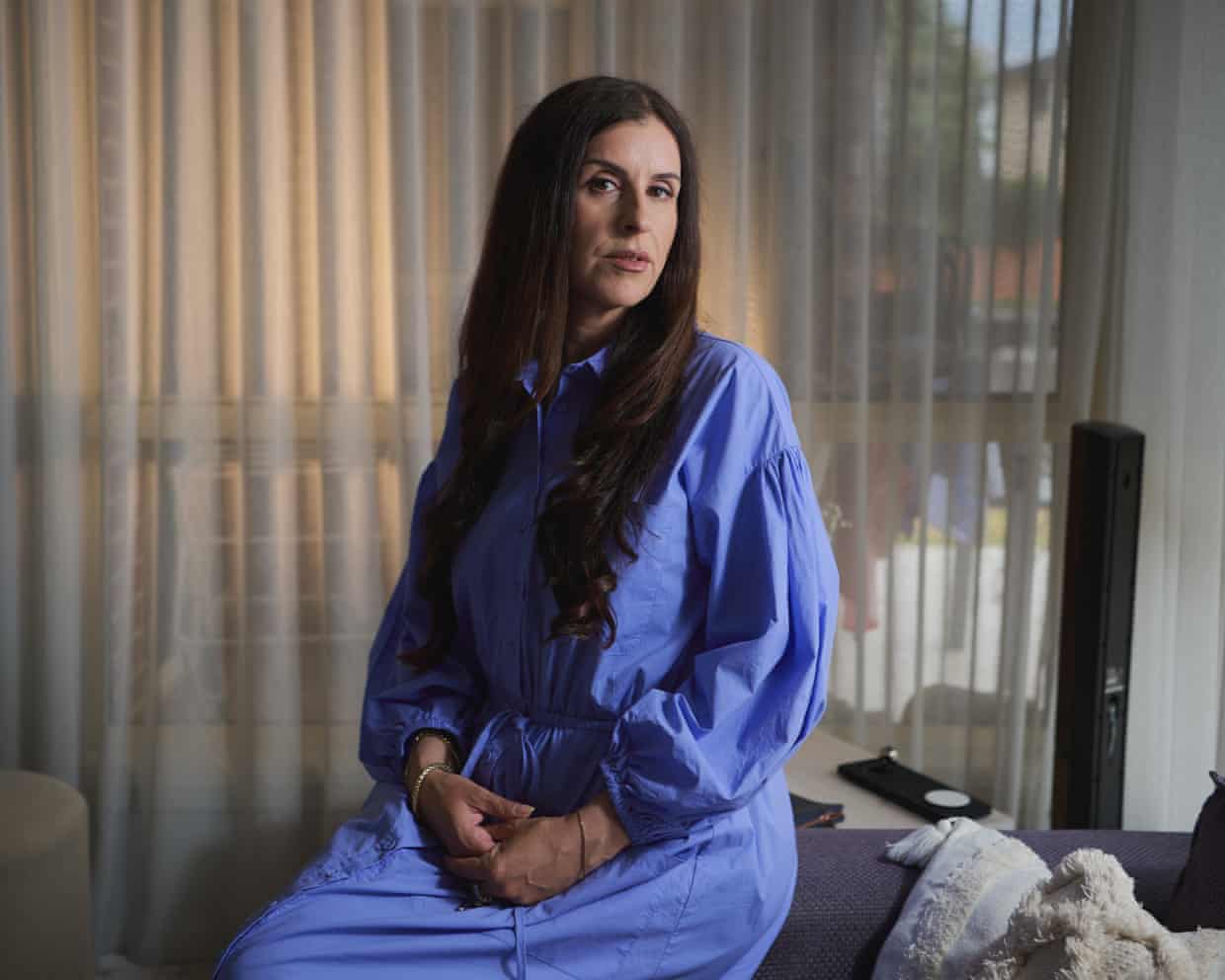
Randa Abdel-Fattah and Louise Adler to headline alternative to cancelled Adelaide writers’ week
The two figures at the centre of the Adelaide festival controversy will reunite to headline the alternative to the cancelled 2026 Adelaide writers’ week.Palestinian Australian academic and writer Randa Abdel-Fattah and AWW’s former director Louise Adler will appear together at Constellations: Not Writers’ Week, a hastily compiled series of events scheduled to start on 28 February in response to the Adelaide festival board’s decision to scrap Australia’s flagship annual literary festival.Abdel-Fattah’s invitation to speak in 2026 was withdrawn by the board after controversy and complaints over her past statements, including a social media post claiming Zionists had “no claim to cultural safety” and a Facebook profile image of a paraglider with a Palestinian flag parachute, which was posted the day after the 7 October attack on Israel.Abdel-Fattah recently told the Full Story podcast that the “cultural safety” statement had been taken out of context and that the paraglider image was “an iconic symbol of freedom” for Palestinians under siege.Adler, who resigned in protest at the decision, will appear in conversation at the Adelaide town hall on 1 March

Jon Stewart on Epstein files: ‘I’m just not sure anybody is going to be held accountable’
Late-night hosts reacted to the latest batch of Epstein files, which failed to redact several victims’ names and photos while still protecting Donald Trump.Jon Stewart returned to his Monday night desk at the Daily Show fuming at the lack of consequences for the men named in the files related to the convicted sex offender Jeffrey Epstein – which still have not been fully released, though the justice department published another somewhat redacted batch on Friday.There have been consequences for “none of these dudes”, he said. “They’ve been on the plane. They’ve been on the island
Amazon reveals plans to spend $200bn in one year the day after Bezos guts Washington Post

Bitcoin loses half its value in three months amid crypto crunch

‘Orwellian’: Sainsbury’s staff using facial recognition tech eject innocent shopper

How cryptocurrency’s second largest coin missed out on the industry’s boom

What does the disappearance of a $100bn deal mean for the AI economy?

Google Pixel Buds 2a review: great Bluetooth earbuds at a good price