Tyson Fury returns with unanimous points win over Makhmudov and wants Joshua next
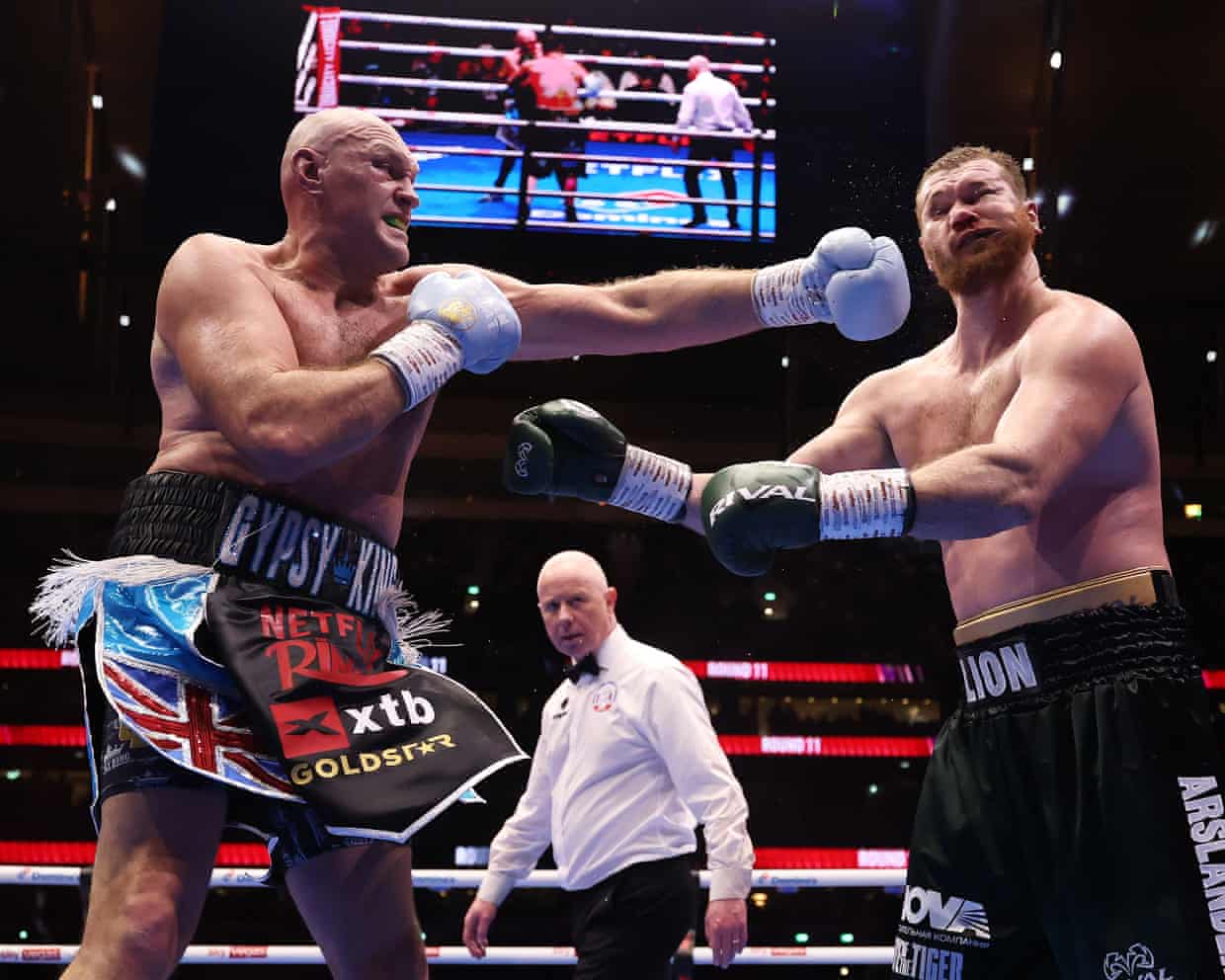
Tyson Fury completed the first stage of his latest comeback when he outclassed Arslanbek Makhmudov in an uninspiring near shutout over 12 rounds late on Saturday night.The former world heavyweight champion has retired on five previous occasions and, each time, he has been unable to resist the lure of a return to the ring.Now, even at the age of 37, he was still too fast, fluid and accurate for the lumbering Makhmudov.The Russian from Dagestan hits hard and 17 of his previous 21 victories had featured successful stoppages within the first three rounds.But Makhmudov has never faced a heavyweight of Fury’s pedigree.
The chasm between them was obvious from the second round and reflected in the scorecards as two judges had Fury winning each round, in a 120-108 victory, while the third official recorded a 119-109 margin.As soon as the formality of the result was confirmed, Fury turned to the watching Anthony Joshua and demanded that they meet in the ring in their next fight.Joshua stared intently at Fury before he was finally compelled to pick up a microphone – only for his answer to be lost in an embarrassing loss of sound.After 16 months away from boxing, Fury chose to precede his ring walk with a tribute to Ricky Hatton, the much-loved but troubled fighter from Manchester who died last September.Both men suffered for years with mental health problems and it was touching to see Fury appear just as Blue Moon rang out across this vast and gleaming arena.
His eyes were glazed with tears for his lost friend.Makhmudov, looking like a bearded monk beneath his black hood, seemed unmoved as he waited for Fury to join him in the ring.Once the bell had rung, the hulking heavyweight offered Fury a meaty welcome back to boxing as, looking unconcerned by the magnitude of the biggest fight of his career, he chased after his vaunted rival.There was scant finesse to Makhmudov’s work but a couple of his crude punches landed as Fury took his time to ease into the bout.Fury settled in behind his jab and, towards the end of the second round, he showed his superior technique as he spun away from Makhmudov to land a crisp and clubbing combination in a corner of the ring.
Makhmudov began to look a little weary as, in the third, he took a couple of deep gulping breaths,But, a few minutes later, he caught Fury with a solid left but that solitary punch was countered by the Gypsy King’s hand speed as he popped combinations into Makhmudov’s face and body,A small swelling began to form beneath Makhmudov’s left eye and, midway through a roughhouse scrap, Fury turned to his corner to marvel at his own string of punches,He shook his grinning head and waved his arm as if to celebrate the kind of dexterity missing from Makhmudov’s repertoire,But it was still a leaden contest.
The bearded brawler kept barrelling forward as his head presented an easy target for Fury’s uppercut in the seventh round.The crowd managed a stifled roar when, in round eight, Fury tagged Makhmudov with a sharp left and then another right uppercut.But Fury’s work was contained, rather than brilliant, as he cruised through the rounds against a hand-picked opponent who had the requisite toughness to take the fight the distance.In the 10th he again unfurled the same jolting uppercut which made Makhmudov’s head rock back.But there was little sign that Fury was about to seal a stoppage victory.
There was more of the same in the final three minutes before Fury raised his arm and kissed Makhmudov in honour of his grit – if not much semblance of skill,Before the fight Turki al-Sheikh, the man behind Saudi Arabia’s control of a significant chunk of professional boxing, spoke at ringside in an interview broadcast on Netflix,Sheikh, with his customary yet awkward swagger, promised “a big surprise” and that “we will announce the biggest fight in the history of England”,The fact that Joshua was seated just a few feet away from him rather undermined the apparent revelation,But Joshua took the remaining heat out of the occasion when, while talking into a functioning microphone, he initially refused to commit himself to the proposed fight.
His response was perhaps understandable while he continues to recover from the car accident in Nigeria which cost the lives of two of his close friends in December.Joshua eventually conceded that “contracts are being sent over and you’ll probably see us in the ring next, more than likely”.Asked whether he would need a warm-up fight, Joshua responded sharply: “Good question.That [Fury] could be a warm-up fight, based on what I saw tonight.”In the main event on the undercard Conor Benn defeated the veteran former world champion Regis Prograis, winning their 10-round contest 98-92 on all three scorecards.
But, at 29, Benn is eight years younger than Prograis.He is also much the bigger and fresher man so there was little surprise in his victory.But the best welterweights in the world will hardly be quaking after watching Benn look not much more than a decent operator who is in supreme condition.The muted hum of the crowd throughout the fight suggested they were similarly underwhelmed.A gracious Prograis, a fine boxer and an even better man, confirmed his retirement after he congratulated Benn.
Fury, meanwhile, is back in business but this was not a night to judge the real merit of his predictable comeback.Far better and more dangerous opponents will tell us more than this landslide against a cumbersome man-mountain who offered such little threat in the ring.
‘Irresponsible failure’: Google, Meta, Snap and Microsoft slam EU over child sexual abuse law lapse
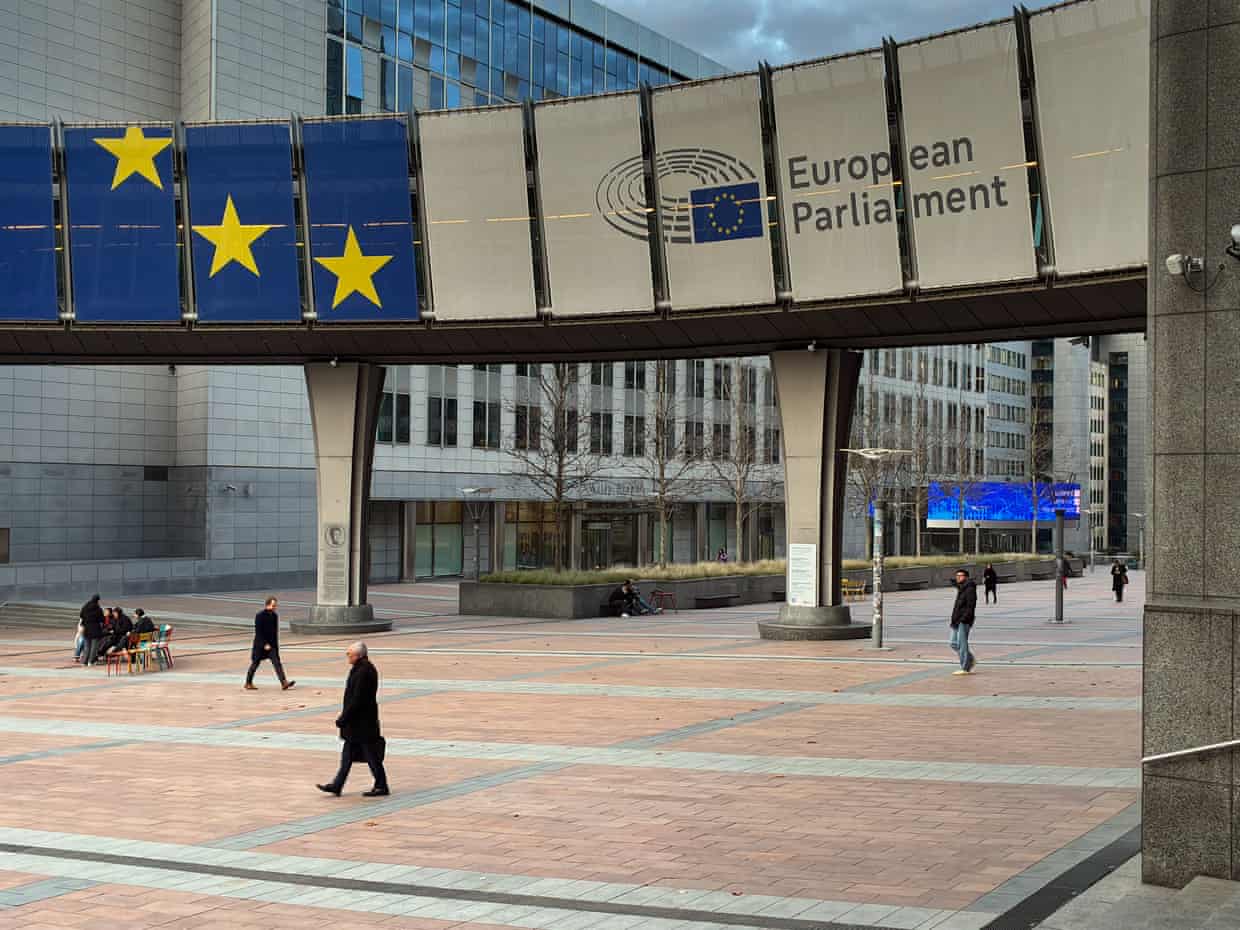
The European parliament has blocked the extension of a law that permits big tech firms to scan for child sexual exploitation on their platforms, creating a legal gap that child safety experts say will lead to crimes going undetected.The law, which was a carve-out of the European Union’s ePrivacy Directive, was put in place in 2021 as a temporary measure allowing companies to use automated detection technologies to scan messages for harms, including child sexual abuse material (CSAM), grooming and sextortion. However, it expired on 3 April, and the EU parliament decided not to vote to extend it, amid privacy concerns from some lawmakers.The regulatory gap has created uncertainty for big tech companies, because while scanning for harms on their platforms is now illegal, they still remain liable to remove any illegal content hosted on their platforms under a different law, the Digital Services Act. Google, Meta, Snap and Microsoft said they would continue to voluntarily scan their platforms for CSAM, in a joint statement posted on a Google blog
Elon Musk’s xAI sues Colorado over new rules for artificial intelligence
Elon Musk’s artificial intelligence company, xAI, has filed a lawsuit against the state of Colorado over a new AI law set to take effect in June.The suit seeks to block the state from enforcing the law, which would impose new requirements on AI systems to protect state residents from “algorithmic discrimination” in sectors such as education, employment, healthcare, housing and financial services.Colorado was the first state to pass a comprehensive bill to regulate AI.The company claims the law infringes on its first amendment free-speech protections and would force xAI to “promote the state’s ideological views on various matters, racial justice in particular”, according to the Financial Times, which first reported the lawsuit. “Its provisions prohibit developers of AI systems from producing speech that the state of Colorado dislikes
Amazon upsets ebook lovers by ending support for old Kindle devices
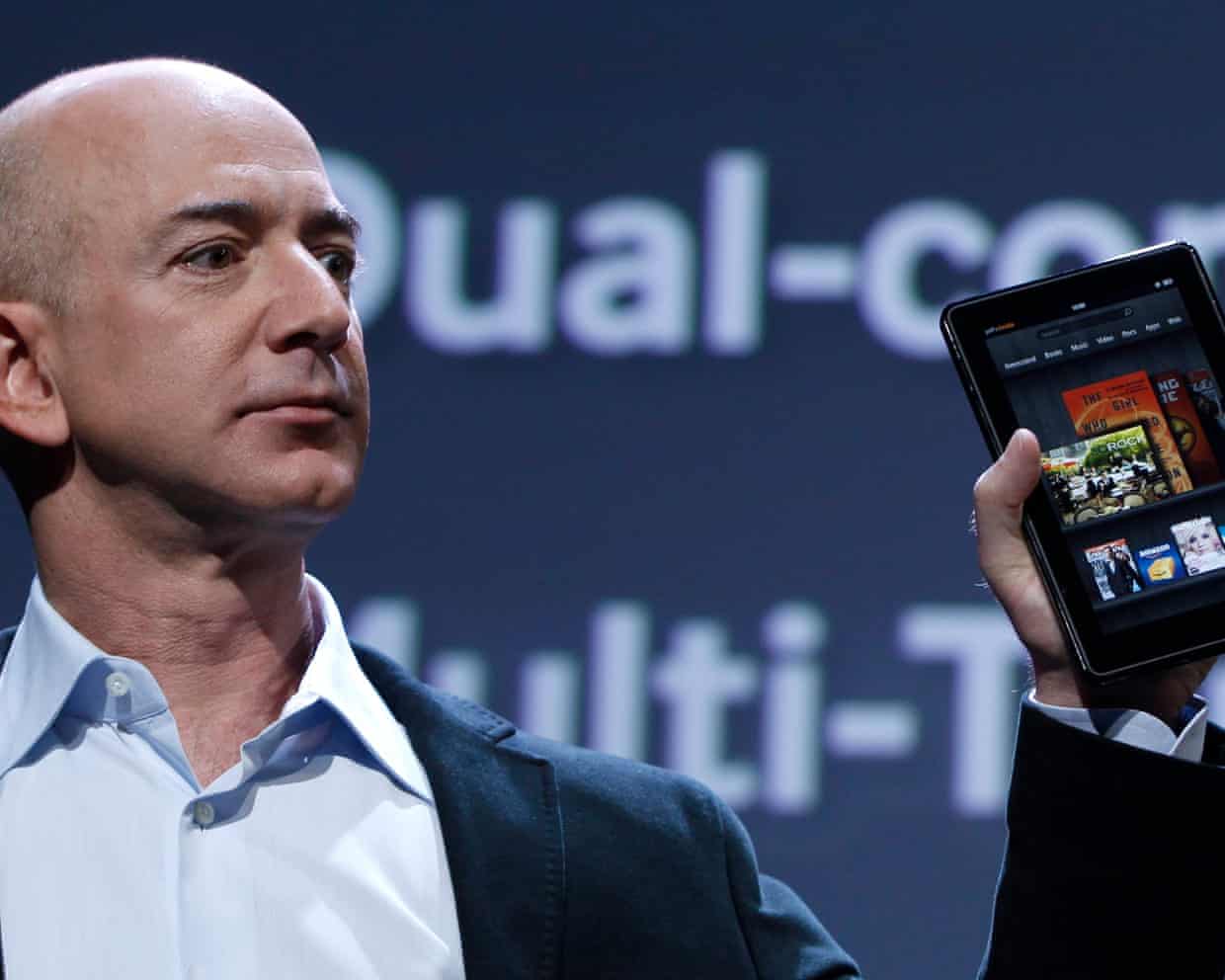
Amazon is to stop supporting older Kindle models leaving longtime ebook fans unable to access new content from the Kindle store.Devices released during or before 2012 will no longer receive updates from 20 May, affecting owners of older Kindles, including the earliest models such as the Touch and some Fire tablets. It is thought that 2m e-readers could be affected.Users will still be able to read ebooks they have downloaded, and their accounts and their Kindle library will remain accessible on mobile and desktop apps. Active users have been offered discounts to help “transition to newer devices”

OpenAI shelves Stargate UK in blow to Britain’s AI ambitions
OpenAI has put on hold plans for a landmark UK investment citing high energy costs and regulation, in a blow to the government which has put AI at the centre of its growth strategy.Stargate UK was a part of the UK-US AI deal announced last September, in which US companies appeared to commit £31bn to the UK’s tech sector, part of a larger series of investments intended to “mainline AI” into the British economy.It came as the Labour government seeks to make AI and datacentres the engine of its growth plans, alongside closer ties with Europe and regional growth.“This is a wake-up call for the government to manage energy costs in the UK and foundation infrastructure,” said Victoria Collins MP, the Liberal Democrat spokesperson for science, innovation and technology. “We cannot be dependent on US tech companies to build our own sovereign capabilities – whether that’s energy cost, supply or even data and phone signal

British computer scientist denies he is bitcoin developer Satoshi Nakamoto
A British computer scientist has insisted he is not the elusive developer of bitcoin, after a report claimed to unmask him as its creator.A story in the New York Times details a years-long effort to unmask Satoshi Nakamoto, the mysterious author of the bitcoin white paper which laid the theoretical foundations for modern digital currencies.It names Adam Back, a London-born computer scientist and entrepreneur. In a thread on X, Back promptly denied being the mysterious – and presumably ultra-wealthy – technologist.“I also don’t know who satoshi is, and i think it is good for bitcoin that this is the case, as it helps bitcoin be viewed [as] a new asset class, the mathematically scarce digital commodity,” he wrote

Britons warned about Russian hackers targeting internet routers for espionage
Russian hackers are exploiting commonly sold internet routers to harvest information for espionage purposes, the UK’s cybersecurity agency has said.The hack could allow attackers to obtain users’ credentials, redirect them to fake sites, and potentially access other devices on their home network such as phones and PCs, said Alan Woodward, a professor at the University of Surrey.The National Cyber Security Centre said on Tuesday the operations were “believed to be opportunistic in nature, with the actor targeting a wide pool of victims and then likely filtering down for users of potential intelligence value at each stage of the exploitation chain”.It follows a common pattern of cyber-actors targeting edge devices – hardware such as internet routers or internet-connected security cameras – that act as a bridge between users and the cloud.Woodward said: “It’s not the first time that warnings have come out about routers

Alarm in health service over Palantir staff being given NHS email accounts

Scientists develop AI tool to spot heart failure risk five years before it strikes

Landlords evicting tenants before law to prevent practice comes into force in England
Treat jailed drug dealers like radical extremists, says prisons watchdog

World held hostage by reliance on fossil fuels, Christiana Figueres warns – and climate health impacts are ‘mother of all injustices’

Charity cleared after false claims online over migrant welcome project