Men’s Rugby World Cup 2027: how the draw will work and the new format explained

A potential path to victory at the 2027 men’s Rugby World Cup will become clearer in Sydney on Wednesday when the draw for the tournament is madeKicking off on 1 October 2027, the men’s event will feature 24 teams instead of 20, and will be the first to include a round of 16.Each tournament since 2003 has included 20 competing nations, and the previous format moved straight from the pool stage to the quarter-finals.There will be a total of 52 matches in 2027, up from 48.Instead of four pools of five there are six pools of four.The eventual winners will still be obliged to play seven matches to claim the trophy, but will play one pool match fewer, before the last-16 game for a place in the last eight.
The top two in the six pools qualify for the knockouts, plus the four best third-placed teams,Teams are split into four bands dependent on their world ranking in the draw that takes place at 9am UK time on Wednesday,As hosts, Australia are automatically assigned to Pool A, and will play in the opening game at Perth Stadium, but everything else is up for grabs,The Wallabies had a final chance to climb the rankings last month in the autumn internationals: but a winless trip to Europe for Joe Schmidt’s side confirmed their Band 2 status with Scotland, Fiji, Italy, Wales and Japan,The hosts, therefore, are destined to face a powerful Band 1 nation in their pool: one of South Africa, New Zealand, England, Ireland, France or Argentina.
Andy Farrell’s Ireland have fallen from second to fourth this year, while England’s 11-match winning streak has seen them climb from seventh to third,Scotland’s dramatic recent defeat by the Pumas ended any hope they had of reaching Band 1, while Wales clung on in Band 2 despite losing three out of four autumn internationals, including a 73-0 thrashing by the Springboks last Saturday,A late 24-23 win against Japan in Cardiff on 15 November crucially removed any danger of Wales dropping into Band 3 for the draw and the prospect of a far harder pool,Band 3 consists of Georgia, Uruguay, Spain, USA, Chile and Tonga, with Samoa, Portugal, Romania, debutants Hong Kong China, Zimbabwe and Canada in Band 4,Georgia will be the team to avoid in Band 3, ranked 13th, and 14th-ranked Uruguay are traditionally tough opponents, while their South American rivals Chile return after their debut in 2023.
One of the most compelling subplots is the potential for Samoa, in Band 4 having squeaked through qualifying – being drawn against Steve Borthwick’s England, which would open the possibility of Manu Tuilagi lining up against his former team.Tuilagi, now playing for Bayonne, will qualify for Samoa early in 2027.Also in Band 4, Portugal’s reappearance will be eagerly anticipated after they lit up the 2023 tournament in France, beating Fiji in dramatic style and drawing with Georgia.There are a few wider intricacies to consider.The winners of pools A, B, C and D will meet a third-place team in the round of 16, while the winners of pools E and F will play a side that finished second in their pool.
“While on the surface that may seem slightly unfair, that imbalance is addressed in the next round,” World Rugby states.“The team that wins Pool A will face a third-place team in the Round of 16, but in the quarter-finals could potentially meet the winner of Pool B if that team wins their round of 16 match.” The winners of Pool E and Pool F will, in theory, have a harder task in the last 16, but cannot face a pool winner until the semi-finals.The dominant form of South Africa, winners of the past two men’s tournaments, makes them strongly fancied to win a third straight title although Borthwick’s England, if they continue on an upward curve, will be confident of a deep run.Much will change between now and 2027 but the favourites can start planning in earnest once the draw is made.

The rise of deepfake pornography in schools: ‘One girl was so horrified she vomited’
‘It worries me that it’s so normalised. He obviously wasn’t hiding it. He didn’t feel this was something he shouldn’t be doing. It was in the open and people saw it. That’s what was quite shocking
Twelve more prisoners in England and Wales released in error in last month
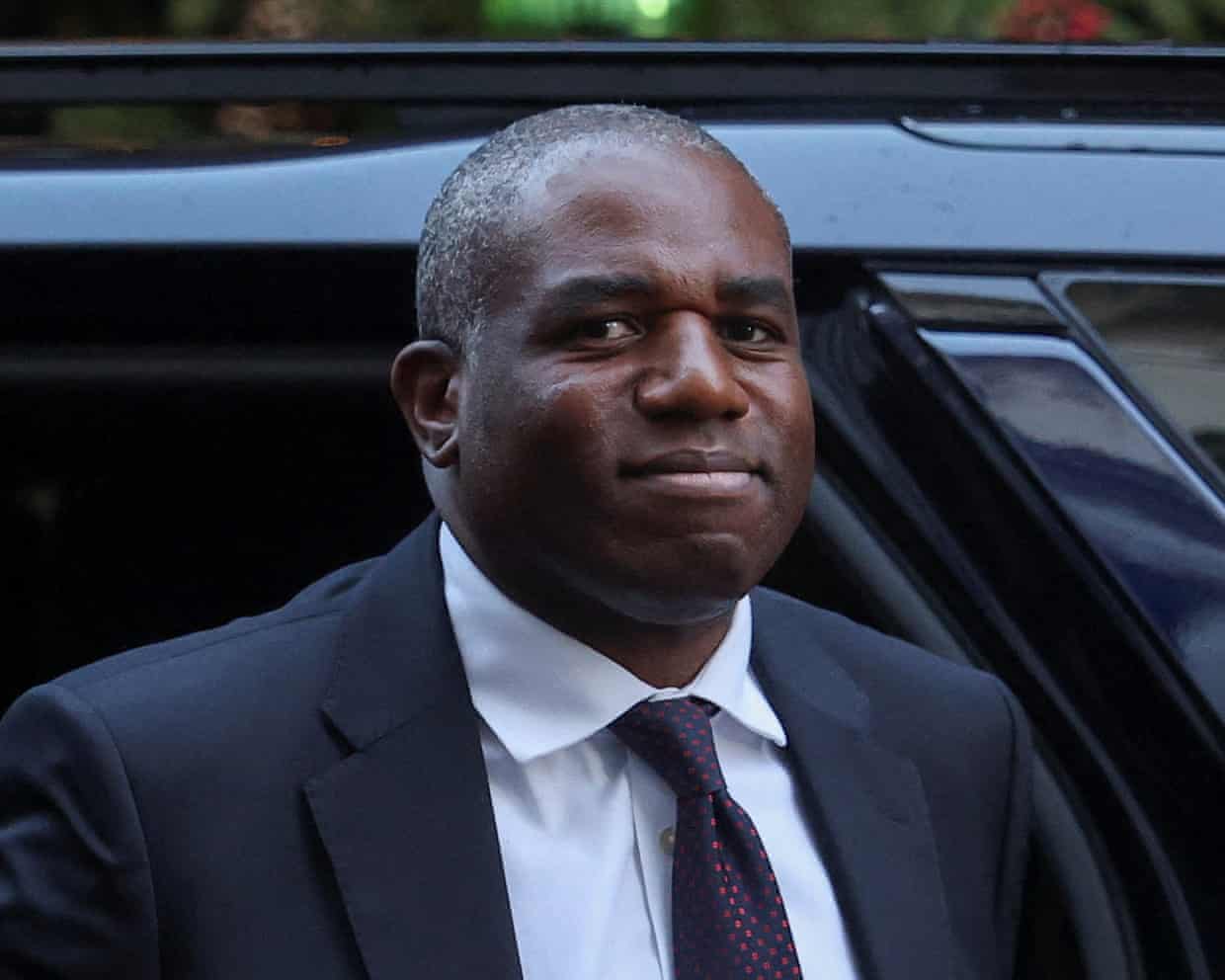
Prisoners continue to be released mistakenly with a further 12 inmates let out of jail in error since November, the UK justice secretary has revealed.David Lammy told BBC Breakfast that despite the latest figures the “trend is downwards” after improvements to the system were put in place.Lammy told the House of Commons in mid-November that there were 91 accidental releases in England and Wales between 1 April and 31 October this year.He said on Tuesday: “Well, I said to parliament a few weeks ago, I released data at that point, and there had been 91 releases in error up to that point, there have been 12 since then, two are currently at large.”Lammy said the two who were still at large were not violent or sexual offenders

UN experts raise concerns over homes rented out by English social landlord
UN experts have said that one of England’s biggest social landlords appears to have systematically failed to ensure the habitability of its rental properties.In a letter to the UK government, they cite the case of a disabled tenant, Sanjay Ramburn, 55, who they say lived with his family of five in an L&Q group property in Forest Gate, east London for several years with no electricity. They experienced four ceiling collapses, as well as severe damp and mould that affected their health.The children developed breathing issues, tinnitus and skin problems. Ramburn, who reported racial harassment and antisocial behaviour at the hands of his upstairs neighbour that he said was not addressed by L&Q, suffered severe mental health issues, the letter says

Almost 4 million children in UK affected by economic abuse, charity finds
Almost 4 million children in the UK are suffering the impact of economic abuse in their families, with some having pocket or birthday money stolen by the perpetrators, a charity has found.Data from charity Surviving Economic Abuse (SEA) showed that over the past year 27% of mothers with children under 18 had experienced behaviour considered to be economic abuse, where a current or former partner has controlled the family’s money.The research found perpetrators used various means, including stopping mothers accessing bank accounts and child benefits, and refusing to pay child maintenance.As a result, some children are missing out on essentials including clothes and food.A third of the women who experienced economic abuse by a former partner reported that their ex refused to pay child support, or paid it unreliably, despite being able to afford it

Resident doctors in England to go on strike in run-up to Christmas
Thousands of doctors in England are to go on strike again this month, in a dispute over pay and job security.The British Medical Association has announced that resident doctors – formerly known as junior doctors – will begin a five-day strike action that will run from 7am on 17 December until 7am on 22 December.It is the 14th strike by doctors since March 2023 and follows a similar five-day action last month, which led to warnings that the NHS may have to cut frontline staff and offer fewer appointments and operations if the strikes continue.The BMA said resident doctors were being driven “away from jobs and to the picket line” because the government was failing to make a “credible offer on jobs or pay”.Dr Jack Fletcher, chair of the BMA’s resident doctors committee, said: “With the government failing to put forward a credible plan to fix the jobs crisis for resident doctors at the same time as pushing a real-terms pay cut for them, we have no choice but to announce more strike dates
Assisted dying bill is safer than any other in the world | Letters
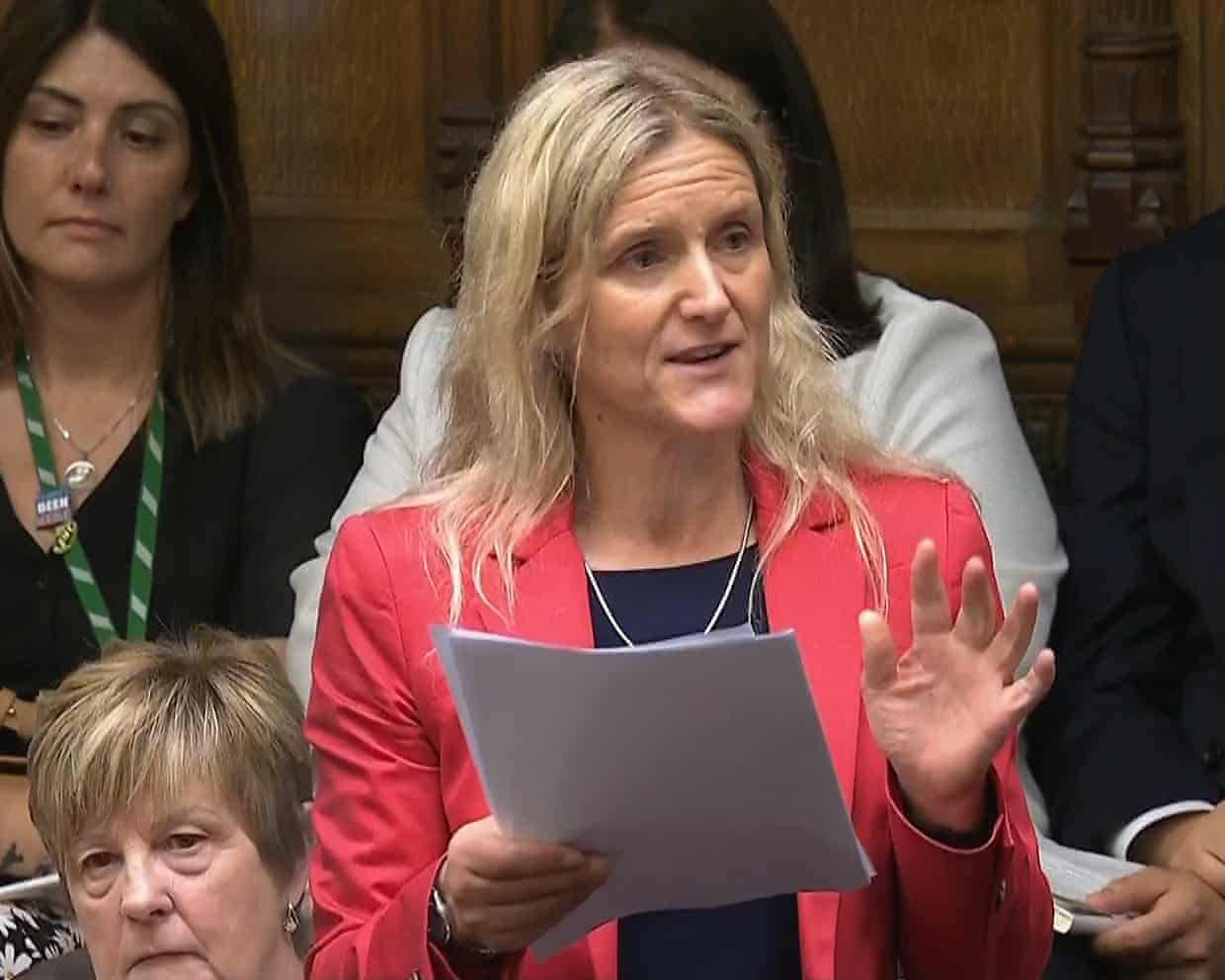
Dr Lucy Thomas raises some interesting points in her defence of the House of Lords’ behaviour on assisted dying (Letters, 26 November). But it is a stretch to suggest that the 1,000 amendments that peers have tabled to the bill represent effective independent scrutiny.What possible justification can there be for requiring every dying person – including a 90-year-old in their final weeks with advanced metastasised cancer – to provide a negative pregnancy test before their request is approved (amendment 458)? I am sure there are many peers who want to scrutinise the bill in a sensible way, but they are being thwarted by a handful who seem intent on stopping law change at any cost.The bill as currently drafted – which MPs have amended and approved – is safer than any other in the world, including in its protections for doctors. Clause 31 ensures that if Dr Thomas doesn’t wish to support her patients with this option, she would be under absolutely no obligation to do so

My cultural awakening: Thelma & Louise made me realise I was stuck in an unhappy marriage

The Guide #219: Don’t panic! Revisiting the millennium’s wildest cultural predictions

From Christy to Neil Young: your complete entertainment guide to the week ahead

Susan Loppert obituary

Oh yes he is! Kiefer Sutherland dives into the world of panto

O come out ye faithful: a joyful roundup of UK culture this Christmas