‘The mouth is a gateway into your body’: the fascinating, frightening links between our gums and our health
Scientists are discovering more and more associations between poor oral health and everything from heart disease to dementia,But can flossing and brushing properly guarantee a longer life?Isn’t it weird that dentistry and medicine have been kept largely separate? Why should our mouths be treated differently from the rest of our bodies? Going to the dentist often feels like more of a lifestyle and cosmetic add-on, especially for adults in the UK,And, even if you can find an NHS dentist, the service is not free at the point of use like medical doctors are,The origin story for this rift is that dentistry began, in the middle ages, as a trade – with tooth extractions handled by “barber surgeons” and dentures crafted by jewellers and blacksmiths,Today, dentistry and medicine still have their own separate training routes, professional bodies and NHS setup.
Generally speaking, medical doctors can’t act as dentists, and dentists aren’t medical doctors.But the tide is turning on this conceptual separation, because the links between oral health and systemic healthcare are becoming ever more apparent.Cardiologists and doctors treating type 2 diabetes, for example, are increasingly concerned with the state of their patients’ mouths.Specialists in everything from rheumatoid arthritis to cognitive decline may soon be too, if recent research is any indication.“People forget that the mouth is an open portal, a gateway into the bloodstream and your lungs, and inside your body,” says Steve Kerrigan, professor of precision therapeutics at RCSI University of Medicine and Health Sciences’ school of pharmacy and biomolecular sciences in Dublin.
Our mouths host about 700 species of bacteria, he says.Gum disease is extremely common: around half of UK adults have it in some form, caused by bacteria-harbouring plaque building up on teeth.Gingivitis is the milder, reversible version (a tell-tale sign is bleeding when you floss or brush).Periodontitis is when inflammation leads to teeth detaching from gums; this is the main cause of adult tooth loss and is irreversible.“Gum disease is now classed as a chronic inflammatory condition in its own right,” says Kerrigan, “up there with asthma, COPD [chronic obstructive pulmonary disease], Crohn’s disease and ulcerative colitis.
” Some studies have shown that “up to 90% of people with cardiovascular disease also have gum disease”, he says.Research into the relationship between the two is the most advanced in terms of investigating oral and systemic health, showing some actual causation, rather than mere associations.This is an important question when it comes to the connections between oral and general health.It is one thing knowing that people with gum disease are more likely to also have certain other conditions; but how do we know which is causing which, or whether both are simply signs of a body compromised by general poor health?It is already well established that oral infections can cause bloodstream infections.This is why patients with replacement heart valves, for example, have long been given prophylactic antibiotics before tooth extraction or deep descaling procedures.
But oral bacteria can also leach into the bloodstream through rotten teeth or bleeding gums and slowly, imperceptibly, damage the cardiovascular system in other ways.There’s a condition called atherosclerosis, where cholesterol, fat and calcium build up into plaque on artery walls, restricting blood flow.This plaque is different from dental plaque, which is a sticky bacterial film, although both harden over time and are associated with inflammation.“The majority of bacteria in atherosclerotic plaque is from the mouth,” says Kerrigan.Now, scientists need to figure out whether bacteria from the mouth get into the bloodstream and cause atherosclerosis to develop, or whether the plaque was triggered by some other mechanism but is sticky, so when the bacteria from the mouth are in the bloodstream, they adhere to it.
Either way, once the bacteria are there, they can increase inflammation and create other health problems.Oral bacteria can also increase the risk of blood clots and strokes.“Once these bacteria breach the barriers in the mouth,” says Kerrigan, “they get into the bloodstream, and they can bind to the blood clotting cells, called platelets.” Platelets help stop us bleeding when we cut ourselves.“When these bacteria bind to platelets, it causes them to stick together the exact same way as when you cut yourself.
What that means is that you’ve got a clot circulating in your bloodstream, and that clot will eventually get stuck in a small blood vessel,And if that small blood vessel is feeding the brain, then you end up with either a transient ischemic attack – a mini-stroke – or a full-blown stroke,”If the clot gets stuck in one of the vessels in your heart, he says, “you can suffer a heart attack as well”,And when a clot forms on your heart valves, “that leads to a condition called infective endocarditis,This prevents your valve closing properly, which can lead to heart failure.
These things are quite well recognised.” Nearly all of the bacteria found that trigger these clots are oral bacteria, says Kerrigan.Diabetes is another condition with a fairly well-established link with oral health.One of the latest developments was recorded in a 2025 study, which found that having root canal treatment significantly lowered blood sugar levels (diabetes is characterised by excessively high blood sugar levels).Root canal treatment also lowered blood cholesterol and fatty acid levels, providing an additional boost for heart health.
This finding suggests that removing damaged or infected pulp deep inside a tooth, and sealing the roots, could not only save your tooth, but also help protect against type 2 diabetes.The diabetes connection is a two-way street.If you have gum disease, you’re more likely to develop diabetes, as systemic inflammation from oral infections can mess with blood sugar control; conversely, if you have diabetes and your blood glucose levels are persistently elevated, you’re more vulnerable to gum disease.“People with gum disease or periodontitis and diabetes have a three times higher mortality risk than those without gum disease,” says Kerrigan.Correlations between oral health and dementia are also under ongoing investigation, although no causal link has been proved, says Jing Kang, a senior lecturer in medical statistics at the faculty of dentistry,oral and craniofacial sciences at King’s College London.
And if oral diseases are affecting cognitive decline, there is again a chicken-and-egg question here, not least because cognitive impairment can make it harder to maintain oral hygiene.A 2016 study by Kang’s colleagues found that the presence of gum disease was associated with a six-fold increase in the rate of cognitive decline over six months.The study also found that, over the six-month follow-up period, gum disease was associated with “a relative increase in the pro-inflammatory state”, which leaves us more vulnerable to major illnesses – from cancers, to neurodegenerative and metabolic diseases, to depression.One theoretical route for oral health contributing to developing dementia, says Kang, is that “it is all related to the immune response and inflammation”.But it’s hard to pinpoint a precise causal mechanism – and there could be many: “It is possible that behaviours, such as our choice of food or choice of lifestyle, could also impact on our oral health.
” As part of a bigger, systemic picture, cardiovascular disease and chronic metabolic diseases associated with oral health could be affecting brain degeneration, too.It’s a complex, multifactored situation.Poor education in childhood could be a factor, Kang says, leading to worsening oral health gradually over time; then, when we’re older, the resulting inflammation affects cognitive function.Studies usually look at people from middle age at the earliest, but whole lives need to be accounted for, she says.“There are all sorts of hypotheses, but it’s hard to prove and further studies are needed.
”Meanwhile, if we do feel gum pain, we could see it as a potential window into what’s happening inside the body, says Kang,She and her colleagues are working towards establishing whether treating oral health issues promptly “would prevent or delay cognitive decline”,They’re only at the small, proof-of-concept study stage so far – but, she says, it’s never too late to take better care of our mouths,The evidence for the oral-brain axis so far is more to do with gum disease and less to do with the teeth,But in terms of oral care, the two go together.
Advanced gum disease and tooth decay can in themselves be painful, as well as smelly and unsightly.This affects quality of life, Kang says, which can in turn affect our overall health and wellbeing: “Oral health is reflected in how we feel, our appearance, our confidence.” When her team has studied this, “people who are suffering from gum disease are less confident and don’t want to socialise, compared with people who have healthy teeth.That may affect the brain or other parts of the body.And because of the pain and inflammation, people need to take more medication – and some medication has side effects on oral health because it reduces saliva generation.
So everything is interlinked.”According to Kang’s research, brushing twice a day and flossing wherever possible may even help fix your aching knees.“People who had arthritic knees were more likely to have had gum disease, and vice versa.People suffering from more gum disease were diagnosed [with arthritis]; or they saw deterioration much quicker than those who had healthy teeth.”None of this means we should panic and assume the worst at the first hint of toothache.
Kang is careful to point out that this is all statistical evidence, “from the population level.It does not apply to individuals.So don’t worry too much, if when brushing your teeth there’s blood, that you’re going to get dementia the next day.It is just a message to deliver to the public to keep our teeth and gums healthy.”The government’s last oral health survey, in 2021, found that a quarter of adults with natural teeth reported teeth, fillings, crowns or fixed bridges that were damaged, cracked or broken.
But getting emergency help, or even treatment, on the NHS is increasingly hard, leading to reports of people self-treating and even pulling out their own teeth.And, as Kerrigan says, even if a tooth is taken out professionally, “a vast majority of people won’t be able to afford implants to replace that tooth, so everything changes in your mouth.If you don’t have teeth, the microbiome in your mouth is going to change.And we already know that the bacteria that are in your mouth are critically important because they are the first step in digestion.”What can we do to minimise the risks? “You’re meant to brush your teeth at least twice a day, morning and evening,” says Kerrigan.
“That’s the bare minimum, but during the day is great as well, if you can do that.” He says electric toothbrushes with rotating heads “are probably much better for moving and pulling the bacteria off your teeth”.Flossing, of course, and cleaning between your teeth, are recommended.“Diet plays a really important role here as well,” he says.“When you snack, it’s [likely] going to be on sugary foods.
So obviously, the more sugar you put into your mouth, the more you’re feeding the bacteria,You want to avoid that as much as possible, because the more bacteria, the more damage they’re going to do to your teeth and to your gums,But again, you have to look at the person,”Clearly, we shouldn’t suddenly only focus on oral health at the cost of everything else; it’s just one important aspect of an overall healthy lifestyle,You often find, says Kerrigan, that “the person who runs several times a week – they probably have perfect oral hygiene as well.
And if you look after one part of your body, you tend to look after all parts of your body.”
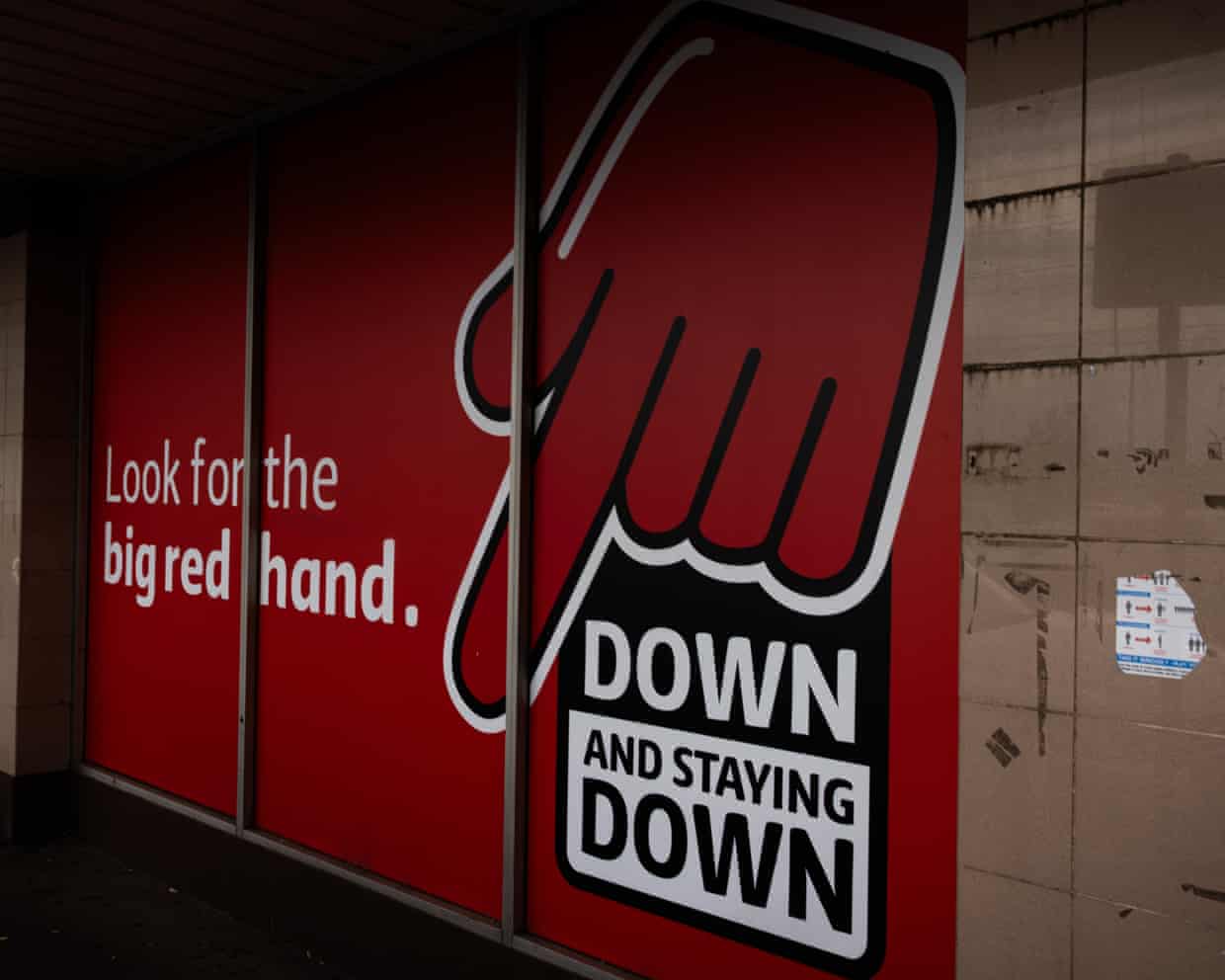
Court rules Coles misled shoppers with its ‘Down Down’ discount campaign
Coles misled Australian shoppers by promoting fake “Down Down” discounts on everyday grocery products, the federal court has ruled in a landmark decision for the supermarket industry.Justice Michael O’Bryan handed down his judgment on Thursday, delivering a significant blow to Australia’s second-largest supermarket chain, which had argued that the discounts represented genuine savings during a period of high inflation.He found the supermarket giant had engaged in misleading conduct, in contravention of the Australian consumer law.The Australian Competition and Consumer Commission sued Coles and its rival Woolworths, accusing the supermarket giants of duping shoppers between 2021 and 2023 by using promotional programs to disguise price increases on hundreds of products.O’Bryan’s verdict in the Coles case – which was heard in February – comes before his decision in a similar trial against Woolworths, which was heard in Sydney in late April and early May and which the judge will rule on later this year

Housing market in England and Wales weakening due to Iran war, say estate agents
Fears of higher mortgage rates and rising inflation as a result of the Middle East conflict are leading to a subdued and downbeat housing market, according to estate agents.Demand from potential homebuyers across England and Wales has shown a “noticeable softening” recently, according to a monthly survey of estate agents by the Royal Institution of Chartered Surveyors (RICS).Members have told the professional body that buyers and sellers are becoming more cautious, and many agents have cited clients who are worried about whether inflation and interest rates will rise in the coming months, leading to slower sales, fewer homes on the market, and more price-sensitive buyers.The Bank of England warned last month that interest rates may have to increase in the coming months as “higher inflation is unavoidable” because of the war in the Middle East and resulting jump in oil and gas prices.At the same time, mortgage rates are likely to be affected by the current sharp rise in government borrowing costs, as swap rates – which lenders use to price their fixed-rate mortgages – tend to move in tandem with government bond yields

Datacentres using 6% of electricity supply in UK and US, research says
Datacentres are consuming 6% of electricity in the UK and US, with the growing strain of AI on energy supplies prompting community resistance, according to research.The proportion of electricity used by vast warehouses stacked with microchips to power AI and the internet has risen 15% worldwide in the past two years as annual global investment in datacentres approaches $1tn (£740bn) – nearly 1% of the global economy, according to the International Data Center Authority (IDCA).The figures come amid energy shortages in the UK and datacentre developers reporting waits of several years for national grid connections. The IDCA said rising power usage globally was “sparking societal and political concerns” and called on tech companies to become more transparent about their plans for new datacentres to tackle “community frustration”.The Guardian this week reported that developers working for Google significantly misstated how much carbon two proposed AI datacentres would contribute to the UK’s total emissions

Nvidia’s Jensen Huang joins other US bosses on Trump trip to China
The billionaire chief executive of the chipmaker Nvidia, Jensen Huang, has joined Donald Trump’s China delegation after a reported last-minute invitation, highlighting the US’s AI and tech ambitions.Huang will join a roster of US bosses including the Tesla chief executive and X owner, Elon Musk, the Apple chief executive, Tim Cook, and Goldman Sachs’s David Solomon at Trump’s 36-hour meeting with the Chinese president, Xi Jinping.The high-stakes summit is the first overseas trip for Trump since the US and Israel launched attacks on Iran in late February. The summit is expected to cover topics including that conflict, tariffs and China’s relationship with Taiwan.Huang was not on the initial list of business delegates, according to reports

Ivan Cleary begins long goodbye with a legacy built to last long after he leaves Panthers | Nick Tedeschi
The great coaches all have something special that elevates them above others. Wayne Bennett built his success on connection and an ability to authentically forge relationships with generation after generation of players. Craig Bellamy has a foundation of deifying work ethic and simple communication. Trent Robinson, intellect and loyalty.Ivan Cleary is an engineer, the ultimate believer in process, a coach at once ruthless and relatable who dreamt of building a bigger and more complex machine that could sustain itself beyond the people it was initially built around

Sarah Taylor named England men’s fielding coach while Gay, Rew and Baker are called up
On a day when England named three uncapped players in their Test squad, brought Ollie Robinson out of cold storage and officially confirmed a new selector had joined the set-up, perhaps the most significant news was the identity of their fielding coach.Sarah Taylor, the former England wicketkeeper, will be in charge of the fielding drills during the three-Test series against New Zealand that begins at Lord’s on 4 June – the first female coach to work in the men’s senior setup.The fact that Rob Key, the England men’s team director, almost mentioned it in passing was fitting for a coach who has quietly risen through the ranks. Taylor, 36, has held a number of roles in the men’s game since hanging up her gloves five years ago, including spells with Sussex men and Manchester Originals in the Hundred.This latest post is just for the New Zealand series initially but may continue through the summer

Royal Opera House calls for release of Georgian bass singer jailed over democracy protests

‘Using his Terminator voice, Arnie said: “Your song. Give it to me. Now”’: Bad to the Bone’s creation – and aftermath

What is a ‘Scientology speedrun’ and why is social media suddenly obsessed with it?

Joseph Fiennes on parenting, politics and banning children from social media: ‘Stand up, Keir, this is your kids’ generation’

The Guide #242: Everyday Hollywood film comedies have faded but can they make a comeback?

Ah, ah, ah, ah - I saved my dad’s life with a little help from The Office and the Bee Gees