UN warns women in public life face increasingly sophisticated online violence
Women in public life are facing growing and increasingly sophisticated forms of online violence, the UN has said, warning that “AI-assisted ‘virtual rape’ is now at the fingertips of perpetrators”.Female rights campaigners, journalists and other public communicators face a deepening threat owing to a combination of artificial intelligence, anonymity and the absence of effective laws and accountability, a report published by UN Women found.Of more than 600 women in public life, 6% said they had been victims of deepfakes, while nearly a third said they had received unsolicited sexual advances online.About 12% said they had had images of themselves shared without their consent, including intimate or sexual content.“Artificial intelligence is making abuse easier and more damaging,” said Kalliopi Mingeirou, who leads UN Women’s efforts to end violence against women.
“While anonymity, as well as the speed of how this information and narratives circulate in mainstream media, make this content more dangerous,”Released on Thursday, the report adds to mounting evidence suggesting that, for millions of women and girls across the globe, the digital sphere has become a space synonymous with abuse,Many women have to choose between being online and accepting the threat of violence or self-censoring, perhaps even staying offline, and potentially paying a professional and personal cost for doing so, it found,“When women in general, or journalists and human rights defenders, are driven out from digital spaces, we all lose,” said Mingeirou,“We know that female journalists are essential to how truth is told and whose stories get told,” she said.
“And when we have women human rights defenders, or more broadly, women in public life being pushed out of the digital spaces, we see an erosion of hard-won rights,”This erosion was particularly concerning given that it was taking place against a broader backdrop of rising authoritarianism, democratic backsliding and networking misogyny such as the manosphere, the report noted,“Gender rights rollback is both enabled and exacerbated by technologies which – by design – amplify misogynistic hate speech for profit,” it said, pointing to generative AI apps that are capable of stripping clothes from photos of women without their consent or simulating them being sexually assaulted,“AI-assisted ‘virtual rape’ is now at the fingertips of perpetrators,” it added,The result was a “supercharging” of threats against women in public life aimed at pushing women out of visible public roles and ushering in a broader rollback of gender rights, said Julie Posetti, the lead researcher and author of the report.
“So if you call anybody a liar and a criminal frequently enough, broadly enough, and with as much fake evidence as you can, then you are likely to convince followers that this is in fact the reality,” said Posetti, who is a professor of journalism and chair of the Centre for Journalism and Democracy at City St George’s University of London.The pattern was similar to that of movements aligned with authoritarianism and that seek to undercut progress on women’s rights, such as reproductive rights, she said.“And we see these sorts of messages around, you know, women not being fit for leadership echoed not just online, but in the partisan press and within certain political circles.So it’s all about reinforcing an environment which is creating permission for the rollback of gender rights.”She said women who identified as LGBTQ+ were more likely to experience online violence, as were those who were racialised or from religious backgrounds, such as Muslim or Jewish women.
“So being a woman makes you a target, but being a woman with intersectional identities makes you a bigger target,” she said.“Add to that a woman who is perceived to be out of place, speaking her mind, speaking truth to power – particularly truth to power to men – these are all aspects of behaviour that tend to trigger the most malign misogynistic attacks.”The view was echoed by Mingeirou, of UN Women, who described the attacks as “coordinated and deliberate”, and aimed at silencing women’s voices while undermining their professional credibility and reputations.“This is part of a phenomenon of a broader pushback against gender equality,” she said.“We see misogynistic networks that are very well coordinated attacking the narratives on gender equality and women in public life more broadly.
”Her view was backed by a study released earlier this year, in which researchers argued the silencing of women online was not an incidental byproduct of the digital sphere, but rather a “coordinated, systemic practice”.The research had laid bare how “online hostility is made frictionless and rewarding for misogynists”, citing how the platforms’ algorithmic amplification and formation of ad hoc hostile groups had served to “convert misogynistic hostility into a coordinated apparatus for suppressing women’s participation in public discourse”.The extent of this threat burst into public view earlier this year after it emerged that hundreds of thousands of requests had poured into Elon Musk’s AI tool, Grok, asking it to strip clothes from photographs of women.Months later, a German TV star Collien Fernandes alleged that her ex-husband had spread AI-generated pornographic images of her online.Last year the UN Women’s executive director, Sima Bahous, said: “What begins online doesn’t stay online.
Digital abuse spills into real life, spreading fear, silencing voices and – in the worst cases – leading to physical violence and femicide,”Thursday’s report found that a quarter of female journalists and media workers surveyed said they had been diagnosed with anxiety or depression owing to online violence, while nearly 13% said they had been diagnosed with post-traumatic stress disorder,For many, the fear of facing online violence had meant they avoided sensitive topics or had gone silent, with 45% of female journalists saying they self-censored on social media, while nearly 22% said they were self-censoring in their professional work,Mingeirou called for technology companies to build in safeguards to prevent abuse and create reporting tools,Governments also needed to act, she said, noting that less than 40% of countries have laws in place to protect women from cyber-harassment or cyberstalking.
Failure to do so could have long-lasting ripple effects and roll back decades of progress.“This is creating a vicious circle,” she said.“When we have such serious mental health indications, then we have women who do not want to get involved and engaged in digital spaces.”
UK airlines given green light to cancel or consolidate flights to conserve jet fuel
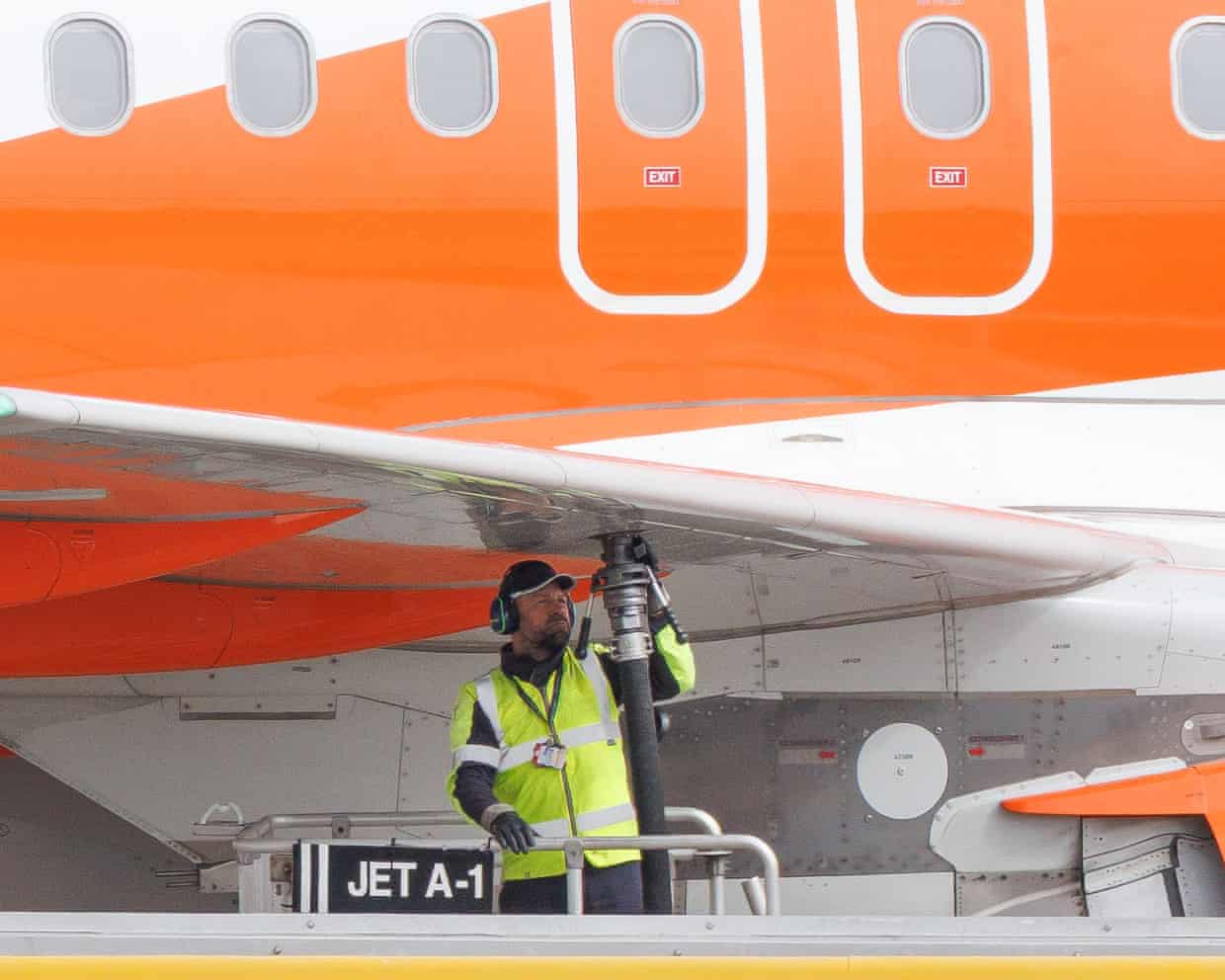
UK airlines will be able to cancel or consolidate flights this summer to conserve jet fuel as the war in the Middle East continues to disrupt supplies.The measures are being taken to avoid major disruption as Britons jet off on their summer holidays. Airlines are looking carefully at their timetables to see which flights can be cancelled in advance and cause the least delays.New legislation would allow for actions such as consolidating schedules on routes where there are multiple flights to the same place on the same day, which could be put in place to stop last-minute cancellations, the government announced on Sunday.The changes will allow airlines to give back a limited proportion of their allocated takeoff and landing slots without losing the right to operate them the following season
Dynamic pay on platforms such as Uber should be banned, says TUC
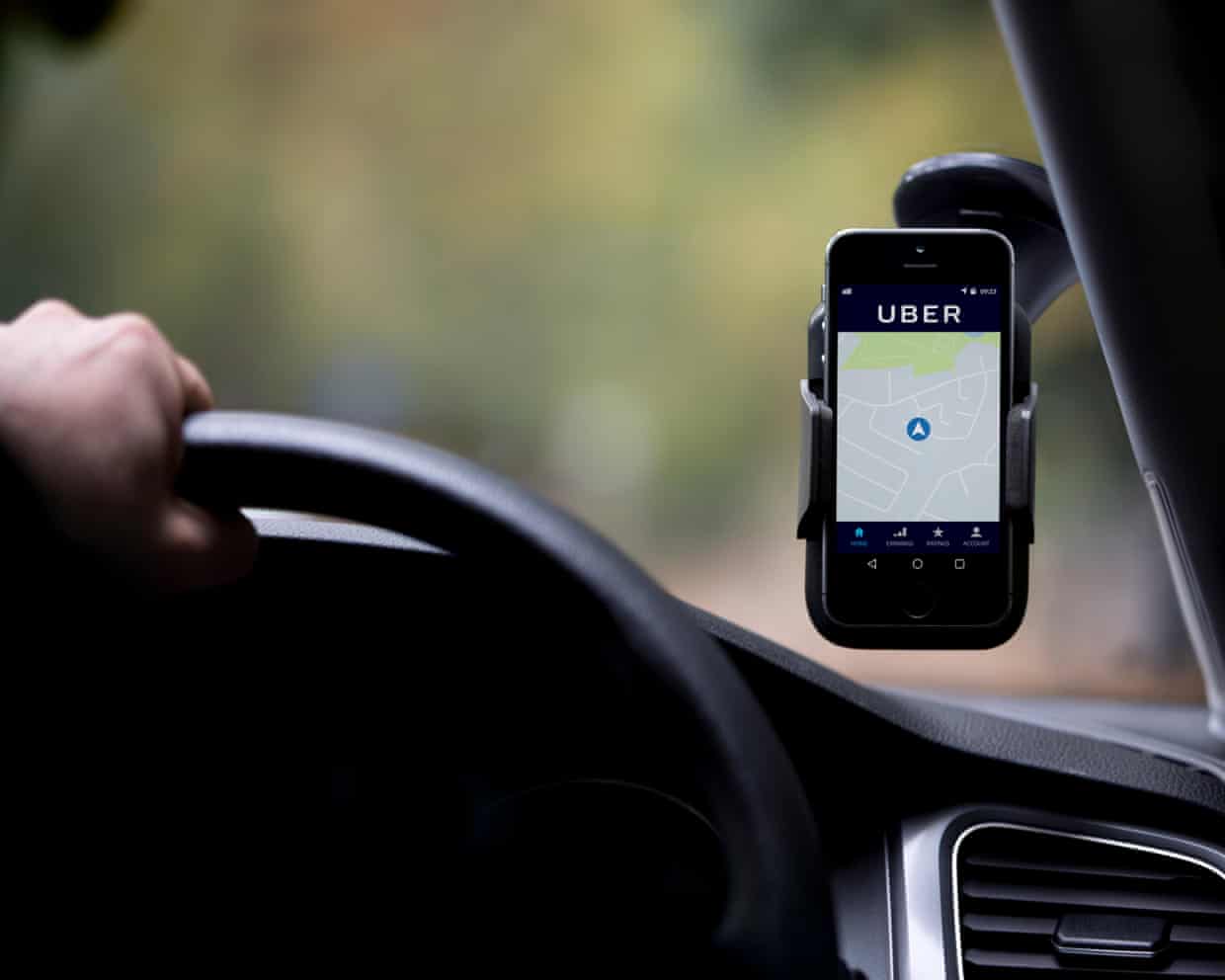
The practice of using “dynamic pricing” to set pay on gig economy platforms including Uber should be banned because it leaves workers at the mercy of shadowy algorithms with no certainty over their earnings, trade union leaders have urged.In a report exposing the human cost of the gig economy practice, the Trades Union Congress said pay was becoming decoupled from time, skill or effort. Instead, work had become a speculative practice with the rewards determined by an algorithmic process with little transparency.Under dynamic pricing, computer-driven algorithms set variable prices on a gig economy platform for customers and rates of commission for workers to match real-time supply and demand in a market.However, union leaders say the practice replaces fixed rates or transparent tariffs with opaque, constantly shifting pricing mechanisms, where the data used to determine the rewards and decision-making process are largely obscured

How does live facial recognition work and how many UK police forces use it?
The Labour government thinks facial recognition technology is “the biggest breakthrough for catching criminals since DNA matching”. It wants all police forces to use it and recently announced 40 new vans rigged with live facial recognition cameras to be deployed in town centres across England and Wales.Supporters say it streamlines police work and catches criminals. Opponents fear it violates civil liberties and can be biased against minorities.The simplest systems check faces captured on CCTV, mobile phones, dashcams, social media and doorbell cameras against mugshots held on the police national database

UK ‘invention agency’ grants £50m of public money to US tech and venture capital firms
Britain’s “invention agency” has pledged £50m of UK taxpayer money to US tech companies and venture capital projects.Dreamed up by Dominic Cummings to fund “crazy” ideas, the Advanced Research and Invention Agency (Aria) is meant to “restore Britain’s place as a scientific superpower”.But a joint investigation by the Guardian and Democracy for Sale, an investigative website, has established that more than an eighth of the agency’s £400m in research and development funding over the past two years has gone to 14 US tech companies and venture capital groups, in some cases, with no clear return for the UK or Aria.One of these companies, Rain Neuromorphics, is also backed by the OpenAI chief executive, Sam Altman, and was reported to be near collapse last year, shortly after winning Aria money. It did not respond to a request for comment; two of its founders appear to have left the company

Formula One: Kimi Antonelli wins F1 Miami GP ahead of Lando Norris – as it happened
Our full report from today’s race is up and running:The rain we were promised still hasn’t fallen – although the decision to move the race forward was a sound one – as the top three make their way on to the balcony for the podium celebrations. Huge cheers for Kimi as he thumps his chest, salutes the crowd and takes in the Italian national anthem. He’s won three of this season’s four races so far, and on this form it’ll be tough to catch him.1) Kimi Antonelli, 100pts2) George Russell, 803) Charles Leclerc, 634) Lando Norris, 515) Lewis Hamilton, 496) Oscar Piastri, 437) Max Verstappen, 26Norris is asked about whether today was more fun, after drivers’ complaints about conditions this season. “Some things have improved, some things are still the same,” he says

Kimi Antonelli produces gutsy drive to hold off Norris and win F1 Miami GP
Kimi Antonelli won the Miami Grand Prix with a superb, gutsy drive under pressure for Mercedes. The Italian triumphed for the third time in a row this season by beating the McLaren of Lando Norris into second at the Miami International Autodrome. His teammate, Oscar Piastri, was third with George Russell in fourth for Mercedes.Max Verstappen delivered a strong comeback to take fifth place after a spin on the opening lap. Charles Leclerc was sixth for Ferrari, with a late spin costing him places on what proved a dramatic final lap as he was passed by Russell and Verstappen

Jannik Sinner makes history with victory in Madrid Open against Zverev

Bordeaux Bègles 38-26 Bath: Champions Cup semi-final – as it happened

Bordeaux brush aside Bath to set up Champions Cup final against Leinster

Horse racing: True Love earns Aidan O’Brien his eighth 1,000 Guineas winner – as it happened

Alex Zanardi obituary

The Swans are fast, bold, skilful – and making the most of the AFL’s new rules. It’s a good time to be a forward | Jonathan Horn