Banaz Mahmod was murdered 20 years ago; the fight for a law on ‘honour’-based abuse goes on

“I’m always looking over my shoulder,I’m never going to let my guard down,” Bekhal Mahmod said,For two decades she has been in hiding, living under a new identity, away from her Iraqi-Kurdish family,In 2007 Bekhal testified in the trial of her father and uncle for the “honour”-based murder of her sister Banaz Mahmod,Banaz, 20, had left her arranged marriage and wanted to marry another man.
She had told police of the violence and threats she was facing but had been dismissed by a female officer as manipulative and melodramatic.This month marks the 20th anniversary of her killing.After years of campaigning, Bekhal is hoping the UK government will finally adopt “Banaz’s law” – proposals that include creating statutory guidance on “honour”-based abuse, informed by survivors – to ensure professionals get better at spotting the signs, victims feel empowered to come forward, and perpetrators are brought to justice.“[Banaz’s murder] will never leave my life,” she added.“It can take the smallest things, like somebody saying the word Iraq … my head turns instantly, it’s a fear.
”Peers tabled amendments to the crime and policing bill last month urging ministers to adopt Banaz’s law proposals, which the government has said it will consider.However, Bekhal fears the UK’s fraught migration debate could deter victims of “honour”-based abuse from coming forward.Bekhal and her four sisters were subjected to violent abuse throughout their childhoods, escalating when the family moved to the UK in 1998.Against the backdrop of rising anti-immigrant sentiment in the 2000s, fuelling the rise of the far-right British National party, Bekhal felt society was not on her side.She said: “I had indefinite leave to remain but I feared [the authorities] weren’t going to take me seriously or help me, that they were just going to see me as just an immigrant using our funds and our system.
I worry, 100%, that the climate now could prevent women from coming forward today.”Sanskriti Sanghi, a campaigns manager at Southall Black Sisters (SBS), the women’s organisation that has been advocating for Banaz’s law, said the way migration – rather than misogyny – has been framed as a threat to women and girls is ultimately “damaging” to women’s safety.Sanghi said: “Violence against women and girls [VAWG] is being weaponised by the far right to further a racist and anti-migrant agenda and that marginalises communities and the most vulnerable within them, reducing trust and faith in the system.“There are these damaging myths being put out about violence against women and girls, that the greatest risk comes from migrant men who are strangers, when it’s most likely to be someone known to the victim, and perpetrators cut across all ethnicities.”Nonetheless, “honour”-based violence is a type of VAWG closely linked to cultural contexts.
Banaz’s law proposes that “honour”-based abuse is explicitly recognised as an aggravating factor in sentencing, backed by statutory guidance shaped by women and campaigners with experience of the abuse and its various cultural contexts.SBS is also campaigning for the government to extend the UK’s migrant victims of domestic abuse concession and indefinite leave to remain domestic violence provisions to all migrant women, regardless of immigration status, aimed at protecting women from the “impossible choice” of an abusive relationship on one hand, or destitution or deportation on the other, because their migration status is precarious, or prevents them accessing public funds.In a House of Lords debate last month, the Liberal Democrat peer Dee Doocey described Banaz’s murder as “emblematic of wider patterns of institutional failure to identify and respond to ‘honour’-based abuse”, calling for “a statutory definition to be brought forward” quickly.Alison Levitt, a justice minister in the Lords, said while the government did not think making “honour”-based abuse a statutory aggravating factor in sentencing would be either “necessary or desirable … when existing guidelines already apply”, she would “welcome further discussion as to how we can achieve the objectives”.Levitt said the government had committed to introducing statutory guidance on “honour”-based abuse, alongside a statutory definition, but needed to ensure “the range of abuse experienced is captured and that we do not build in any unintended consequences … We must do this once and we must get it right.
”She added while she was unable to give the debate a timeline or say whether the bill “will be used as a suitable legislative vehicle”, the government was “getting on with this work … quickly.” This article was amended on 7 January 2025.The creation of a statutory definition of “honour”-based abuse is not one of the proposals being put forward under Banaz’s law as stated in an earlier version.

Kimmel on Trump’s whitewashing of January 6 anniversary: ‘Don’t give in to this revisionist history’
Late-night hosts observed the fifth anniversary of the January 6 insurrection and recapped Venezuelan president Nicolás Maduro’s first day in a US court.Jimmy Kimmel opened his monologue on Tuesday, 6 January, with an acknowledgment of the date: “Five years ago today, after losing what eventually judges from both sides in cities all around the country unanimously declared to be a free and fair election, Donald Trump tried to overthrow our government in a pathetic and illegal attempt to stay in the White House,” he said. “And there’s no other way to put it. You cannot look at the facts objectively and come to any conclusion other than that.“He tried to force the vice-president to claim voter fraud and refuse to certify Joe Biden’s victory, which even his own vice-president refused to do,” he continued

Dolly, Dreamgirls and Daniel Radcliffe: the biggest Broadway shows of 2026
The year 2025 found Broadway at an inflection point – New York theater finally fully rebounded to pre-pandemic levels, as the 2024-2025 season became the highest-grossing of all time, with $1.89bn in tickets sold thanks in part to a new generation of stars and fans. But with a record box office came record ticket prices, as Hollywood stars from Denzel Washington to George Clooney commanded sums pushing four figures for orchestra seating. This year feels relatively less Hollywood-y, though no less starry, with a healthy mix of revivals, new material and buzzy transfers on the calendar. Here are 12 of the most anticipated Broadway shows in 2026

Jon Stewart on Trump’s military intervention in Venezuela: ‘This is all exhausting’
Late-night hosts tore into the Trump administration’s surprise military attack on Caracas, capture of president Nicolás Maduro and vague plans to “run” Venezuela.Jon Stewart wasted no time in his first Daily Show appearance of 2026, immediately digging into Donald Trump’s shock decision to remove Maduro from power in the early hours of 2 January, which more than a dozen countries condemned as a “crime of aggression” to the UN.“Now, obviously, this is actually a very fraught moment for the world,” he said on Monday evening. “It is highly unusual for any government, any sovereign nation, to violate the airspace and territory of another sovereign nation and hit the grab and go on their president.“Look, no one knows how this operation is gonna work out,” he added
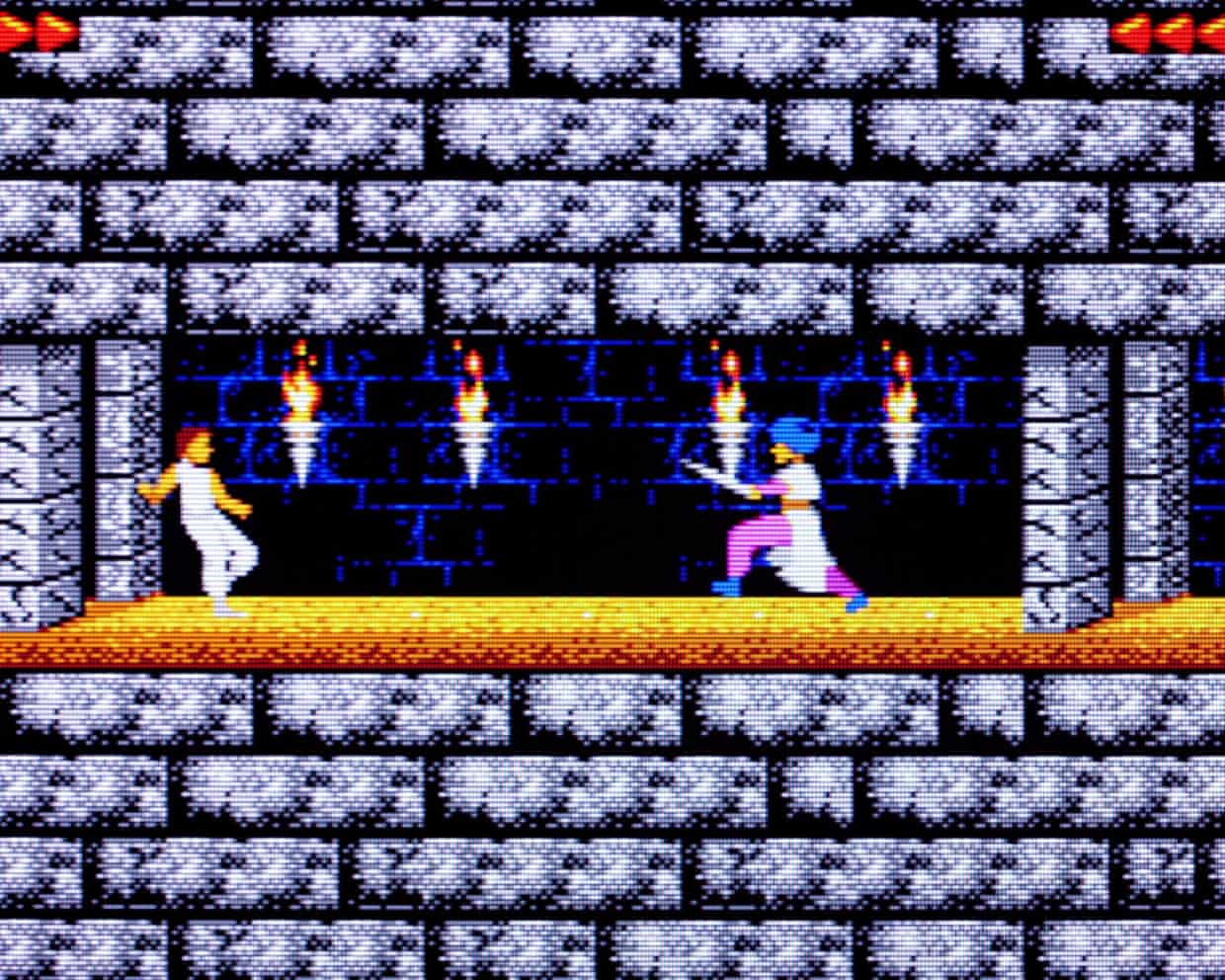
‘I wanted that Raiders of the Lost Ark excitement – you could die any minute’: how we made hit video game Prince of Persia
Programming was very open back in the 1980s. You had to teach yourself, either from magazines, or by swapping tips. When you wrote a video game, you submitted it on a floppy disk to a publisher, like a book manuscript. In my freshman year at Yale university, I sent Deathbounce, an Asteroids-esque game for the Apple II computer, to Broderbund, my favourite games company. They rejected it, but took my next effort, Karateka, a side-scrolling beat-’em-up

The Guide #224: Bondage Bronte, to more comeback tours – what will be 2026’s big cultural hitters ?
Welcome to 2026! I hope you are enjoying the final dribblings of the festive break, before reality bites on Monday. As is now tradition (well, we did it once before), this first newsletter of the new year looks at some of the big questions we hope will be answered in the next 12 months, across film, TV, music and games. Hopefully it will double up as a decent primer for the year ahead too, though for a more exhaustive rundown check the Guardian’s 2026 previews for film, music, TV, gaming, stage and art. Right, let’s get on with it:A storyline likely to rumble on through the year is the proposed purchase of Warner Bros by Netflix, which will require government approval (certainly not a given), not to mention all manner of contractual fine-tuning, before that big red N gets stamped on Warners’ famous water tower. Just enough time then for Hollywood’s greatest wrangler of spectacle, and newly installed head of the Director’s Guild, Christopher Nolan to demonstrate the value to Netflix of putting mass-market movies on the biggest screens possible
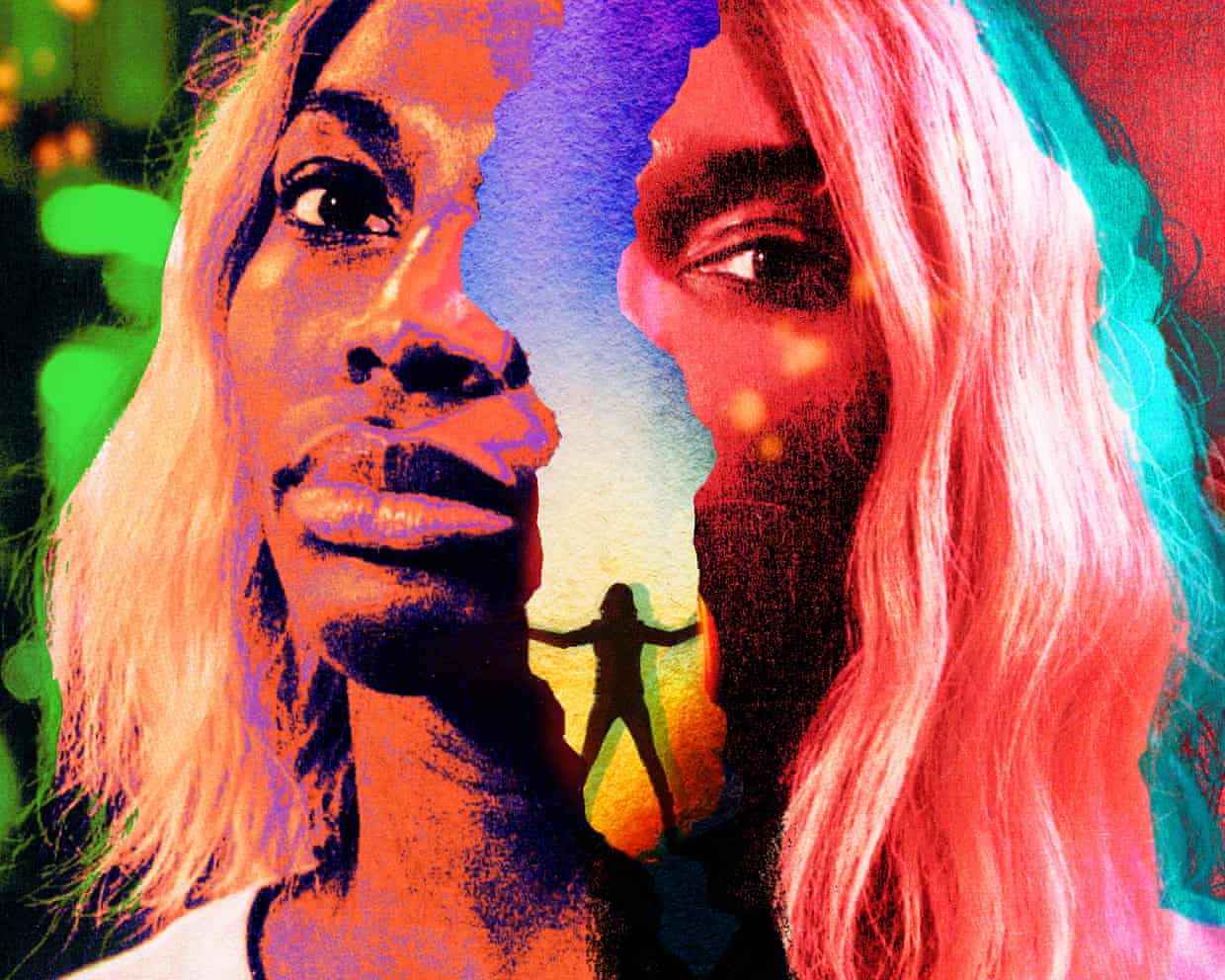
My cultural awakening: I May Destroy You helped me confront being spiked
When I May Destroy You aired in the summer of 2020, I hadn’t yet been spiked. Michaela Coel’s comedy-drama, based on her own experience of sexual assault, follows Arabella (Coel) as she realises she was drugged and raped on a night out. With one in four women in Britain having experienced sexual violence, the 12-part series was a difficult watch for many. If not relatable, then confronting and familiar; something that had happened to others, but close enough to know that it could happen to you. Three months later, it did happen to me

Reeves’s promise of pub business rates U-turn averts Labour rebellion

The Primark machine suffers a continental splutter at a bad moment | Nils Pratley

Hundreds of nonconsensual AI images being created by Grok on X, data shows

Musk lawsuit over OpenAI for-profit conversion can go to trial, US judge says

Chloe Kim’s Olympic three-peat bid in doubt after dislocated shoulder

The mediocre Ashes: England arrived as a rabble and Australia weren’t much better | Geoff Lemon