Labour admits 60% of parents wrongly targeted in HMRC child benefit fraud crackdown

More than 60% of parents who had their child benefit stopped by HMRC using incorrect Home Office travel data were not fraudulently claiming the support from abroad, it has emerged,The scale of the government’s anti-fraud fiasco is four times higher than previously admitted, with 15,000 of the 23,500 parents targeted by HMRC now identified as legitimate beneficiaries living in the UK,It means 63% of parents targeted in the anti-fraud debacle first reported by the Detail and the Guardian were legitimate claimants,The government’s admission was revealed in a written answer to a parliamentary question tabled by the Conservative MP for Fylde, Andrew Snowden,Dan Tomlinson, the exchequer secretary to the Treasury, told Snowden in his written answer that figures revealed that, as of 30 November, 14,994 of the 23,794 cases where benefit had been suspended had since “been confirmed to be eligible to child benefit”.
This is four times the number previously admitted by HMRC, which has repeatedly said it would not be entering a “running commentary” on the debacle.Snowden said: “These figures are deeply troubling.HMRC has confirmed that nearly two-thirds of the families caught up in this exercise were fully eligible for child benefit, meaning only 4.3% were found to be claiming incorrectly.“I grew up in a family that for a period of time, through no fault of our own, relied on the benefits system.
So I know first-hand how distressing it will have been for those who will rely on that money to put food on the table.”“The important thing here is that these families, who have every right to the benefit, have had it removed from them through no fault of their own,” he said.A letter in November from HMRC’s chief executive and first permanent secretary to Meg Hillier, the chair of the Treasury select committee, disclosed data only up to 31 October, a few days after the Detail and the Guardian exposed the incidents of wrongful suspension.In that four-page letter, John-Paul Marks told her “3,673 out of 23,794 customers” had “their eligibility subsequently confirmed”.The new number of cases revealed by Tomlinson is likely to rise after he also disclosed that 7,781 remained open and so far 1,019 of the total cases opened were found to involve parents who were ineligible for child benefit.
The move by HMRC caused uproar across the opposition benches when it was exposed by an investigation by the Detail in Belfast, which reported how parents who had gone on holidays from the UK but returned via Dublin airport suddenly found their child benefit had been stopped.A joint investigation by the Detail and the Guardian found the problem occurred beyond Northern Ireland, with hundreds of parents elsewhere in Britain also hit after it emerged the basis for the benefit suspension was Home Office data based on unconfirmed passenger bookings and incomplete exit and entry border data.One woman told how she had had her benefit stopped after she apparently had not returned from a trip to Norway – a journey she never made, as the wedding she was due to attend was cancelled.Another woman told how her benefit was stopped after she failed to make a flight as she had become seriously ill and was in intensive care with sepsis at the time of the alleged emigration.A third was told her benefit had been stopped after one of her children had an epileptic seizure at the departure gate and they could not continue with their holiday.
In a new case uncovered by the Detail, one parent in England revealed she had not even booked a flight out of the country but was still hit by the benefit freeze.Tina Pearson, a childminder in East Yorkshire, suspected a scam when she received a letter notifying her that her child benefit was being stopped while HMRC investigated information it had that she had flown to Spain last year but not returned.“I haven’t left the country in three years, I don’t have a passport.I’ve never been to Spain,” she said.“So it just seemed like a really weird letter to get.
“I ignored it, I thought, ‘Oh that’s a scam,’ And then my child benefit didn’t go in,” She phoned HMRC and the mistake was immediately corrected,HMRC had based its decision on incomplete Home Office records and apologised within days of the error being exposed,It started a national introduction of the anti-fraud system in the late summer after a pilot scheme last autumn.
However, HMRC said it would continue to crack down on fraudsters and would conduct PAYE checks before suspending future accounts.Parents have told the Guardian that PAYE checks would not cover those who were self-employed or were on carer’s allowance or other benefits.Experts at the Open Rights Group (ORG) have serious data protection concerns about the HMRC data processing and decisions to remove PAYE checks from the national rollout, even though they had been conducted in the pilot.They also want to know if “risks were identified but ignored”, pointing out “in law the onus is on the data processor, but that onus has been shifted on to the customers” by HMRC.Mariano delli Santi, the legal and policy officer at ORG, said: “My question is ‘Where is the Information Commissioner’s Office? Where is the regulator?’“The ICO has the power to order the government to stop doing this.
“Why didn’t they open an audit? Why didn’t they open a formal investigation? Why didn’t they issue an information notice, a legally binding request to HMRC to give them information about what they are doing, whether they carried out a DIPA, etc?“These are things that politicians are starting to ask, but MPs don’t have the investigatory powers that ICO does.”Tomlinson told Snowden that the national rollout was “not comparable with the pilot”, with “different checks applied in the pilot”.It appears from the answer to the second question posed by Snowden that the crackdown based on the Home Office data has now been paused.Tomlinson said: “There were no new child benefit compliance inquiries opened using Home Office international travel data in the period 1-30 November 2025.This was because our focus during that time was on reviewing the circa 23,500 already opened.
”An HMRC spokesperson said: “The pilot showed that we can use international travel data effectively to tackle error and fraud, and it remains our best assessment for this compliance activity,“Using travel data as a risk indicator allows us to narrow down our inquiries, meaning we contact less than 2% of child benefit customers rather than asking all recipients to regularly reconfirm their eligibility,” If you have been affected by this story and want to share your experience, email: lisa,ocarroll@theguardian,com
Labour admits 60% of parents wrongly targeted in HMRC child benefit fraud crackdown
More than 60% of parents who had their child benefit stopped by HMRC using incorrect Home Office travel data were not fraudulently claiming the support from abroad, it has emerged.The scale of the government’s anti-fraud fiasco is four times higher than previously admitted, with 15,000 of the 23,500 parents targeted by HMRC now identified as legitimate beneficiaries living in the UK.It means 63% of parents targeted in the anti-fraud debacle first reported by the Detail and the Guardian were legitimate claimants.The government’s admission was revealed in a written answer to a parliamentary question tabled by the Conservative MP for Fylde, Andrew Snowden.Dan Tomlinson, the exchequer secretary to the Treasury, told Snowden in his written answer that figures revealed that, as of 30 November, 14,994 of the 23,794 cases where benefit had been suspended had since “been confirmed to be eligible to child benefit”

‘We’ve got more in common than what divides us’: a Muslim-Jewish kitchen in Nottingham counters hate and hunger
As antisemitism and Islamophobia rise, a community centre brings people together over shared meals, offering an antidote to food poverty, social isolation and divisionDonate to the Guardian Charity Appeal 2025 hereCommunities are our defence against hatred. Now, more than ever, we must invest in hopeIt’s 2.30pm on a Wednesday afternoon and the Himmah Hub, a community centre in Nottingham, is abuzz with activity. Crates of leftover supermarket food are being carried inside, trestle tables assembled, and volunteers are arriving to prepare meals that will be served in a few hours’ time to anyone who needs one – a queue has already begun to form outside.This is the Salaam Shalom kitchen, known as SaSh, a joint Muslim-Jewish project set up in 2015, and based on one of the core tenets of both faith groups: bringing people together through food
NHS to trial potentially life-saving treatment for deadly liver disease
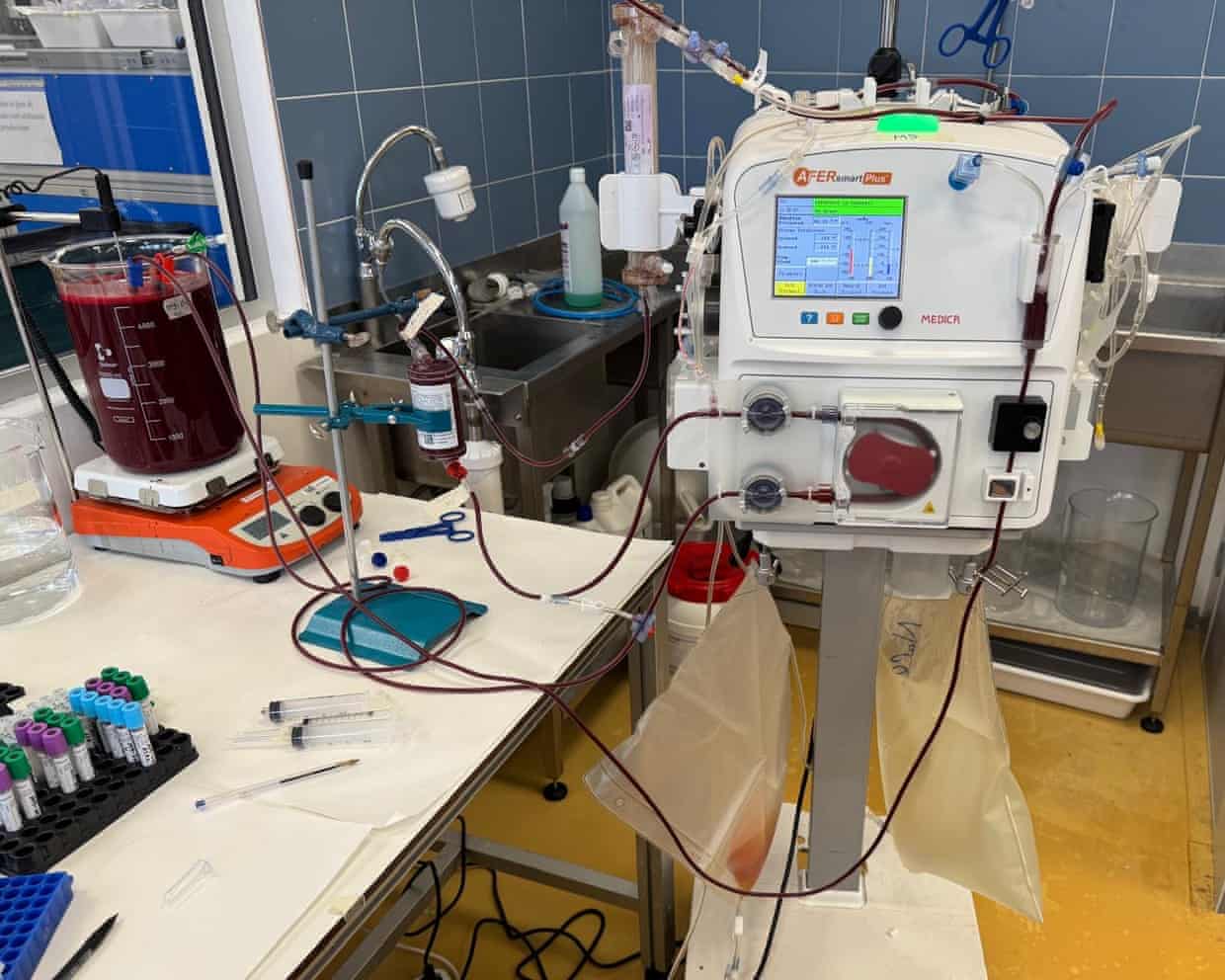
The NHS is to trial a potentially life-saving new treatment for a deadly liver disease that causes the body’s vital organs to fail.Thirteen major hospitals will use a device that cleans patients’ blood that has become corrupted by toxins as a result of them developing acute-on-chronic liver failure (ACLF).ACLF is a severe and hard-to-treat form of liver disease linked to obesity, alcohol and hepatitis, in which patients suddenly deteriorate and have to be admitted to intensive care. Three out of four people affected are only diagnosed when it has already become life-threatening.Seven out of 10 people with the disease die within 28 days and only a handful of those affected are eligible for a liver transplant, which is the only existing way to reverse ACLF
Pressure grows on DWP over ‘misleading’ response to carer’s allowance scandal
Senior officials who oversaw a flawed benefits system that plunged hundreds of thousands of carers into debt are under mounting pressure over their “misleading” response to the scandal.Prof Liz Sayce, the chair of a scathing review into the government’s treatment of unpaid carers, last week called for an overhaul of management and culture at the Department for Work and Pensions (DWP).Days after the publication of the review, the DWP’s top civil servant in charge of carers’ allowance, Neil Couling, said carers themselves were at fault for the decade-long failures.His comments, revealed by the Guardian, have prompted a key adviser to the Sayce review and a leading carer’s charity to declare a lack of confidence in the department’s pledge to fix the issues.Prof Sue Yeandle, the UK’s leading expert on unpaid carers, said ministers and senior officials had issued “really misleading” claims that the failures affected only a small number of people
US plan for $1.6m hepatitis B vaccine study in Africa called ‘highly unethical’
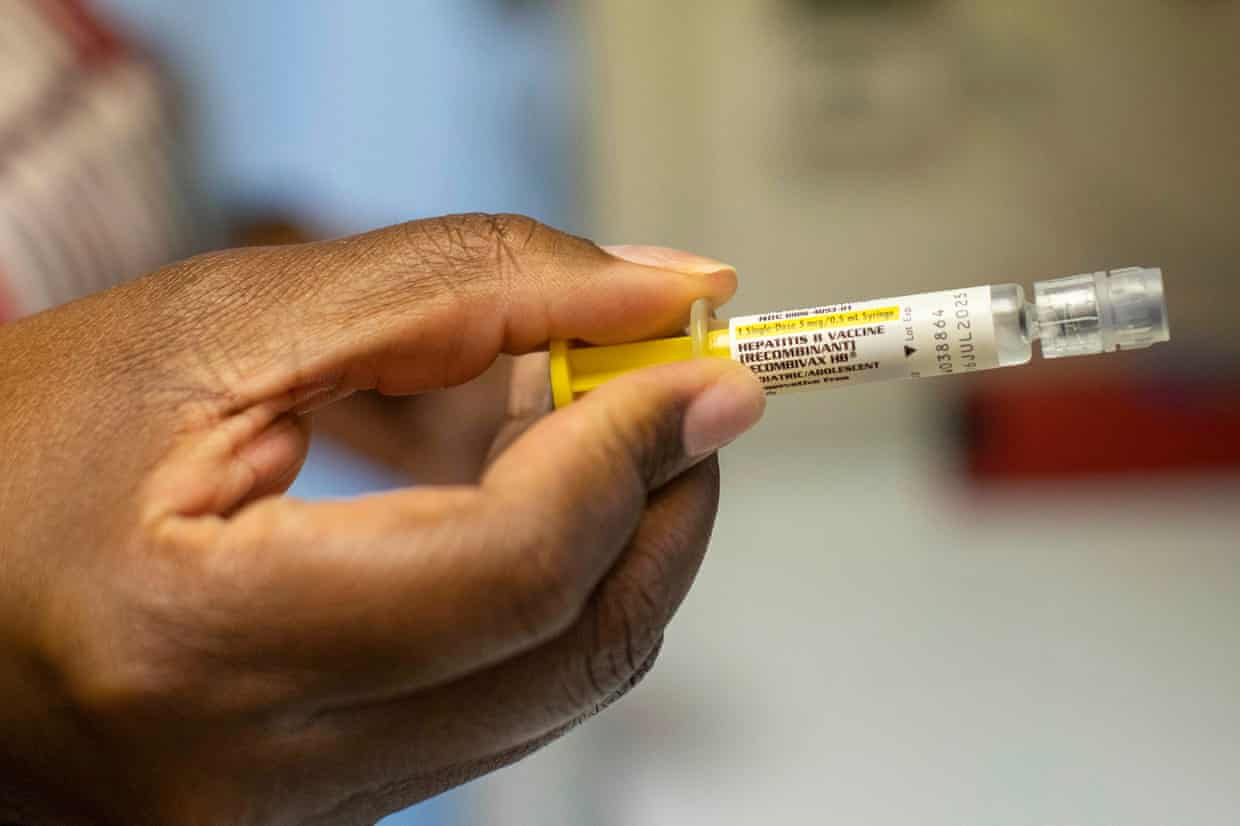
The Trump administration has indicated that it will fund a $1.6m study on hepatitis B vaccination of newborns in the west African country of Guinea-Bissau, where nearly one in five adults live with the virus – a move that researchers call “highly unethical” and “extremely risky”.The news follows an official change in recommendations on hepatitis B vaccines at birth from the US Centers for Disease Control and Prevention (CDC), which called the shots an “individual” decision, despite decades of safe and effective vaccination and no evidence of harm. It is part of sweeping changes to childhood immunizations by the US health secretary, Robert F Kennedy Jr, which have global repercussions – including cutting funding for programs that bring vaccines to countries around the world.“He has a fixed, immutable belief that vaccines cause harm,” said Paul Offit, director of the Vaccine Education Center and an attending physician at Children’s Hospital of Philadelphia

Young people will suffer most from UK’s ageing population, Lords say
Young people will suffer most from the government’s failure to take seriously the unsustainable pressure on public finances and living standards created by the UK’s ageing population, according to the findings of a House of Lords inquiry.The report, Preparing for an Ageing Society, by the economic affairs committee, also found successive governments’ inaction on adult social care “remains a scandal”.But it also argued against the impact of age discrimination in the workplace. “The most damaging form of age discrimination [could be] self-directed, with older workers operating under a mistaken impression of its extent and therefore limiting their own choices,” it found.Lord Wood of Anfield, the committee’s chair, said, unlike the unpredictable challenges of climate change, defence and AI, ageing was a knowable, long-term challenge – and one that will touch every area of society and the economy

My surf addiction didn’t need more fuel. Then I found the WSL third-tier live stream | Kieran Pender

Arrogant England’s cricket machine collapses like a castle of dust in 11 days | Barney Ronay

Stokes vows to remain England captain as McCullum admits regret over Ashes preparations

Dominant Australia defeat England in third Test to retain Ashes – as it happened
Pat Cummins is in rare air as an Ashes captain. Can his Dad's Army go around again? | Geoff Lemon

Starc breaks England hearts again as Australia retain the Ashes in tense third Test