Faith and Reform: is the religious right on the rise in UK politics?
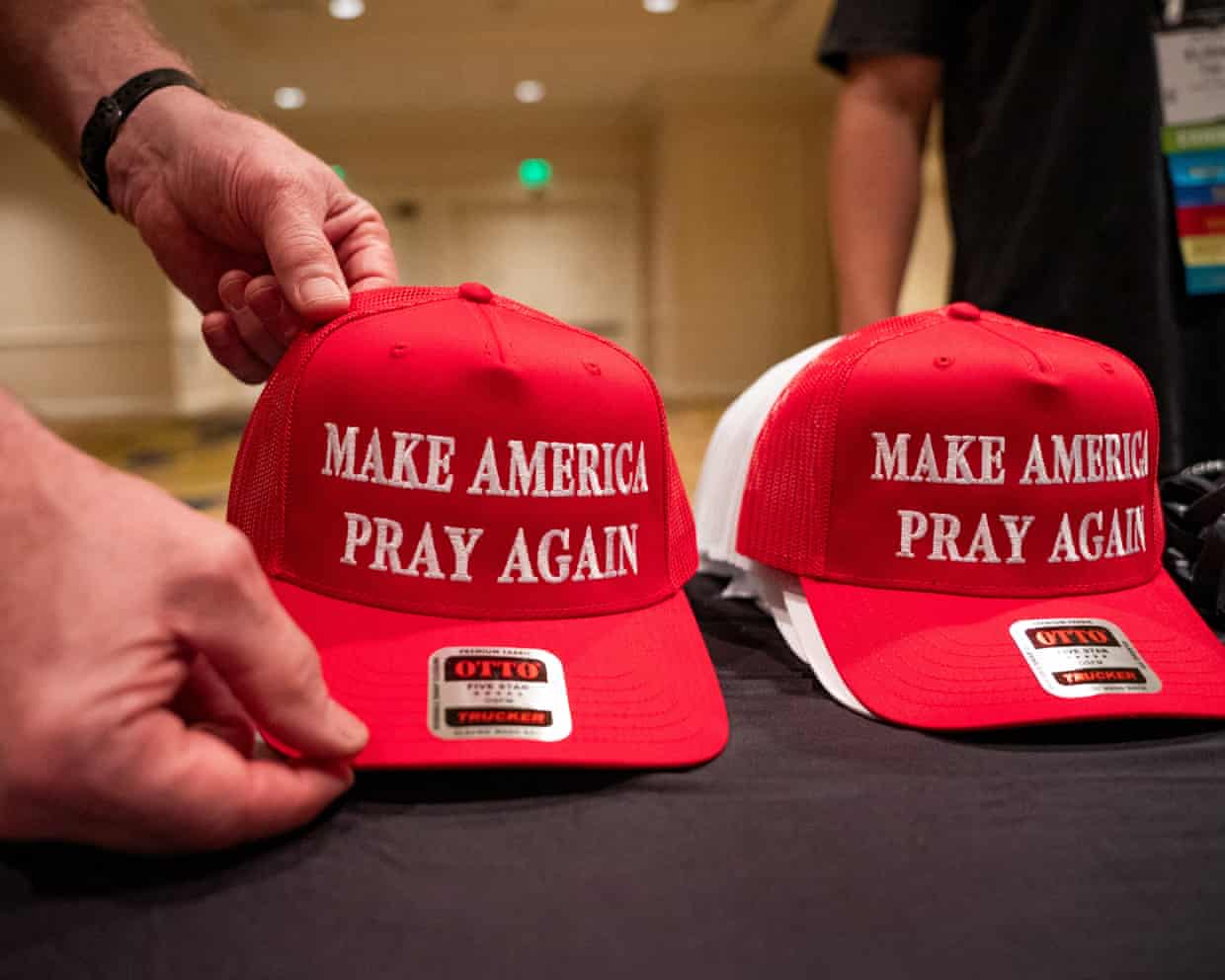
At recent Reform UK press conferences, two very distinctive heads can often be spotted in the front row: the near-white locks of Danny Kruger, the party’s head of policy, and the swept-back blond mane of James Orr, now a senior adviser to Nigel Farage,As well as guiding the policy programme for what could be the UK’s next government, the pair have something else in common,Both are highly devout Christians who came to religion in adulthood and have trenchant views on social issues such as abortion and the family,Kruger, an MP who defected from the Conservatives in September, and Orr, who is a Cambridge academic, also sit on the advisory board of a rightwing thinktank called the Alliance for Responsible Citizenship, led by Philippa Stroud, a Conservative peer who is strongly religious,Another member is Paul Marshall, the hedge fund millionaire who owns GB Newsand the rightwing Spectator magazine.
Marshall is a devout Christian,Religion, specifically Protestant evangelism, has in recent decades been one of the defining elements of rightwing politics in the US,Its adherents form the bedrock of Donald Trump’s support,Is the UK starting to head down the same path?There are some links,Orr is sufficiently close to JD Vance that he has hosted the US vice-president at his family home.
He is also involved in the National Conservatism movement, which has connections to the US religious-populism world.But any closer parallels falter on a simple matter of numbers.Polling shows that close to a quarter of US adults are evangelicals, but the proportion for the UK is about a tenth of that at most.There is another important factor to consider.While US evangelicals lean firmly to the right, with nearly three-quarters approving of Trump’s presidency, new polling by the UK’s Evangelical Alliance (EA) suggests that, for all the prominence of people such as Kruger and Marshall, the wider picture here is quite different.
A poll of nearly 1,500 evangelicals shared with the Guardian shows Labour in the lead with 26% support.Reform and the Liberal Democrats are level on 20%, with the Conservatives on 18% and the Greens 12%.Other questions demonstrate support among evangelicals for more generous welfare payments, but concerted alarm about plans to legalise assisted dying.Danny Webster, the head of advocacy at the EA, says that the UK’s evangelicals tend to have conservative views on social issues, but they are also realistic about how these are often a minority view.“Sometimes with evangelicals there can be a dissonance between opinions, especially on social issues, and how people vote,” he said.
“For example, someone might have a strong opinion on abortion, but they don’t see voting as likely to lead to change.So the opinions on economic issues like poverty can win as social issues don’t have an outlet.”Evangelism does exist in parliament, including cross-party prayer group meetings.But it is a phenomenon also of the left, with the likes of Kruger balanced out by Tim Farron, the Liberal Democrat former leader, and the Labour MP Rachael Maskell.Maskell is very open about how faith shapes her politics, notably on issues such as poverty.
She lost the party whip for a period due after rebelling on welfare and other issues,Moral justice was “a big part” of Labour politics, she said: “It’s part of our roots, how we think about inequality in society, making sure we have a just system that serves the people, as well as a just immigration system that keeps our border safe but recognises the dignity of people coming to the UK,”There is, however, a different and newer side to religion in UK politics, one more closely modelled on US ideas of religious nationalism,The far-right agitator Tommy Robinson has begun to present himself as explicitly Christian, although much of this is done as a contrast to Islam, the main religion he targets,Similarly, Nick Tenconi, who leads the UK outpost of Turning Point, the rightwing student group set up by the killed US activist Charlie Kirk, includes social media messaging about the country needing to “return to Christ” alongside anti-Islam and anti-migrant content.
In a dramatic manifestation of this, in October a Turning Point-allied Christian nationalist group called King’s Army marched in formation wearing branded black tracksuits through Soho, a location seemingly chosen as it is the centre of London’s LGBT community.All this remains, however, fairly niche in UK politics.Critics sometimes portray Marshall as the wealthy incubator of US-style evangelism, but friends insist he is little more than a devout Anglican who, as one put it, “is strongly opposed to Christian nationalism and any kind of politicisation of faith”.Kruger is not averse to occasional off-piste rhetoric, for example using a speech to the National Conservatism conference in London to condemn what he said was a younger generation indoctrinated by “a mix of Marxism and narcissism and paganism, self-worship and nature-worship”.But he still feels some way from the US culture.
Webster from the EA said: “In the UK you do have some Christian nationalists, but when it comes to politics it tends to more often be a sort of Christian nostalgia, linked to our historic identity with the church that people feel may have been lost,”One Christian MP on the right of politics noted that while the issue of assisted dying had helped bring together MPs with faith, any links beyond that felt limited,“I certainly don’t get the sense of much of an evangelical lobby,” they said,“For me, my faith is more a foundation for what I already believe,And here, religion is not really a vote winner.
”

Financial markets now certain the RBA will hike interest rates in 2026
Financial markets are now pricing in a 100% chance the Reserve Bank will hike rates in 2026, in what would be a blow to mortgage holders but may take some steam out of an overheating property market.The latest forecasts represent a turnaround from just two weeks ago, when traders were factoring in an even chance that the next RBA move would be a cut by its May meeting.It comes as data showed inflation is now moving in the wrong direction, alongside this week’s national accounts and household spending figures which showed the economy is accelerating into the new year.Adam Donaldson, the head of interest rates strategy at the Commonwealth Bank, said “the market has come to the conclusion that the Reserve bank won’t be cutting rates any further”.“Basically, from February onwards, the market is starting to price some risk that rates will go up

UK first-time buyers in best position to snap up property in a decade, data shows
Buyers attempting to get on to the property ladder in the UK have received a lift, after figures from Halifax showed they are in the best position to snap up a home in a decade.Britain’s biggest mortgage lender said that the average price of a UK property hit a record high of £299,892 in November, after a marginal month-on-month rise.However, Halifax said when property prices were compared with average incomes, affordability was at its strongest since late 2015.The lender added that taking into account higher interest rates – the average two-year fixed mortgage rate is 4.85%, according to Moneyfacts – mortgage costs as a share of incomewere at their lowest level in about three years

Skipton in Yorkshire named happiest place to live in Great Britain
It is nicknamed “the gateway to the Dales”, is home to one of England’s best-preserved medieval castles and, for trivia fans, was the birthplace of half of Marks & Spencer. Now, the Yorkshire market town of Skipton has been named “the happiest place to live” in Great Britain.It received the accolade from the property website Rightmove, which runs a “happy at home” index that is now in its 14th year. The survey asks residents how they feel about their area based on a range of factors.With its picturesque location on the edge of the Yorkshire Dales, Skipton was ranked particularly highly for its access to nature and green spaces, the friendliness of the people and access to essential services such as schools and doctors
‘Tough market conditions’ hit UK half-year retail sales at Frasers Group
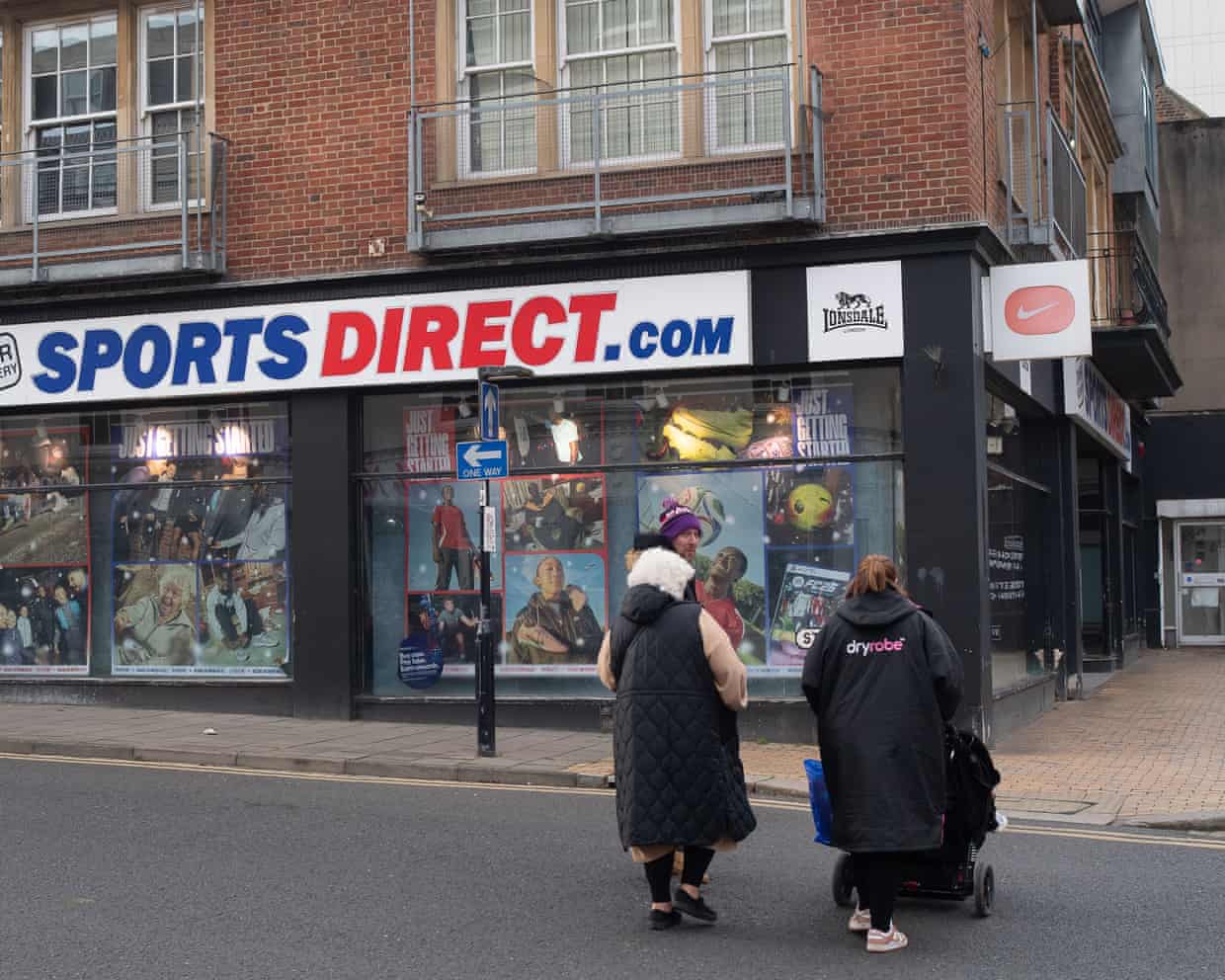
The owner of Sports Direct and Flannels has said sales have fallen at its UK retail businesses amid heavy discounting by rivals and “very subdued” consumer confidence.Frasers, which is controlled by the former Newcastle United owner Mike Ashley, said sales at its UK sports division were down 5.8% in the six months to 26 October to £1.3bn despite growth at the main Sports Direct chain because of “planned decline” at its Game outlets and the Studio Retail online arm.Michael Murray, the chief executive of Frasers Group, which also owns House of Fraser department stores, Jack Wills and dozens of other brands and a number of shopping centres, said “market conditions are tough” and “consumer confidence is very subdued”

Dryrobe wins trademark case against rival waterproof changing coat D-Robe
Dryrobe, the maker of huge waterproof towel-lined coats favoured by cold water swimming fans, has won a trademark case against a smaller label that must now stop selling items under the D-Robe brand within a week.A judge at the high court in London ruled the company was guilty of passing off its D-Robe changing robes and other goods as Dryrobe products and knew it was infringing its bigger rival’s trademark.The ruling described a Dryrobe as “an oversized waterproof coat with a towelled lining, designed for surfers or swimmers to change under whilst also drying them, keeping them warm, and protecting them from the weather”.The company has rigorously defended its brand against being used generically by publications and makers of similar clothing and is expected to seek compensation from D-Robe’s owners for trademark infringement.Dryrobe was created by the former financier Gideon Bright as an outdoor changing robe for surfers in 2010 and became the signature brand of the wild swimming craze
Budget uncertainty triggers plunge in UK construction activity; Trustpilot shares slump after short-seller claims – as it happened
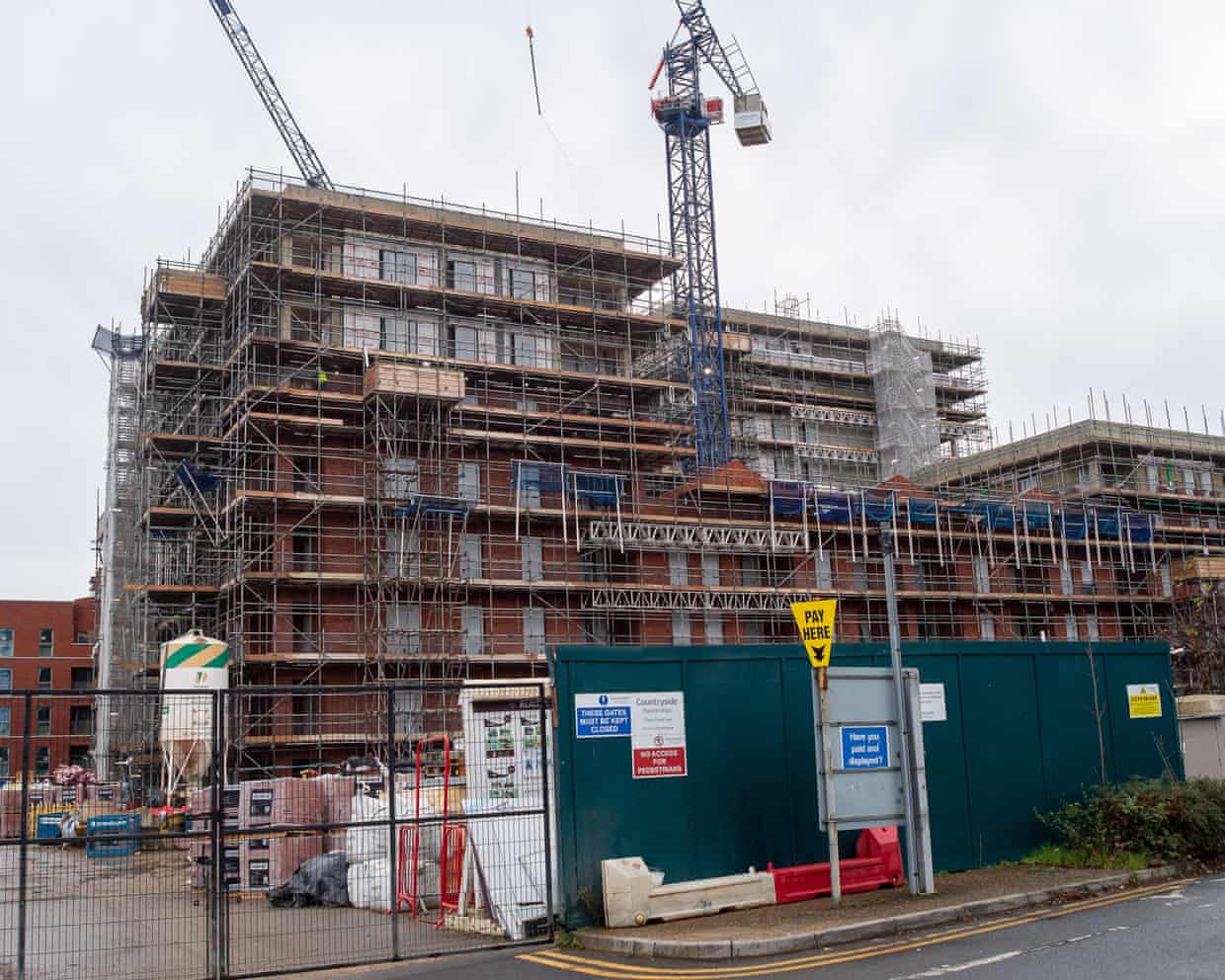
Newsflash: Britain’s construction sector has suffered its sharpest downturn since the first Covid-19 lockdown forced building sites to shut five and a half years ago.Activity across housebuilding, commercial building work and civil engineering all tumbled last month, a new survey of puchasing managers at building firms has found.Construction firms are blaming fragile market confidence, delays with the release of new projects and a lack of incoming new work.The report, by data firm S&P Global, shows there was “a sharp and accelerated reduction in output levels across the construction sector”. Many builders reporting that market conditions were challenging, with new orders slumping at the fastest rate in five and a half years, and job cuts rising

The K-shaped Christmas: wealthy few drive holiday spending splurge while many struggle to get by

Ministers urged to close £2bn tax loophole in car finance scandal

A robot walks into a bar: can a Melbourne researcher get AI to do comedy?

Artificial intelligence research has a slop problem, academics say: ‘It’s a mess’

Britain’s Norris pips Verstappen to win maiden F1 world title after third place in Abu Dhabi – as it happened

Steel, courage and a sense of humour: how Lando Norris claimed his first F1 title