Two in five teenagers in England and Wales ‘abused’ in intimate relationships

Two in five teenagers in intimate relationships say they have experienced emotional or physical abuse, including control, pressure or violence, according to a survey in England and Wales.“Teenage years are often when children first begin to explore romantic relationships,” the report says.“At their best, these can bring joy and companionship and teach important lessons about trust.“But for too many, they are marked instead by control, pressure or violence – experiences that can undermine a young person’s safety and affect their daily life.”The online poll, which asked 11,000 13- to 17-year-olds about their experience of violence in teen relationships, was carried out by Savanta on behalf of the Youth Endowment Fund (YEF), a government-backed charity that works to prevent children from becoming involved in violence.
Acknowledging the limitations of such a survey, the YEF said a quarter (28%) of teenagers who were polled claimed to have been in a romantic or sexual relationship in the past year.Of those, 39% said they had experienced abuse, 15% said they had suffered physical or sexual abuse and more than a third (36%) reported emotional abuse.Behaviours included partners checking their phone or social media (19%), monitoring their location (14%) and criticism of their body or appearance (11%).One in 10 of those in relationships said they felt forced or under pressure to have sex, 12% felt afraid to disagree, 13% felt they couldn’t leave and 5% said explicit images of themselves had been shared online.“Although girls were slightly more likely to receive emotional or physical abuse from a partner than boys, the difference was small (41% v 37%),” the report states.
“Girls were more likely to say their partner had made them feel they couldn’t leave, made them afraid to disagree, criticised their appearance or put pressure on them to have sex,Boys, meanwhile, were more likely to report having explicit images of themselves posted online,”Three-quarters of those who experienced abuse said it had had an effect on their day-to-day lives,Two out of five said they felt worried and bad about themselves, while 39% had trouble sleeping, lost their appetite and struggled to concentrate,More than a third (34%) said their relationships with friends and family had been affected and more than one in five (22%) said they had avoided going to school or college as a result.
Jon Yates, YEF CEO, said: “Evidence shows high-quality lessons delivered by a trained teacher or youth worker can make a difference.Every teenager should learn what a healthy relationship looks like – and every school needs the funds, training and support to make that happen.”Zara*, a YEF youth advisory board member, said: “I think there needs to be more conversations about understanding your boundaries.And not just in relationships, in friendships too.“I also think we need to educate young people about what exactly relationship violence is and the different aspects of it.
Often, when you think of it, you think of just one thing.But there are so many different scenarios that can contribute.”Kay*, 18, a youth adviser for the education charity Let Me Know (LMK) which works with young people to prevent relationship abuse, domestic violence and sexual assault, told the Guardian teen relationships were nerve-racking.“No one knows what they’re doing.It feels like people are vulnerable.
It’s very common for girls to become isolated from their friends and it all becomes about a boy.When it goes wrong it becomes very hard to get them out of it.”Kay also described a culture where boys belittle girls and are critical of their appearance.“Boys act as if the guy is doing the girl a favour by being with them.When it’s physical abuse, everyone thinks they know what physical abuse looks like.
When it’s emotional abuse, it’s harder for the person who is being abused to recognise it,”Schools try their best, she says,“But I feel like schools are always years behind the problem,They are not capturing things as early as they could,” At home, she said “parents should not assume their child is not experiencing these things.
Make it an active conversation to help that young person.”LMK’s CEO, Deirdre Kehoe, said: “The results from this year’s survey underline the importance of breaking the cycle of abuse.Without effective relationship education, young people’s understanding of healthy and unhealthy relationships is too often left unchallenged until even further harm is done.”The Department for Education was contacted for comment.* Names have been changed
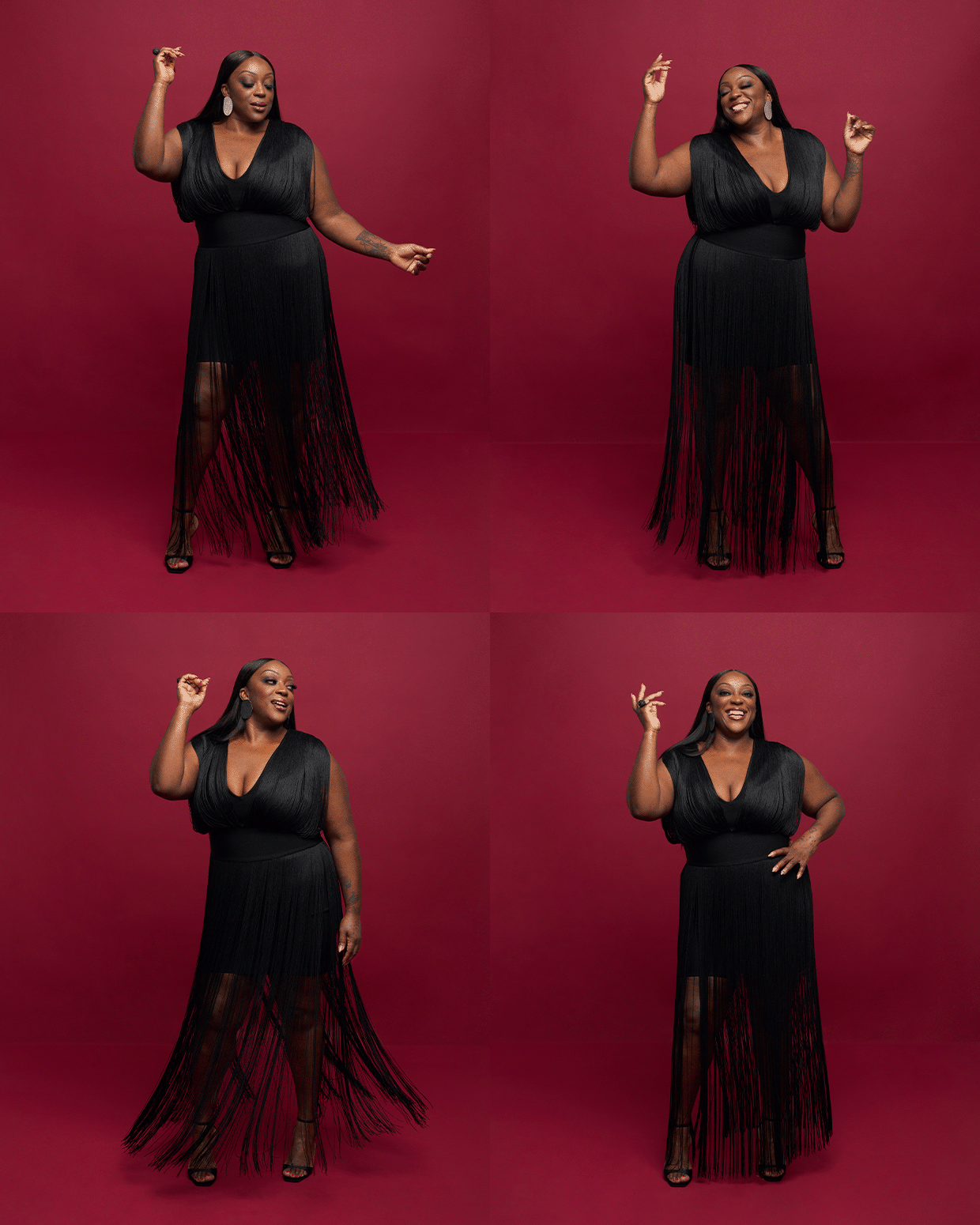
Comedian Judi Love: ‘I’m a big girl, the boss, and you love it’
Judi Love was 17 when she was kidnapped, though she adds a couple of years on when reliving it on stage. It was only the anecdote’s second to-audience outing when I watched her recite it, peppered with punchlines, at a late-October work-in-progress gig. The bones of her new show – All About the Love, embarking on a 23-date tour next year – are very much still evolving, but this Wednesday night in Bedford is a sell out, such is the pull of Love’s telly star power.She starts by twerking her way into the spotlight, before riffing on her career as a social worker and trading “chicken and chips for champagne and ceviche”. Interspersed are opening bouts of sharp crowd work – Love at her free-wheeling best
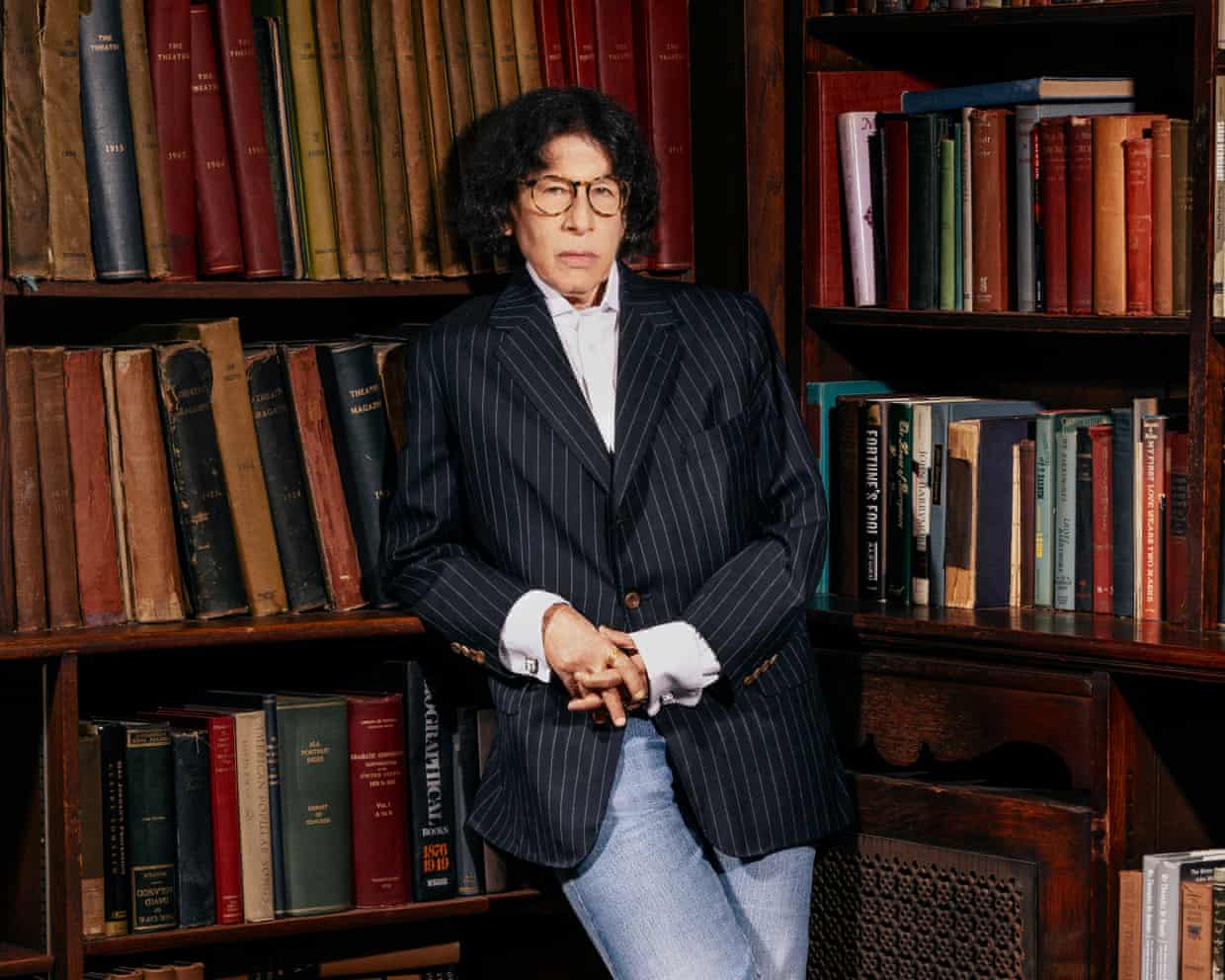
Fran Lebowitz: ‘Hiking is the most stupid thing I could ever imagine’
I would like to ask your opinion on five things. First of all, leaf blowers.A horrible, horrible invention. I didn’t even know about them until like 20 years ago when I rented a house in the country. I was shocked! I live in New York City, we don’t have leaf problems

My cultural awakening: Thelma & Louise made me realise I was stuck in an unhappy marriage
It was 1991, I was in my early 40s, living in the south of England and trapped in a marriage that had long since curdled into something quietly suffocating. My husband had become controlling, first with money, then with almost everything else: what I wore, who I saw, what I said. It crept up so slowly that I didn’t quite realise what was happening.We had met as students in the early 1970s, both from working-class, northern families and feeling slightly out of place at a university full of public school accents. We shared politics, music and a sense of being outsiders together

The Guide #219: Don’t panic! Revisiting the millennium’s wildest cultural predictions
I love revisiting articles from around the turn of the millennium, a fascinatingly febrile period when everyone – but journalists especially – briefly lost the run of themselves. It seems strange now to think that the ticking over of a clock from 23:59 to 00:00 would prompt such big feelings, of excitement, terror, of end-of-days abandon, but it really did (I can remember feeling them myself as a teenager, especially the end-of-days-abandon bit.)Of course, some of that feeling came from the ticking over of the clock itself: the fears over the Y2K bug might seem quite silly today, but its potential ramifications – planes falling out of the sky, power grids failing, entire life savings being deleted in a stroke – would have sent anyone a bit loopy. There’s a very good podcast, Surviving Y2K, about some of the people who responded particularly drastically to the bug’s threat, including a bloke who planned to sit out the apocalypse by farming and eating hamsters.It does seem funny – and fitting – in the UK, column inches about this existential threat were equalled, perhaps even outmatched, by those about a big tarpaulin in Greenwich
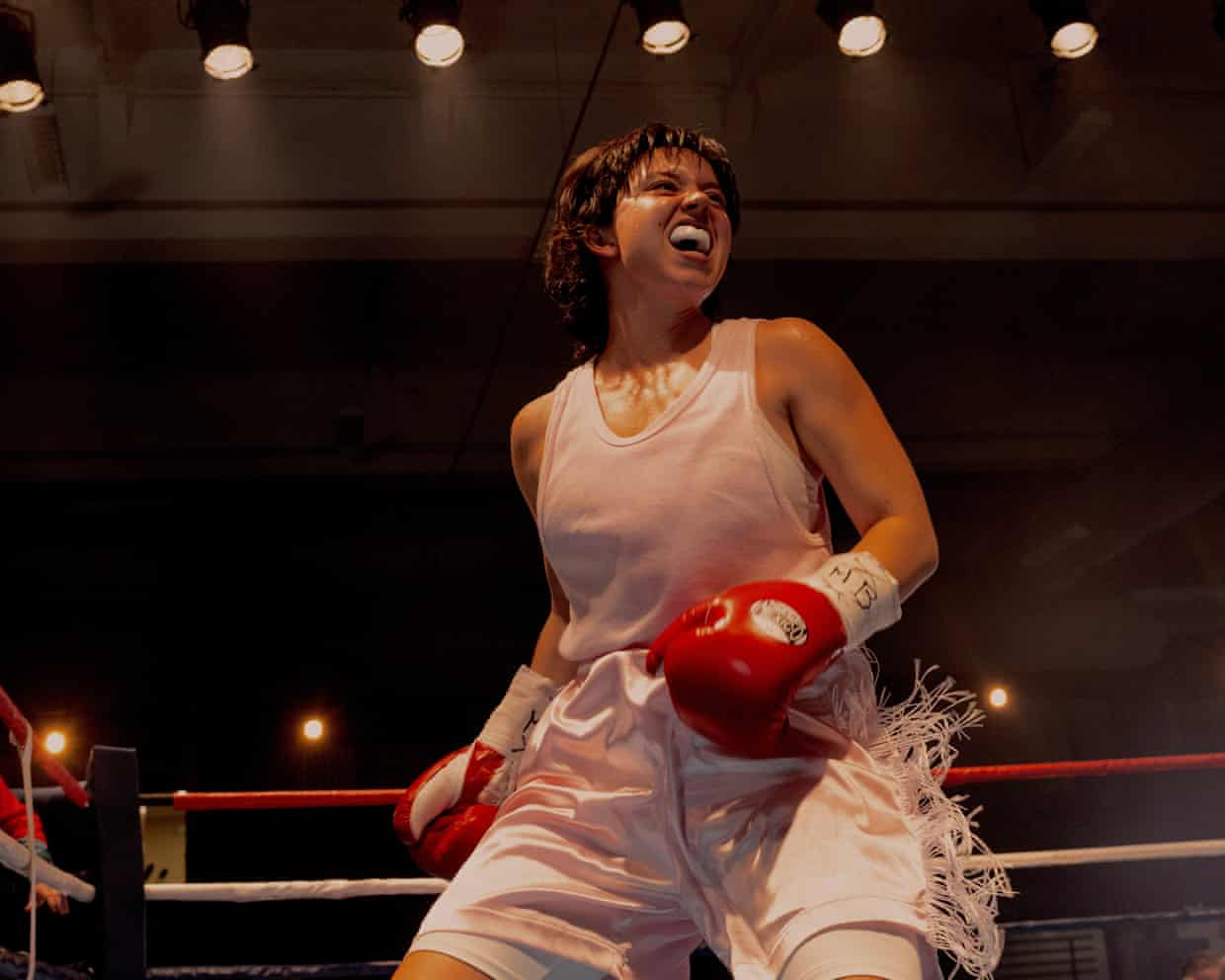
From Christy to Neil Young: your complete entertainment guide to the week ahead
ChristyOut now Based on the life of the American boxer Christy Martin (nickname: the Coal Miner’s Daughter), this sports drama sees Sydney Sweeney Set aside her conventionally feminine America’s sweetheart aesthetic and don the mouth guard and gloves of a professional fighter.Blue MoonOut now Richard Linklater (Before Sunrise) reteams with one of his favourite actors, Ethan Hawke, for a film about Lorenz Hart, the songwriter who – in addition to My Funny Valentine and The Lady Is a Tramp – also penned the lyrics to the eponymous lunar classic. Also starring Andrew Scott and Margaret Qualley.PillionOut now Harry Melling plays the naive sub to Alexander Skarsgård’s biker dom in this kinky romance based on the 1970s-set novel Box Hill by Adam Mars-Jones, here updated to a modern-day setting, and with some success: it bagged the screenplay prize in the Un Certain Regard section at Cannes.Laura Mulvey’s Big Screen ClassicsThroughout DecemberRecent recipient of a BFI Fellowship, the film theorist Laura Mulvey coined the term “the male gaze” in a seminal 1975 essay, and thus transformed film criticism

Susan Loppert obituary
My partner Susan Loppert, who has died aged 81, was the moving force behind the development of Chelsea and Westminster Hospital Arts in the 1990s. This pioneering programme, which Susan directed for 10 years (1993-2003), was a hugely innovative and imaginative project to bring the visual and performing arts into the heart of London’s newest teaching hospital.As Susan wrote in an article for the Guardian in 2006, this was not about “the odd Monet reproduction or carols at Christmas … but 2,000 original works of art hung in the vast spaces of the stunning atrial building” as well as in clinics, wards and treatment areas – many of them specially commissioned. And on top of this, full-length operas, an annual music festival, Indian dancers in residence, and workshops by artists from poets to puppeteers.Susan was born in Grahamstown, South Africa, to Phyllis (nee Orkin, and known as “Inkey” because of her dark hair), a lawyer and anti-apartheid activist, and her husband Eric Loppert, a manager

Advertising giant WPP relegated from FTSE 100 after nearly 30 years

Post Office avoids fine over leak of wrongfully convicted operators’ names
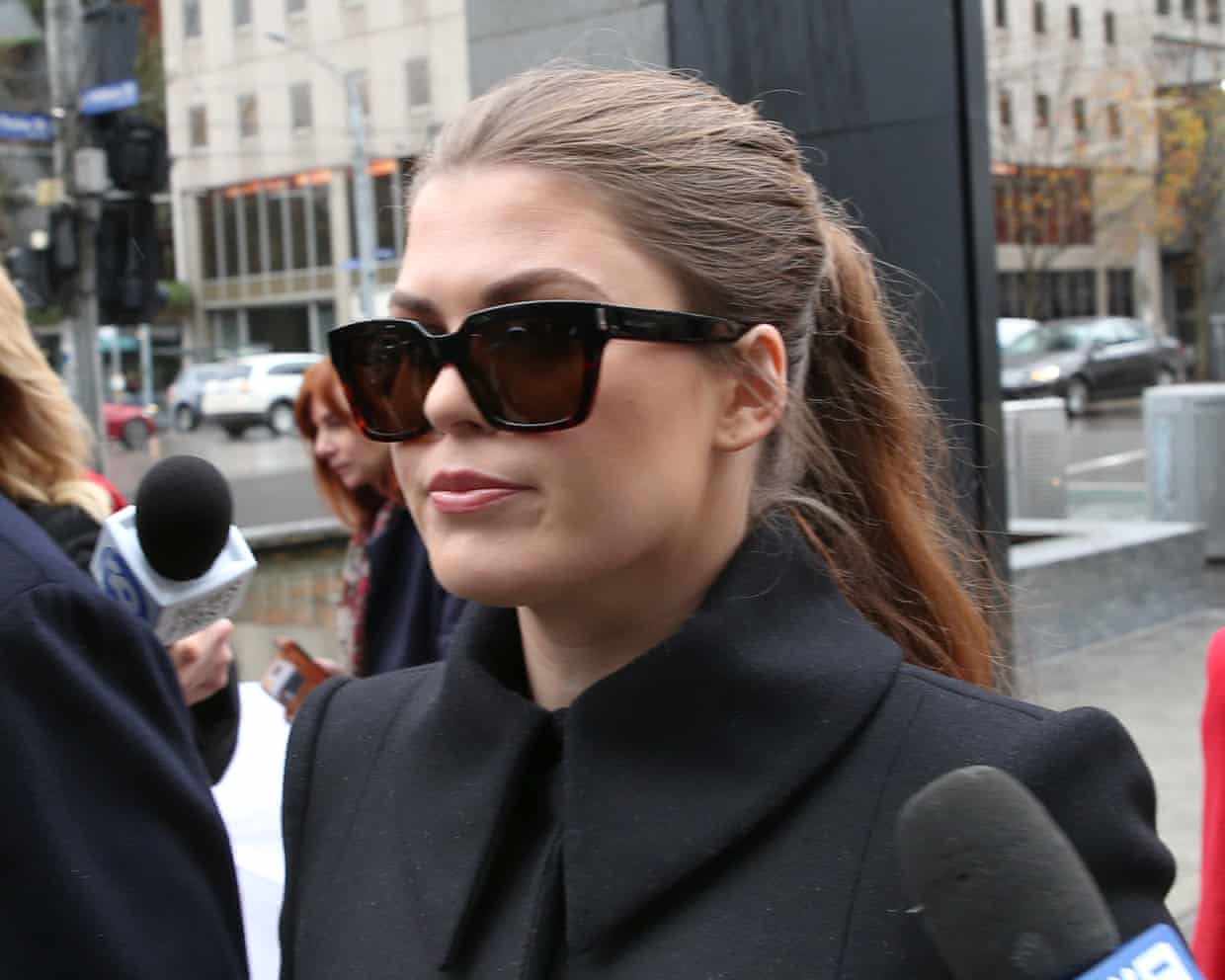
Doom, gloom … and Belle Gibson? The top Google searches in Australia in 2025

Amazon and the tightening grip of capitalism | Letters

Maro Itoje eyes World Cup glory after England dodge big guns in 2027 draw

Cummins conundrum is key as Australia try not to overthink tactics