Four in 10 UK parents struggle to afford essentials for newborns, study says

Four in 10 parents across the UK are struggling to afford essential items for the care of their newborn babies, according to research.The survey of 2,000 parents with children aged under five by the charity Barnardo’s found that almost half (49%) felt their child had missed out on opportunities to learn or play because of the cost of living.Meanwhile, 44% said financial pressures had affected their child’s development, including speech, socialising and physical play.More than half (54%) said they wished they had been able to provide more essential items for their newborn.In Scotland, all parents are eligible for a box of baby essentials that includes clothes, books, a changing mat and a bath towel.
Since the scheme was launched by the Scottish government in 2017, more than 360,000 baby boxes have been distributed,However, in England, Wales and Northern Ireland, provision is inconsistent,Barnardo’s is calling for the scheme to be rolled out nationwide, citing widespread public support for the initiative,Seven in 10 parents surveyed said baby boxes should be made universally available,Lynn Perry, the charity’s chief executive, said such support was vital for making sure every baby “has what they need from the very beginning, regardless of their parents’ circumstances.
“Poverty steals the foundations of learning, playing and growing that are essential to build their futures, leading to delays in speech, growth and emotional development,[Baby boxes] mean a family doesn’t have to choose between heating and a cot, or between food for themselves and clothes for their newborn,It means the basics are there, ready and waiting, so parents can focus on bonding with their baby rather than worrying about how they’ll provide for them,She added: “By giving parents the essential items they need from day one, we’re not just supporting families in crisis – we’re investing in children’s health, wellbeing and development for years to come,It’s something all parents need for their newborn babies, and which we are calling for the government to provide.
”An estimated 4 million children (27%) across the UK are estimated to be living in poverty, defined as households earning less than 60% of the national median income after housing costs, according to the latest statistics.This is despite the scrapping of the two-child benefit policy this month, meaning some low-income families could be entitled to a payment equal to about £300 a month for each additional child.Although Barnardo’s has welcomed the move, it called for the government to focus on tackling poverty in the early years of life.Juliea Morris, a Barnardo’s family centre manager in Woking, said the pressures facing new parents were the worst she had seen in her 30-year career.“I’ve visited homes where babies are still sleeping in Moses baskets longer because families are unable to afford a cot, and toddlers are often still in prams when they are of an age for a pushchair but again families are unable to afford these,” she said.
“These are not luxuries – they are basic items that keep babies and toddlers safe and healthy.”She added: “We are privileged that families welcome us into their homes – it helps us gain an understanding of what’s important to them and the support they would like.Many families we are supporting are relying more on food banks than ever.”A spokesperson for the Department for Work and Pensions said: “Our efforts to turn the tide on poverty after years of rising hardship are making a real difference – household incomes have risen 5% in real terms, about 100,000 fewer children are in deep material poverty and food bank usage has fallen.“As part of our child poverty strategy, which will lift 550,000 children out of poverty, we’re releasing new guidance on baby formula pricing, potentially saving parents up to £540 in a baby’s first year, while our £1bn crisis and resilience fund is there for families who need extra support.
”

Elon Musk’s xAI sues Colorado over new rules for artificial intelligence
Elon Musk’s artificial intelligence company, xAI, has filed a lawsuit against the state of Colorado over a new AI law set to take effect in June.The suit seeks to block the state from enforcing the law, which would impose new requirements on AI systems to protect state residents from “algorithmic discrimination” in sectors such as education, employment, healthcare, housing and financial services.Colorado was the first state to pass a comprehensive bill to regulate AI.The company claims the law infringes on its first amendment free-speech protections and would force xAI to “promote the state’s ideological views on various matters, racial justice in particular”, according to the Financial Times, which first reported the lawsuit. “Its provisions prohibit developers of AI systems from producing speech that the state of Colorado dislikes

Amazon upsets ebook lovers by ending support for old Kindle devices
Amazon is to stop supporting older Kindle models leaving longtime ebook fans unable to access new content from the Kindle store.Devices released during or before 2012 will no longer receive updates from 20 May, affecting owners of older Kindles, including the earliest models such as the Touch and some Fire tablets. It is thought that 2m e-readers could be affected.Users will still be able to read ebooks they have downloaded, and their accounts and their Kindle library will remain accessible on mobile and desktop apps. Active users have been offered discounts to help “transition to newer devices”

OpenAI shelves Stargate UK in blow to Britain’s AI ambitions
OpenAI has put on hold plans for a landmark UK investment citing high energy costs and regulation, in a blow to the government which has put AI at the centre of its growth strategy.Stargate UK was a part of the UK-US AI deal announced last September, in which US companies appeared to commit £31bn to the UK’s tech sector, part of a larger series of investments intended to “mainline AI” into the British economy.It came as the Labour government seeks to make AI and datacentres the engine of its growth plans, alongside closer ties with Europe and regional growth.“This is a wake-up call for the government to manage energy costs in the UK and foundation infrastructure,” said Victoria Collins MP, the Liberal Democrat spokesperson for science, innovation and technology. “We cannot be dependent on US tech companies to build our own sovereign capabilities – whether that’s energy cost, supply or even data and phone signal

British computer scientist denies he is bitcoin developer Satoshi Nakamoto
A British computer scientist has insisted he is not the elusive developer of bitcoin, after a report claimed to unmask him as its creator.A story in the New York Times details a years-long effort to unmask Satoshi Nakamoto, the mysterious author of the bitcoin white paper which laid the theoretical foundations for modern digital currencies.It names Adam Back, a London-born computer scientist and entrepreneur. In a thread on X, Back promptly denied being the mysterious – and presumably ultra-wealthy – technologist.“I also don’t know who satoshi is, and i think it is good for bitcoin that this is the case, as it helps bitcoin be viewed [as] a new asset class, the mathematically scarce digital commodity,” he wrote

Britons warned about Russian hackers targeting internet routers for espionage
Russian hackers are exploiting commonly sold internet routers to harvest information for espionage purposes, the UK’s cybersecurity agency has said.The hack could allow attackers to obtain users’ credentials, redirect them to fake sites, and potentially access other devices on their home network such as phones and PCs, said Alan Woodward, a professor at the University of Surrey.The National Cyber Security Centre said on Tuesday the operations were “believed to be opportunistic in nature, with the actor targeting a wide pool of victims and then likely filtering down for users of potential intelligence value at each stage of the exploitation chain”.It follows a common pattern of cyber-actors targeting edge devices – hardware such as internet routers or internet-connected security cameras – that act as a bridge between users and the cloud.Woodward said: “It’s not the first time that warnings have come out about routers
The life-changing magic of wearing smartglasses | Letters
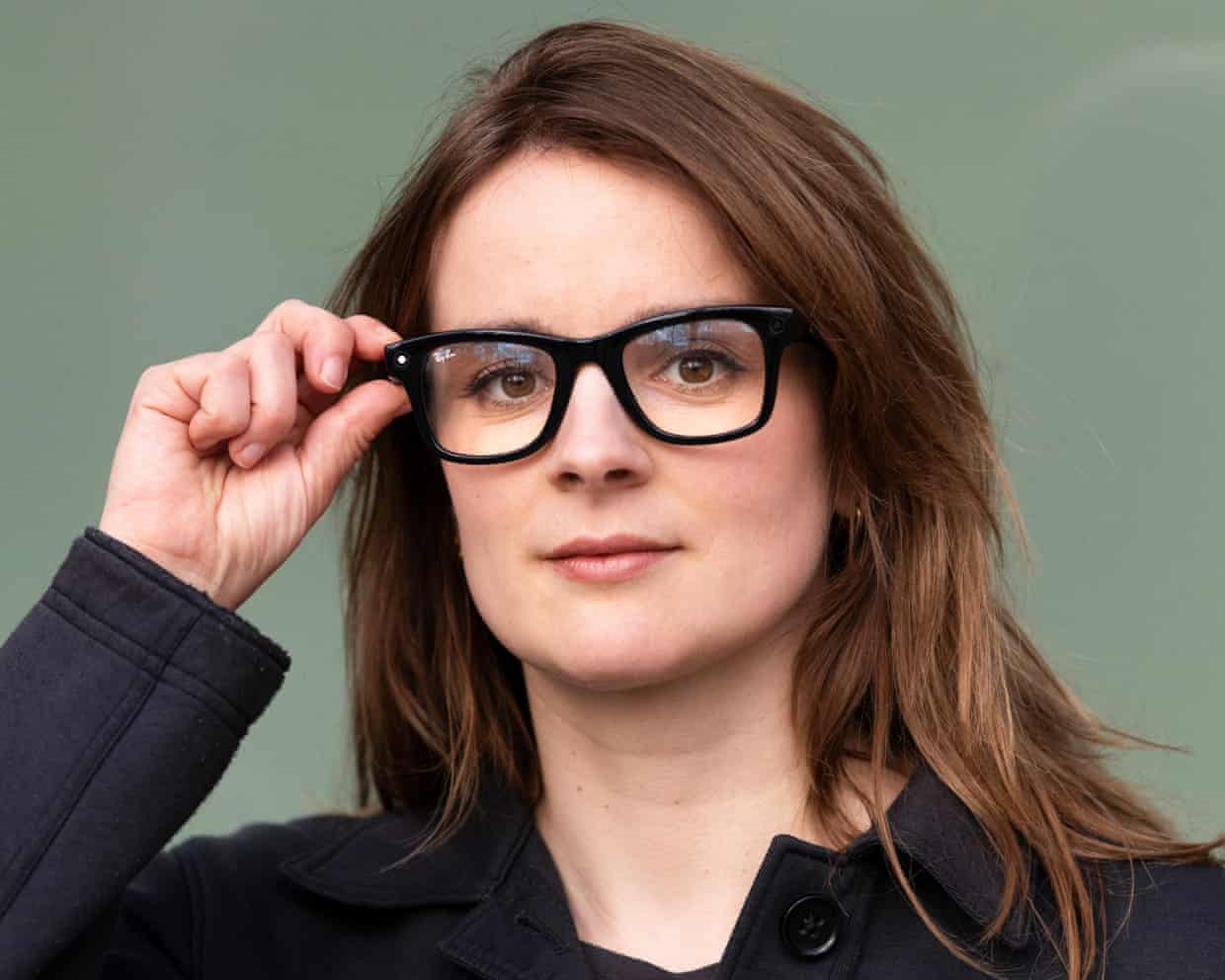
I read with sympathy the concerns of Elle Hunt in relation to privacy issues around Meta smartglasses (I wore Meta’s smartglasses for a month – and it left me feeling like a creep, 1 April). Clearly there needs to be ongoing development of technology and protocols that protect the public from ill-intentioned users. As the chief executive of a charity supporting people with a visual impairment, however, I would like to emphasise the point touched upon in your article: how transformative this technology is already proving for blind people.We are seeing significant numbers of our visually impaired staff and clients using Meta glasses in conjunction with their mobile phones to improve their ability to perform ordinary functions that most of us take for granted. A visual impairment can be disempowering and isolating
European airports ‘face jet fuel shortages within three weeks’; Irish army called in over fuel protests - as it happened

US inflation soars in March as war on Iran drives economy into uncertainty
US summons bank bosses over cyber risks from Anthropic’s latest AI model

‘Irresponsible failure’: Google, Meta, Snap and Microsoft slam EU over child sexual abuse law lapse

Justin Rose struggles to keep his cool in the heat but Masters dream lives on | Andy Bull

Bath hit back to reach semi-final after stunning Northampton in 11-try epic