Meta ordered to pay $375m after being found liable in child exploitation case
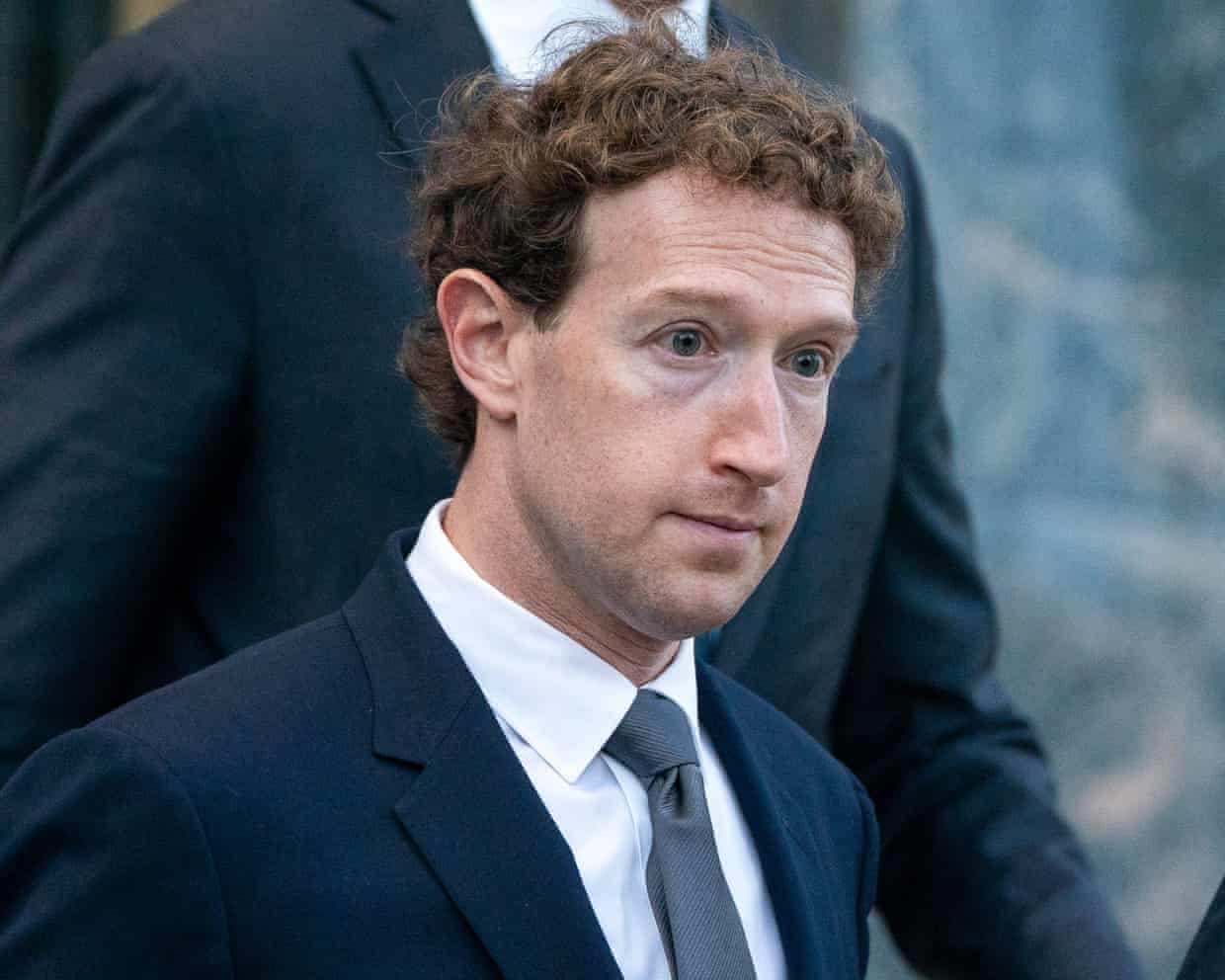
A New Mexico jury on Tuesday ordered Meta to pay $375m in civil penalties after it found the company misled consumers about the safety of its platforms and enabled harm, including child sexual exploitation, against its users.This is the first bench trial to find Meta liable for acts committed on its platform.“The jury’s verdict is a historic victory for every child and family who has paid the price for Meta’s choice to put profits over kids’ safety,” said New Mexico attorney general Raúl Torrez.“Meta executives knew their products harmed children, disregarded warnings from their own employees, and lied to the public about what they knew.Today the jury joined families, educators, and child safety experts in saying enough is enough.
”The lawsuit was brought by Torrez’s office in December 2023.The lawsuit followed a two-year Guardian investigation published in April of that year revealing how Facebook and Instagram had become marketplaces for child sex trafficking.That investigation was cited several times in the complaint.The jury ordered Meta to pay the maximum penalty under the law of $5,000 per violation, totaling $375m in civil penalties for violating New Mexico’s consumer protection laws.The jury found Meta liable for both claims brought by the state of New Mexico under the Unfair Practices Act.
Meta has said it will appeal the ruling, and accused Torrez of making “sensationalist, irrelevant arguments by cherrypicking select documents”.“We respectfully disagree with the verdict and will appeal.We work hard to keep people safe on our platforms and are clear about the challenges of identifying and removing bad actors or harmful content,” said a Meta spokesperson.“We will continue to defend ourselves vigorously, and we remain confident in our record of protecting teens online.”Internal Meta documents and testimony obtained by the New Mexico department of justice during the litigation revealed that both company employees and external child safety experts repeatedly warned about risks and harmful conditions on Meta’s platforms.
Evidence presented to the jury included details of the 2024 arrest of three men charged with sexually preying on children through Meta’s platforms, and attempting to meet up with them.This was part of a sting investigation operated by undercover agents and dubbed “Operation MetaPhile” by the attorney general’s office.The New Mexico court heard how Meta’s 2023 decision to encrypt Facebook Messenger – its direct messaging platform, which predators have used as a tool to groom minors and exchange child abuse imagery – blocked access to crucial evidence of these crimes.Witnesses from law enforcement and the National Center of Missing and Exploited Children (NCMEC) testified about deficiencies in Meta’s reporting of crimes taking place on its platforms, including the exchange of child sexual abuse material (CSAM).Meta has generated high volumes of “junk” reports by overly relying on AI to moderate its platforms, investigators said.
These reports were useless to law enforcement, and meant crimes could not be investigated, they said.In the next phase of the legal proceedings, due to begin on 4 May, the attorney general’s office will seek additional financial penalties and court-mandated changes to Meta’s platforms that “offer stronger protections for children”, said Torrez.The design feature changes the state is seeking include “enacting effective age verification, removing predators from the platform, and protecting minors from encrypted communications that shield bad actors”.In taped depositions played at the trial, Meta chief Mark Zuckerberg and Instagram leader Adam Mosseri said harms to children, such as sexual exploitation and detriments to mental health, were inevitable on the company’s platforms due to their vast user bases.Company executives also testified the company has invested billions in technology updates to keep children safe on their platforms.
They include Instagram Teen Accounts, which debuted in 2024 and sets default protections for users aged between 13 and 17,Social media companies have long maintained they are not responsible for crimes committed via their networks because of a US federal law that generally protects platforms from legal liability for content created by their users: section 230 of the Communications Decency Act,Meta’s attempts to invoke section 230 and the first amendment to get the case dismissed were denied in a judge’s ruling in June 2024, due to the lawsuit’s focus on Meta’s platform product design and other non-speech issues, such as internal decisions about content and curation,The trial lasted almost seven weeks, with both the company and the state calling witnesses that ranged from child safety experts to current and former employees of the company,The jury deliberated its verdict for about one day.
“It’s a huge win for the New Mexico attorney general.His jury didn’t even deliberate very long,” former New Mexico deputy district attorney and current criminal defense lawyer John W Day, told the Guardian.“This wasn’t surprising, as there’s an undercurrent of resentment and fear and concern among not just families but the community in general, about the invasiveness of social media, and this one certainly opens the floodgates to lots of other litigation and reforms and regulation.”Meta is also the subject of a separate lawsuit in Los Angeles, as hundreds of families and school districts accuse several big tech platforms of harming children.Plaintiffs in this case allege that Meta, along with Snap, TikTok and YouTube, knowingly designed their platforms to be addictive for young users, contributing to issues such as depression, eating disorders, self-harm and other mental health challenges.
Snap and TikTok have reached settlements, while Meta and YouTube continue to contest the claims in court.All companies deny wrongdoing.The jury is currently deliberating a verdict.
Estate of Mike Lynch ordered to pay £920m to Hewlett-Packard
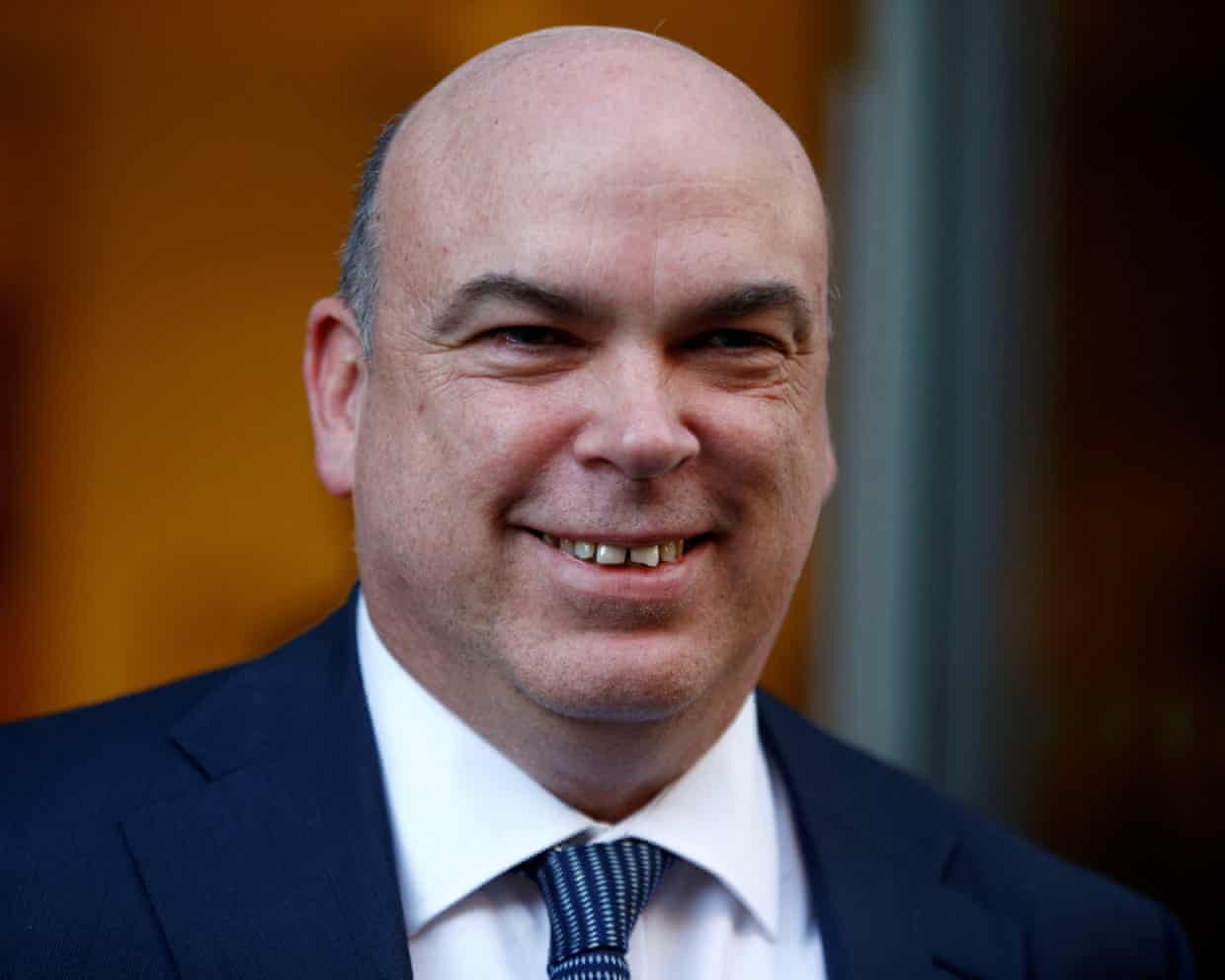
The estate of late British tech tycoon Mike Lynch has been ordered to pay £920m to the technology company Hewlett-Packard (HP) two years after he died in a superyacht disaster.The ruling by London’s high court said the estate was liable to pay the sum as compensation, costs and interest for HP’s acquisition of Lynch’s firm Autonomy, after a UK legal ruling in 2022 that he duped the US firm into paying £8.2bn for his software firm Autonomy.The deceased entrepreneur’s estate has been estimated to be worth about £500m, so the damages could leave it bankrupt.Lynch and six others, including his 18-year-old daughter Hannah, died in August 2024 on a trip with friends and family celebrating his acquittal on US fraud charges relating to HP’s $11bn takeover of Autonomy in 2011
Energy price shock and interest rate rises could cause ‘pronounced’ UK recession, economist warns – as it happened
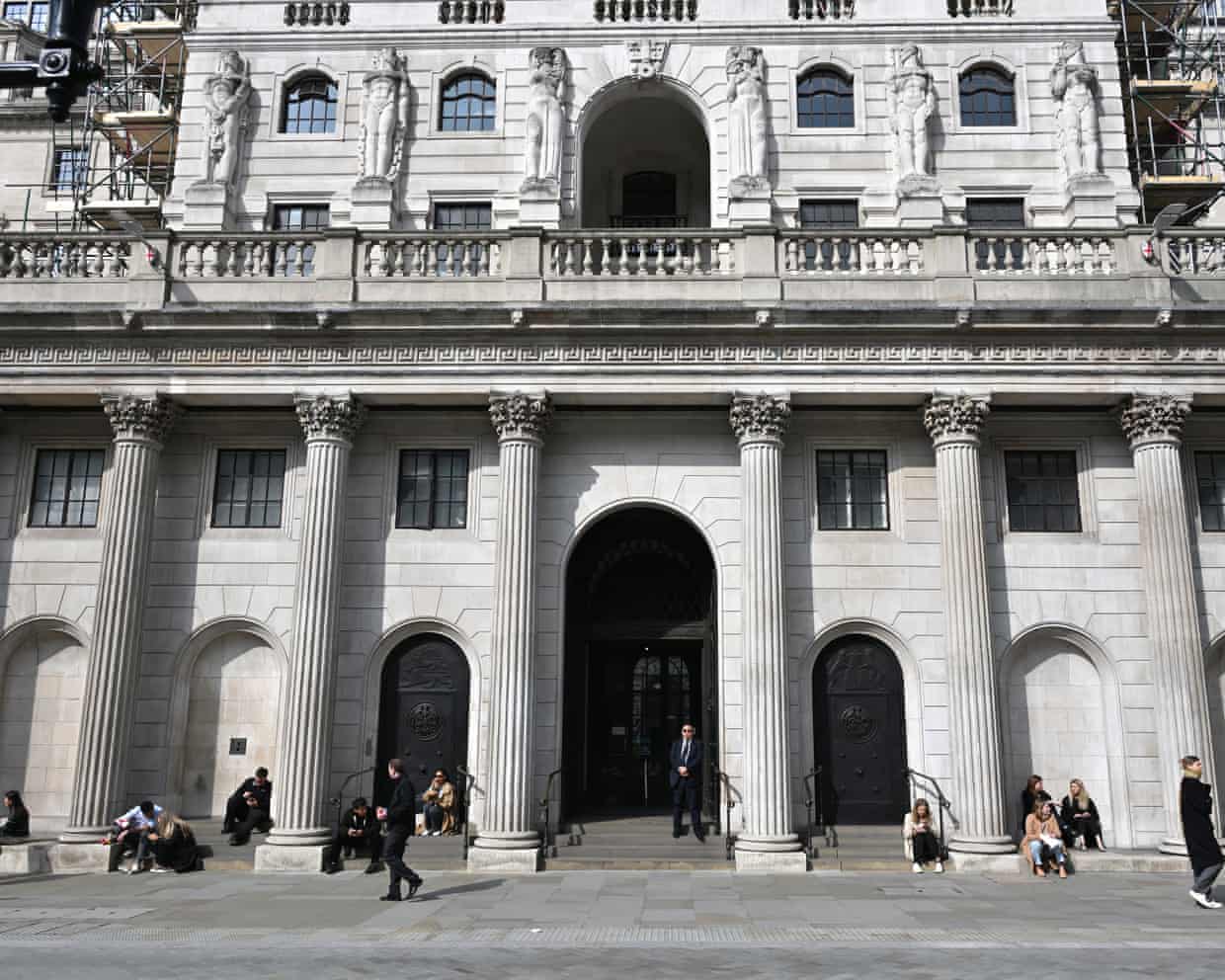
Britain’s economy could be dragged into recession by the end of this year by high energy prices and interest rate hikes, economists at Morgan Stanley have warned.Following this morning’s data showing a slowdown in private sector growth this month and a surge in input costs (see 9.41am), Morgan Stanley economist Bruna Skarica has warned that the energy price shock is likely to prompt the Bank of England to raise interest rates, which would hurt growth.Skarica points out that oil prices have risen by around 40% since January, with natural gas contracts up by around 80%, prompted the financial markets to predict the BoE will raise rates this year.Skarica told clients:double quotation markShould these financial conditions and commodity prices be sustained in the coming months, we would be calling for a pronounced UK recession at the turn of the year

What levers could Rachel Reeves pull to help with rising prices?
Rachel Reeves updated MPs on Tuesday about the steps the government was taking to cushion the impact of the Iran war on consumers and the UK economy. The chancellor stopped short of announcing specific immediate support but said she was contingency planning for the tough months ahead.Here are some of the levers she could pull:Speculation has been rife since the effective closure of the strait of Hormuz sent oil and gas prices soaring, that the government may be forced to step in to protect households from a jump in utility bills.But Reeves gave the clearest indication yet that she has no intention of repeating the across-the-board subsidies introduced by Liz Truss in autumn 2022, which went on to cost the Treasury about £40bn, and were worth £1,350 to households in the top 10% of earners.Reeves said Truss’s approach had “left us with high levels of national debt, a cheque written then for a bill that is still being paid today”
Seven charts that reveal how unprepared Australia was for the fuel crisis
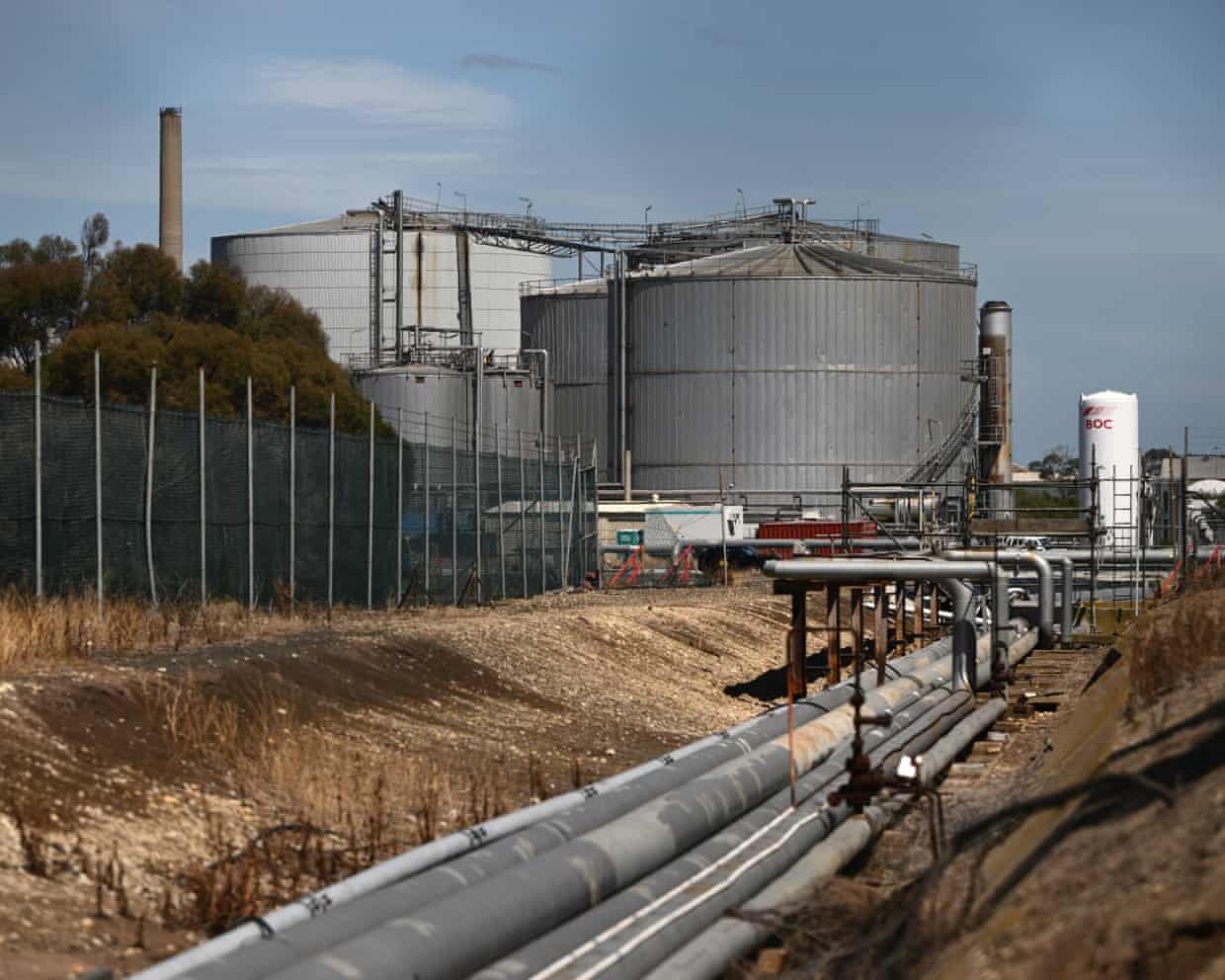
It’s been a bewildering few weeks since the start of the US-Israel war on Iran triggered a global energy shock that shows little sign of ending.Here are seven charts that tell the story so far.At the turn of this century, Australia produced 563,000 barrels of oil a day, with eight refineries supplying 98% of our total petroleum product needs.From that high point, oil and petroleum production has slumped to the point where the country relies on imports for 90% of its liquid fuel needs and oil production is at its lowest since the late 1960s.Over the past 25 years, the number of local refineries has also dropped:Mobil’s Port Stanvac refinery in South Australia was mothballed in 2003 (and permanently closed in 2009)
UK manufacturers hit by sharpest rise in cost inflation since Black Wednesday in 1992
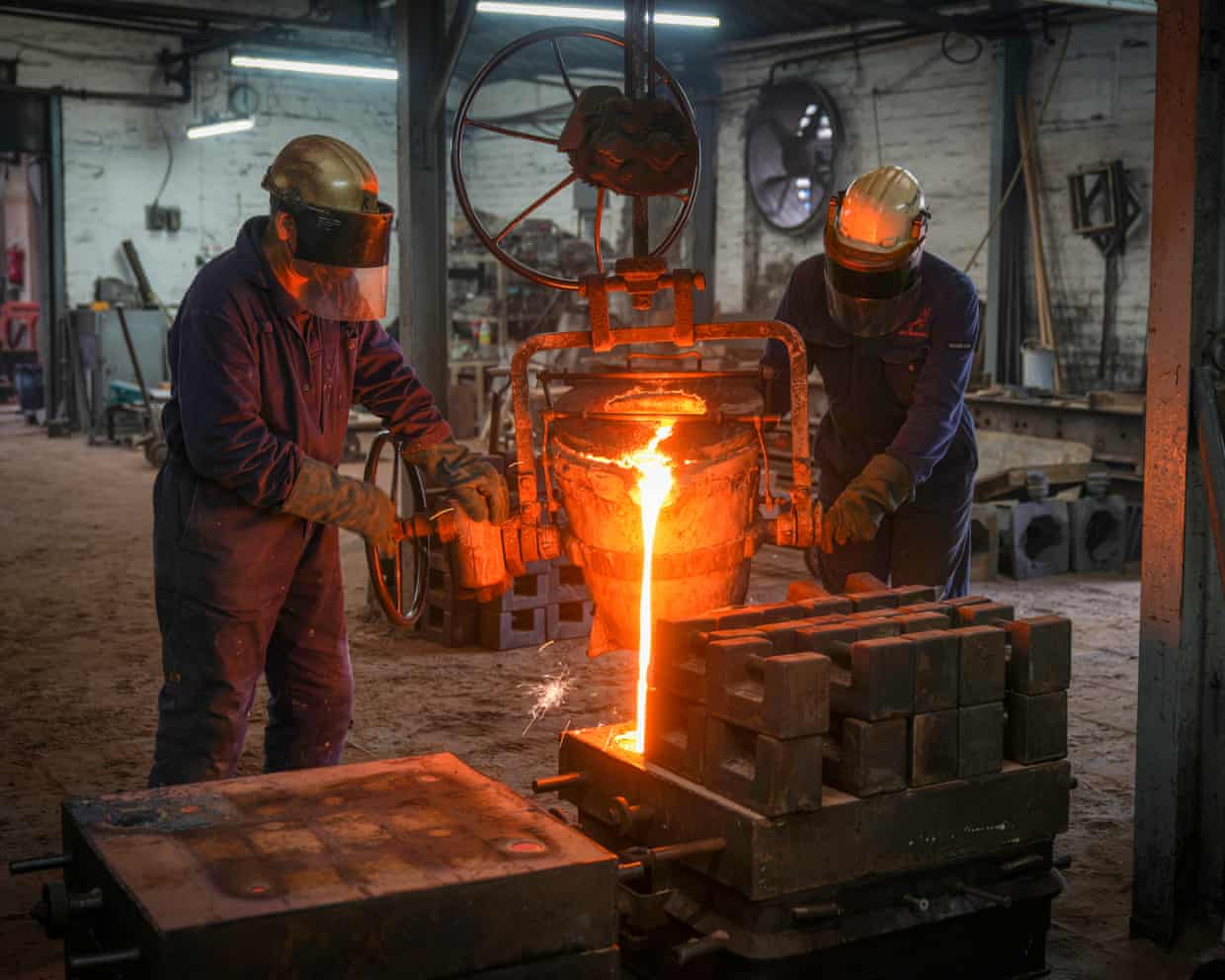
The UK’s manufacturers have suffered the sharpest one-month acceleration in costs since the aftermath of Black Wednesday in 1992 as conflict in the Middle East has driven up oil prices, new survey evidence shows.The closely watched purchasing managers’ index (PMI) lays bare the impact of the conflict on the UK economy, with growth slowing sharply across manufacturing and services and costs rising.Chris Williamson, the chief business economist at S&P Global Market Intelligence, which collects the data, said: “Output growth across manufacturing and services has slowed to a crawl as companies blamed lost business directly on the events in the Middle East, whether through heightened risk aversion among customers, surging price pressures, higher interest rates, or via travel and supply chain disruptions.“Inflationary pressures have surged higher on the back of rising energy prices and fractured supply chains.”Responding to the survey, Morgan Stanley warned the economy could potentially be dragged into “a pronounced UK recession” by the end of this year by high energy prices and interest rate hikes
Revolut warns it risks backlash over support for energy-intensive AI and crypto
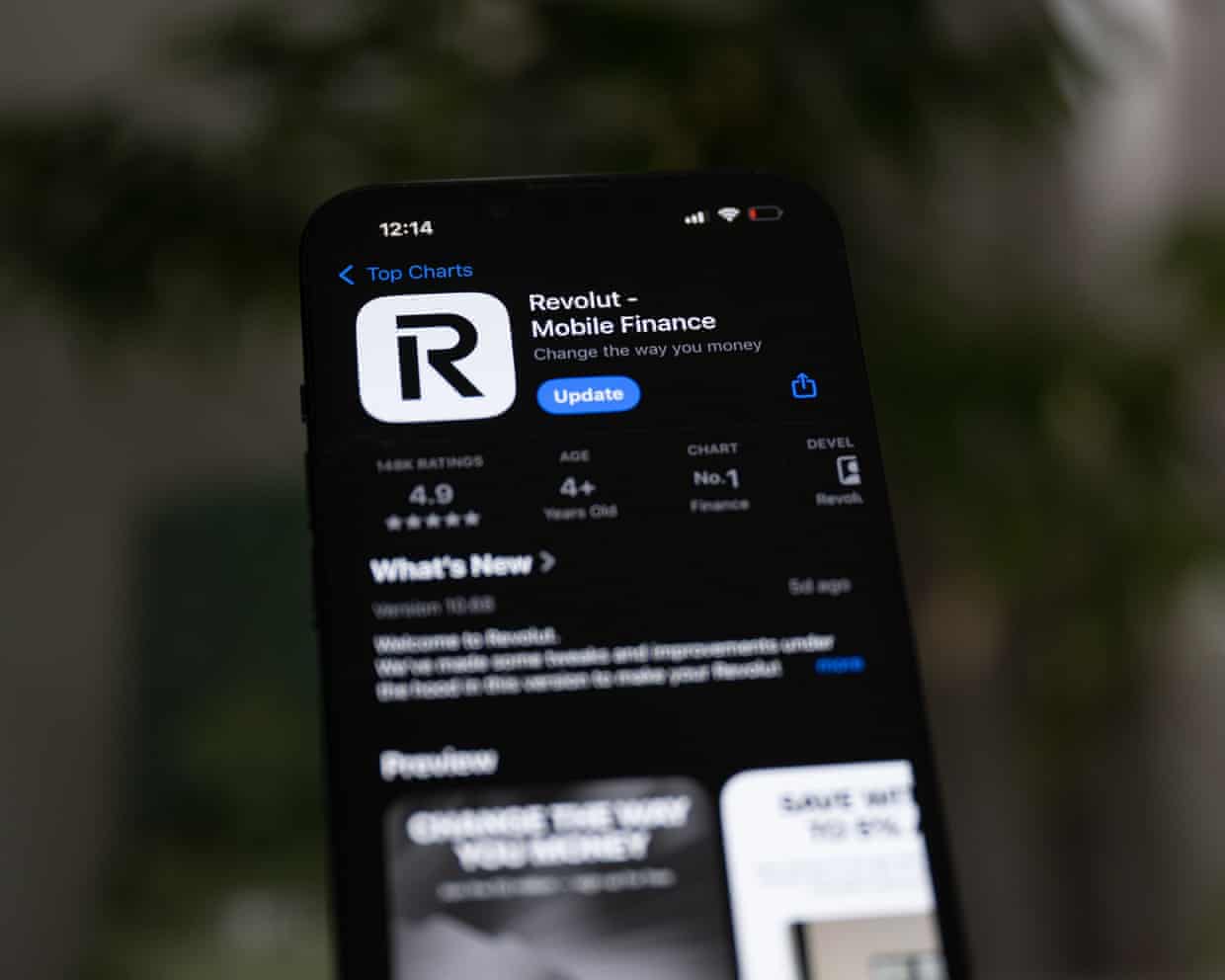
The UK banking app Revolut has said it could face a backlash over its support for energy-intensive sectors such as crypto and AI, as it posted a 57% increase in profits for last year.The fintech, which can now launch as a fully fledged UK bank after a five-year wait for regulatory approval, warned in its 2025 annual report that such activities posed a “reputational risk”. Revolut offers crypto trading.Cryptocurrency mining, particularly for bitcoin, and AI datacentres demand large amounts of power, with competition for electricity supplies only getting steeper since the US-Israel war on Iran sent energy prices soaring over the past month.The company also reported a £1
Royal Mail owner pushes back against criticisms that service has declined

Crispin Odey: I can’t remember telling female employee ‘I could attack you now’

Baltimore sues Elon Musk’s AI company over Grok’s fake nude images

Protect men and boys from manosphere influencers, Labour MPs tell Ofcom
From the Pocket: Essendon have all the hallmarks of a team deep in rebuild – just not the stomach to acknowledge it
Crammed Test cricket schedule risks leaving Australian summers unrecognisable | Geoff Lemon