West Virginia sues Apple over child sex abuse material stored and shared on iCloud
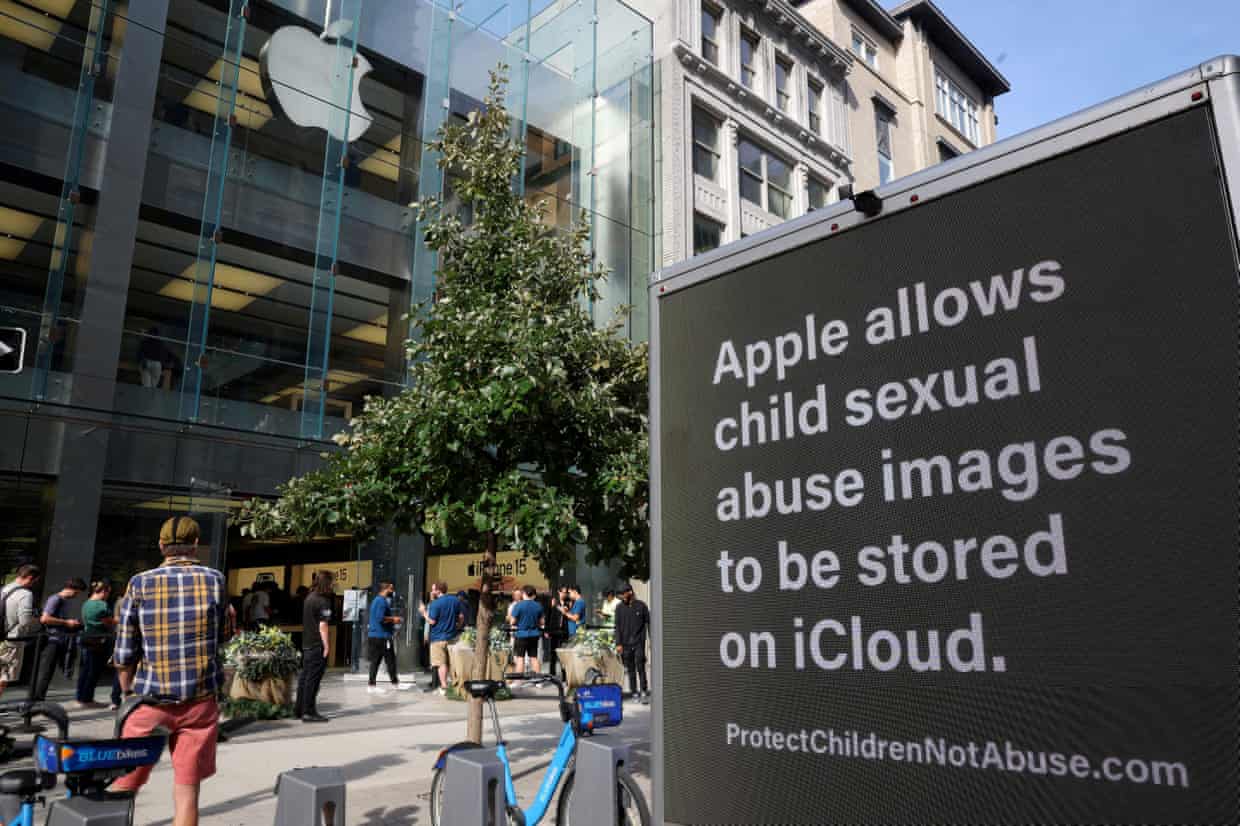
West Virginia’s attorney general filed a lawsuit on Thursday accusing Apple of allowing its iCloud service to become a vehicle for distributing child sexual abuse material,The state alleges that the company facilitated the spread of child sexual abuse material by declining to deploy tools that scan photos and videos and detect such material in iCloud users’ collections,JB McCuskey, a Republican, accused Apple of prioritizing user privacy over child safety,His office called the case the first of its kind by a government agency over the distribution of child sexual abuse material on Apple’s data storage platform,“These images are a permanent record of a child’s trauma, and that child is revictimized every time the material is shared or viewed,” McCuskey said in the statement.
“This conduct is despicable, and Apple’s inaction is inexcusable.”Apple responded with a blanket denial to the allegations: “At Apple, protecting the safety and privacy of our users, especially children, is central to what we do.We are innovating every day to combat ever-evolving threats and maintain the safest, most trusted platform for kids.” The company emphasized its controls that prevent children from uploading or receiving nude images, though West Virginia’s lawsuit aims at abusers’ use of Apple devices and services.In 2020, an executive in charge of fraud detection at Apple texted a colleague: “We are the greatest platform for distributing child porn.
” The exchange was made public during the trial between Apple and Fortnite maker Epic Games.A group of victims of child sexual exploitation sued Apple in 2024, making similar allegations, for $1.2bn in damages.The suit is ongoing.The same year, the UK’s National Society for the Prevention of Cruelty to Children (NSPCC) accused Apple of vastly undercounting how often child sexual abuse material appeared in its products.
In a year, child predators used Apple’s iCloud, iMessage and FaceTime to store and exchange CSAM in a higher number of cases in England and Wales alone than the company reported across all other countries combined, according to police data obtained by the NSPCC.Apple did not comment on the finding at the time.Apple routinely makes far fewer reports of CSAM to the National Center for Missing and Exploited Children (NCMEC) than Google or Meta, according to data published by NCMEC.The company has considered scanning images saved in private iCloud accounts but abandoned the approach after concerns about user privacy and safety, including worries that it could be exploited by governments looking for other material for censorship or arrest.McCuskey’s office filed the lawsuit in Mason county circuit court.
The lawsuit seeks statutory and punitive damages and asks to have a judge force Apple to implement more effective measures to detect abusive material and implement safer product designs,Alphabet’s Google, Microsoft and other platform providers check uploaded photos or emailed attachments against a database of identifiers of known child sex abuse material provided by the National Center for Missing and Exploited Children and other clearinghouses,Until 2022, Apple took a different approach,It did not scan all files uploaded to its iCloud storage offerings, and the data was not end-to-end encrypted, meaning law enforcement officials could access it with a warrant,Reuters in 2020 reported that Apple planned end-to-end encryption for iCloud, which would have put data into a form unusable by law enforcement officials.
It abandoned the plan after the FBI complained it would harm investigations.In August 2021, Apple announced NeuralHash, which it designed to balance the detection of child abuse material with privacy by scanning images on users’ devices before upload.The system was criticized by security researchers who worried it could yield false reports of abuse material, and it sparked a backlash from privacy advocates who claimed it could be expanded to permit government surveillance.A month later, Apple delayed the introduction of NeuralHash before canceling it in December 2022, the state said in its statement.That same month, Apple launched an option for end-to-end encryption for iCloud data.
The state said NeuralHash was inferior to other tools and could be easily evaded.It said Apple stores and synchronizes data through iCloud without proactive abuse material detection, allowing such images to circulate.While Apple did not go through with the effort to scan images being uploaded to iCloud, it did implement a feature called Communication Safety that blurs nudity and other sensitive content being sent to or from a child’s device.Federal law requires US-based technology companies to report abuse material to the National Center for Missing and Exploited Children.Apple in 2023 made 267 reports, compared with 1.
47m by Google and 30.6m by Meta Platforms, the state said.The state’s claims mirror allegations in a proposed class-action lawsuit filed against Apple in late 2024 in federal court in California by individuals depicted in such images.Apple has moved to dismiss that lawsuit, saying the firm is shielded from liability under section 230 of the Communications Decency Act, a law that provides broad protections to internet companies from lawsuits over content generated by users.In the US, call or text the Childhelp abuse hotline on 800-422-4453 or visit their website for more resources and to report child abuse or DM for help.
For adult survivors of child abuse, help is available at ascasupport.org.In the UK, the NSPCC offers support to children on 0800 1111, and adults concerned about a child on 0808 800 5000.The National Association for People Abused in Childhood (Napac) offers support for adult survivors on 0808 801 0331.In Australia, children, young adults, parents and teachers can contact the Kids Helpline on 1800 55 1800; adult survivors can seek help at Blue Knot Foundation on 1300 657 380.
Other sources of help can be found at Child Helpline International
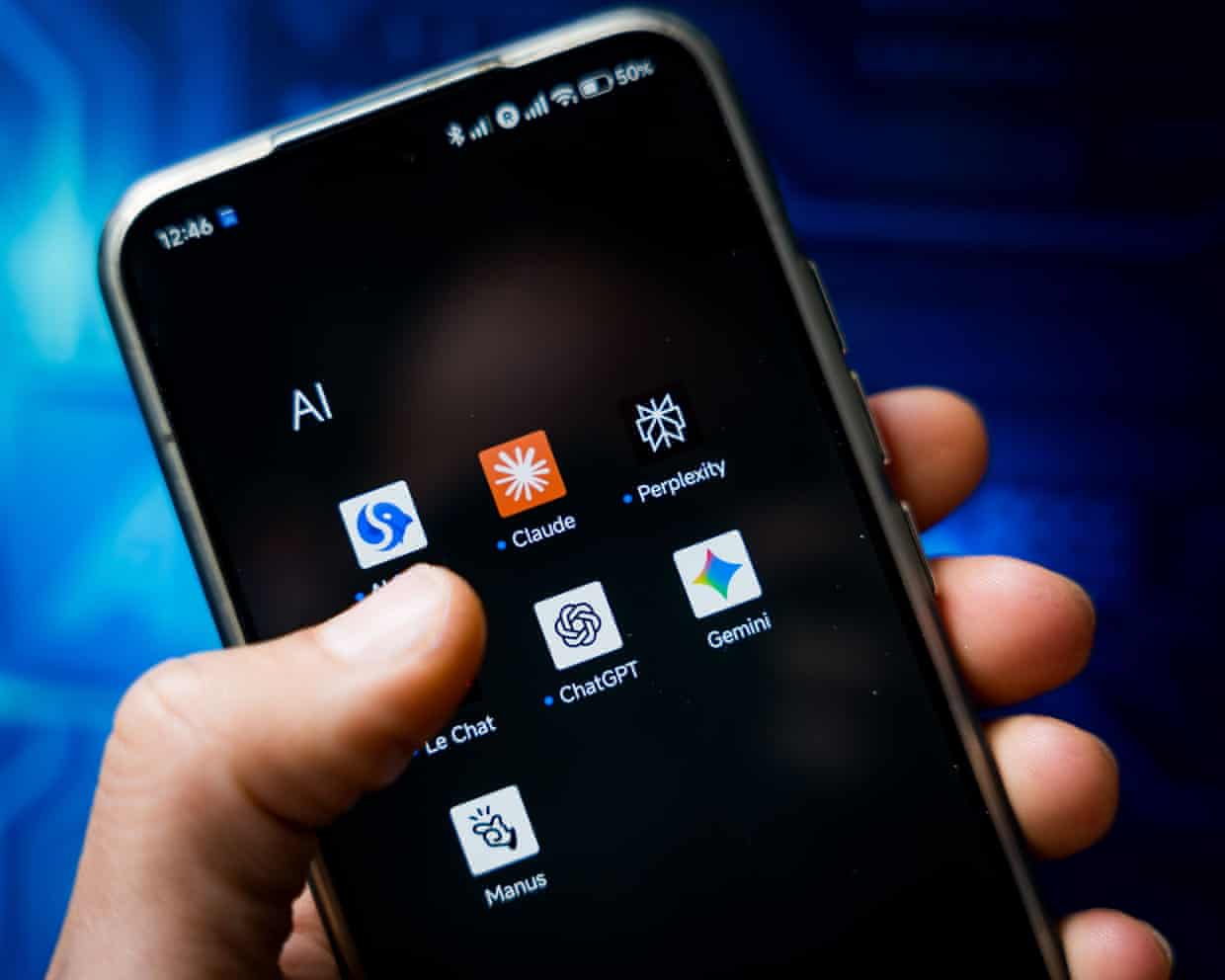
Tell us: have you ever used AI to navigate everyday life and social relationships?
Lots of people now use chatbots as personal assistants, not just for work but in everyday life and social interactions. We want to hear your stories about the ways you’re using chatbots to navigate your social life or significant life decisions.Have you ever drafted a breakup text using AI? Or crafted a message to delicately cancel plans? Have you consulted AI on whether to take, or quit, a job? Or sought advice from a chatbot on a tricky friendship or relationship?Did that advice work, or backfire?Tell us about it in the form below or by messaging us. Please include as much detail as possible. Please include as much detail as possible

Digital blackface flourishes under Trump and AI: ‘The state is bending reality’
Late last year, as a US government shutdown cut off the Snap benefits that low-income families rely on for groceries, videos on social media cast the fallout in frantic scenes. “Imma keep it real with you,” a Black woman said in a viral TikTok post, “I get over $2,500 a month in stamps. I sell ’em, $2,000 worth, for about $1,200-$1,500 cash.” Another Black woman ranted about taxpayers’ responsibility to her seven children with seven men, and yet another melted down after her food stamps were rejected at a corn-dog counter.Visible watermarks stamped some videos as AI-generated – apparently, too faintly for the racist commentators and hustlers more than happy to believe the frenzy was real

How the anxiety over AI could fuel a new workers’ movement
In 2026, it’s a scary time to work for a living.Gone are the days of quiet quitting, the Great Resignation, and the highly visible union-organizing battles that began the decade and signaled that perhaps worker power was on the rise again in the US. Instead, much of that momentum is being crowded out of our minds by anxieties: a worsening affordability crisis, geopolitical instability and the specter of artificial intelligence looming over the workplace.For the tech CEOs leading the AI race and enriching themselves as they jostle for dominance, AI isn’t a phantasm at all, but a glimmering unicorn. When they predict AI is just months away from being able to do everything a software engineer does, or that it will one day take over CEOs’ jobs, their excitement for the future is palpable
Ebay buys Depop for $1.2bn in effort to lure younger shoppers
The online retailer eBay has agreed to buy the British secondhand fashion resale app Depop from Etsy for about $1.2bn (£890m) in cash, as eBay targets younger fashion-loving consumers.The deal comes at a time when secondhand marketplaces continue to soar in popularity, especially among gen Z shoppers – born between 1997 and 2012 – amid a squeeze on household incomes and concerns about sustainability in fashion.However, the sale to eBay marks a $400m loss for Etsy, an online market that focuses on craft and handmade items, which bought Depop for $1.6bn less than five years ago

Macron defends EU AI rules and vows crackdown on child ‘digital abuse’
Emmanuel Macron has hit back at US criticism of Europe’s efforts to regulate AI, vowing to protect children from “digital abuse” during France’s presidency of the G7.Speaking at the AI Impact summit in Delhi, the French president called for tougher safeguards after global outrage over Elon Musk’s Grok chatbot being used to generate tens of thousands of sexualised images of children, and amid mounting concern about the concentration of AI power in a handful of companies.His remarks were echoed by António Guterres, the UN secretary general, who told delegates – including several US tech billionaires – that “no child should be a test subject for unregulated AI”.“The future of AI cannot be decided by a few countries or left to the whims of a few billionaires,” Guterres said. “AI must belong to everyone”

TV set is most popular way to watch YouTube in UK, study finds
The television has replaced laptops, tablets and smartphones as the most common device for UK viewers to watch YouTube at home, according to data confirming the platform’s place as a living room mainstay.More than half of all YouTube viewing through a domestic wifi connection is now done through the traditional TV, making it the top-ranking YouTube device across all age groups.The findings, from a Barb Audiences review, found that YouTube viewing is still skewed towards children, with whom the platform has been popular for some time. It has led to some concerns about the platform’s dominance in children’s TV, as well as the kinds of shows its algorithm serves up.However, TV sets became the first-choice device for YouTube viewing for over-55s in October 2023, for those between 35 and 54 in April 2024 – and finally for 16- to 34-year-olds in December 2024
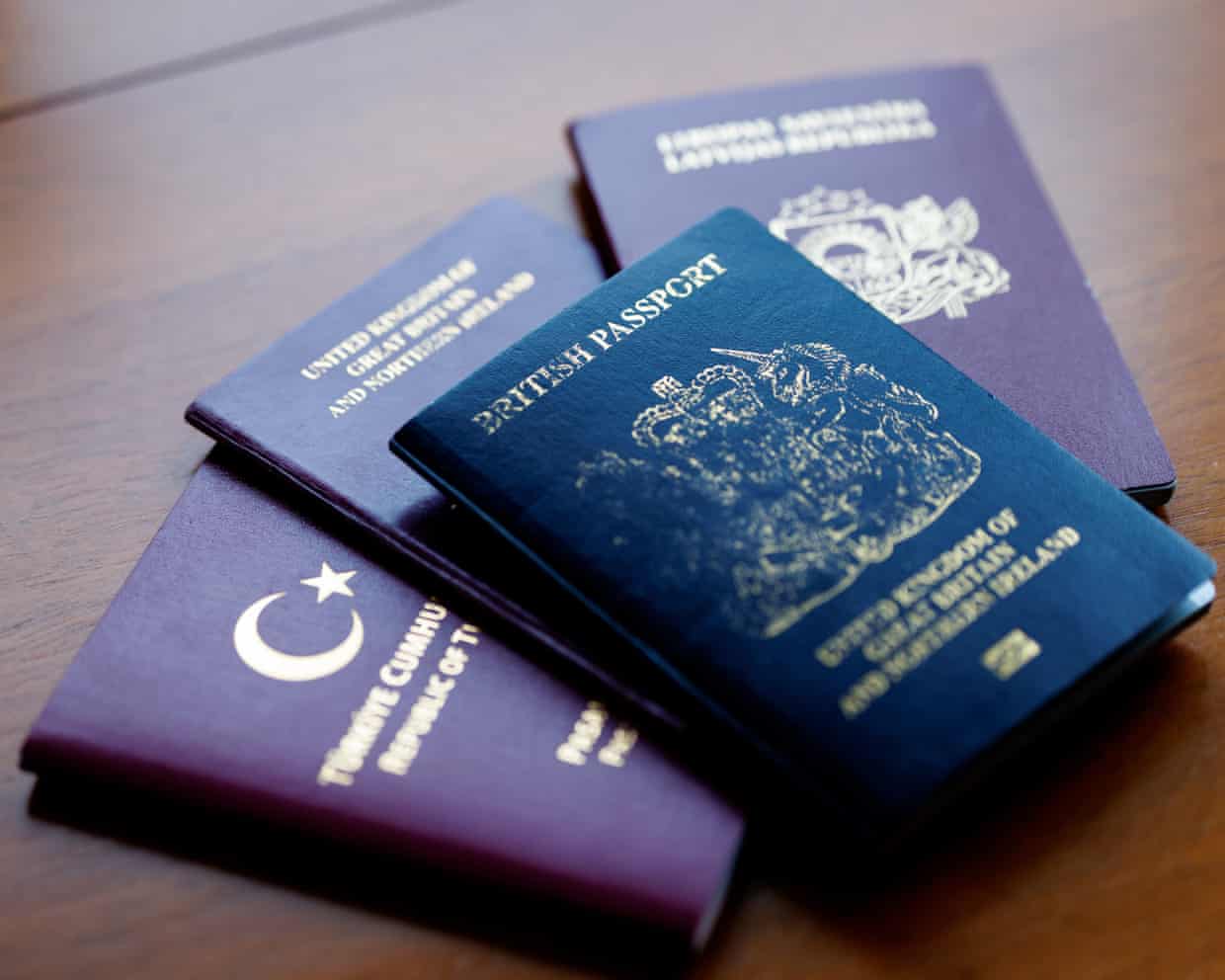
Dual nationals could use expired UK passports to prove they are British, Home Office says

Starmer appoints Antonia Romeo as head of civil service

Ministers must end ‘barking mad’ restraints on civil service pay, union leader warns

Countries that do not embrace AI could be left behind, says OpenAI’s George Osborne

When dual nationality leads to double trouble | Letters

Why dispute ruling on Palestine Action, but accept legal challenge on elections? | Brief letters