Microsoft and Meta announce large staff reductions as they spend big on AI

Meta and Microsoft are trimming their workforces by thousands as they make heavy investments in AI and executives claim that the technology is meeting their companies’ productivity needs.Meta told staff on Thursday that on 20 May it would cut some 10% of its personnel – just under 8,000 employees– to boost efficiency, part of a layoff plan made months ago.The company is also closing about 6,000 open roles.The same day, Microsoft announced to employees, for the first time, that it would offer voluntary retirement to about 7% of its American workforce of roughly 125,000.In an internal memo to Meta’s staff, Janelle Gale, the chief people officer, didn’t mention AI explicitly but said the cuts would allow the company to “offset the other investments we’re making”.
In Meta’s fourth-quarter 2025 earnings presentation, the CEO, Mark Zuckerberg, spoke about a “major AI acceleration” that included plans to spend from $115bn to $135bn on AI – nearly twice the company’s capital expenditure the previous year,“This is not an easy tradeoff,” Gale wrote,She emphasized that laid-off employees would receive generous severance packages,Zuckerberg, in contrast to Gale, has said outright that AI is making some hiring unnecessary,“We’re starting to see projects that used to require big teams now be accomplished by a single very talented person,” he said in the January earnings call.
Meta confirmed news reports of the layoffs and internal memo, but declined to comment further.Microsoft wrote to its employees on Thursday that it would be offering voluntary buyouts to longtime employees, in particular those for whom the sum of their ages and years at the company amount to 70 or greater, according to the FT.More than 8,000 employees would qualify, according to the FT.Microsoft did not immediately respond to a request for comment.In July 2025, Microsoft forecast that it would spend some $100bn on AI infrastructure in the coming fiscal year.
Analysts now estimate that figure to be $110bn-$120bn.Mustafa Suleyman, Microsoft’s AI chief, said in February that he believes that AI will be able to replace most white-collar work within the next 12 to 18 months.Satya Nadella, the Microsoft CEO, has trumpeted Microsoft’s internal AI adoption, which he says has led to major productivity gains.In April 2025, he claimed that AI handled as much as 30% of the company’s coding work.“We are only at the beginning phases of AI diffusion, and already Microsoft has built an AI business that is larger than some of our biggest franchises,” he said in a January press release.
Zuckerberg was sitting onstage with Nadella as the Microsoft CEO made the remark,When Nadella asked Zuckerberg how much of the social media company’s coding was done by AI, Zuckerberg said: “Our bet is sort of that in the next year probably … maybe half the development is going to be done by AI, as opposed to people, and then that will just kind of increase from there,”The redundancy announcements from the two tech giants come amid tech workers’ growing concerns that their bosses will try to replace them with AI,Those fears aren’t unfounded,Employees themselves are becoming fodder to train AI models.
Reuters recently uncovered an internal memo at Meta showing that the company is installing new software on American employees’ computers to record their mouse movements, clicks and keystrokes to feed into AI training data.Other companies doubling down on AI have slashed their numbers, too.The Block CEO Jack Dorsey cut almost half the company’s workforce in early March, citing gains in AI.Amazon, which announced plans to spend a whopping $200bn in one year in February, has laid off at least 30,000 workers in the last six months.Oracle, which is struggling with the debt load of its multibillion-dollar investment in datacenters, told employees last month that it would be cutting thousands of jobs, too.
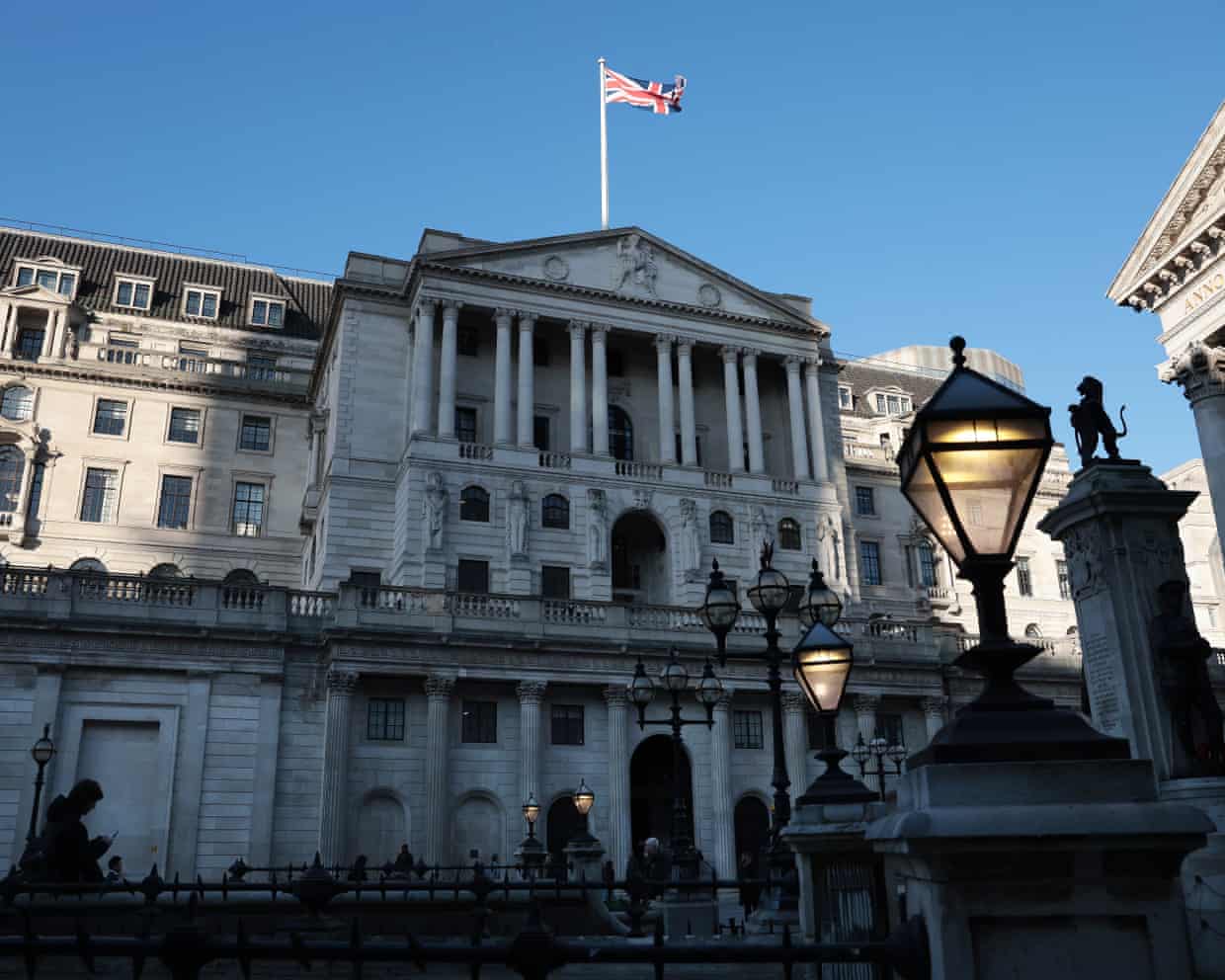
UK braces for price rises driven by Iran war as economic confidence plummets
Confidence in the UK economy has fallen sharply amid the mounting economic fallout from the Iran war, surveys show, as businesses prepare to raise their prices and consumers brace for a fresh cost of living shock.Highlighting the knock-on effect of the Middle East crisis in Britain, several closely watched surveys of business activity and consumer confidence blamed the US-Israeli war on Iran for a marked deterioration in the outlook in April.The latest barometer from the data company GfK showed UK consumer confidence slid in April to its lowest level since October 2023, while three separate business surveys revealed an increase in cost pressures facing companies and an expectation they would raise their prices over the coming months.Neil Bellamy, consumer insights director at GfK, said soaring fuel prices and the prospect of higher energy costs were a constant reminder to consumers of the inflationary shock from the war.“Consumers really do have the jitters now,” he said

American Airlines says soaring price of jet fuel will cost it $4bn this year
The soaring price of jet fuel will cost American Airlines another $4bn this year, the carrier has said, wiping out forecast profits.The airline, the world’s largest by passengers flown, said the fuel crisis from the US-Israel war on Iran could push it into losses during 2026, having forecast profits approaching $1.8bn before bombing started.The price of jet fuel has more than doubled since the conflict began at the end of February. While many European airlines have hedged their fuel, locking in a purchase price for months or years ahead, American carriers have been exposed to the price rises

Fertiliser is in short supply. What does it mean for Australia’s farmers – and your bread?
The US-Israel war on Iran is delivering a double blow to Australian farmers, who are being hit by the spike in diesel prices as well as an equally severe surge in the price of fertiliser.Soaring fuel costs are hurting almost every business and household but growers are now making decisions about planting that will affect the size of their crops come harvest time.So why are we experiencing this fertiliser squeeze, how much worse could it get, and what does it all mean for farmers and the price of food?A fifth of the world’s oil and liquefied natural gas shipments pass through the strait of Hormuz, which has essentially been shut since the US and Israel attacked Iran at the end of February.But the share of world supply of urea – the most popular commonly used fertiliser – that typically passed through the strait before the conflict was more than twice that, at 43%.For sulphur – used to produce phosphate fertilisers – the figure is 44%
BP board suffers triple climate rebellion from shareholders
BP’s board has suffered a triple climate rebellion in its first shareholder meeting since appointing new leadership to steer the embattled oil company.More than 50% of shareholders voting at the company’s annual general meeting (AGM) came out against its plans to scrap its existing climate reporting, and its resolution to replace in-person annual shareholder meetings – a lightning rod for climate protest in recent years – with online-only events.About 18% of shareholders voted against the re-election of BP’s chair, Albert Manifold, less than a year after he took on the role. The “unprecedented” revolt means BP will not be allowed to carry out the resolutions that were defeated by a majority, although Manifold will remain as chair.The dissenting shareholders included Legal & General Investment Management (LGIM), the UK’s largest asset manager, which had said it would vote against Manifold and oppose BP’s plans to cut back on climate reporting

UK undershoots annual borrowing target by £700m
The UK government budget came in below its annual borrowing target by £700m, official figures show – but the Iran war is likely to blow a hole in Rachel Reeves’s carefully calculated fiscal “headroom” over the coming months.The government borrowed a net total of £132bn for the financial year ending in March, the Office for National Statistics (ONS) said. This slightly undershot the £132.7bn that the Office for Budget Responsibility (OBR) had forecast just last month.The total was £19

Sainsbury’s boss urges government to help ease rising energy costs for food producers
The boss of Sainsbury’s has called on the government to help ease the rising cost of energy for farmers, food producers and retailers caused by the conflict in the Middle East to prevent further price rises.Simon Roberts, the chief executive of the UK’s second largest grocer, said: “The single biggest thing the government could do to keep prices down is to make sure energy prices for the industry are not rising faster.”Referring to the expansion of support on bills for energy-intensive UK businesses announced by the chancellor last week, Roberts said: “Some sectors have seen those reliefs and it is now time to look at what’s possible in food [growing], manufacturing and retailing.”He said Sainsbury’s had not yet had problems with the availability of food, and that was being helped by the UK entering the season in which more food is home-grown. The growing season is in full swing in the UK but that takes a lot of energy to produce,” he said, highlighting the cost of heating polytunnels to produce fruit and salad vegetables, higher fuel costs to transport food from farms to shops, and the cost of running refrigerators

Chinese hackers using everyday devices to target UK firms, warns cybersecurity agency

Criminal gangs profiting as child sexual abuse websites double, experts say

Tesla reports mixed financial results as Musk pivots automaker to AI and robots

What is Mythos AI and why could it be a threat to global cybersecurity?

‘Get back to work’: Amazon faces fresh scrutiny over workplace safety record

Anthropic investigates report of rogue access to hack-enabling Mythos AI