Activist group says it has scraped 86m music files from Spotify
An activist group has claimed to have scraped millions of tracks from Spotify and is preparing to release them online.Observers said the apparent leak could boost AI companies looking for material to develop their technology.A group called Anna’s Archive said it had scraped 86m music files from Spotify and 256m rows of metadata such as artist and album names.Spotify, which hosts more than 100m tracks, confirmed that the leak did not represent its entire inventory.The Stockholm-based company, which has more than 700 million users worldwide, said it had “identified and disabled the nefarious user accounts that engaged in unlawful scraping”.
“An investigation into unauthorised access identified that a third party scraped public metadata and used illicit tactics to circumvent DRM [digital rights management] to access some of the platform’s audio files,” said Spotify.Spotify does not believe the music taken by Anna’s Archive has been released yet.Anna’s Archive, which is known for providing links to pirated books, said in a blog it wanted to create a “‘preservation archive’ for music”.The group claimed the audio files represented 99.6% of all music listened to by Spotify users and would be shared via “torrents”, a means of sharing large digital files online.
“Of course Spotify doesn’t have all the music in the world, but it’s a great start,” said Anna’s Archive, which describes its mission as “preserving humanity’s knowledge and culture”.“With your help, humanity’s musical heritage will be forever protected from destruction by natural disasters, wars, budget cuts and other catastrophes,” said the group.Ed Newton-Rex, a composer and campaigner for protecting artists’ copyright, said the leaked music would probably be used for developing AI models.“Training on pirated material is sadly common in the AI industry, so this stolen music is almost certain to end up training AI models.This is why governments must insist AI companies reveal the training data they use,” he said.
The Anna’s Archive site makes references to LibGen, a vast online archive of pirated books that has allegedly been used by Mark Zuckerberg’s Meta to train its AI models.According to a US court filing, Zuckerberg, Meta’s founder and chief executive, approved use of the LibGen dataset despite warnings within the company’s AI executive team that it was a dataset “we know to be pirated”.Meta successfully defended a claim for copyright infringement by authors, but the plaintiffs in the case are seeking to amend their claim.The co-founder of an AI startup wrote on LinkedIn that members of the public could in theory “create their own personal free version of Spotify”.Yoav Zimmerman, a co-founder of Third Chair, said it could also allow tech companies to “train on modern music at scale”.
He added: “The only thing stopping them is copyright law and the deterrent of enforcement,”Spotify said it had put in place new safeguards “for these types of anti-copyright attacks” since the Anna’s Archive announcement and was “actively monitoring for suspicious behaviour”,Copyright has become a battleground between artists, authors and creatives on one side and AI companies on the other,AI tools such as chatbots and music generators are trained on vast amounts of data taken from the open web, including copyright-protected work,In the UK, creative professionals have protested against a government proposal to let AI companies use copyright-protected work without permission unless the owner of the copyright-protected work signals they do not want their data to be taken.
Almost every respondent to a government consultation on the proposal has backed artists’ concerns.Liz Kendall, the secretary of state for science, innovation and technology, told parliament this month there was “no clear consensus” on the issue, adding that ministers would “take the time to get this right”.The government has pledged to make policy proposals on AI and copyright by 18 March next year.

A tape measure, a metal detector and a spirit level: 25 surprisingly useful things you can do with your phone
While many use our phones predominantly to doomscroll, smartphones have a range of little-known functions that could make life better and easier – from heart monitoring to even developing camera filmOur smartphones are magical things – far more than dopamine drip providers and a way to keep in touch with friends and family. Using the built-in features and easily available additional apps, there are plenty of clever things you can do with your smartphone.The iPhone’s Measure app uses augmented reality and the device’s camera to calculate everything from ceiling heights to room dimensions – handy for those DIY tasks that require a quick decision. And, good news for parents, Apple also points out that you can use it to measure a person’s height: the digital equivalent of etched markings on the wall.Metal detectors cost a pretty penny, but many modern devices have built-in magnetometers designed to help improve the accuracy of GPS within apps
‘It can be quite a thankless job’: why driving examiners are quitting
It has long been a stressful rite of passage for many young people but, in recent years, passing the actual driving test is the easy part. Now, many people seeking a test need to wake up early to snag a date before the bots do and, even then, they are looking at a long and arduous wait.Despite moves from the government to address the issue, an audit report released this week found plans to cut the wait for a driving test to seven weeks by the end of the year would not be achieved until November 2027.One of the main barriers is an exodus of driving examiners. Only a net 83 more driving test examiners have been hired despite 19 recruitment campaigns since 2021, with the average wait for a practical test now at 22 weeks across Great Britain, according to the National Audit Office

Tinsel and Home Alone back in style as TikTok seeks comfort in #90sChristmas
Tinsel, DIY tree decorations, deep burgundy drapes – and Home Alone on VHS. Christmas has gone retro on TikTok, and in people’s living rooms.The app has reported a surge in Christmas decor videos, with an emphasis on nostalgia as users embrace festive looks from bygone eras. For younger TikTokers, that means the 90s.More than 8,000 videos have been posted under the hashtag #90sChristmas, celebrating a look that includes multicoloured tree lights, homemade felt ornaments and – in a post with nearly 4m views – VHS tapes of Christmas classics such as the Macaulay Culkin caper

Elon Musk’s massive 2018 Tesla pay package restored by Delaware court
Elon Musk’s controversial $56bn pay package from Tesla was reinstated by the Delaware supreme court on Friday, two years after a lower court struck down the vast compensation deal as “unfathomable”.The reinstated pay package could be worth as much as $139bn today, according to the New York Times. The decision comes less than two months after Tesla shareholders approved a new plan that could be worth $1tn to Musk, already the world’s richest person, in a decade’s time. Musk’s fortune currently stands at an estimated $600bn.Rescinding the pay deal would be “inequitable”, and would leave Musk “uncompensated for his time and efforts over a period of six years”, the Delaware supreme court justices wrote, echoing arguments from Tesla board members earlier this year

‘A black hole’: families and police say tech giants delay investigations in child abuse and drug cases
Max Osterman was 18 when he connected with a drug dealer on Snapchat who used the handle skyhigh.303. Max would message him whenever he wanted to buy Percocet, and they would meet. After about a year, and just days after their last exchange, Max collapsed. The pills he ordered had been laced with fentanyl

The Com: the growing cybercrime network behind recent Pornhub hack
Ransomware hacks, data theft, crypto scams and sextortion cover a broad range of cybercrimes carried out by an equally varied list of assailants.But there is also an English-speaking criminal ecosystem carrying out these activities that defies conventional categorisation. Nonetheless, it does have a name: the Com.Short for community, the Com is a loose affiliation of cybercriminals, largely native English language speakers typically aged from 16 to 25. Its activities run from crippling the IT systems of British retailers to phoning in bomb threats to schools and encouraging teenage girls to harm themselves

UK consumers saving less as taxes squeeze incomes, data shows

Bosses at City & Guilds handed million-pound bonuses after training firm is privatised
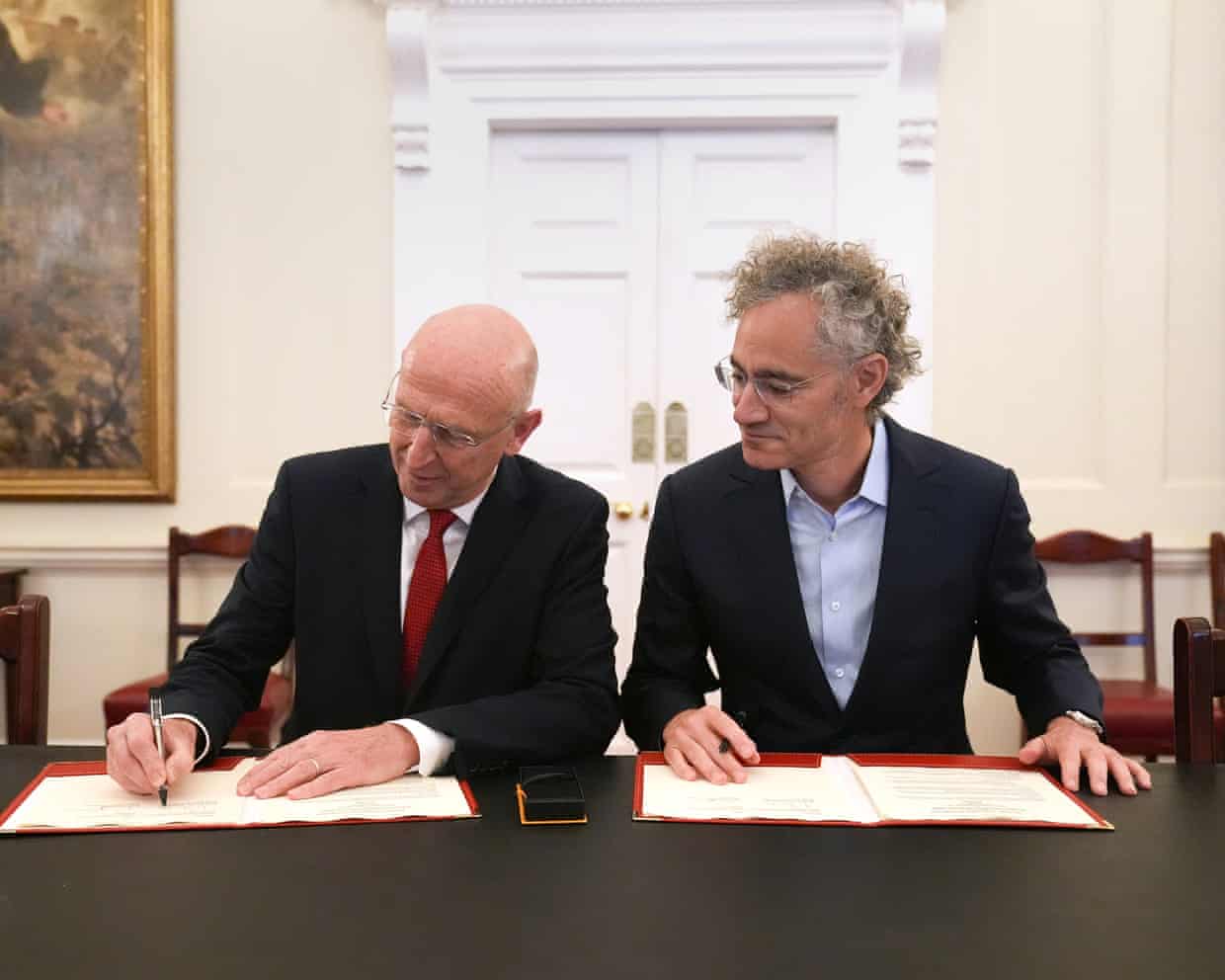
MPs question UK Palantir contracts after investigation reveals security concerns

Extremists are using AI voice cloning to supercharge propaganda. Experts say it’s helping them grow

McCullum admitting failure of his methods was gobsmacking but England are learning | Mark Ramprakash

Six balls in Perth to Harry Brook’s drop: 10 moments that decided the Ashes