The Spin | Knight-Stokes Cup sets up much-needed platform for state school cricket
As a state school-educated international cricketer, the former England bowler Sajid Mahmood has always been in the minority,A report from the Sutton Trust charity last year found 59% of professional male cricketers in England went to independent schools, ranking the sport behind only the armed forces (63%) and senior judges (62%) as the country’s most privately educated profession,Yet Mahmood has become even more of an outlier since his playing retirement,While it is common for former professional cricketers to take up positions as private school coaches once they hang up their playing boots, Mahmood has spent the past eight years teaching the sport to state school students in west London,It is a path so uncommon that he is yet to encounter another England cricketer in the state system.
“I’m fully aware of state schools not really having cricket opportunities,” said Mahmood, who played 38 times for England between 2004 and 2009.“That’s where I came from, so it was important for me to give those opportunities to people who can’t necessarily access good coaching or get an insight into what it takes to play professionally.“I’m quite passionate about passing on that knowledge to state school kids.I want to level that playing field, almost.”That passion has seen Mahmood become an unofficial ambassador for a new national cricket competition launched last week solely for state-educated children.
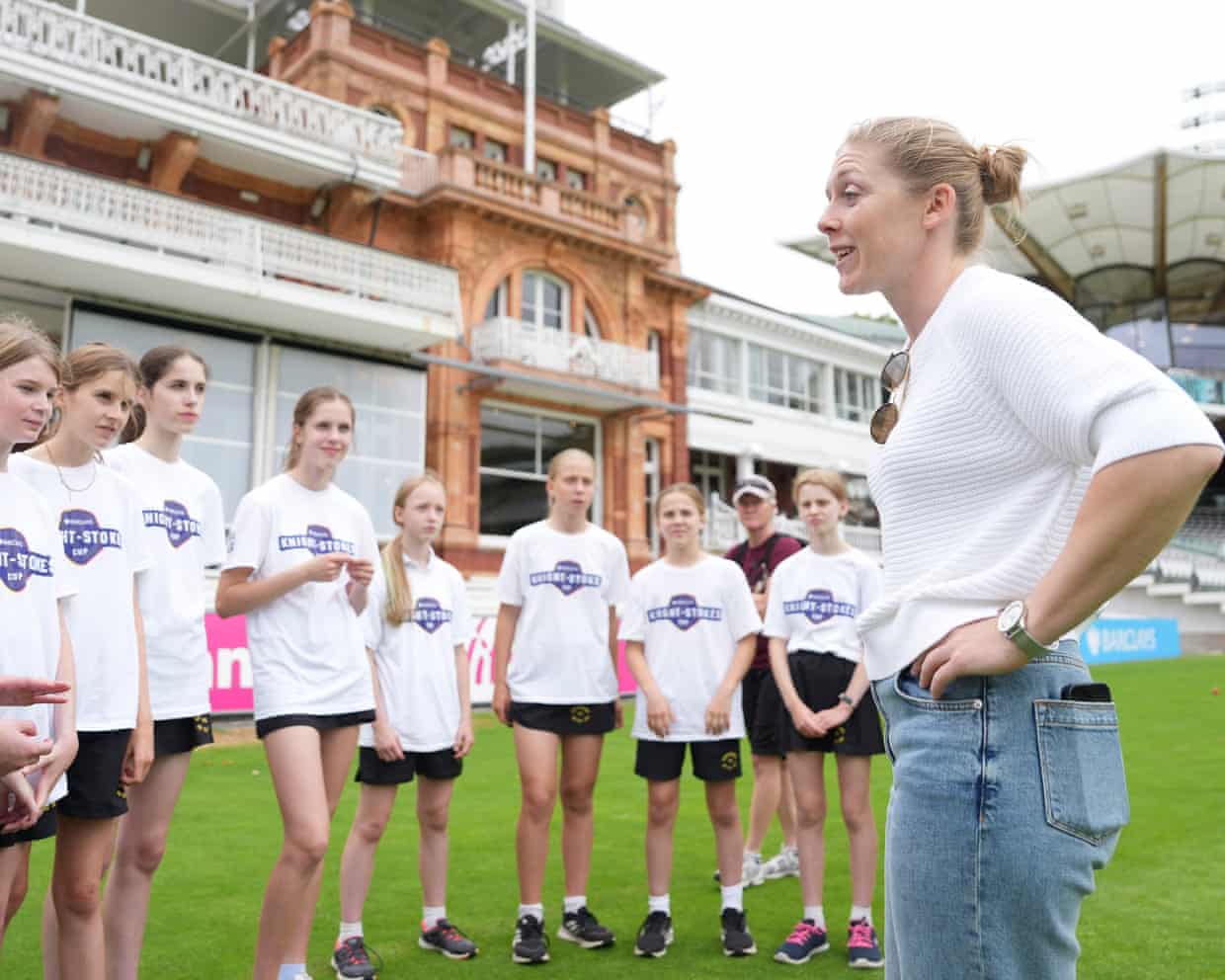
In a couple of days, Mahmood’s school – William Perkin Church of England High School, in Greenford – will play their opening fixture in the Knight-Stokes Cup.Named after two of England’s greatest state-educated cricketers, Ben Stokes and Heather Knight, the competition will culminate in a Finals Day on the main pitch at Lord’s in September.Open to all state schools in the United Kingdom, around one-fifth have signed up to take part, with approximately 1,100 boys’ and 400 girls’ under-15 teams vying for a rare chance to play at the home of cricket.It is an admirable concept, launched as an attempt to counter-balance the longstanding elitist fixture between Eton and Harrow that still takes place at Lord’s each year in spite of growing opposition.And it is something the MCC Foundation, who are organising and delivering the competition, are taking seriously, with a new honours board installed in the pavilion for the winners.
“I love the fact that there’s been some time, money and exposure being pushed towards specifically a state school competition,” said Stokes.“Sometimes that’s where you find the rogue, raw, rare, talented people.”The extent of its ambition is realistic.In launching the tournament, the MCC president, Ed Smith, described it as “a catalyst” rather than “a complete answer on its own”.No one competition can shift an entire national landscape, especially when there are overwhelmingly large factors preventing the sport’s widespread growth.
In news that will surprise no one, the main impediment to state school cricket up and down the country remains a pitiful lack of facilities – a fact that different governments over multiple decades are answerable for.Mahmood’s school is one of the fortunate ones.Thanks to a previous sport-loving headteacher who placed importance on physical activity, pupils there have access to an outdoor cricket pitch, four outdoor nets and four more indoors.At Blythe Bridge High School, in Staffordshire, there are no playing or training facilities, although the school’s healthy local relationships mean they are able to play and train at a number of cricket clubs nearby.With a smattering of players on the cusp of county recognition and a hat-trick from star man Oliver Staten, they eased through their opening fixture last week and have high hopes.
“Our kids are excited about this,” said Cory Flint, Blythe Bridge’s head of PE.“We’re quite a strong state school so we’ve said that we can go pretty far in the competition.But you never know.”At the Winston Churchill School in Surrey, ambitions are somewhat lower.Matches are played on a worn artificial strip in the middle of the school’s running track.
“The players just wear their PE kit,” said PE teacher Jack Fuller,“We don’t ask them to wear full whites because we don’t want to make students buy something if they are only going to play a few games,”Playing regulations for the competition are intentionally loose to remove as many impediments as possible,Mahmood also points to the importance of private schools signing up for their state equivalents to use their facilities during the tournament,Collaboration is a key part of the vision.
“There’s been close to 100 independent schools who have put their names forward, which I think is crucial,” said the former Lancashire bowler.“Living as neighbours, it’s important that the independent schools allow state schools to use those facilities as well – that’s one of the ways we can really use the competition to grow the sport.Independent schools are playing their part in this as well.”The competition’s primary aim is to broaden cricket’s reach – an ambition that is difficult to construe negatively, regardless of how shallow the impact of one competition might be.A secondary ambition is to potentially unearth some gems.
“Hopefully in five or six years’ time, you’ve got six or seven players who are professionally contracted that can say they were part of the Knight-Stokes Cup,” said Stokes.Mahmood agreed: “Towards the latter end of the tournament, we might see some really good players.I wouldn’t be surprised if we find some who haven’t been involved in any pathway and actually get earmarked for county cricket.”That is all for the future.Small seeds, humble beginnings and all that.
As Mahmood says: “The more we can get done, the more it goes from a box-ticking tournament to something that can actually make a real impact.”This is an extract from the Guardian’s weekly cricket email, The Spin.To subscribe, just visit this page and follow the instructions
Starmer sees off major Labour rebellion over call for Mandelson inquiry
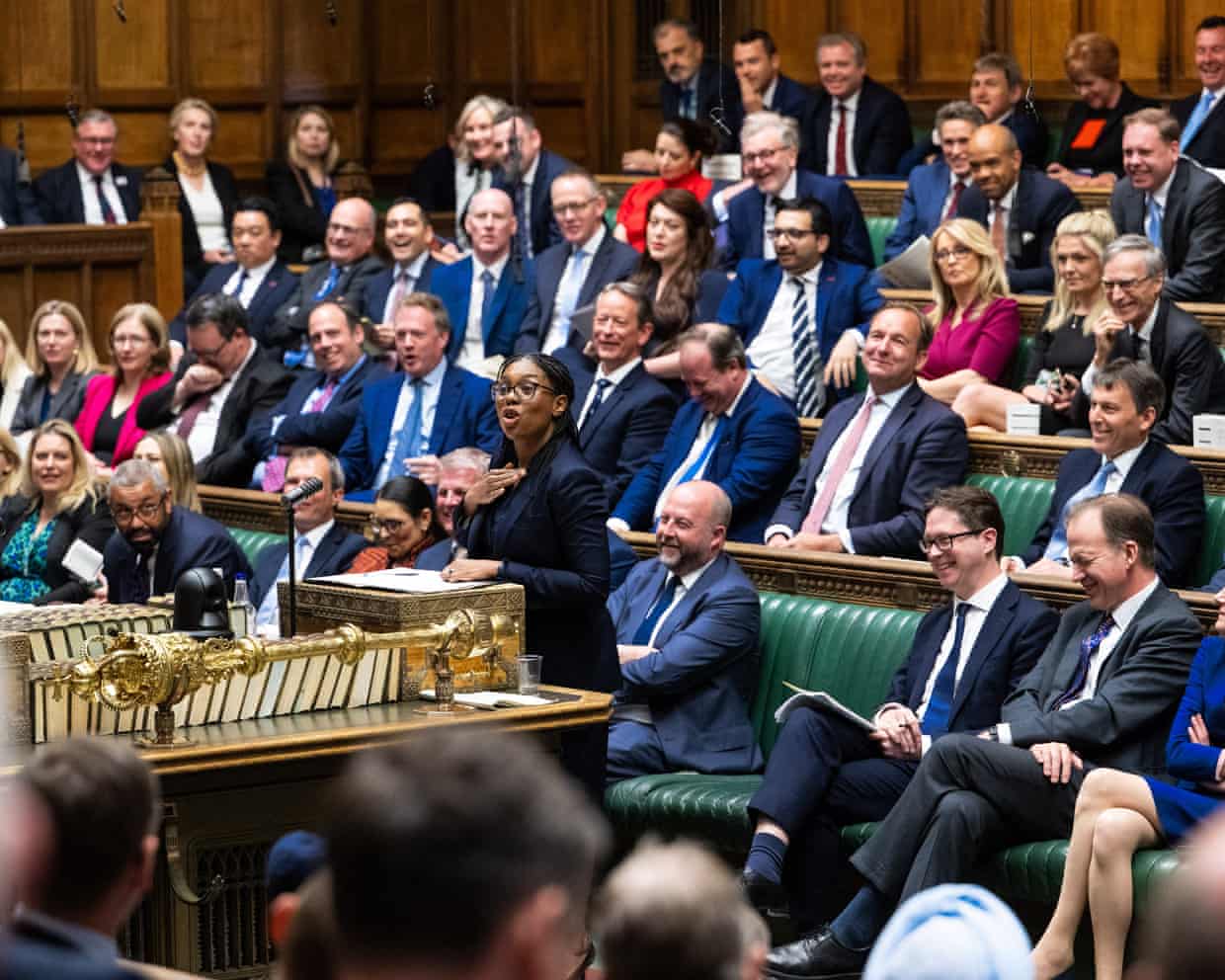
Keir Starmer has seen off a major Labour rebellion over a bid to force a parliamentary investigation into his appointment of Peter Mandelson, but many of his own MPs warned he was running out of political capital.After Downing Street deployed its full weight to force Labour MPs to block a referral to the privileges committee over the scandal, some angrily accused Starmer of leaving them facing accusations of a “cover-up”.Previously loyal MPs warned the prime minister to tread carefully, particularly after what are expected to be a damaging set of election results for Labour next week.“He’s in the last-chance saloon and the last few days haven’t improved his prospects of survival,” one minister said, while another added: “Keir only has so much credit in the bank with the backbenches now, so he needs to spend it wisely.”On a day of high jeopardy on Tuesday, Starmer’s former chief of staff, Morgan McSweeney, and the Foreign Office’s former permanent secretary, Sir Philip Barton, prompted yet more questions over how much pressure had been put on officials to accelerate Mandelson’s posting to Washington
Starmer buys some time – but he could be running out of political capital
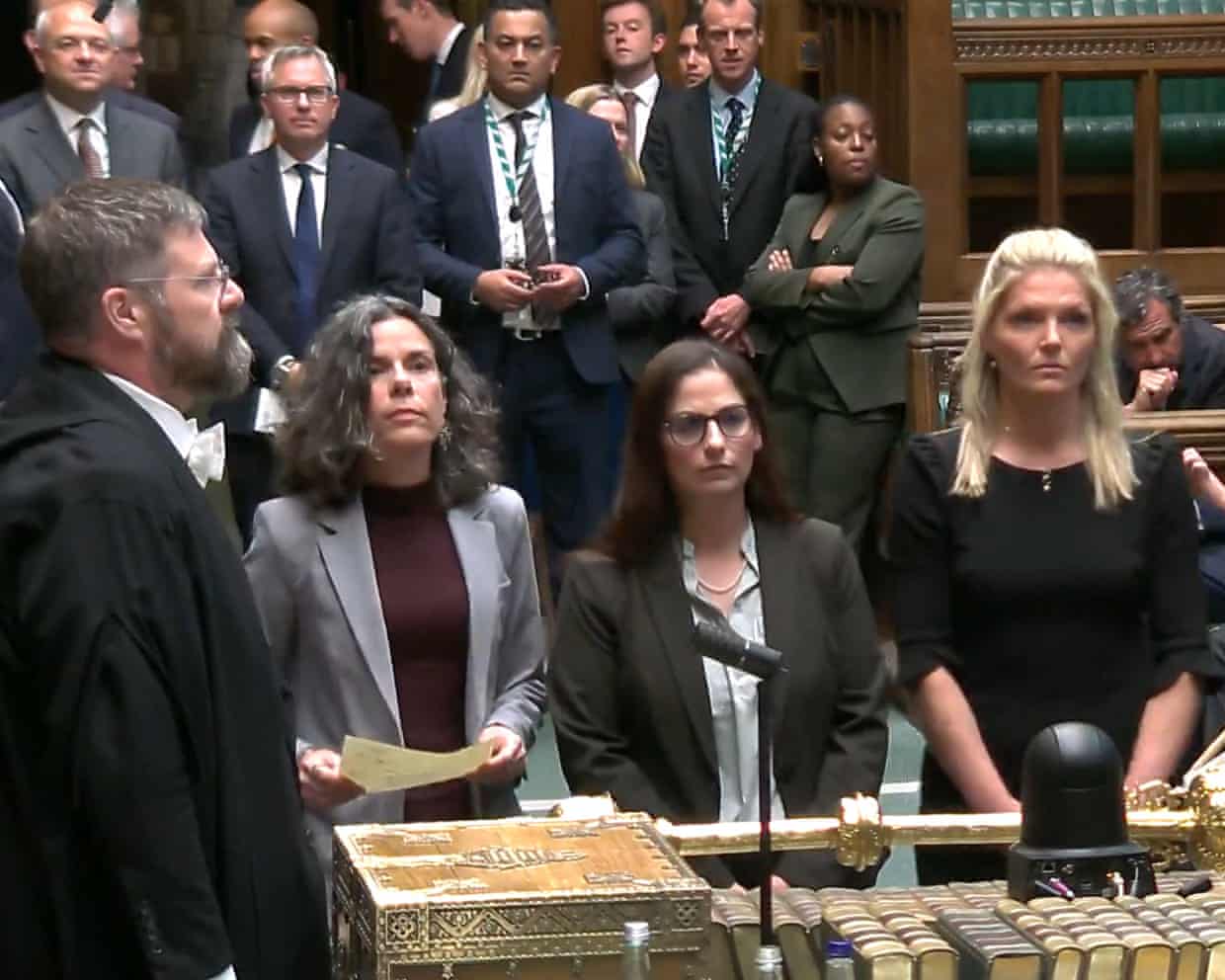
Keir Starmer deployed the entire Labour machine – cabinet ministers, whips, even Gordon Brown – to shore up his support ahead of what was set to be a critical day for his premiership on Tuesday. And it worked.Labour MPs trooped dutifully through the voting lobbies to block Conservative attempts to refer him to the privileges committee – a process that would have dragged out the Peter Mandelson row and been a painful reminder of Starmer’s original sin of appointing the former Labour spin doctor and minister as his man in Washington.It is not the first time the prime minister’s senior team has come to his rescue. In February, his cabinet rallied round to see off an immediate challenge to his position from Anas Sarwar, Labour’s leader in Scotland

No 10 dismisses Reeves’s reported plan for freeze on private rents
Downing Street has dismissed the idea of a freeze on private sector rents even as Rachel Reeves left the door open to such a move, after the Guardian revealed the chancellor has been considering it as an option to cut the cost of living.A No 10 spokesperson said on Tuesday that freezing private sector rents was “not the approach we will be taking” after sources told the Guardian it was Reeves’s preferred solution for dealing with a spike in housing costs in the wake of the Iran war.They added: “We have no plans to implement this. Our focus remains on cutting bills and backing renters alongside lower energy prices.”Reeves, however, failed to rule out the idea when asked about it in the Commons, telling the Labour MP Yuan Yang: “I will do everything in my power and use every lever we have to bear down on the cost of living, including for people in the private rented sector
UK politics: Starmer avoids privileges committee inquiry into vetting of Peter Mandelson – as it happened
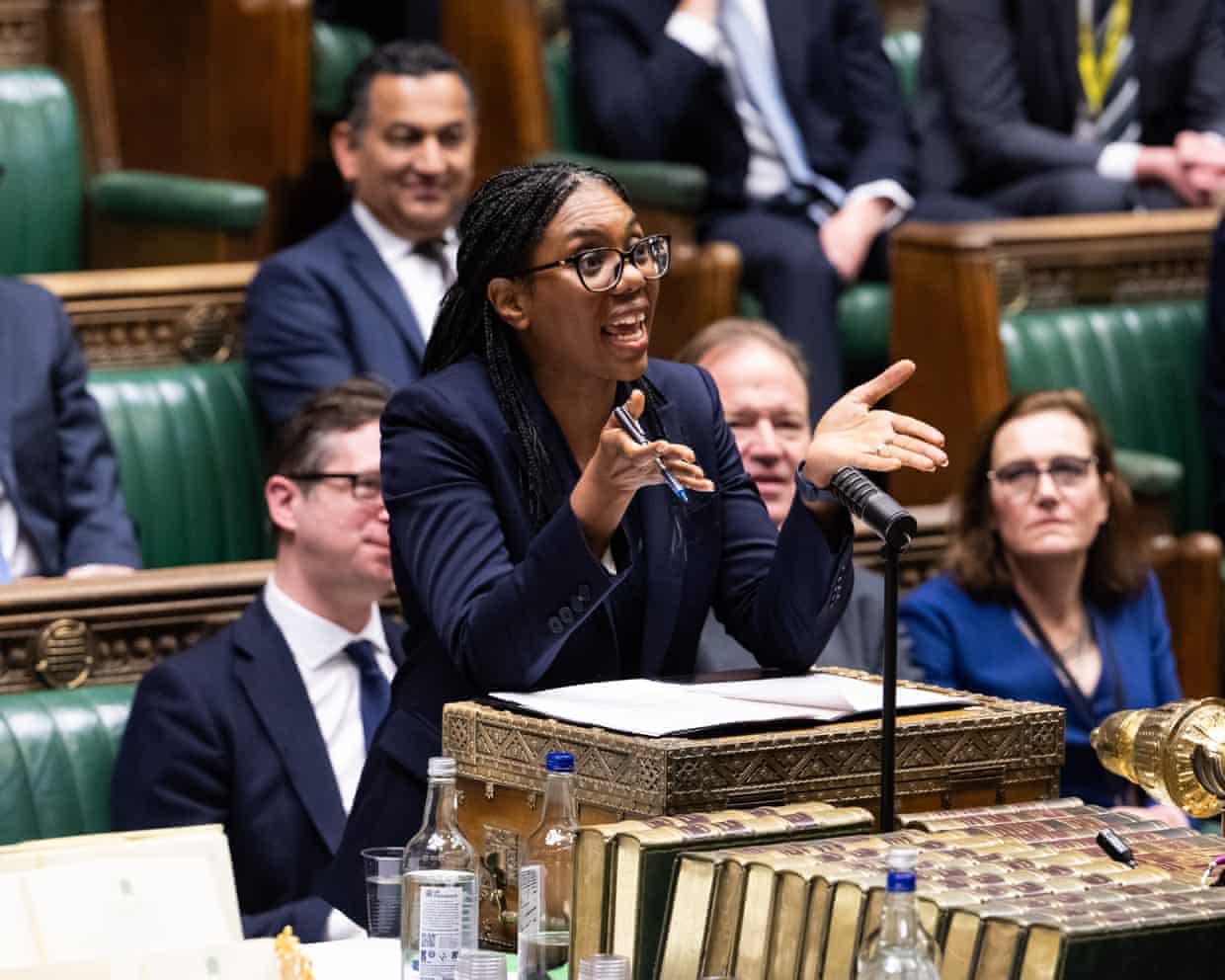
MPs voted 335-223 against the motion, meaning the government won by a majority of 112.Keir Starmer saw off an opposition bid to refer him to a standards committee over Peter Mandelson’s appointment. The government won the vote by 335 votes to 223, a majority of 112.Peers have ended their stand-off with MPs over plans to curb social media for under-16s after the government agreed to introduce “age or functionality restrictions”.After the Guardian’s story that the Treasury is considering imposing a one-year rent freeze on private sector homes to deal with the impact of the Iran war on household budgets, the PM’s spokesperson said: “We have no plans to implement this

Drop the ‘toxic hot potato’: what Barton and McSweeney really revealed about the Mandelson scandal
The latest two witnesses to testify to parliament over Peter Mandelson’s appointment had plenty to offer headline writers. “A toxic hot potato” was how Philip Barton, the former top civil servant in the Foreign Office, described Mandelson’s links with Jeffrey Epstein, a view he would have shared with Downing Street if only he had been asked.“A knife through my soul” was how Morgan McSweeney, the prime minister’s former chief adviser, described the moment he found out the true nature of Mandelson’s relationship with the convicted child sex offender.But the most interesting parts of both men’s evidence on Tuesday were those that addressed the question at the core of the scandal: was the Foreign Office’s decision to grant Mandelson security clearance against the advice of the vetting agency influenced by pressure from Downing Street?Both Barton and McSweeney agreed there was pressure put on the department over Mandelson’s security vetting. Both, however, maintained it had no bearing on the decision in late January 2025 to grant Mandelson clearance

Shabana Mahmood’s frustration with immigration debate is understandable | Letter
Zoe Williams criticises Shabana Mahmood’s recent language as showing “contempt for the values of her own party”, but I disagree (Shabana Mahmood’s expletive was shocking. But not for the reason you think, 23 April). In today’s polarised climate, too many on the progressive side treat any divergence on issues like immigration as indistinguishable from Reform UK. That simply isn’t true.Mahmood’s language may have been coarse, but her frustration is understandable

‘Protected for another century’: experts lift 15-tonne foremast from HMS Victory

Having Spent Life Seeking by Kae Tempest review – painfully earnest tale of trauma and transition

The Primitives: ‘A reviewer said that Crash would finish the band. Then it was in Dumb and Dumber’

Arts funding gap in the north must be closed | Letters

‘I wanted alcohol to take me to a place where I was not’: comedian John Robins on the moment he realised he had a drinking problem

Tate at a turning point: new director must confront unwieldy ‘beast’ of an art institution