Could Lib Dems become the biggest party in English local government?

It has been an election buildup dominated by the rise of Reform UK and the Greens, and the contrasting woes of Labour and the Tories.But there is a chance that on 8 May the Liberal Democrats, largely ignored in recent weeks, could wake up as the biggest party in English local government.This is just one of several paradoxes for the party’s leader, Ed Davey, and his team.They are fifth in many national polls, with a rating barely changed from 2024.But Lib Dem bosses are sanguine, convinced that UK politics is now so different, so atomised, to make headline polling almost irrelevant.
One senior Lib Dem said: “A lot of people seem to be misreading the way things are going.We think we have some of the answers.”In one sense, the ambitions are familiar.Barring an unexpected change of fortunes, the Lib Dems will increase their total number of councillors for an unprecedented eighth set of local elections in a row.A particularly good night for the party, plus heavy losses for the Conservatives, could result in the Lib Dems overtaking Kemi Badenoch’s party.
If Labour fared very badly, there is an outside chance this second place could become first,One party strategist said: “It’s not something we’re necessarily expecting this time – it’s more likely in a year or two,But for all the fuss about Reform, year after year we are quietly making gains,It’s the tortoise and the hare,”Beyond the raw metrics there will be two main gauges of success for the Lib Dems.
The first is consolidation or progress in “blue wall” areas where they took dozens of parliamentary seats from the Conservatives in 2024.“In places like Surrey we want to show we can finish the job on the Tories,” as one Lib Dem MP put it.“I call it electoral bamboo,” another MP said.“I’m still surrounded by Conservatives, but we are spreading out quickly.”The other gauge, which feels less certain, would be gains on councils which, in recent years, have been less promising ground for the Lib Dems, such as Birmingham and Preston.
It is the latter category where Lib Dem strategists hope to test out a campaigning model based on a mixture of rigorous voter targeting and being able to, as one planner put it, “cut through the noise” of an increasingly fragmented political system,For the local elections, this is based around occasionally Reform-adjacent retail policies, such as a demand to cut fuel duty by 10p to help with costs from the Iran war, coupled with relentless attacks on Nigel Farage, particularly his closeness to Donald Trump,The party is now running its biggest-ever programme of digital adverts, most targeting Farage, contrasting his support for Trump with Davey’s repeated willingness to criticise the US president,“Iran has had real cut-through,” one Lib Dem MP said,“It’s not uncommon to have someone complain about potholes and then switch directly to the war and their worries about Trump.
“It is also really notable the number of doors you knock on where people say they are desperate for anyone except Reform to win,Farage is really polarising,”This phenomenon is central to a strategy aimed mainly at the next general election but getting an initial try-out on 7 May,Based on huge amounts of internal polling, the Lib Dems are working on the basis that about half of voters will do whatever is necessary to block Reform in their local area,One senior Lib Dem said: “We are seeing huge, huge, levels of tactical voting, in a way we haven’t seen before.
” It is this context that makes the party relaxed about polling about who will definitely vote for them, and to focus more on those who would consider it, perhaps tactically,With about a quarter of voters seen as strongly pro-Reform – the “burn everything down and start again” sector, as one Lib Dem official put it – another quarter are frustrated with the government and flatlining incomes, but uncertain where to go,This is where campaigning is aimed, based on a mixture of retail policies centred on the cost of living and presenting the Lib Dems, particularly Davey, as able to understand their worries but without the baggage or discord that comes with Reform,One senior Lib Dem said: “We don’t need to chase the 50% who are already anti-Reform,They will vote tactically regardless of almost anything else.
In 2019 we tried to win just with these people and got hammered.It’s easy to boost polling numbers and lose seats.”This will, however, at most be a partial test.Local elections are not general elections: turnout is lower, and many voters are less worried about a Reform-run council collecting their bins than the idea of Farage in Downing Street.But there will be lessons to uncover, including whether the Lib Dems’ electoral ground game still works in a five-party battle, and if Davey, whose performance has prompted some grumblings among MPs, has the ambition and charisma to expand the party’s brand outside its strongholds.
Thus far, the mood feels hopeful.“There is more work to do, but we are getting towards being on the right track,” one MP said.“Some of the movement on economy is positive.”But with the two-party system seemingly smashed and voter loyalty a memory, all predications come with caveats.This is new ground for everyone.
“I knocked on a door and a man said he wanted to vote for Restore Britain,” one MP said, referring to the Rupert Lowe-led start-up party that sits even further to the right than Reform.“When I told him they aren’t standing here he said: ‘Well, it’s probably you then.’ That was a first.”
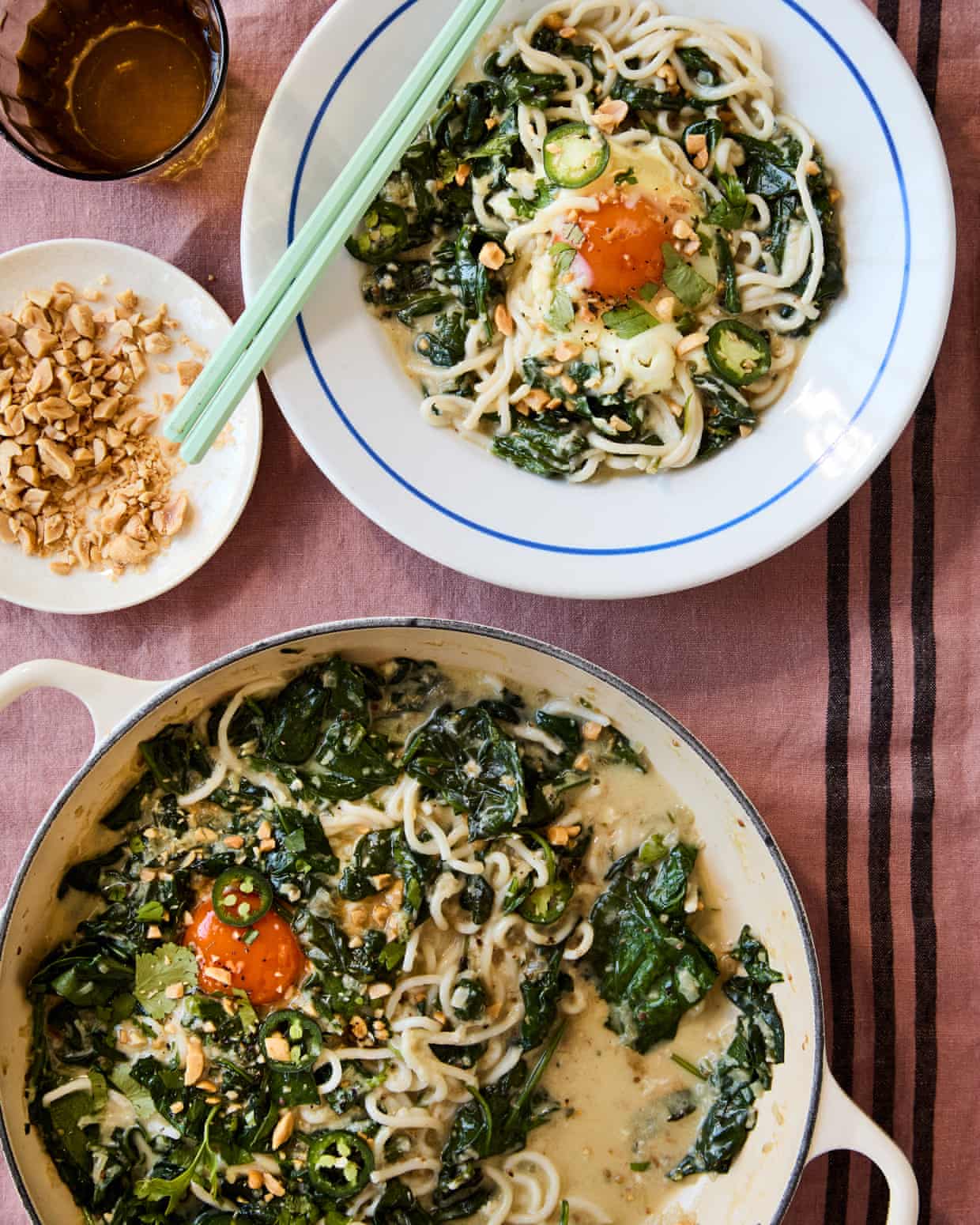
Rukmini Iyer’s quick and easy recipe for green chilli eggs with coriander and coconut | Quick and easy
This might look like a shakshuka, but with lemongrass, ginger and lime, you couldn’t really get away with calling it one – particularly because the noodles make this an easy, flavour-packed one-pan dinner. The crunch of the peanuts is particularly good against the lime-spiked coconut milk – a perfect transitional “is it spring yet?” dinner.Prep 15 min Cook 15 min Serves 21½ tbsp neutral oil 2 garlic cloves, peeled and grated½ stick lemongrass, finely chopped½-1 green chilli, finely chopped (remove the pith and seeds first if you want less heat)5cm piece fresh ginger, peeled and finely gratedJuice and zest of 1 lime 2 large echalion shallots (or small onions), peeled and finely sliced1 tsp freshly ground coriander seeds 1 tsp flaky sea salt 320g baby spinach400ml tin coconut milk, whisked smooth150g packet straight-to-wok medium noodles2 eggsTo serve 15g coriander, roughly chopped 50g salted peanuts, finely chopped½ green chilli, finely sliced (remove the pith and seeds first if you want less heat)Heat the oil in a large, deep frying pan on a medium heat, then add the garlic, lemongrass, chilli, ginger, lime zest and shallots. Stir-fry for four to five minutes, until the shallots are soft and the mixture is aromatic and starting to brown lightly, then turn down the heat and add the ground coriander and salt. Stir-fry for 30 seconds, add the spinach and cook for two minutes, until it is just wilting
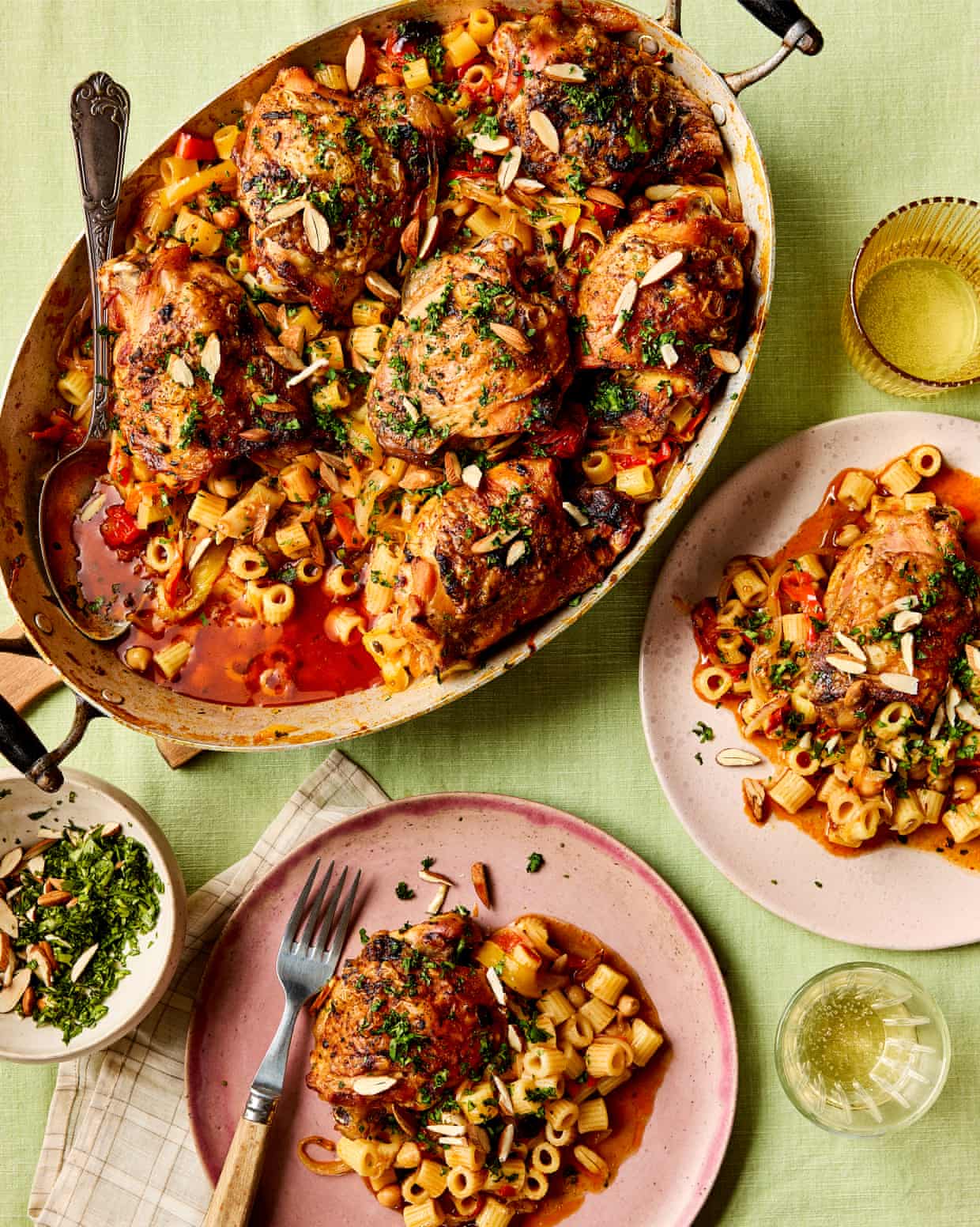
A pasta bake and a sumac salad: Sami Tamimi’s prep-ahead sharing recipes
My ideal way of entertaining is completely fuss-free, with everything prepared ahead of time so I can enjoy being with my guests rather than worrying about cooking. I like to put big, generous dishes in the middle of the table, such as this one-tray chicken, pasta and chickpea bake, alongside a fresh salad, so everyone can serve themselves and share a simple, delicious meal.This is a comforting and flavourful dish that brings together tender chicken, hearty chickpeas and perfectly cooked pasta in a rich, pungent sauce. It’s a simple yet satisfying meal that’s ideal for busy weeknights or casual family meals. Everything cooks together in the oven, and the flavours blend beautifully while keeping prep and washing-up to a minimum
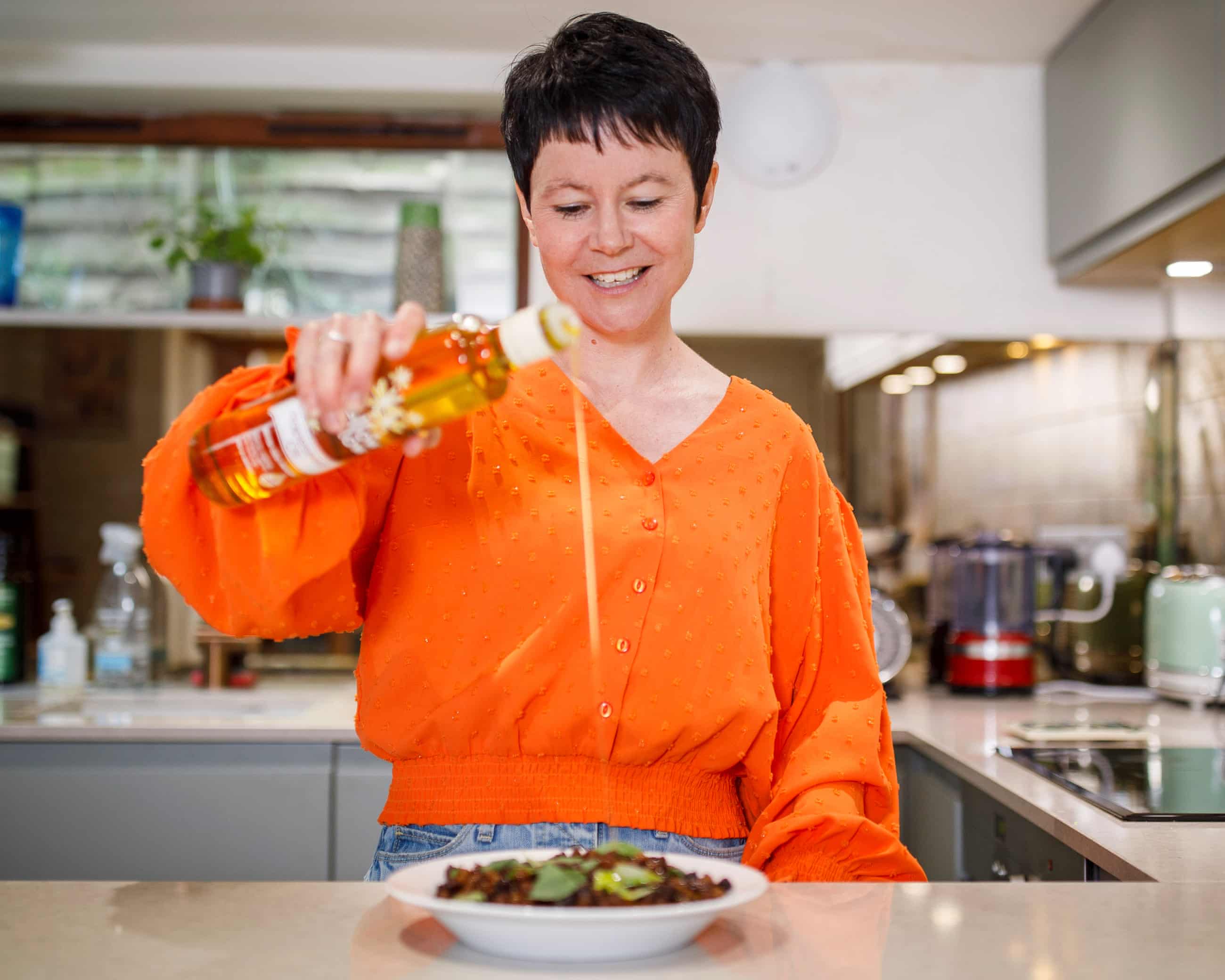
The truth about cooking oils: 14 essential facts for healthier, cheaper meals
From avocado to hemp, extra virgin olive and rapeseed, the shops are packed with various oils. But what is worth spending money on? And are any of them actually better for you? The world of cooking oils is confusing. I keep spotting new ones on supermarket shelves, trumpeting their health claims. Cold-pressed avocado oil, extra virgin macadamia oil, organic coconut oil, premium hemp seed oil … Even familiar oils are mired in controversy. Is it OK to cook with olive oil? Should you avoid seed oils? Meanwhile, prices keep rising – earlier this month, Walter Zanre, the CEO of Filippo Berio UK, said supermarkets were “taking the mickey” out of customers over olive oil pricing

The surprising boom in blouge wine: ‘It’s for 5pm, in the sun’
Twenty years ago, a winery could do well selling one white and two reds, says Konrad Pixner, a northern Italian winemaker who set up his vineyard, Domaine de L’Accent, in Languedoc, France, in 2019. But today, importers and bars always ask: “Do you have something new?” So up in the hills, surrounded by deep gorges and limestone plateaus, Pixner is constantly experimenting.After a good harvest in 2023, Pixner walked into the shed he shares with other winemakers at 4am to find that his biggest vat of white wine, pressed from carignan blanc grapes, had overflowed during fermentation. He had run out of space, so he quickly “pumped the white juice into the tank where whole bunches of carignan noir were,” he says, and left them to ferment for 10 days together. In contrast to rosé, made from red grapes left for a short time with their skins on before being pressed, he created “blouge” – a light, fresh wine blended from white and red grapes that’s best served chilled

How to make the perfect custard creams – recipe | Felicity Cloake's How to make the perfect …
Prue Leith reckons the custard cream is “arguably Britain’s most iconic biscuit” – and, certainly, we’ve been dunking this fern-patterned treat in our tea for well over a century, with early advertisements for this “delicious biscuit” placing it, perhaps aspirationally, in the “fancy” category. By 1920, Bermondsey baking behemoth Peek Frean could confidently declare the custard cream “far and away the most popular of all the cream sandwich biscuits”, a status only slightly dented by the time I was at school about seven decades later, when it sat just below its contemporary, the chocolate bourbon, in the playtime snack ratings.Despite my love of both custard and cookies, however, I’ve always found this particular custard-flavoured product a bit sugary and dull. As historian Lizzie Collingham explains in her magisterial book, The Biscuit: The History of a Very British Indulgence, it combines two early industrial foodstuffs, namely custard powder and machine-made biscuits, and though they may have been created in a factory, I think they’re much better made at home.Let’s be honest, the biscuit isn’t really the point of the packet variety – as children, we’d prise them open to scrape out the sugary filling, like bears sucking honey from a split log – but when you bake them yourself, it can be
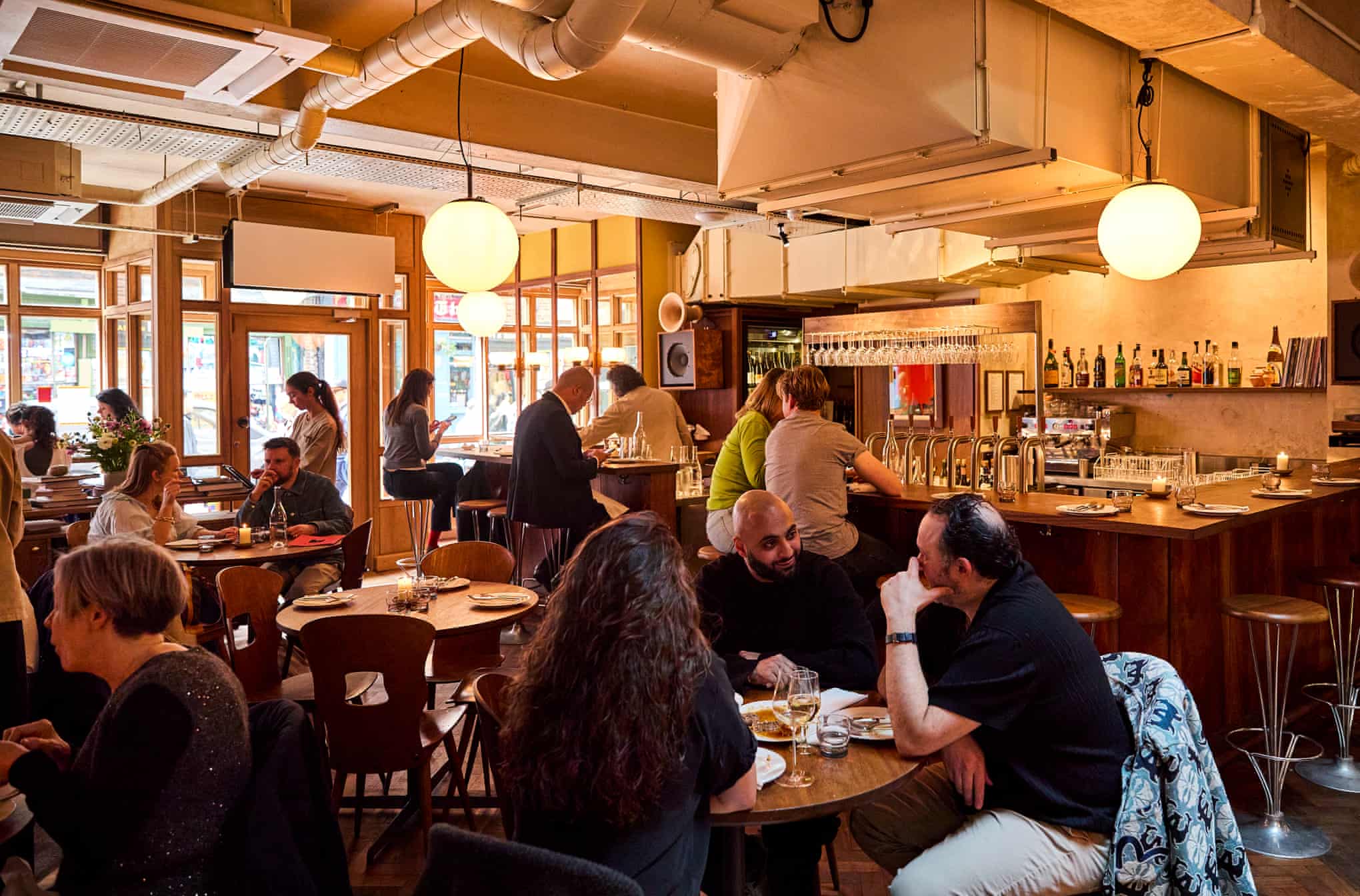
Impala, London W1: ‘Shamelessly, brilliantly too much’ – restaurant review | Grace Dent on restaurants
Impala is like no restaurant I’ve ever been to, yet it somehow has echoes of almost all of themLate last month, Impala drove into Soho already flaming hot in the hype stakes: this was a sizzling booking to brag about even before executive chef and co-founder Meedu Saad had turned on the stoves. Impala, after all, is a Super 8 restaurant, the group that has, among others, Tomos Parry’s Brat in Shoreditch, which has been constantly, unfalteringly brilliant since 2018. It also runs Parry’s second baby, Mountain, which is likewise wonderful; sometimes weird, yes, but always wonderful. Long before that, back in 2016, they opened Kiln, the famed live-fire Thai counter hangout that cheffy boys in beanies have tried and failed to emulate all over Britain, while Super 8’s beginnings were with the boundary-pushing and much-loved Smoking Goat. That is nothing less than a litany of solid-gold bangers, and now they’ve unleashed Impala by Saad, the former head chef at Kiln

Bank of England warns ‘higher inflation is unavoidable’ after leaving interest rates on hold
Eurozone inflation soars to 3% as Iran war drives up energy prices
Maryland becomes first state to ban surveillance pricing in grocery stores

Tech giants’ results show rosy outlook for AI boom and US stock market

‘I really was one of those bandwagon fans’: meet Katharina Nowak, F1’s youngest race president

Trial or error? Lancashire bear brunt as county game adjusts to new substitute rules | Ali Martin