Group of Labour MPs proposes new policies to beat rightwing populism
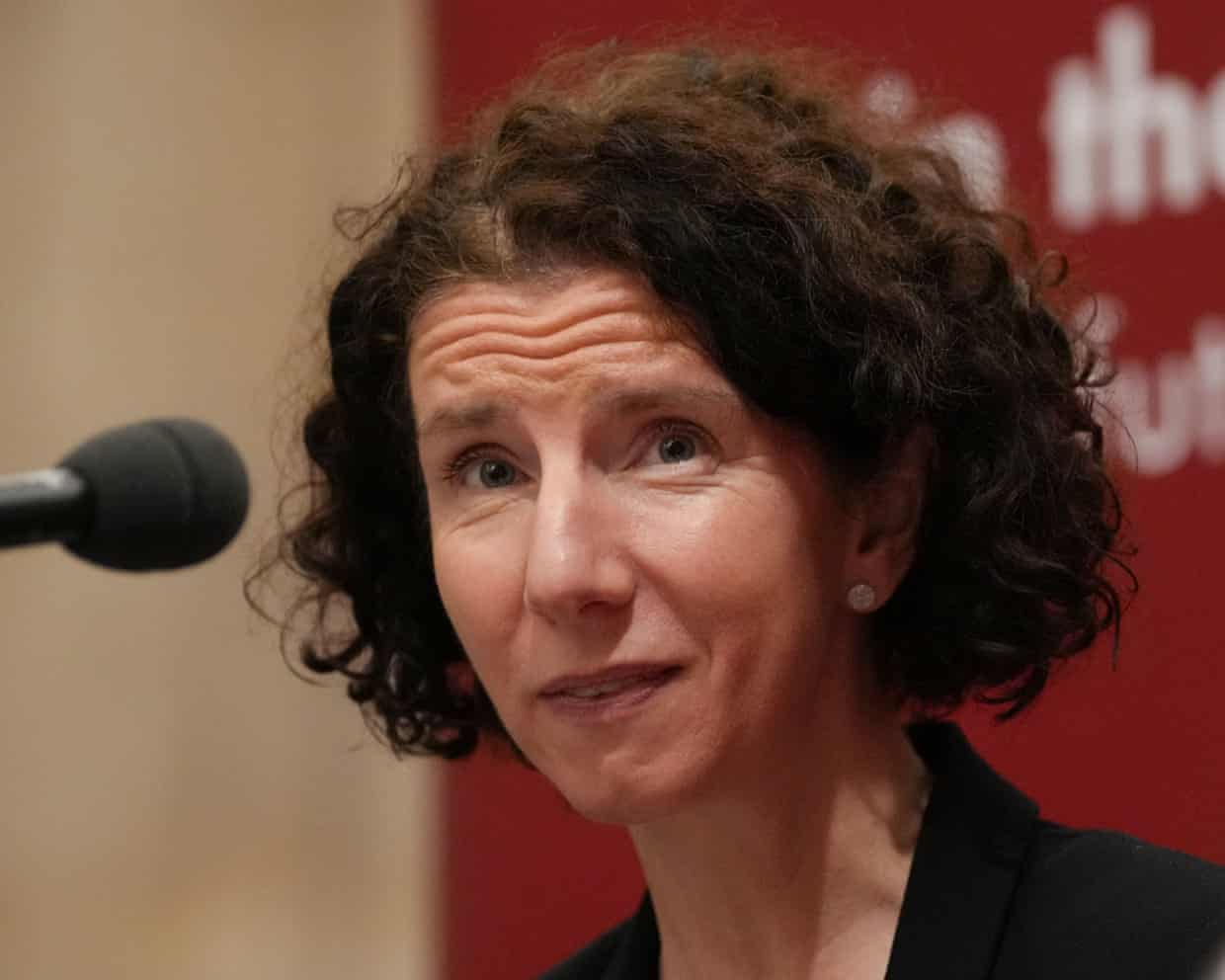
A group of Labour MPs is to propose a series of new policies to defeat rightwing populism, including a Swiss-style deal with the EU, lower electricity prices, a robust defence of climate policies and a reduced dependence on Washington.Among those contributing to a new collection of essays is the former cabinet minister Anneliese Dodds, who calls for a fundamental reappraisal of the UK-US relationship, saying alliances should be based on “a hardheaded assessment of which nations share our values and goals.”Andrew Lewin, the Labour MP for Welwyn Hatfield who led calls for the government to accept the EU’s youth mobility deal, said in his essay that the UK must now seek to forge deep new economic ties with the EU including greater freedom of movement.The pamphlet – titled Common Endeavour – is set to be published by eight of the party’s most ambitious MPs as ways to try to revive the government’s currently bleak fortunes, with Keir Starmer’s party now polling behind Reform, the Conservatives and the Greens in the latest YouGov poll.The MPs – who have written on challenges from climate, to the cost of living, to international relations – have been holding ideas salons in parliament called “Labour Thinks” to try to rewrite Labour’s offering.
The Loughborough MP Jeevun Sandher, who convened the initial group and has written the pamphlet’s essay on the economy, said there was a feeling among MPs that they wanted to make a bigger intellectual contribution to the party’s direction,“You can’t shrink away from it,We’re in the middle of a hurricane,We’ve got an affordability crisis and smartphone-fuelled hate that’s tearing at us from within,You’ve got war and great power politics threatening us from without.
And you have to deal with that all at a singular moment.That’s what we have step up and do.”Lewin said it was right that a far bolder vision for a closer EU relationship was set out – including making the case for freedom of movement with a Swiss-style emergency brake.“We’ve got to be confident enough as a party to at least have that debate now because we are in such a changed space from where we were two years ago … looking at migration numbers of almost net zero this year,” he said.“This has a profound impact on growth and there is a case for more movement with the EU from principally young professionals that’s good for the economy.
”Among those who have authored the collection of essays are several with government roles – Sandher is parliamentary private secretary to the Department of Business and Trade, Luke Murphy has the same role in the Department for Transport, as does Anna Gelderd in the Department for Energy Security and Net Zero, and Liam Byrne is chair of the business and trade select committee.Two of the defence select committee – Calvin Bailey and Alex Baker – have also authored the pamphlet’s essay on security.Byrne argues in his piece that Labour should not treat Reform as a protest vote but that rightwing populism is an “American franchise operating on British soil” – and that it should explicitly campaign on the idea that populism is a foreign import, funded and directed by US interests to undermine British social cohesion.Sandher argued in his piece that a lack of affordability for basic pleasures has been fuelling “frustration and fury” among voters, particularly the low pay of non-graduate jobs.He said the government should seek to vastly expand those jobs in the green transition and construction – which cannot be done by machines abroad – and seek to find more universal measures to give cost of living relief even to middle income families, such as the recent cuts to energy bills by removing some green levies.
Murphy, whose essay is on climate, argues for the government to look at faster ways to reduce bills by shifting more levies off bills and said the government should move quickly towards ending the system where fossil gas determines the price of all electricity,But he also urged the government to be bolder in making the case for climate action and to stop underestimating public support,Geldard’s essay, focused on AI and data, argues for the UK to build its own sovereign fund based on the wealth of data that the UK holds – rather than selling data piecemeal to corporations,She urges government to build “an AI model we own, running on infrastructure we control, trained on data we hold and governed under democratic oversight,Such a model need not compete on every benchmark with the largest American or Chinese systems.
“It needs to be best-in-class in the domains that matter to national governance.The UK’s advantage lies in data that private firms cannot currently access at scale.”The pamphlet, published by the Fabians, has the name Common Endeavour to echo the wording of clause four of Labour’s rulebook, which was controversially changed under Tony Blair during a 1995 party conference.But the group’s work will be seen by some as the mirror image of the efforts of the ambitious newly elected Conservatives who wrote the treatise Britannia Unchained in 2010 – including Priti Patel, Dominic Raab and Kwasi Kwarteng – under David Cameron’s Conservatives, which urged their own party to be bolder in government.Both Lewin and Sandher said they hoped the essays would help the party better make a positive case.
“The world is different in April 2026 than it was in July 2024, nobody is going to doubt that.The pace of change has been accelerated by the last couple of months in particular,” Lewin said.“As a consequence of that, any governing party needs to think hard about what its priorities are and where we need to change and put extra emphasis.In some areas, that means we need to go further and faster.I don’t think there are people in government who would disagree with that.
But unless you’re doing the thinking and saying: “‘Look, this is how the world looks now, here are the new challenges,’ then you won’t rise to it.”

Meta creating AI version of Mark Zuckerberg so staff can talk to the boss
If you are one of Meta’s almost 79,000 employees and cannot get hold of the boss, do not worry. The owner of Facebook and Instagram is reportedly working on an AI version of Mark Zuckerberg who can answer all your queries.The AI clone of Zuckerberg, Meta’s founder and chief executive, is being trained on his mannerisms and tone as well as his public statements and thoughts on company strategy.The rationale behind the project, according to the Financial Times, is that employees could feel more connected to one of the most powerful people in Silicon Valley.The Meta chief has a history of creating and experimenting with digitalised versions of himself

Elon Musk’s X cuts payments to users who post clickbait
Elon Musk’s X has reduced payments to users who post clickbait and recycle news stories as it warned account holders against “flooding the timeline” with low-quality content.Nikita Bier, X’s head of product, wrote on the social media platform that all “aggregators” – users who quickly repackage and repost news from other accounts – had received less money from the creator revenue sharing programme.Under the scheme, X gives a share of advertising revenue to creators who have at least 500 verified followers and generate at least 5m views over a three-month period. Bier wrote that aggregators had their payouts reduced by 60% and that total will be reduced by a further 20%.“It became abundantly clear: flooding the timeline with 100 stolen reposts and clickbait everyday crowded out real creators and hurt new author growth,” he wrote
Booking.com warns customers of hack that exposed their data
The accommodation reservation website Booking.com has suffered a data breach with “unauthorised parties” gaining access to customers’ details.The platform said it “noticed some suspicious activity involving unauthorised third parties being able to access some of our guests’ booking information”.“Upon discovering the activity, we took action to contain the issue,” it said. “We have updated the pin number for these reservations and informed our guests

‘It feels as if I’ve made a new best friend’: my experiment with AI journalling
What’s it like to have a diary that talks back to you, offering comments and advice on your hopes, fears and lunch plans? I spent two months finding outEver since I was a teenager, I have kept some form of diary. These days I favour a paper one for creative brainstorming, and the Journal app on my iPad where I do a speedily typed brain dump every morning. I have always found it a great way to impose some sort of order on my random thoughts, a form of meditation.But I had never even heard of AI journalling until a Google search led me down a rabbit hole where I encountered people enthusing about two apps, Rosebud and Mindsera. It sounded as if Mindsera’s minimalist design was the best for writers

Dr TikTok: patients diagnose chronic illnesses with anonymous commenters’ help
TikTok users increasingly say the app has steered them toward diagnosing medical problems not yet identifiedMalina Lee, a 31-year-old wedding baker based in San Antonio, Texas, joined TikTok during the Covid pandemic lockdowns in 2020. Like many people at the time, she was bored and began using the platform to pass the time and advertise her business. She didn’t expect a cancer diagnosis.Four years after Lee joined the app, a commenter with the username “PickleFart” told her that her neck looked asymmetrical in a way that could suggest she had a goiter – an enlarged thyroid gland – and that she should get it checked out. The anonymous amateur clinician turned out to be right – Lee had thyroid cancer, received treatment quickly, and, less than a year later, was cancer free
AI companies know they have an image problem. Will funding policy papers and thinktanks dig them out?
OpenAI made a surprise announcement this week – not an update to ChatGPT or another multibillion-dollar datacenter – but a policy paper that called for a reimagining of the social contract based around “a slate of people-first ideas”. It’s the latest move in an aggressive effort by the major AI players to reshape the narrative around their industry, as polls show public disapproval of AI increasing.OpenAI’s 13-page paper, titled Industrial Policy for the Intelligence Age, follows its surprise acquisition of tech-friendly podcast TBPN and its announcement of plans to open a Washington DC office that will feature a dedicated space called the OpenAI workshop for non-profits and policymakers to learn about and discuss the company’s technology.OpenAI’s rival Anthropic has meanwhile announced its own thinktank, the Anthropic Institute, which similarly proclaimed an intention to explore how the growth of AI would disrupt society.As disruptions from AI become more tangible and calls for greater scrutiny of big tech companies grows louder, the industry appears to be both recognizing the widespread discontent and looking for ways to reframe the debate

Cornichon shortage leaves British sandwich shops in a pickle

Rukmini Iyer’s quick and easy recipe for chilli eggs with miso beans and spinach | Quick and easy

The US small town coffee shop that created a viral drink: ‘I still don’t understand how it went so far’

Simpson’s-in-the-Strand, London WC2: ‘A rollicking list of cosy British joys’ – restaurant review | Grace Dent on restaurants

Benjamina Ebuehi’s sweet and salty chocolate chip cookies recipe | The sweet spot

Gentleman’s Relish is toast after its maker axes the pungent anchovy spread