I called my recipe book Sabzi – vegetables. But the name was trademarked. And my legal ordeal began

Vegetables, in my experience, rarely cause controversy.Yet last month I found myself in the middle of a legal storm over who gets to own the word sabzi – the Hindi, Urdu, Punjabi, Persian, Dari and Pashto word for cooked veg or fresh greens.It was a story as absurd as it was stressful, a chain of delis threatened me with legal action over the title of a book I had spent years creating.But what began as a personal legal headache soon morphed into something bigger, a story about how power and privilege still dominate conversations about cultural ownership in the UK.When the email first landed in my inbox, I assumed it must be a wind-up.
My editor at Bloomsbury had forwarded a solicitor’s letter addressed to me personally, care of my publishers.As I read it, my stomach dropped.A deli owner from Cornwall accused me of infringing her intellectual property over my cookbook Sabzi: Fresh Vegetarian Recipes for Every Day.Why? Because in 2022, she had trademarked the word sabzi to use for her business and any future products, including a cookbook she hoped to write one day.My jaw clenched as I pored over pages of legal documentation, written in the punitive and aggressive tone of a firm gearing up for a fight.
I was accused of “misrepresentation” (copying the deli’s brand), damaging its business and affecting its future growth, and they demanded detailed commercial reports about my work, including sales revenue, stock numbers and distribution contracts – information so intrusive that it felt like an audit.Buried in the legal jargon was a line that shook me.They reserved the right to seek the “destruction” of all items relating to their infringement claim.Reading the threat of my book being pulped was nothing short of devastating.It was also utterly enraging.
Because sabzi isn’t some cute exotic brand name, it’s part of the daily lexicon of more than a billion people across cultures and borders.In south Asia, it simply means cooked vegetables.Shout it loudly in any household and someone will instinctively start chopping.For Iranians, sabzi refers to fresh herbs and greens and is part of the national psyche.Iran’s national dish is ghormeh sabzi, a fragrant herb-laden stew, and sabzi is the scent of Nowruz, the Persian New Year, where we eat herbed rice and grow fresh greens as a symbol of rebirth and renewal.
As someone of both Pakistani and Iranian heritage, when I first had the idea of writing a vegetarian cookbook back in 2017, I knew that I wanted to call it sabzi to honour the two food cultures I grew up with,But back to the deli’s threats,My publishers sought legal advice – which was clear: the claims were overreaching and we should fight them,Book titles can’t actually be trademarked and common cultural words should be exempt from intellectual property law (can you imagine if someone tried to trademark common food words like curry, pasta or tapas?) The evidence of alleged business harm was weak, amounting to a few emails from customers who seemingly couldn’t differentiate between the deli owner and my name on the cover of the book,The legal team responded robustly, and I stepped away imagining we’d hear more in a few weeks.
Then everything exploded.One morning, I opened Instagram to find I was subject of a pile-on accusing me of copying the deli by calling my cookbook Sabzi.I noticed an unusual pattern in the people sending me aggressive messages: they were all women, all white, and all from Cornwall.I traced the comments back to the deli’s page and saw the owner had posted publicly about the legal action, naming me and framing it as a David-v-Goliath battle.This puzzled me, as business chains generally do rather better financially than food writers.
Her statement also described herself as a “mother of two”, a detail that was later repeated in press coverage as though maternity itself conferred some kind of moral authority.As someone who has written extensively about infertility and recurrent pregnancy loss, I found the framing jarring.There are many places in the world where motherhood shapes your vulnerability – Sudan, say, or Gaza.But a privately educated deli owner, related by marriage to the former prime minister Clement Attlee, taking legal action against a writer over the title of a book that just means “vegetables” is not one of those situations.The deli owner was working with a PR company to amplify her case so it wasn’t long before local and national journalists started getting in touch.
I was dumbfounded as to why the case was being escalated in public, outside legal channels, but it was clear that she was determined to heighten the dispute.She reported my book for trademark infringement on Amazon and overnight it disappeared from the world’s biggest bookseller.Say what you like about Amazon (and I often do), but most books are bought there, particularly in the run-up to Christmas, so it’s an important platform for authors.My editor explained that under Amazon’s policies, only the complainant can revoke an infringement claim, which meant we could be waiting months – possibly until after court proceedings – for my book to reappear online.It was around that time that I stopped being able to sleep.
The stress wasn’t abstract any more, it was a direct threat to my livelihood,It was then – in a twist that still feels ridiculous to write – that a letter arrived from the Duchy of Cornwall, one of the monarchy’s oldest feudal estates, on behalf of the deli owner as her landlord,The letter argued in support of the deli’s right to trademark the word sabzi, a plot twist so colonial that I had to check whether the East India Company had been revived,I didn’t have “correspondence with Prince William’s estate about vegetables” on my 2025 bingo card and wondered what would come next,A note from King Charles demanding a Tupperware of leftovers?When a private estate providing income to the crown becomes involved in a legal dispute over the ownership of an Asian word for veg, the legacy of the entitlement at the heart of British colonialism is laid bare.
And really, for me, it felt as if colonial entitlement were at the heart of this case.Throughout the saga, some argued that because the deli owner had some Iranian heritage (her father is from Iran and her mother is British), the dispute wasn’t about cultural appropriation.But people of colour know that heritage alone doesn’t guarantee solidarity.British politics offers its own examples of this – Priti Patel, whose family fled persecution in Uganda, and Suella Braverman, whose parents were economic migrants to the UK, have used some of the most inflammatory rhetoric against refugees and migrants in recent memory.You can share a heritage and still uphold the power dynamics of privilege.
Because my lawyers advised silence, I couldn’t comment publicly,My friends, however, made up for it,Desi WhatsApp during a scandal is its own news channel: one half outrage, one half jokes about your ancestors rising from the grave,Their fury was laced with a weariness, though,When words born in our grandmothers’ kitchens become entangled in legal battles backed by establishment power, something has gone seriously wrong.
This case is part of a much bigger pattern.For decades, companies in the global north, backed by western intellectual property laws, have attempted to control or commercialise food terms and ingredients from the global south.In the UK, the restaurant chain Pho sparked widespread outrage when it issued cease-and-desist letters to other Vietnamese restaurants for using the word “pho” in their names and later withdrew its trademark after public pressure.A similar backlash ensued after the celebrity chef David Chang’s Momufuku empire attempted to trademark “chili crunch”, a spicy condiment popular in east Asian homes, or when the US company RiceTec tried to patent “basmati”, the name of a rice grown in, and deeply entwined, with the heritage of India and Pakistan.Farmers and activists in the global south have also fought numerous biopiracy cases, not over words, but over seeds and plants.
The examples raise the same questions about who gets to own and profit from traditional food culture.Monsanto’s patent relating to the use of Nap Hal wheat for chapati flour was later revoked; the Dutch company Health and Performance Food International secured patents over teff, Ethiopia’s 4,000-year-old staple grain (though these were later ruled invalid); and South Africa defeated attempts to trademark rooibos tea – yielding its manufacturers geographic rights over the term, in the same way that champagne, Darjeeling tea and Colombian coffee are protected descriptions.Farmers in the global south have long argued that these cases and attempts represent a new form of colonial extraction, carried out not by armies but by intellectual property and patent lawyers.For those of us in diasporas, these ingredients and words carry a different but equally emotional weight.They are bridges to our families, our histories and our identities.
If my friends embraced me privately during this ordeal, the food world embraced me openly.As the news of the dispute spread, some of the UK’s most respected food writers rallied, with Rukmini Iyer, Rachel Roddy, Catherine Phipps, Olia Hercules, Debora Robertson and Nigella Lawson (among many more) posting clear-eyed arguments about why food culture belongs to everyone.It was incredibly moving to see others speak the words I could not and I’m for ever indebted to those who, through no ask from me, leapt to my defence.I suspect this happened because the food world is, by nature, collaborative.We blurb each other’s books and publicise the work of our peers.
Food, after all, is a conduit to sharing.But also, I think it’s because we know that there is plenty of room for people working on similar themes to thrive.Just look at how many air-fryer cookbooks exist.As public pressure grew, the tone behind the scenes began to shift.I was informed that the deli would drop the case and withdraw the trademark, a quiet admission that it should never have been sought or granted.
To my relief the book was reinstated with online retailers and although there has been no apology or statement reflecting on lessons, it’s still a win for all of us who do not want our cultures to be commodified,I hope the case leads to reflection in the UK trademark office and that training is introduced so that examiners develop greater cultural literacy,There also need to be safeguards against privatising common words and clearer routes of appeal,Food is something we share, not something we own, and it should stay in the hands of all those who keep it alive,Sabzi: Fresh Vegetarian Recipes for Everyday by Yasmin Khan is published by Bloomsbury (£26).
To support the Guardian buy a copy at guardianbookshop.com.Delivery charges may apply.Do you have an opinion on the issues raised in this article? If you would like to submit a response of up to 300 words by email to be considered for publication in our letters section, please click here.

Report takes aim at Fifa and IOC over policies for athletes convicted of sexual assault
With the draw for the 2026 Fifa World Cup set to take place on Friday, a report examining the participation of athletes convicted of sexual offences at major sporting events has highlighted significant distrust of international sports governing bodies in how they deal with these situations.The report, titled No One Wants to Talk About It, is the result of interviews with elite athletes directly affected by sexual abuse and is intended to gauge attitudes around the eligibility and accreditation criteria for athletes with prior criminal sexual convictions and their participation at mega sporting events.The athletes highlighted “institutional inaction, silence, or complicity” in a lack of regulation by Fifa and the International Olympic Committee (IOC), among other organizations.The report is a collaboration between the Sports and Rights Alliance and Thomas More University in Belgium. The Sports and Rights Alliance is a coalition that includes Amnesty International, Football Supporters Europe, Human Rights Watch, and World Players Union as well as other trade unions and human rights groups

No ‘fire drill’ at TNT after painful loss of Champions League and England rugby | Matt Hughes
It has been a tough couple of weeks for TNT Sports, with the loss of three days of Ashes cricket due to England’s two-day defeat in Perth following on from some bruising rights negotiations.On the eve of the first Test, the Guardian revealed TNT had lost UK rights to the Champions League to Paramount+, with Sky Sports picking up the decent consolation prize of Europa League rights, while this week it emerged that TNT has also lost the rights to international rugby union with ITV having paid £80m for the inaugural Nations Championship.Senior figures at TNT are open about being “absolutely gutted” at losing the Champions League, which has been its biggest property since its predecessor BT Sport first bought the rights in 2013, but they do not regret the level of its bid, which was gazumped by Paramount. The value of the UK rights has increased from £1.2bn to £2

Lando Norris rules out asking McLaren for team orders to help F1 title bid
Lando Norris would not want McLaren to have to use team orders to aid him in winning his first world championship at the season finale in Abu Dhabi this weekend. Both he and his teammate, Oscar Piastri, insisted they had not yet discussed the potential use of orders for the decisive grand prix.Norris goes into the 24th and final race of the season as favourite but still in a close, high-pressure fight with Red Bull’s Max Verstappen and Piastri, enjoying a 12-point lead on Verstappen and 16 on Piastri. Norris will take his first title if he finishes in front of both his rivals or claims third place or better. Verstappen would need to win and hope Norris finishes outside the podium places while Piastri would need to win and have Norris finish sixth or lower
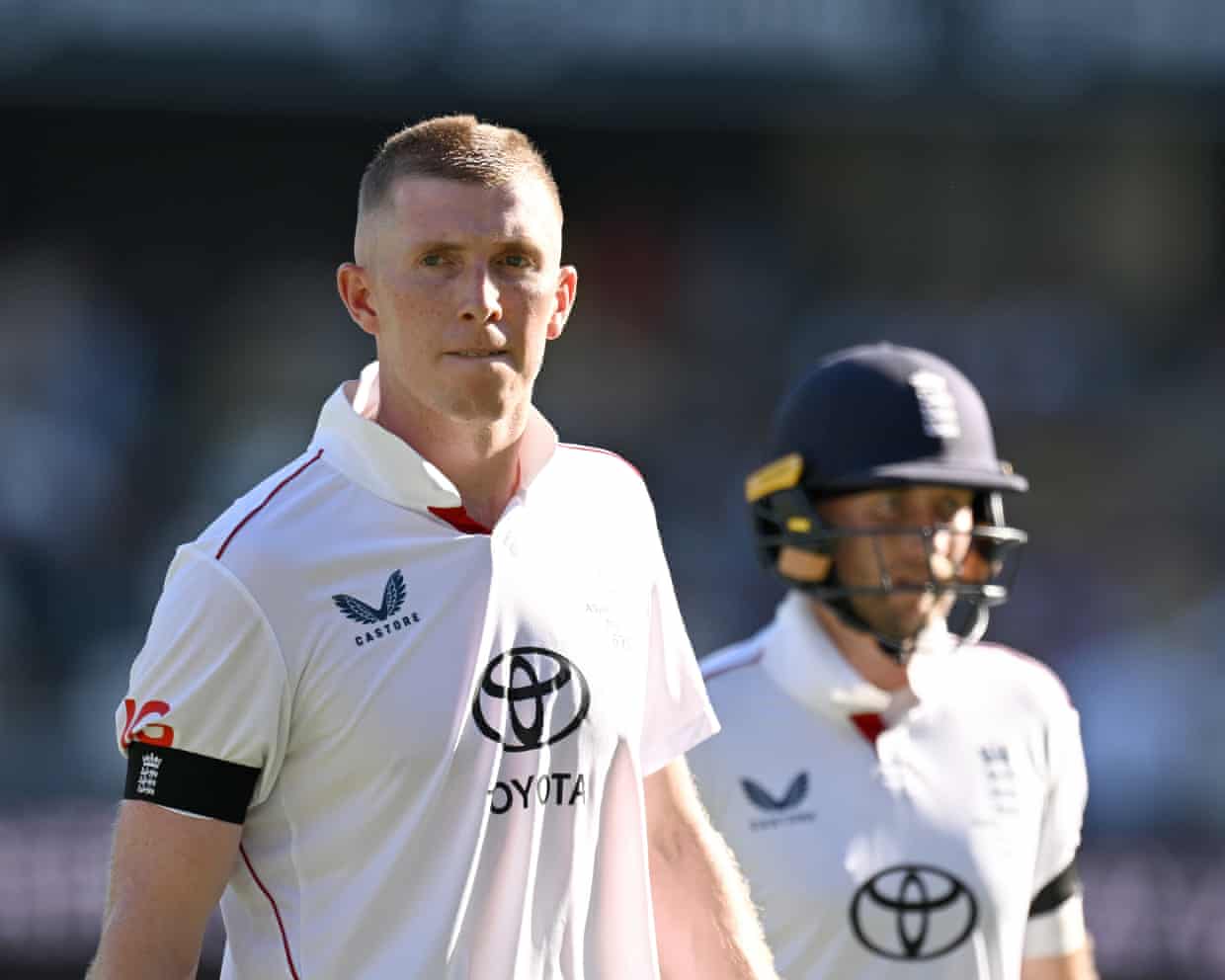
Nathan Lyon in ‘filthy’ mood after Test omission as Crawley hails ‘phenomenal’ Root
Nathan Lyon admitted he was furious after being dropped by Australia for the first time in 13 years of home Tests as the battle for the Ashes got back under way in Brisbane on Thursday. In his absence Joe Root plundered the home side’s all-seam attack for an unbeaten 135 on the opening day at the Gabba, his 40th Test century and his first on Australian soil, an effort teammate Zak Crawley acclaimed as “one of his best”.Lyon, Australia’s all-time third-highest Test wicket-taker, described his mood as “absolutely filthy” as he came to terms with being snubbed. “I’m letting things settle down in my own head and trying to make sure that I’m doing whatever I can to make sure the guys representing Australia do the right thing and get the right result for us,” he said.“I’m not the first player to miss a Test match and I won’t be the last

Sublime Starc is last man standing after Australia’s mystifying call to leave out Lyon | Geoff Lemon
In the end it was Mitchell Starc saving the day in the second Ashes Test as he did the first. In a series supposed to be defined by Australia’s fast-bowling Big Three, he has done the work as the sole member to make the starting line. With one English wicket left to fall and his tally on six for 46, he was on the brink of the remarkable feat of recording career-best figures for the fourth time in less than 12 months. Joe Root and Jofra Archer swung a few runs away to void that statistical note, but it was still another day (and night) of heavy lifting for the man who so far in this series has carried Australia’s burden.Having passed Harbhajan Singh’s 417 Test wickets in the process Starc, who ended day one with figures of six for 71, is now in the top 15 wicket-takers on the Test all-time list, but the more significant milestone from the overtaking lane was the 414 of Wasim Akram, making Starc the most prolific left-arm quick of all

Zak Crawley’s handsome drives steady England ship and show power of perseverance | Simon Burnton
Anthems over, Zak Crawley left the field and took the water handed to him by Matt Potts. If he was a little dry of mouth it would hardly be a surprise – even without the burden of the brace of ducks he took from the first Test, the situation he was about to walk into might have verged awkwardly close to terrifying. He downed half the bottle, donned his helmet and turned back around.Mitchell Starc, the bowler who dismissed him in the opening over of each innings in Perth and is even more effective in these day-night games, dried his hands on the sun-baked turf as Crawley made his way to the middle, and picked up the new pink ball.Three slips set themselves for some catching practice

The AI boom is heralding a new gold rush in the American west

Hundreds of Australians complain of wrongful social media account closures but ombudsman can’t help
Doom, gloom … and Belle Gibson? The top Google searches in Australia in 2025

Amazon and the tightening grip of capitalism | Letters

Anti-immigrant material among AI-generated content getting billions of views on TikTok

Tesla privately warned UK that weakening EV rules would hit sales