Renault says ‘seismic shift’ in electric car interest after oil price shock – business live

Renault’s UK boss has said the Iran war oil price surge has started a “seismic shift upwards” in interest in electric vehicles.Adam Wood, managing director for the French carmaker in the UK, said that buyers were realising that it was much cheaper to charge electric cars than to fill up with petrol.Oil prices remained above $111 per barrel on Friday, with little sign that the US and Iran would reach an agreement to reopen the strait of Hormuz, a key export route for a fifth of the world’s oil.Renault said the effect of the oil price surge was translating to sales.It said enquiries about electric vehicles were up 42% on its website, and that electric vehicles accounted for almost 50% of sales in April.
The Renault 5 was the bestselling electric car in Britain during the month,Wood said:double quotation markInterest in electric vehicles has undergone a seismic shift upwards following the spike in oil prices at the end of February,In turbulent times, more and more people are realising the benefits of switching to electric,With a wider choice of more efficient, more desirable and more affordable electric cars than ever before, there’s never been a better time to make the switch,Car buying websites across Europe have also reported an “E-Auto-Boom” thanks to the oil price increase – meaning that Donald Trump may, via the US-Israeli attacks on Iran, have boosted demand for electric vehicles despite his personal antipathy towards them.
Petrol prices are making drivers baulk – and consider shifting to electric cars, according to Renault,The UK government is trying to put pressure on fuel sellers to ensure they do not scalp their customers,The government’s Competition and Markets Authority said on Friday that it had found that “a minority of retailers” had increased their profit margins since the start of the Iran war,However, it said that on average profit margins were “broadly unchanged between February and March, and were similar to the average margins throughout 2025”,It said that increased oil prices were the main driver for higher pump prices.
Sarah Cardell, chief executive at the CMA, said:double quotation markOn average, retailer fuel margins did not increase.We will remain vigilant to ensure any fall in costs is passed on quickly to motorists.Today’s report also shows the value of shopping around, with drivers able to save up to £9 per tank by doing so.To try to prevent scalping, the government has introduced a “Fuel Finder” scheme for people to check pump prices, with enforcement due to start today by the CMA.The AA is excited by the changes.
Edmund King, the AA’s president, said:double quotation markThis is a momentous day for pushing the fuel trade to price petrol and diesel at the pump fairly, transparently and competitively.Up until now, most motorists travelling unfamiliar roads would only find out how cheap or expensive fuel at the next forecourt is when they drive past.AA analysis of motorway service area petrol prices this week shows that 31 out of 50 sampled were charging at least 184.9p a litre – against a national average of 157.7p.
Most motorists would only find this out as they drove off the motorway and pulled onto the forecourts.The UK financial watchdog is facing four legal challenges against its £9.1bn compensation scheme for victims of the motor finance scandal.The Financial Conduct Authority (FCA) said that it will defend the scheme “robustly” as the “fastest, simplest route for consumers and the most efficient way for firms to put things right”.The FCA confimed the Guardian’s report of a legal challenge from consumer group Consumer Voice, which claims that the scheme massively shortchanges victims, which is represented by Courmacs Legal.
It is also facing challenges from lenders Volkswagen Financial Services, Mercedes Benz Financial Services and Crédit Agricole Auto Finance.The FCA noted that none of the claims received are expressly in the name of any individual consumers.“We will defend the scheme robustly as lawful and the best way to resolve such a widespread, long running and complex issue,” the FCA said.“These legal challenges create fresh uncertainty for millions of consumers and for the second largest consumer credit market.”Oil prices have soared, which usually means one thing: huge oil company profits.
America’s ExxonMobil reported adjusted earnings per share of $1,16, beating the $1 consensus expectation,Production in its newest oil fields in Guyana rose to a record, with buyers around the world desperate for new sources of crude oil to replace those trapped in the Gulf by the Iran war,However, Exxon’s statutory profits came in at $4,2bn for the first quarter.
That was nominally the lowest in five years, and down from $7.7bn last year, but that was mainly because of one-off accounting impacts from financial derivatives.It has not all be plain sailing for the oil company: it also had a $700m financial hit from cargoes that could not be delivered through the strait of Hormuz.Manufacturers in the UK have recorded one of the sharpest rises in business costs in more than thirty years, due to the economic fallout of the Iran war, a closely-watched survey has revealed.The S&P Global purchasing managers’ index (PMI) said manufacturers’ input prices – such as raw materials, energy and labour – rose at one of the fastest rates since its survey began in 1992, outside of the post-pandemic inflationary surge in 2022.
Rob Dobson, the director at S&P Global Market Intelligence, said:double quotation markRestrictions on transit through the strait of Hormuz are causing substantial disruptions to input deliveries, with supplier lead times lengthening to the greatest extent in almost four years.The resulting material shortages are exerting steep pressure on purchasing costs.Business optimism in the sector also fell to its lowest level in a year during April, as manufacturers remained concerned about the impact of the war in the Middle East and what it will do to global economic growth and geopolitical instability.Manufacturers also reported issues with supply chains due to the complications caused by the Middle East war and restrictions on transit through the strait of Hormuz.However, despite the rise in costs, manufacturers otherwise had a much better April than expected, with the PMI showing a near four-year high in activity.
The PMI reading for April rose to a 47-month high of 53.7, its best level since May 2022 and up from a reading of 51 in March.Any reading above 50 signals expansion in the sector, while anything below represents a contraction.The manufacturing PMI has posted above 50.0 for six successive months.
Manufacturing production and new orders both rose, due to an uptick in new work from existing customers and new business from domestic and overseas clients.However, the survey said part of the increase reflected clients attempting to bring forward their orders in the belief that there will be price increases and supply chain delays as a result of conflict in the Middle East.There may be clouds over the global economy, but so far British consumers appear to be continuing as usual, according to new Bank of England figures.Net borrowing of consumer credit by individuals slightly decreased to £1.9bn in March from £2.
0bn in February, according to the Bank’s data, published on Friday,That was still slightly above the previous six-month average of £1,8bn, and higher than the £1,8bn expected by economists,The number of mortgage approvals for house purchases during March also came in higher than expected – possibly helping to explain the surprising resilience in house prices reported earlier by Nationwide.
There were 63,530 mortgages approved, up from 62,700 and above the 60,000 expected by economists,Net borrowing of mortgage debt by individuals increased to £6,2bn, from £5,2bn in February,Renault’s UK boss has said the Iran war oil price surge has started a “seismic shift upwards” in interest in electric vehicles.
Adam Wood, managing director for the French carmaker in the UK, said that buyers were realising that it was much cheaper to charge electric cars than to fill up with petrol.Oil prices remained above $111 per barrel on Friday, with little sign that the US and Iran would reach an agreement to reopen the strait of Hormuz, a key export route for a fifth of the world’s oil.Renault said the effect of the oil price surge was translating to sales.It said enquiries about electric vehicles were up 42% on its website, and that electric vehicles accounted for almost 50% of sales in April.The Renault 5 was the bestselling electric car in Britain during the month.
Wood said:double quotation markInterest in electric vehicles has undergone a seismic shift upwards following the spike in oil prices at the end of February.In turbulent times, more and more people are realising the benefits of switching to electric.With a wider choice of more efficient, more desirable and more affordable electric cars than ever before, there’s never been a better time to make the switch.Car buying websites across Europe have also reported an “E-Auto-Boom” thanks to the oil price increase – meaning that Donald Trump may, via the US-Israeli attacks on Iran, have boosted demand for electric vehicles despite his personal antipathy towards them.Here’s more on NatWest’s economic modelling in response to the Iran war: the bank said the economic fallout from the conflict in the Middle East could cost it £140m amid slowing growth and rising inflation even as it reported profits ahead of expectations.
Overall, the FTSE 100 lender booked a £283m impairment charge and said that almost half of that was because of a reassessment of its economic forecast to “reflect increased geopolitical risk and weaker equity markets”.The bank said it expects its base case for UK gross domestic product growth to be only 0.4% this year, half that forecast by the International Monetary Fund earlier this month.You can read more here:Donald Trump has said he will stick with the US’s “incredible” blockade of the strait of Hormuz, with little sign that talks over reopening it are likely.Yet oil prices look like they are off their two-year peak of more than $126 per barrel of Brent crude on Thursday.
Brent crude futures are trading at $110 today, but that does not actually mean prices have dropped.Futures prices refer to a specific month of delivery, and the contract watched by financial markets changes at the end of each month.The price of crude for the new front month, July, is up by about 1% on Friday.The US-Israeli war on Iran has triggered a global energy crisis, as Iran responded by closing the strait and strangling about a fifth of global oil supplies.Yet despite the electoral risks to Trump from surging gasoline prices (not to mention a potential global food crisis), there appears to be little sign of movement to reopen the strait.
“Their economy is crashing, the blockade is incredible, the power of the blockade is incredible,” Trump told reporters at the White House on Thursday,“Their economy is a disaster,So we’ll see how long they hold out,”Jim Reid, an analyst at Deutsche Bank, wrote in a note to clients:double quotation markOil prices have continued to creep higher overnight, with no sign that the US and Iran are moving closer to a deal,Given the month-end, there’s been a contract roll, but if we stick with the July 2026 contract for consistency, Brent crude is up +1.
07% this morning to $111.58/bbl.Moreover, Trump showed no sign of backing down […]Meanwhile, there’s been no sign of comprise from the Iranian side, with new Supreme Leader Mojtaba Khamenei issuing a statement that Iran would maintain its missile and nuclear capabilities and suggesting that Iran would implement “new legal frameworks” over the Strait of Hormuz.NatWest is now the biggest faller on the FTSE 100, down 3.7% after analysts suggested that its underlying profits were slightly weaker than expected.
Gary Greenwood, banks analyst at Shore Capital, said that profits before tax benefited from “stronger-than-expected notable items in income and slightly lower costs”, but once those were stripped out “underlying performance was a touch weaker than expected”.In a note to clients, Greenwood wrote:double quotation markWhile management has upgraded [2026] income guidance to the top end of the £17.2bn to £17.6bn range, this remains below current consensus of £18.0bn and may therefore disappoint, especially given the first quarter miss on this metric.
Richard Hunter, head of markets at interactive investor, an investment platform, said:double quotation markWith high performance comes high expectations, and NatWest has slipped today in terms of outlook rather than delivery.The slightly bearish reaction to the numbers reflects the disappointment, although in context it does little to derail the group’s onward march.The shares have risen by 22% over the last year, as has the wider FTSE100, and by 90% over the last two years.At the other end of the FTSE 100, AstraZeneca is among the biggest fallers after US regulators voted against recommending its new breast cancer drug.Its shares were down 1.
9% in early trading.A US Food and Drug Administration committee voted against recommending the pharmaceutical company’s camizestrant by six votes to three.Susan Galbraith, executive vice president of oncology haematology R&D at AstraZeneca, said:double quotation markWe are disappointed with the mixed outcome of today’s [committee] meeting.We strongly believe in the results of the SERENA-6 trial, and are encouraged that the committee saw camizestrant as a safe and effective potential new medicine.We remain confident in the clinical benefit the combination can bring to patients by changing therapeutic strategy at the earliest opportunity, and are committed to challenging the status quo in the pursuit of innovation that optimises outcomes for patients.
And we’re off, in London at least,Top of the FTSE 100 this morning is Diageo, the drinks maker,It makes brands including Guinness but also, more pertinently this morning, a bevy of Scotch bevvies,Diageo executives will be raising a glass to King Charles, after Donald Trump last night announced that the US would drop all tariffs on Scotch whisky in the royal family’s honour,Trump said in a post on social media:double quotation markIn Honor of the King and Queen of the United Kingdom, who have just left the White House, soon headed back to their wonderful Country, I will be removing the Tariffs and Restrictions on Whiskey having to do with Scotland’s ability to work with the Commonwealth of Kentucky on Whiskey and Bourbon
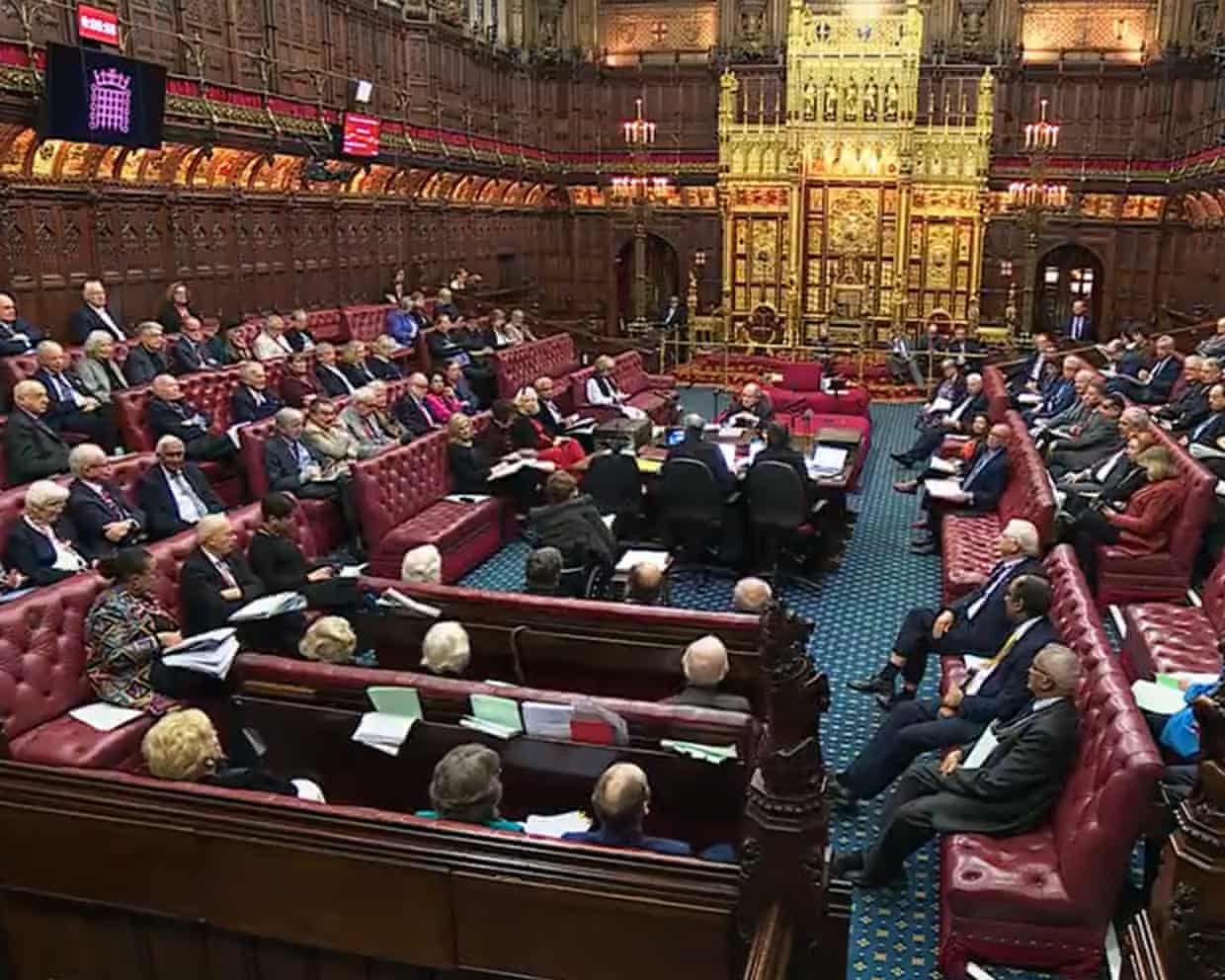
Starmer restores powers to ousted hereditary peers in Lords shake-up
Dozens of hereditary peers whose seats have been abolished have had their lawmaking powers restored as Keir Starmer seeks to accelerate changes to the House of Lords.It is understood that 15 Conservative hereditary peers, two Labour and nine crossbenchers have been handed life peerages, enabling their return to the red benches.The apparent concession was made in a bid to end a long battle over Starmer’s plans to remove the right of the last remaining hereditary peers to sit in the Lords, a commitment made in Labour’s 2024 manifesto.A government source described the parliamentary session that has just ended as “tortuous” given that every stage of the bill to abolish hereditary peers has resulted in considerable disruption in the Lords, as well as demands in private meetings for compensation for removed peers.The peers have already been subject to a due diligence process run by the House of Lords appointment commission, which includes a check by HM Revenue and Customs
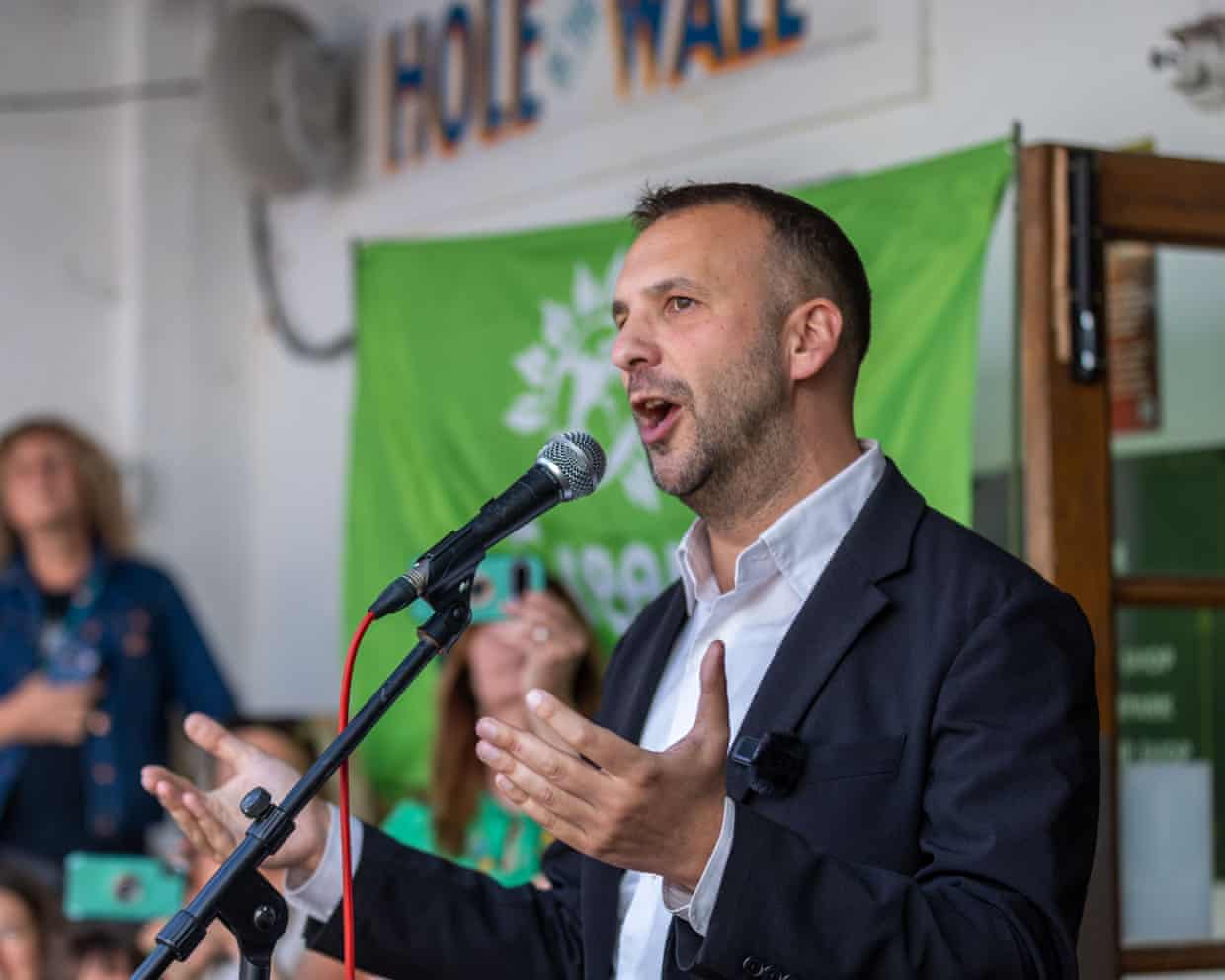
Polanski criticised for reposting comment suggesting police arresting Golders Greens suspect used excessive force – as it happened
The Green party leader, Zack Polanski, has been criticised for retweeting a post on X suggesting that the police used excessive force when they arrested the suspect in the Golders Green attack.Polanski, a profilic user of social media, reposted without comment a tweet which, referring to Mark Rowley, the Met police commissioner, contained the message message: “So essentially his officers were repeatedly and violently kicking a mentally ill man in the head when he was already incapacitated by a Taser.”Mike Tapp, a Home Office minister, responded by saying:double quotation markI’m disgusted that anyone with this view is leading any political party. The Green Party has hit a new low.A spokesperson for the Jewish Labour Movement said:double quotation markThe Jewish community is hugely grateful to the police for apprehending a knife-wielding terrorist before he stabbed more Jews
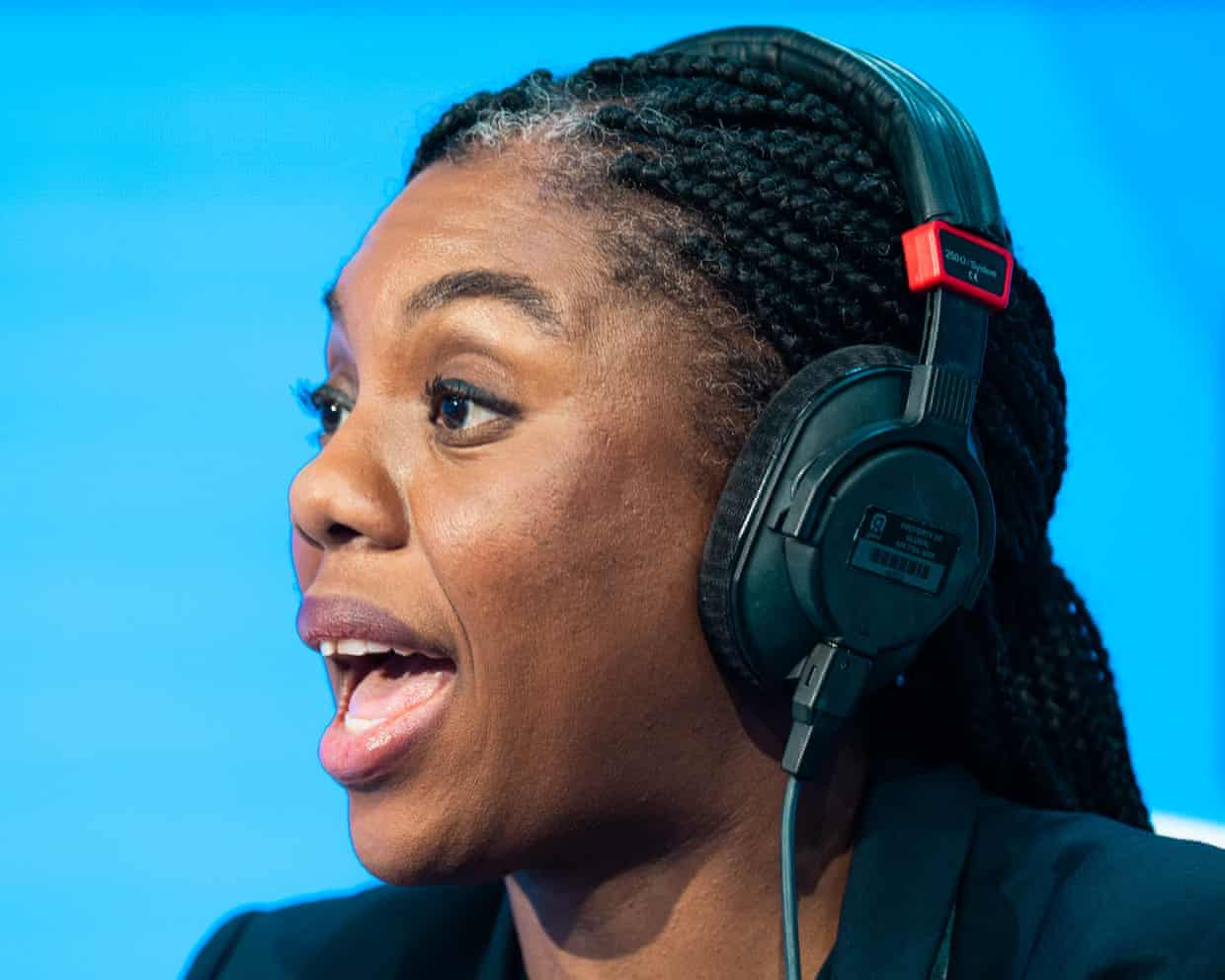
It’s amazing how much damage Kemi can do to herself in five minutes on local radio | John Crace
It was the sort of day that every politician dreads. One where you can’t not say and do something. The pressure to come up with the right words. The knowledge that even if you do find the right words, they still won’t be enough.Nothing anyone can say can mitigate the horror of the latest antisemitic attacks in north London on Wednesday
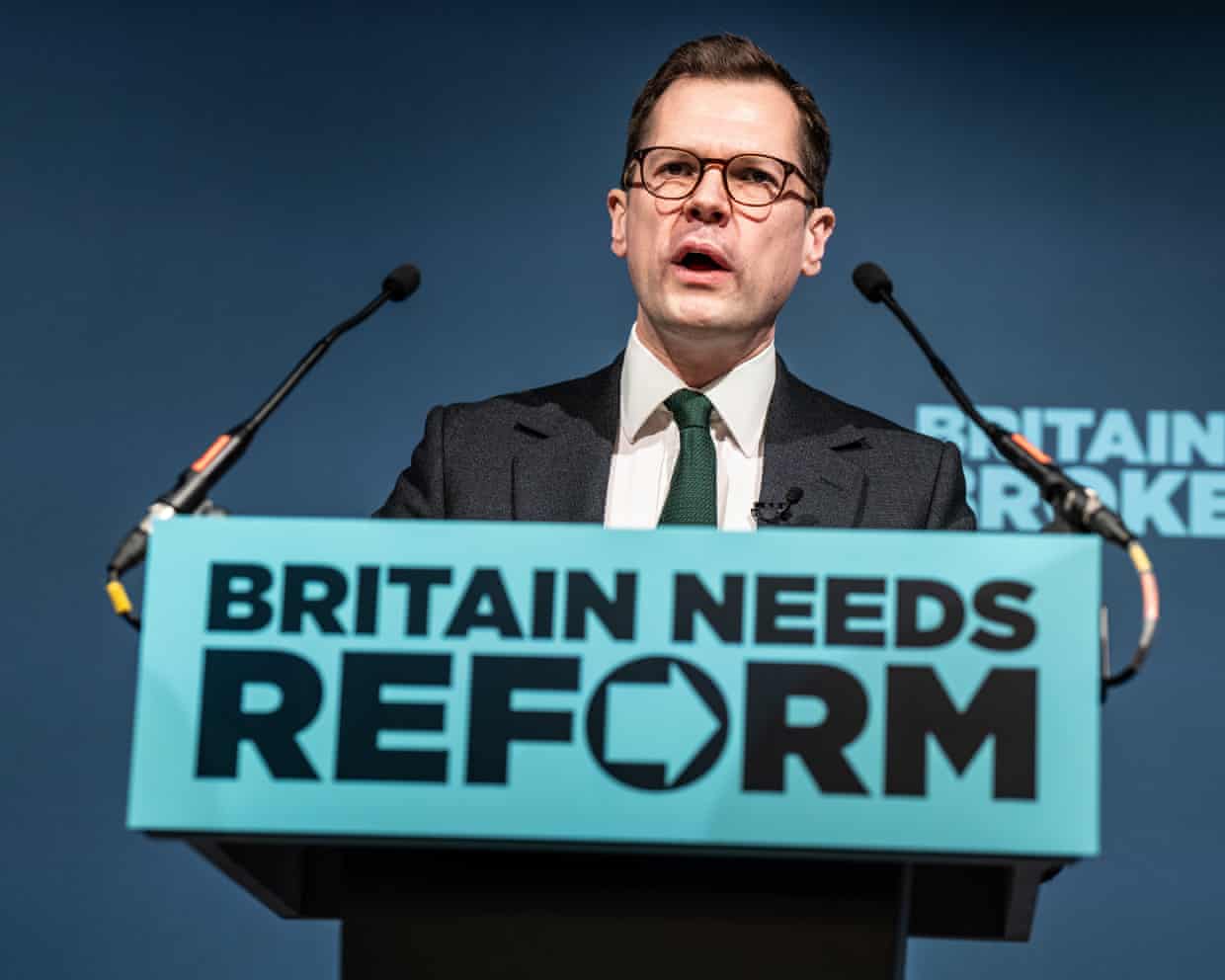
Labour calls on Jenrick to give £37,500 campaign donation to charity amid electoral law investigation
Labour has called on Robert Jenrick to give up almost £40,000 donated to his campaign to be Conservative leader in 2024 following allegations that the sum came from an impermissible foreign donor now convicted of fraud.The party called for Jenrick to make a donation to charity after the Guardian revealed the Electoral Commission has been investigating claims that £37,500 out of £100,000 given to his campaign by a UK company Spott Fitness ultimately came from a company run by a US-based businessman, Gary Klopfenstein.The watchdog has also referred evidence to the police to assess whether any electoral laws have been broken. Its inquiries are now paused while the police review the material. The exact scope of the review is unclear and the police have not confirmed whether it relates to any specific individual
Could Lib Dems become the biggest party in English local government?
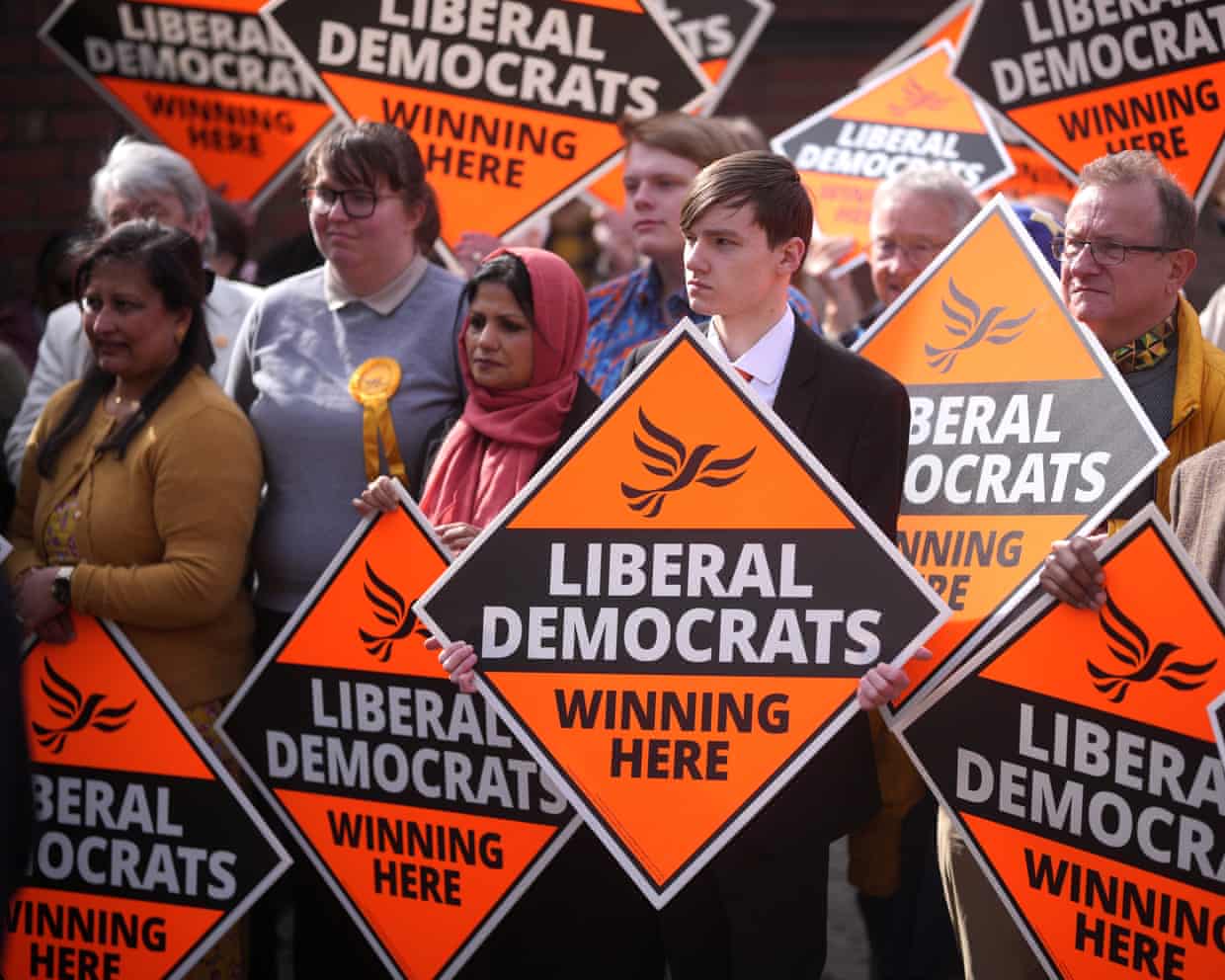
It has been an election buildup dominated by the rise of Reform UK and the Greens, and the contrasting woes of Labour and the Tories. But there is a chance that on 8 May the Liberal Democrats, largely ignored in recent weeks, could wake up as the biggest party in English local government.This is just one of several paradoxes for the party’s leader, Ed Davey, and his team. They are fifth in many national polls, with a rating barely changed from 2024. But Lib Dem bosses are sanguine, convinced that UK politics is now so different, so atomised, to make headline polling almost irrelevant

Mapped: the elections that could deliver ‘unprecedented’ losses for Labour
Labour is on track for its worst local election performance next Thursday, data analysed by the Guardian shows, in a blow that will pile further pressure on Keir Starmer’s leadership.Barring a drastic change in fortunes, Labour’s vote-share could fall to historic lows across elections for councils in England and devolved parliaments in Wales and Scotland on 7 May, with big gains for Reform, the Greens and nationalist parties, according to recent polling.The collapse in support is particularly existential in the race for the Welsh parliament, the Senedd, which Labour has dominated since its creation in 1999.Polling shows Labour’s vote share falling by more than half in Wales, enough to push the party into third place, with Reform and Plaid Cymru vying for first.Labour’s long-term decline in Scotland is expected to continue, with the Scottish National party likely to remain in power in Holyrood and Reform headed for second place

Why routine cancer tests have age limits | Brief letters

UK researchers develop tool to identify people most at risk of obesity-related diseases
Raise tax on alcohol and junk food to cut deaths from liver disease, experts say

Trial of non-invasive endometriosis scan boosts hopes for quicker diagnosis

Leasehold ban in England and Wales unlikely before next general election, minister says

The use of advanced practitioners in the NHS is no reason to fear for patient safety | Letters