War in Middle East ‘could wipe out growth in UK living standards’

The Middle East crisis could trigger an energy price shock that more than wipes out the £300 rise in living standards a typical working-age household could otherwise expect this year, a leading thinktank has warned.The Resolution Foundation said a “decent” one-off increase in average living standards in 2026 and a bumper rise for lower-income households could be reversed by rising oil and gas prices as the Iran conflict disrupts supplies.However, if the recent jump in energy prices persists, the foundation said all the gains could be wiped out.While the effect may not be as large as the increase caused by the Russian invasion of Ukraine, which sent the cost of food, oil and gas soaring, a rise this year in oil and gas prices could add a percentage point to UK inflation and £500 on typical annual energy bills, it said.The UK’s reliance on gas from the Middle East makes it especially vulnerable to an effective blockade of the strait of Hormuz, through which about 20% of the world’s liquid natural gas is transported.
According to the thinktank’s calculations in its analysis of Tuesday’s spring forecast, living standards for typical working-age households are on track to grow by £300 over the next year, or 0.9%.Lower-income households are set for a larger rise of £800, up 3.9%, mainly because of the lifting of the two-child benefit cap and an above-inflation increase in universal credit.This would be the second strongest year for living standards in the past two decades for poorer households.
The research director, James Smith, said the government should consider developing a social tariff, to protect low-income households from any energy shock because an across-the-board support package had proven very costly in the past.“We have called for the government to develop the infrastructure for a social tariff.Targeting people with high energy needs and low levels of income.Liz Truss showed us that if you try to support people across the board, that is very expensive.“There is pressure from right and left on the government who say why are we worrying about [borrowing levels] and tightening our belts? This is exactly the reason.
Because if the government says it can’t do things like energy support, you know it has a big problem.”The Institute for Fiscal Studies (IFS) echoed that argument against offering across-the-board energy support, as Truss’s government did in the wake of Russia’s invasion of Ukraine at the cost of £35bn.Helen Miller, the thinktank’s director, said: “This kind of government support is a key reason that debt has been rising in recent years.And, partly because bad shocks keep coming along, and partly because we are aiming only to stabilise debt in the better times, debt keeps rising over time.That can’t go on for ever.
“The short answer is, rather than do something across the board, try to target help to where it’s most needed,”The IFS also laid out the trade-offs from accelerating the government’s pledge to spend 3% of GDP on defence,Bringing that target forward, to 2030, would cost £14bn a year, wiping out planned spending increases in every other area, unless taxes were raised to fund the rise,Ruth Curtice, the chief executive of the Resolution Foundation, said: “The immediate economic outlook for Britain is highly uncertain, with yesterday’s forecasts already looking out of date, while the living standards picture for the rest of the parliament is very lopsided,“This coming year is set to be a decent one for living standards, and a bumper one for poorer families, as wages and benefit support rise above the level of inflation.
But a fresh energy price shock risks puncturing this good news.”The Joseph Rowntree Foundation said the situation could be even worse, arguing that Rachel Reeves’s claim that living standards will rise by £1,000 a year by the time of the next general election ignored pressures from housing costs.“Our modelling finds that average annual household disposable incomes are projected to grow by only £40 over the course of the current parliament (from April 2024 to April 2029) after adjusting for inflation,” it said.The chancellor’s claim is based on real household disposable income – a measure of inflation-adjusted wage growth that does not account for housing costs.

What was really behind Jack Dorsey laying off nearly half of Block’s staff?
Jack Dorsey cited AI as the driving force behind cutting 40% of his company’s employees, but other factors such as a weak crypto market, overstaffing and a declining stock price may also have motivated the move.Last week, the financial technology company Block announced that it would lay off 4,000 of its 10,000 workers. Dorsey, Block’s CEO, said in a letter to shareholders that advances in AI “have changed what it means to build and run a company”.“We’re already seeing it internally. A significantly smaller team, using the tools we’re building, can do more and do it better

OpenAI amends Pentagon deal as Sam Altman admits it looks ‘sloppy’
OpenAI is amending its hastily arranged deal to supply artificial intelligence to the US Department of War (DoW) after the ChatGPT owner’s chief executive admitted it looked “opportunistic and sloppy”.The contract prompted fears the San Francisco startup’s AI could be used for domestic mass surveillance but its boss, Sam Altman, said on Monday night the startup would explicitly bar its technology from being used for that purpose or being deployed by defence department intelligence agencies such as the National Security Agency (NSA).OpenAI, which has more than 900 million users of ChatGPT, made the deal almost immediately after the Pentagon’s existing AI contractor, Anthropic, was dropped.Anthropic had insisted “using these systems for mass domestic surveillance is incompatible with democratic values”, leading the US president, Donald Trump, to call Anthropic “leftwing nut jobs” and directing the federal government to stop using its technology.Despite denials from OpenAI that the agreement allowed for surveillance use, commentators raised the spectre of the Snowden scandal, which broke in 2013, when it emerged the NSA was engaged in mass harvesting of phone and internet communications
Iran war heralds era of AI-powered bombing quicker than ‘speed of thought’
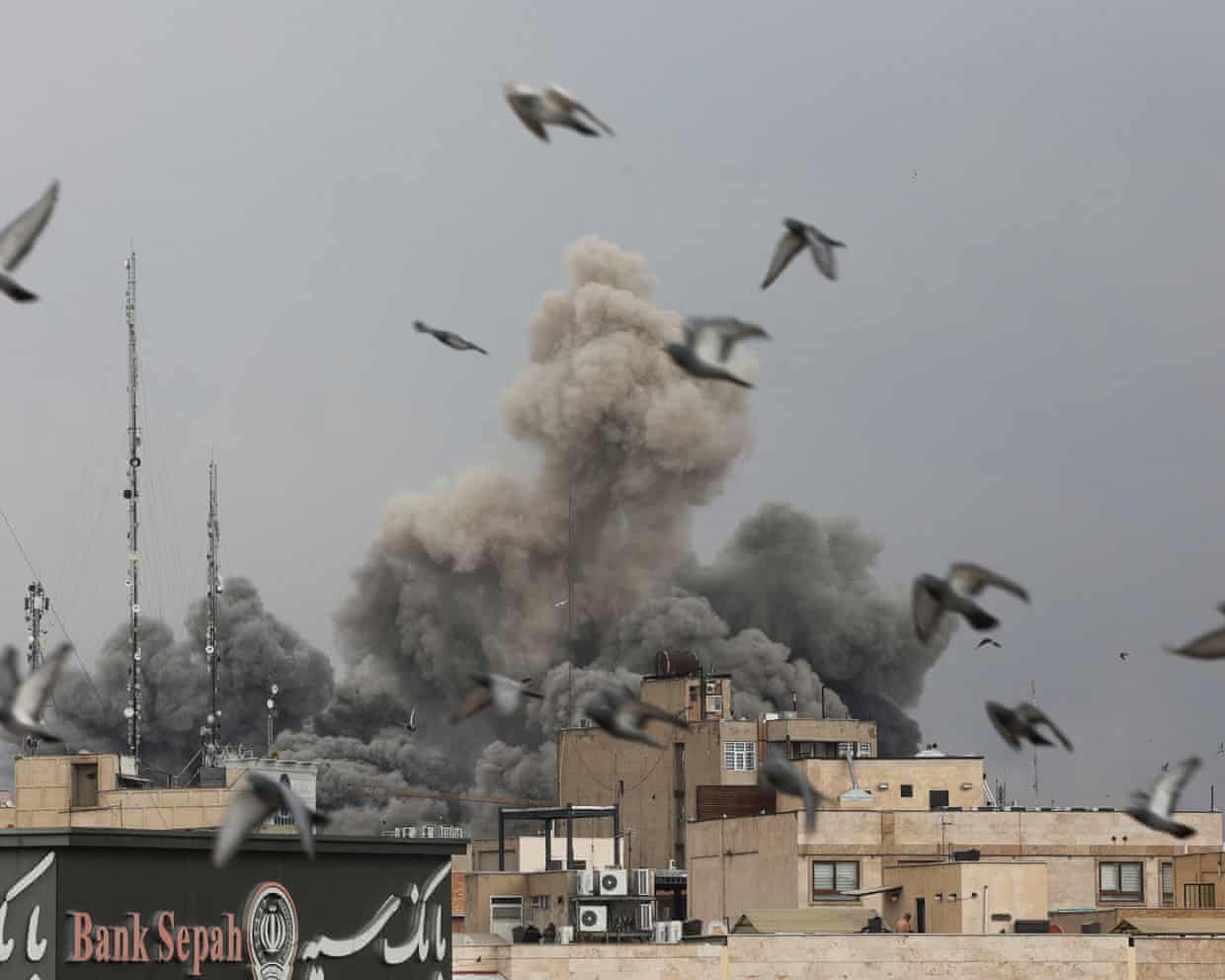
The use of AI tools to enable attacks on Iran heralds a new era of bombing quicker than “the speed of thought”, experts have said, amid fears human decision-makers could be sidelined.Anthropic’s AI model, Claude, was reportedly used by the US military in the barrage of strikes as the technology “shortens the kill chain” – meaning the process of target identification through to legal approval and strike launch.The US and Israel, which previously used AI to identify targets in Gaza, launched almost 900 strikes on Iranian targets in the first 12 hours alone, during which Israeli missiles killed Iran’s supreme leader, Ayatollah Ali Khamenei.Academics studying the field say AI is collapsing the planning time required for complex strikes – a phenomenon known as “decision compression”, which some fear could result in human military and legal experts merely rubber-stamping automated strike plans.In 2024 the San Francisco-based Anthropic deployed its model across the US Department of War and other national security agencies to speed up war planning

Anthropic’s AI model Claude gets popularity boost after US military feud
The AI model Claude has surged in popularity after being blacklisted by the Pentagon last week over ethics concerns.Claude climbed to the No 1 spot on Apple’s chart of top free apps on Saturday in the US – dethroning OpenAI’s ChatGPT, just one day after the Pentagon tapped OpenAI to supply AI to classified military networks. The bot’s app climbed the iPhone app charts in the UK but did not beat out ChatGPT. Claude also raced up the Android charts in the US and UK, though ChatGPT reigned supreme, according to data from Sensor Tower.Claude and other apps by the startup Anthropic suffered outages early Monday amid what the company described as “unprecedented demand for Claude” over the last week

UK firms in Middle East face heightened threat from Iran hackers, agency warns
UK businesses with a presence in the Middle East have been urged to step up vigilance against cyber threats from Iran after US-Israeli attacks.The National Cyber Security Centre (NCSC) said there was “almost certainly” a heightened risk of an indirect cyber threat for organisations that had offices, or supply chains, in the Middle East.The UK’s cybersecurity agency said Iran remained a threat despite an extensive bombing campaign that has devastated the country’s political and military leadership, including the death of its supreme leader, Ayatollah Ali Khamenei.“Iranian state and Iran-linked cyber actors almost certainly currently maintain at least some capability to conduct cyber activity,” said the NCSC.The agency said in an alert published on Monday that there was “likely” no significant change in the direct cyber threat from Iran to the UK, but organisations should prepare for the risk of collateral damage from Iran-linked hacktivists

US military reportedly used Claude in Iran strikes despite Trump’s ban
The US military reportedly used Claude, Anthropic’s AI model, to inform its attack on Iran despite Donald Trump’s decision, announced hours earlier, to sever all ties with the company and its artificial intelligence tools.The use of Claude during the massive joint US-Israel bombardment of Iran that began on Saturday was reported by the Wall Street Journal and Axios. It underlines the complexity of the US military withdrawing powerful AI tools from its missions when the technology is already intricately embedded in operations.According to the Journal, US military command used the tools for intelligence purposes, as well as to help select targets and carry out battlefield simulations.On Friday, just hours before the Iran attack began, Trump ordered all federal agencies to stop using Claude immediately
Shadow of Iraq war lies over Westminster as MPs consider US-Israeli attack on Iran
‘It’s no news just when we wanted some’: bosses react to spring statement
Reeves’s spring statement? The economy is great, don’t worry about the Middle East

UK considering sending warship to Cyprus; government to charter flight from Oman ‘in the coming days’– as it happened
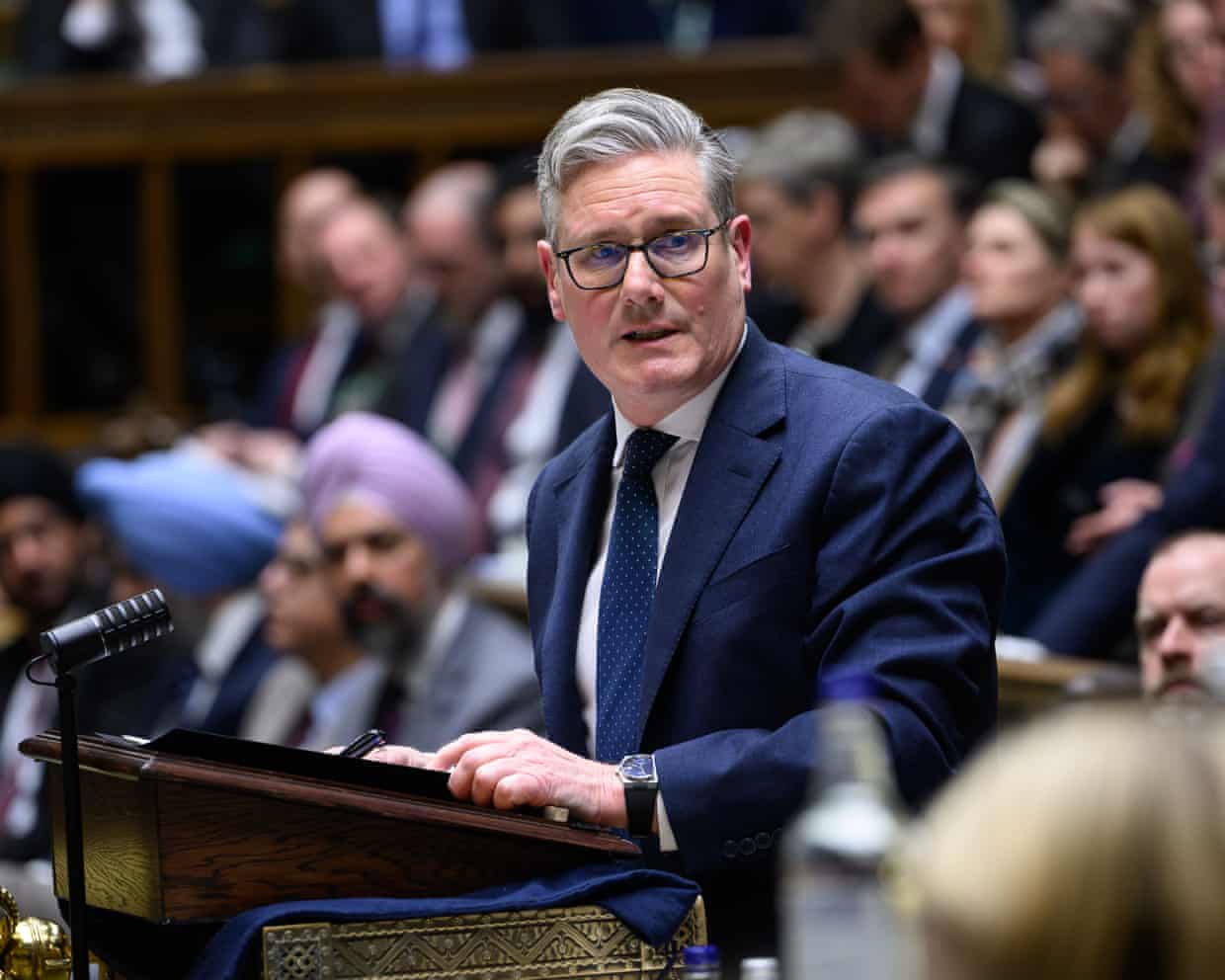
Starmer vows to avoid ‘mistakes of Iraq’ that have haunted Labour for decades
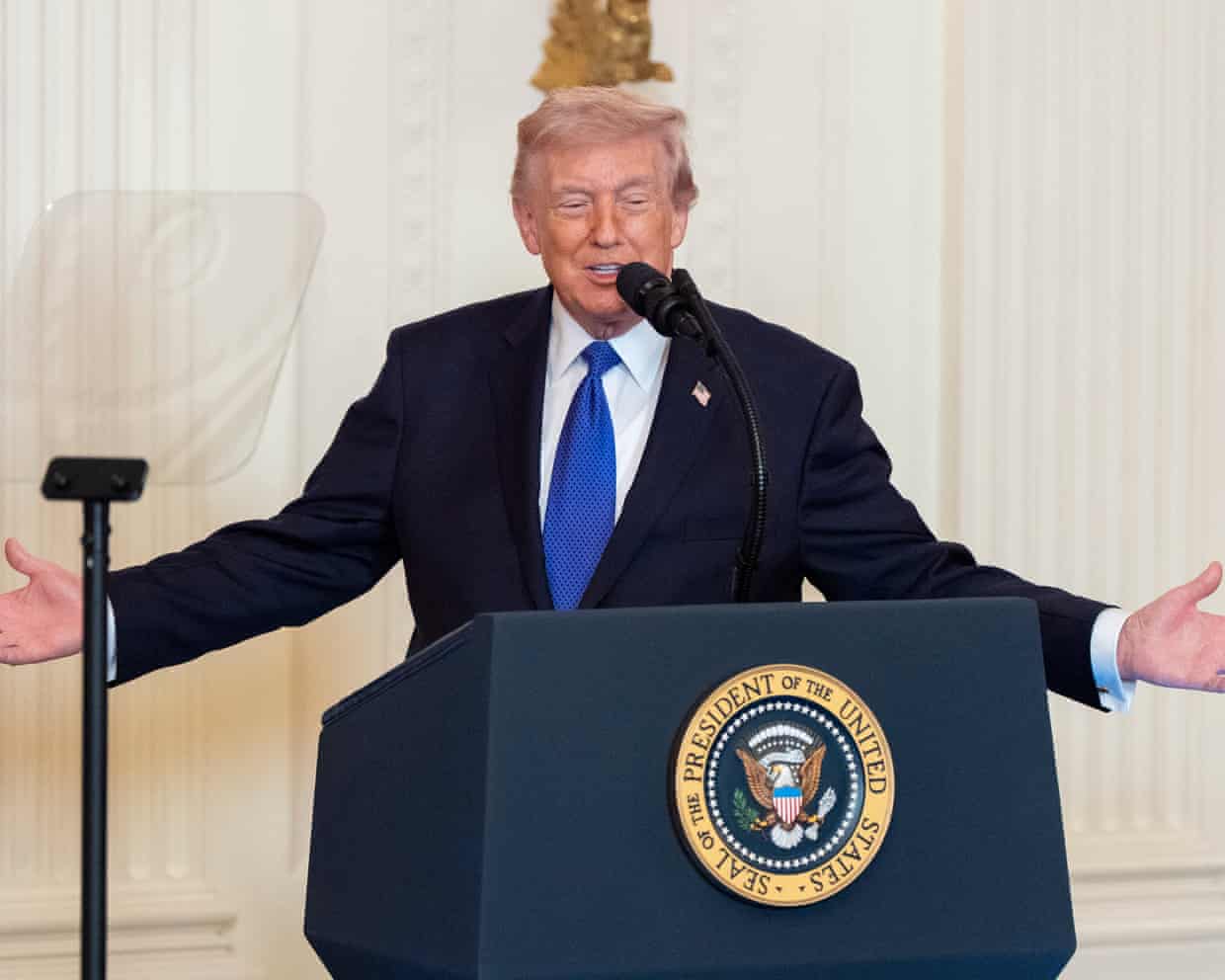
After failing to win the peace prize, Trump turns his focus to Nobel prize for war | John Crace