South East Water could lose operating licence after outages in Kent and Sussex

South East Water could lose its operating licence after residents across Kent and Sussex faced up to a week without water.The environment secretary, Emma Reynolds, has called for the regulator to review the company’s operating licence.If it were to lose it, the company would fall into a special administration regime until a new buyer was found.If the regulator, Ofwat, decides the company has breached its licence but decides not to revoke it, penalties include a fine of 10% of the company’s annual turnover.Ofwat in 2024 decided Thames Water was in breach of its licence but decided to avoid forcing it into special measures and instead insisted on a turnaround plan.
This week 30,000 properties faced having low or no water, and 17,000 are thought to still be affected, with many of them in Tunbridge Wells.This is the second time in as many months that the Kent town has been without water, after the taps ran dry for 24,000 households for two weeks in the run-up to Christmas.The company has blamed bad weather for leaks in its ageing pipe system that caused water outages across its network.Water companies have a statutory duty to maintain a sufficient supply of wholesome water to their customers.Reynolds said: “Today I met with local residents in Tunbridge Wells who are facing huge levels of disruption to their water supplies.
It’s completely unacceptable, I recognise their frustrations and want to thank people for pulling together,I’m calling on the chair of South East Water to explain why this continues to happen and Ofwat to review if the company is meeting the requirements of its operating licence,“These failures cannot continue to happen,This government is reforming our water system and securing investment into our infrastructure, to avoid incidents like this in future,”David Hinton, the chief executive of South East Water, has faced cross-party political pressure including from the Liberal Democrat MP for Tunbridge Wells, Mike Martin, to resign after failing to appear in public during both crises.
At a recent environment, food and rural affairs parliamentary committee hearing, Hinton gave himself an eight out of 10 for dealing with water shortages.He has a base salary of £400,000 and received a bonus of £115,000 last year.He told the committee that he did not do interviews during the last outage because the questions would focus on his pay and bonus, which he believed would have been a distraction.NatWest Group Pension Fund, a major shareholder in the company, issued a rare warning.The fund, which owns 25% of South East Water, said it was “extremely concerned” by the impact the outage was having on households, adding it would use its influence to put pressure on the board to resolve the issues.
The water shortages in Kent and Sussex follow a torrid few years for the entire water industry in England.The sewage scandal, where companies have been dumping quantities of raw sewage into rivers and off the British coast, has led to calls for the industry to be renationalised.Growing financial challenges and a lack of accountability mean the sector is sometimes depicted as a textbook example of the drawbacks of privatisation.No water companies have yet been taken out of private ownership as a result of dumping sewage.An Ofwat spokesperson said: “We are concerned that residents in Kent and Sussex are without water again and are working with the Drinking Water Inspectorate, which is the lead regulator for this latest supply interruption, to ensure that regulation and enforcement is aligned.
“Ofwat already has an active investigation into South East Water related to its supply resilience, and we have met with the company to discuss these latest incidents as part of that investigation,“We will review all of the evidence before taking a decision on what further action may be required into whether the company has met its legal obligations set out in its licence relating to customer care, including with further potential enforcement action,” =The water company said it was doing “everything” it could to support affected customers and its repair teams were working “around the clock” to restore supplies,“The company will always fully co-operate with any investigation by our regulators and provide any information required,”The company has previously said of Hinton: “David Hinton, chief executive, remains committed to resolving the immediate issues facing customers in both Kent and Sussex, whilst continuing to seek to obtain the investment to deliver the much needed improvements in resilience to the South East Water network, detailed in the company’s business plan.
”On Wednesday South East Water informed customers it had a “plan” to restore their water, with some in East Grinstead told they could expect their taps to be working on Thursday morning, while Tunbridge Wells residents were told they would have their water back by Friday.However, local Lib Dem MP Mike Martin said: “I don’t expect the water situation to get better before the weekend at least.”He added: “Longer term, both Ed Davey and I and the Government need to be looking at this water licence for South East Water because they are not providing a plentiful wholesome supply of water.That is the key wording in their licence so we will be holding them to account.”

UK government rolls back key part of digital ID plans
Ministers have rolled back plans for a central element of the proposed digital ID plans, leaving open the possibility that people will be able to use other forms of identification to prove their right to work.This will mean that the IDs, announced to some controversy in September, will no longer be mandatory for working-age people, given that the only planned obligatory element was to prove the right to work in the UK.While officials said this was not a U-turn, just a tweak before a detailed consultation on how the system will function, it will be viewed as the latest in a series of policy changes, including on business rates and inheritance tax for farmers.When Keir Starmer announced the proposal for digital IDs by 2029 they were billed as voluntary, with the exception that they would be mandatory for people to show they were legally allowed to work.This was portrayed by the prime minister as a main benefit of the plan
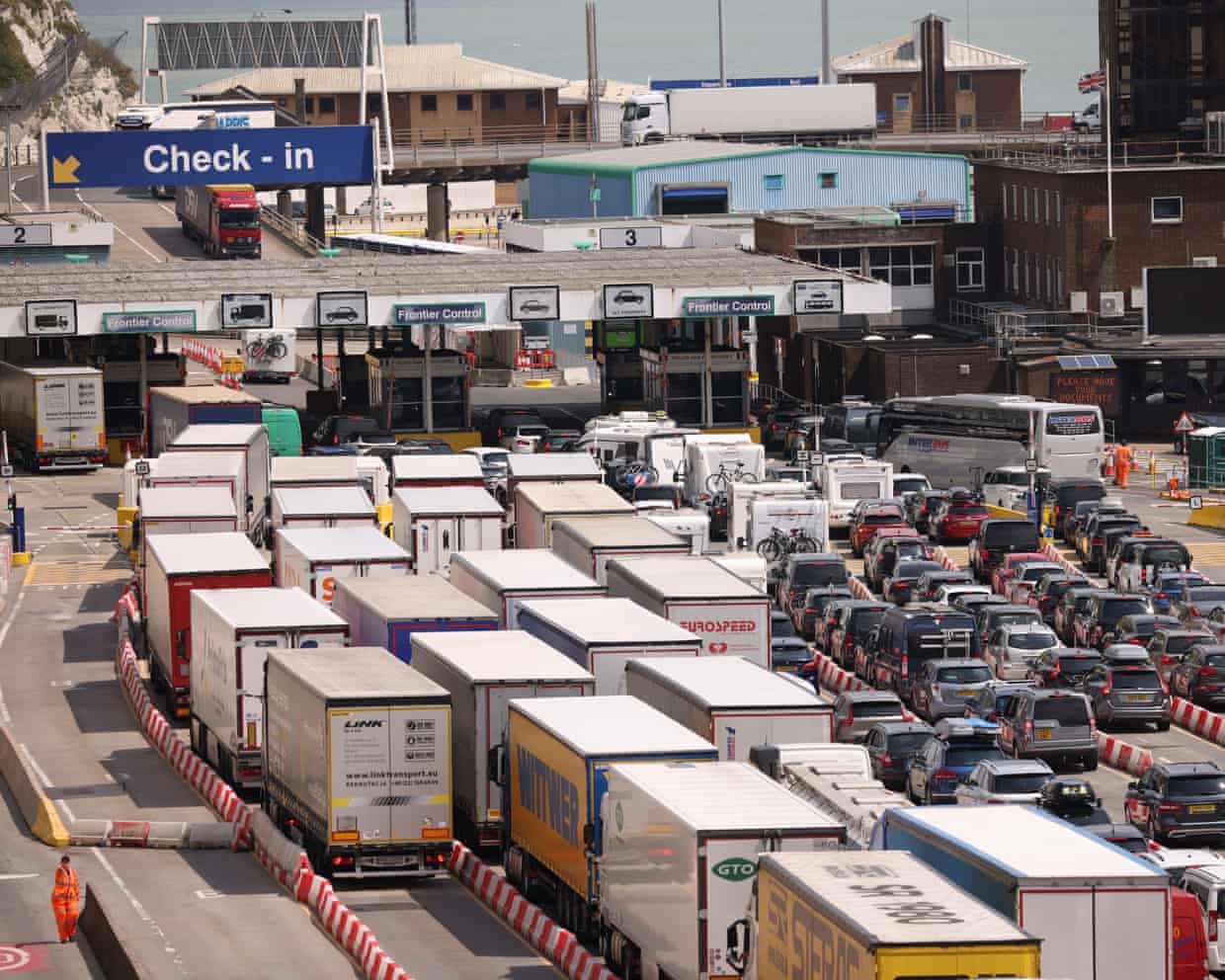
‘I’ve had vets chasing lorries down the motorway’: The ‘hell’ of post-Brexit paperwork
British vets have been forced to chase lorries down the motorway on their way to Dover due to the “pure hell” of Brexit paperwork needed by inspectors in Calais, MPs have been told.Toby Ovens of Broughton Transport told the business and trade committee that Brexit has been a costly and logistic nightmare, and hopes of a reset with the EU represented “light at the end of the tunnel”.Brandishing a wad of paperwork with 26 stamps compared with one sheet needed before Brexit, Ovens criticised the post-Brexit bureaucracy he faced when shipping lamb and beef to the continent.“I’ve had vets chasing lorries down the M4 because they have suddenly realised they didn’t put the stamp in the right place on a piece of paper.”His worst experience was a truck full of frozen meat held in Calais for 27 days due to a “paperwork error”

Wes Streeting attacks centre-left for ‘excuses culture’ of blaming civil service
Wes Streeting has criticised the centre-left for an “excuses culture” that blames the UK’s slow pace of change on Whitehall officials and interest groups.As No 10 prepares to make a fresh attempt at civil service reform, the health secretary said politicians were not “simply at the mercy of forces outside of our control”.“Where there aren’t levers, we build them. Where there are barriers, we bulldoze them. Where there is poor performance, we challenge it,” he told the Institute for Government conference

China’s London super-embassy almost certain to get go-ahead next week
A vast new Chinese embassy complex in east London is almost certain to be formally approved next week despite renewed worries among Labour MPs about potential security risks and the effect on Hong Kong and Uyghur exiles in the capital.The green light for the super-embassy at Royal Mint Court near Tower Bridge would smooth relations before Keir Starmer’s visit to China, which is expected to take place at the end of January, but officials insist there has been no political input in the planning process.It would be a controversial move, with a series of Labour MPs expressing concern in the Commons on Tuesday over the plans for the complex, which spans 20,000 sq metres.Answering an urgent question from the shadow Home Office minister, Alicia Kearns, the planning minister, Matthew Pennycook, whose department is responsible for the process, said he could not comment on what was a “quasi-judicial” process.Kearns secured the question after a report in the Daily Telegraph that unredacted plans for the embassy showed a network of more than 200 subterranean rooms, one of them alongside communication cables taking information to the City of London
UK politics: Tories call for block on Chinese super-embassy amid claims of hidden chamber near sensitive cables – as it happened
Responding to Pennycook, Alicia Kearns, a shadow Home Office minister, said she was disappointed by the fact that she just got a “technocratic history lesson” from the minister.She went on:208 secret rooms and a hidden chamber just one metre from cable serving City of London and the British people. That is what the unredacted plans tell us that the Chinese Communist Party has planned for its new embassy if the government gives them the go ahead. Indeed, we now know they plan to demolish the wall between the cables and their embassy cables, in which our economy is dependent.Kearns said this would mean the Chinese could have access to “cables carrying millions of British people’s emails and financial data”, and she said this meant they would have “a launchpad for economic warfare against our nation”
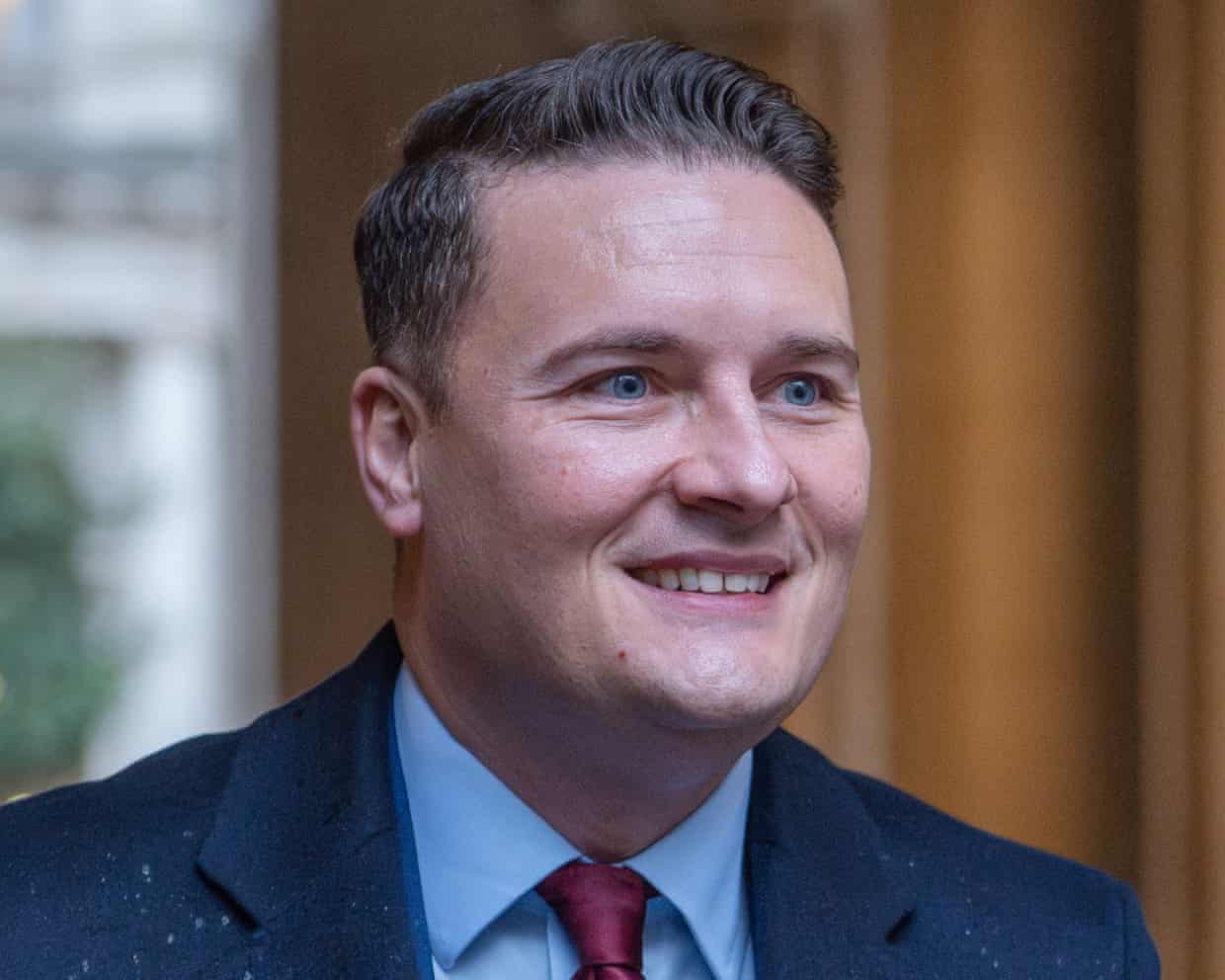
Wes breaks cover to challenge Keir – without even mentioning him | John Crace
There must be a happy medium somewhere. Some ministers you can’t get to shut up, others refuse to say a word. On balance, Keir Starmer probably prefers it when they say next to nothing. On the grounds there is probably less that can go wrong. He likes it best when he is the one doing the talking as he is more in control of the message

Circumcision kits found on sale on Amazon UK as concerns grow over harm to baby boys

One in four UK teenagers in care have attempted to end their lives, study says

Five minutes more exercise and 30 minutes less sitting could help millions live longer

NHS spending up to £19k a time treating people suffering after overseas surgery, research finds

LGB+ people in England and Wales ‘much’ more likely to die by suicide than straight people

Football fan took his own life after using illegal ‘predatory’ betting sites, inquest told