UK economy grows by only 0.1% amid falling business investment

The UK economy expanded by only 0,1% in the final three months of last year, according to official data, as falling business investment and weak consumer spending led to little momentum going into 2026,Figures from the Office for National Statistics (ONS) show that the economy grew at the same rate of 0,1% as the previous three months,This was less than a 0.
2% rise that economists had been expecting,The economy grew by 1,3% in 2025, an improvement on growth of 1,1% in 2024, although worse than official forecasts of 1,5%.
The ONS said the economy also expanded by 0.1% on a monthly basis in December, slowing from 0.2% in November – a figure that was revised down from 0.3%.The downbeat data came as Rachel Reeves prepares to use a major speech in the coming weeks to insist she will stick to her growth plan, reviving the term “securonomics” to describe the approach.
After a deliberately low-key House of Commons statement to mark the spring forecast on 3 March, the chancellor plans to deliver a public lecture, reiterating her strategy and setting out priorities for 2026.Treasury sources said these will include the opportunities the government sees in AI – with an aide calling her an “optimist” about the technology – and hopes for closer EU ties.It follows the revelation that health secretary Wes Streeting told then US ambassador Peter Mandelson that Labour had “no growth strategy at all”.The rise came despite there being no growth at all in the dominant services sector, which makes up about 80% of the economy.The small boost was instead driven by the production sector, up by 1.
2%, while the construction industry shrank 2.1%, its worst performance in four years, the ONS said.Liz McKeown, the director of economic statistics at the ONS, said: “The economy continued to grow slowly in the last three months of the year, with the growth rate unchanged from the previous quarter.“The often-dominant services sector showed no growth, with the main driver instead coming from manufacturing.Construction, meanwhile, registered its worst performance in more than four years.
”Business investment fell by 2.7% in the final quarter, while consumer spending grew by a sluggish 0.2%.The figures back up earlier consumer and business surveys that suggested economic activity had slowed in the run-up to the late November budget, as households held off spending and companies delayed investment decisions amid speculation that the chancellor would implement significant tax rises.“The big picture is that private sector activity still appears to be extremely subdued,” said Ruth Gregory, the deputy chief UK economist at Capital Economics.
The UK economy fared relatively well in the first half of 2025, with growth of 0.7% in the first quarter and 0.3% in the second quarter.However, economic output was then hit by the cyber-attack on Britain’s biggest carmaker, Jaguar Land Rover, which depressed vehicle production and led to the minimal growth in the third quarter.Speculation around the autumn budget appears to have further hindered growth in the final three months.
“These figures confirm that the UK economy ended 2025 with a whimper,” said Suren Thiru, the economics director at the Institute of Chartered Accountants in England and Wales,“Businesses had a particularly bleak quarter as the dark cloud of uncertainty caused by the budget and higher costs severely curtailed trade and investment plans,”However, more recent surveys for January have suggested that business and consumer sentiment picked up in the new year, with economists expecting growth of 0,4% in the first quarter of 2026,Fergus Jimenez-England, an associate economist at the National Institute of Economic and Social Research, said the government must avoid spooking businesses any further.
“With the spring statement upcoming in March, the chancellor should look to support this change in sentiment by avoiding a repeat of last year and refrain from further policy changes,” he said,The Office for Budget Responsibility had forecast GDP growth to be 1,5% in 2025 and 1,4% in 2026,The government’s official forecaster expects the economy to grow at annual pace of 1.
5% up to 2030, partly because of low productivity growth.Bank of England policymakers left interest rates unchanged at 3.75% last week but indicated that lower inflation as a result of cost of living measures in Reeves’s budget should pave the way for cuts in the months ahead.Reeves, who on Wednesday insisted Labour could win the political argument for a closer relationship with the EU, said: “The government has the right economic plan to build a stronger and more secure economy, cutting the cost of living, cutting the national debt and creating the conditions for growth and investment in every part of the country.”
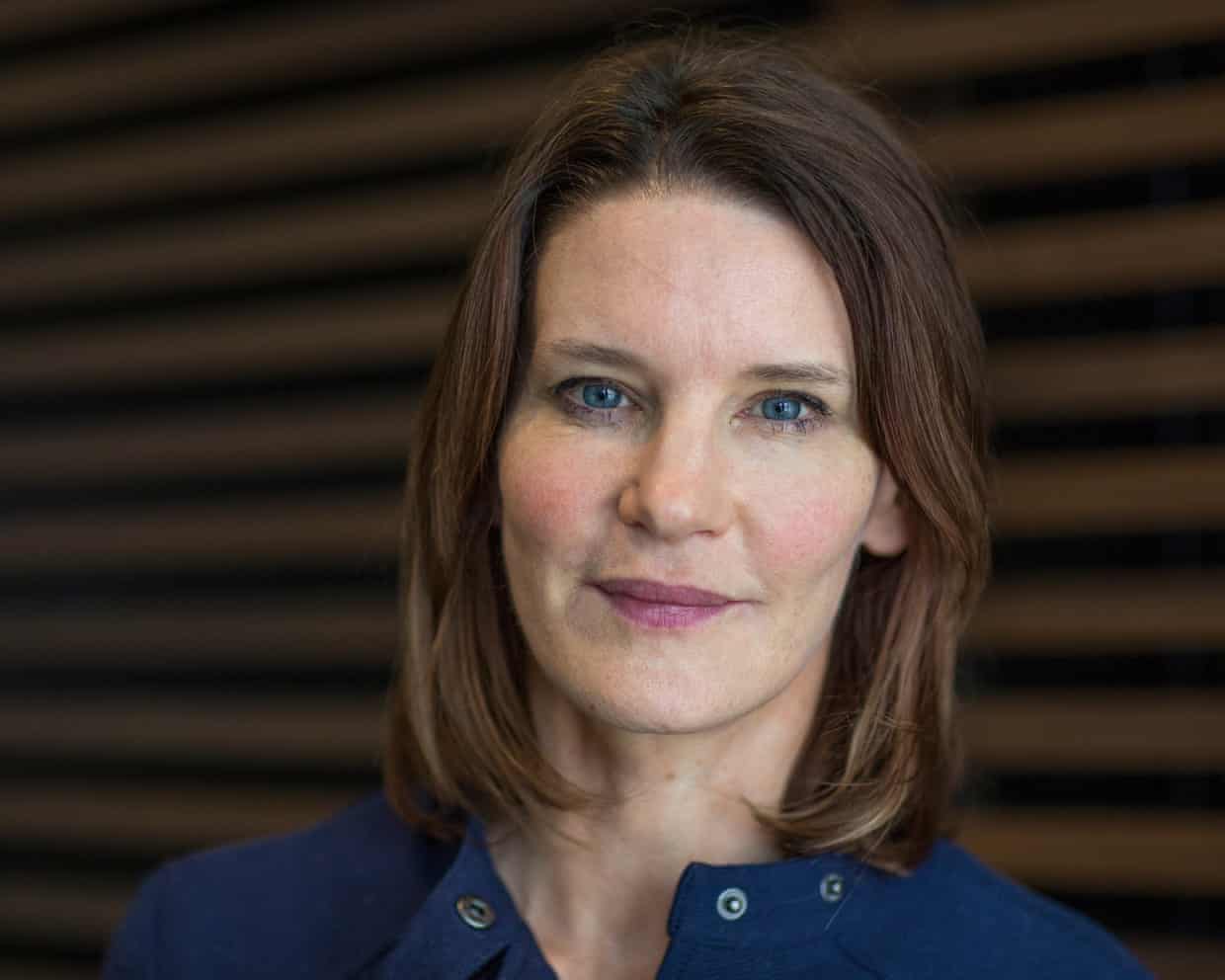
Children’s vocabulary shrinking as reading loses out to screen time, says Susie Dent
Children’s vocabulary is shrinking as reading loses out to screen time, according to the lexicographer Susie Dent, who is urging families to read, talk and play word games to boost language development.The Countdown star’s warning comes as the government prepares to issue its first advice to parents on how to manage screen use in under-fives, amid concerns that excessive screen time is damaging children’s language development.“So many children are now falling behind,” Dent said. “The vocabulary gap is getting bigger and there is a real perception that vocabulary development is suffering and that impacts on learning.”Citing a 2023 Oxford University Press report that found that two in five pupils had fallen behind in vocabulary development, she said: “There is a huge perception that screen time is having a negative impact on vocabulary, and I think that’s because it is taking away from reading time
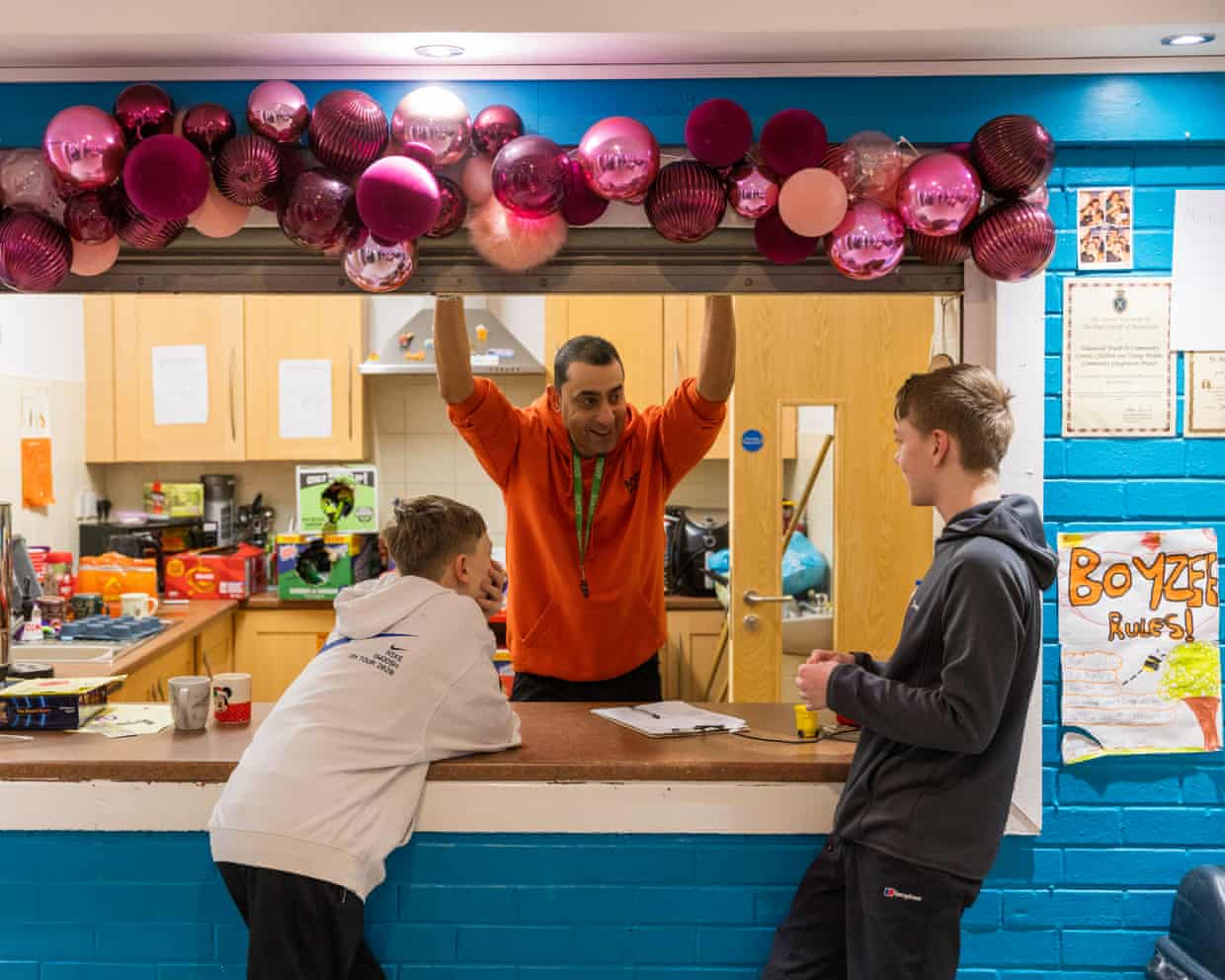
‘We’re on a cliff edge’: the struggle to keep youth services alive in Knowsley
“I feel like I’m failing because I can’t reach everyone,” said Toni Dodd, the centre manager at Karma in the Community, a youth service in Knowsley on the outskirts of Liverpool.“I’ll go over and get kids hanging outside the shops, bring them in, but it’s who am I not reaching? It just takes one thing and they’re on that track into crime, into drugs. There are kids going into school on ketamine. I do all I can but it’s so hard to keep it open and running, and you can’t meet the demand there is.”Young people in Knowsley don’t have it easy
One in 14 children who die in England have closely related parents, study finds
One in 14 children who died in England in a four-year period had parents who were close relatives, according to “stark” figures revealed by the first study of its kind.The figures, published by the National Child Mortality Database (NCMD), based at the University of Bristol, analysed all 13,045 child deaths in England between 2019 and 2023. Of these, 926 (7%) were found to be of children born to consanguineous parents, meaning the mother and father are close blood relatives, such as first cousins.Although the exact number of children with consanguineous parents across England is unclear, the data clearly shows their overrepresentation within mortality statistics and requires “urgent action”, according to researchers.The largest geographical estimate of consanguinity currently available is from a large study following the lives of 13,000 babies born in Bradford

Reading and writing can lower dementia risk by almost 40%, study finds
Reading, writing and learning a language or two can lower your risk of dementia by almost 40%, according to a study that suggests millions of people could prevent or delay the condition.Dementia is one of the world’s biggest health threats. The number of people living with the condition is forecast to triple to more than 150 million globally by 2050, and experts say it presents a big and rapidly growing threat to future health and social care systems in every community, country and continent.US researchers found that engaging in intellectually stimulating activities throughout life, such as reading, writing or learning a new language, was associated with a lower risk of Alzheimer’s disease, the most common form of dementia, and slower cognitive decline.The study author Andrea Zammit, of Rush University Medical Center in Chicago, said the discovery suggested cognitive health in later life was “strongly influenced” by lifelong exposure to intellectually stimulating environments

Psychiatric drugs aren’t always the answer | Letter
Yes, there has been a shocking lack of progress in developing transformative psychiatric medicine (We need new drugs for mental ill-health, 5 February), but this may be because in mental health, drugs are not always the answer (see, for example, Richard P Bentall’s Doctoring the Mind).Huge progress has been made in the effectiveness of talking therapies – for example, free effective treatment for post-traumatic stress disorder (PTSD) is available to all UK army veterans through the charity PTSD Resolution.What is lacking is rollout of the effective methods that now exist. This is an area where the UK is genuinely world leading. The Human Givens Institute is at the forefront of the development of effective, solution-focused, science-based therapies

MPs call on welfare bosses to speed up redress over carer’s allowance scandal
An influential MPs’ committee has urged welfare bosses to speed up redress for tens of thousands of unpaid carers who stand to have huge benefit debts written off after they were wrongly hit with carer’s allowance penalties.The public accounts committee (PAC) said management failures and “systemic issues” at the Department for Work and Pensions (DWP) had led to carers being incorrectly forced to repay overpayments running into thousands of pounds.The committee said a “lack of integrated, concerted leadership” allowed carer’s allowance problems to proliferate for years and the DWP must now rebuild trust with carers by giving the issue “the leadership and attention it has long deserved”.Its comments are the latest in a series of damaging official criticisms of the DWP hierarchy’s role in longstanding carer’s allowance injustices. Last week, the work and pensions committee chair, Debbie Abrahams, accused it of a “culture of complacency”

Jon Stewart calls Maga backlash to Bad Bunny’s Super Bowl show ‘actually pathetic’

Eternal Sunshine of the Spotless Mind was never a love story. It was a warning
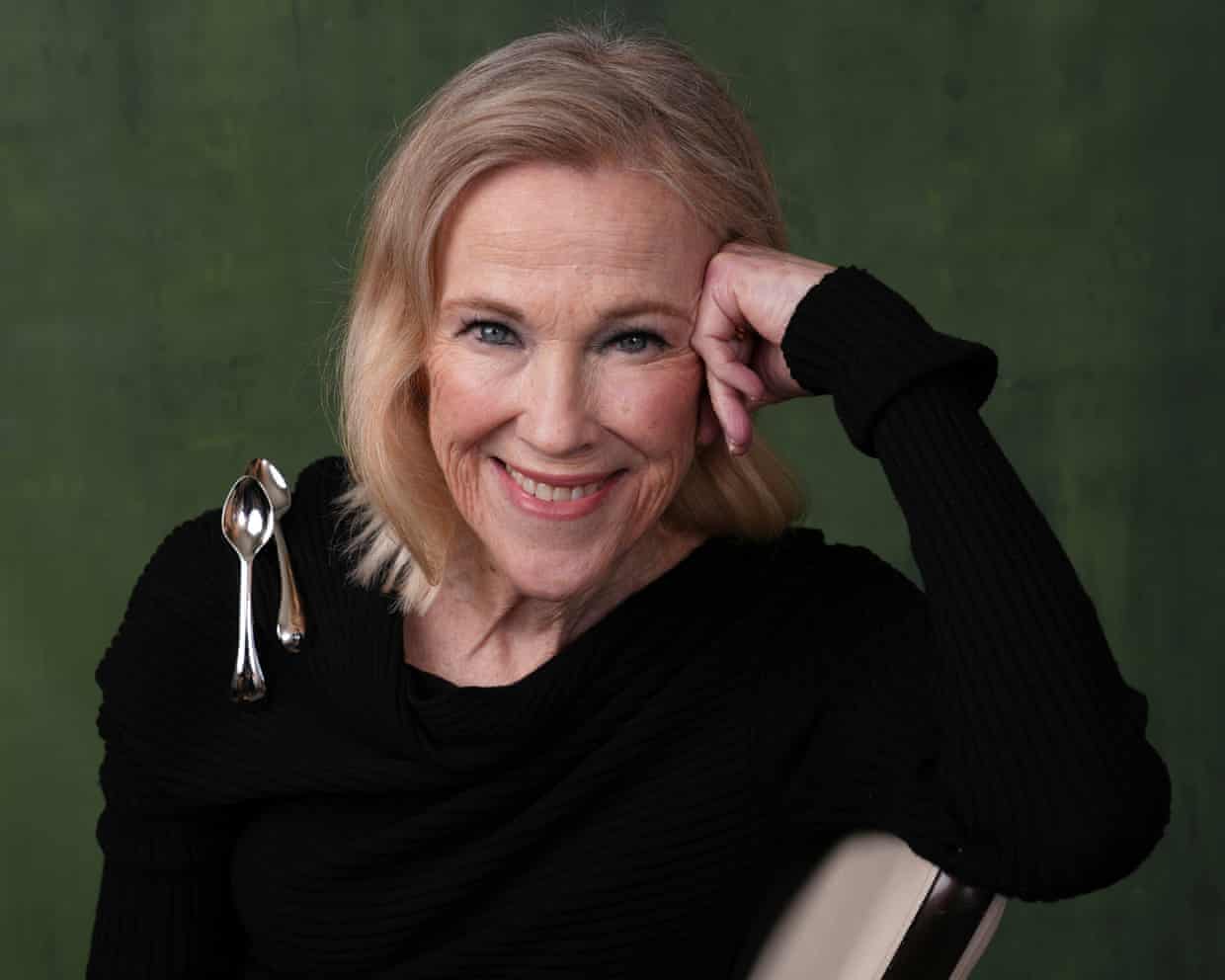
Actor Catherine O’Hara died of a blood clot in her lungs, death certificate says

‘We recorded it in a kitchen!’ How China Crisis made Black Man Ray

Super Bowl: Bad Bunny, the ads and everything but the football – as it happened

Perth festival 2026: Swan River bursts to life with a stunning trail of stories and light