Singing activists disrupt NatWest meeting over ‘climate backtracking’

The chair of NatWest was forced to defend the bank against accusations of “climate backtracking” at a chaotic annual shareholder meeting, which was temporarily suspended owing to singing protesters.Not long after the meeting began in Edinburgh, it was adjourned for about half an hour after a protester interrupted Rick Haythornthwaite’s opening speech.Protesters in the audience, wearing black T-shirts emblazoned with “No more big oil” and “No bombs”, then sang a song to the tune of Frère Jacques, with a chorus of “No more bombs, no more oil”.They appear to represent the campaign group Extinction Rebellion’s XR Money Rebellion, which has targeted NatWest and other banks for financing fossil fuel projects.When the meeting resumed, it was dominated by questions from shareholders about NatWest’s climate policies, as well as staff wages compared with bumper executive pay packets.
Recent changes to the bank’s climate policy have included dropping a commitment not to lend to any oil and gas companies that lack a credible transition plan or fail to report their overall carbon emissions.Mara Lilley, a representative of the Church of England pension board, said the C of E board was voting against Haythornthwaite’s re-election because of “concerns about NatWest backtracking on its climate commitments”.In response, Haythornthwaite, who began his career in energy working in exploration for BP, said that, as “a geologist by background”, he was taking climate breakdown “very, very seriously, as does all of this board”.He added: “We’ve had to wrestle with the questions of how do we balance supporting our customers in their [energy] transition efforts with managing the risk of what is an increasingly complex policy environment.”Haythornthwaite said NatWest retained two key goals: to halve its climate impact compared with 2019 levels (it is now at 39%) and to achieve net zero emissions from its financing by 2050.
“Those commitments have not gone away.”He added that the bank, which provided £19bn in energy transition finance during the second half of 2025, was targeting a new goal of £200bn in sustainable lending by 2030.The NatWest chair said oil and gas financing was “only” 0.6% of the bank’s total lending, and NatWest would not invest in controversial projects such as shale oil and gas oil sands, or coal gas, methane or coal liquefaction.He described the company’s policy changes as a “slight shift” in its climate commitments, adding: “We feel that we found a pragmatic middle road.
”However, investors disagreed.Jeanne Martin from ShareAction said: “NatWest Group plays a key role in the economy’s transition to net zero” but in February “reduced the ambition of its fossil fuel policy and climate targets”.Her organisation speaks on behalf of 19 institutional shareholders with $1.4tn assets.ShareAction had said before the meeting that “this kind of backtracking has real consequences”.
She asked for a meeting within three months between those investors and Haythornthwaite, to which he agreed.Haythornthwaite was re-elected as a director with backing from 92% of shareholders, the lowest approval vote among the 25 resolutions.Martin said in response to the vote: “This is a significant level of dissent in a system where board chairs are normally waved through with overwhelming support.“It reflects investor concern that the bank tearing up its fossil fuel policy risks accelerating exposure to physical risks like flooding and heatwaves, while storing up long-term financial instability for the future.”Two representatives from Unite, including Michelle Smith, the union’s lead industrial organiser, asked about NatWest’s rising dividends and executive pay packets.
Smith said bank staff had “seen shareholder dividends and executive remuneration packages increase at inflation-busting levels, whilst … we have got members visiting food banks and having to make choices between eating and heating”.Haythornthwaite replied that he was hopeful that the bank could soon strike an agreement with the union, saying: “We want to be able to give our colleagues a fair reward for their very considerable effort they put in the company and we’ve got to balance that with the long-term sustainability of the business.”In February, NatWest reported its boss, Paul Thwaite, would receive £6.6m, the largest payout for a chief executive of the banking group since his disgraced predecessor Fred Goodwin took home £7.7m in 2006.
Last year, the UK government sold its final shares in NatWest, ending 17 years of state ownership.

BP profits more than double as oil prices soar in Iran war
BP has provoked outrage by revealing its profits more than doubled in the first quarter of this year after its oil traders reaped the benefit of the war in Iran.The energy company capitalised on a surge in global oil market prices to report better than expected profits of $3.2bn (£2.4bn) for the first quarter, more than double the $1.38bn it made in the same period last year
Deloitte and Zoom’s trims to parental-leave benefits may hurt them in long run, experts say
Recent moves by US companies Deloitte and Zoom to reduce how much paid parental leave they offer employees could signal a larger reduction in benefits in corporate America, according to labor market experts.American workers are already seen as having less benefits and labor protections than many of their counterparts across the world, especially in Europe.Leadership at huge accounting and communication technology companies likely made the decisions because the labor market has stagnated, meaning that people looking for jobs do not have the same leverage when considering a job opening, the experts say.But while cutting the benefit might help companies save money in the short term, some consultants argue that the moves will ultimately hurt companies because it will make workers less productive, among other negative consequences.“It feels like someone is just looking at a spreadsheet saying, ‘How can I get more hours?’” said Bobbi Thomason, a professor of applied behavioral science at Pepperdine Graziadio Business School
Shares in buy-to-let mortgage lenders fall after report Reeves plans rent freeze
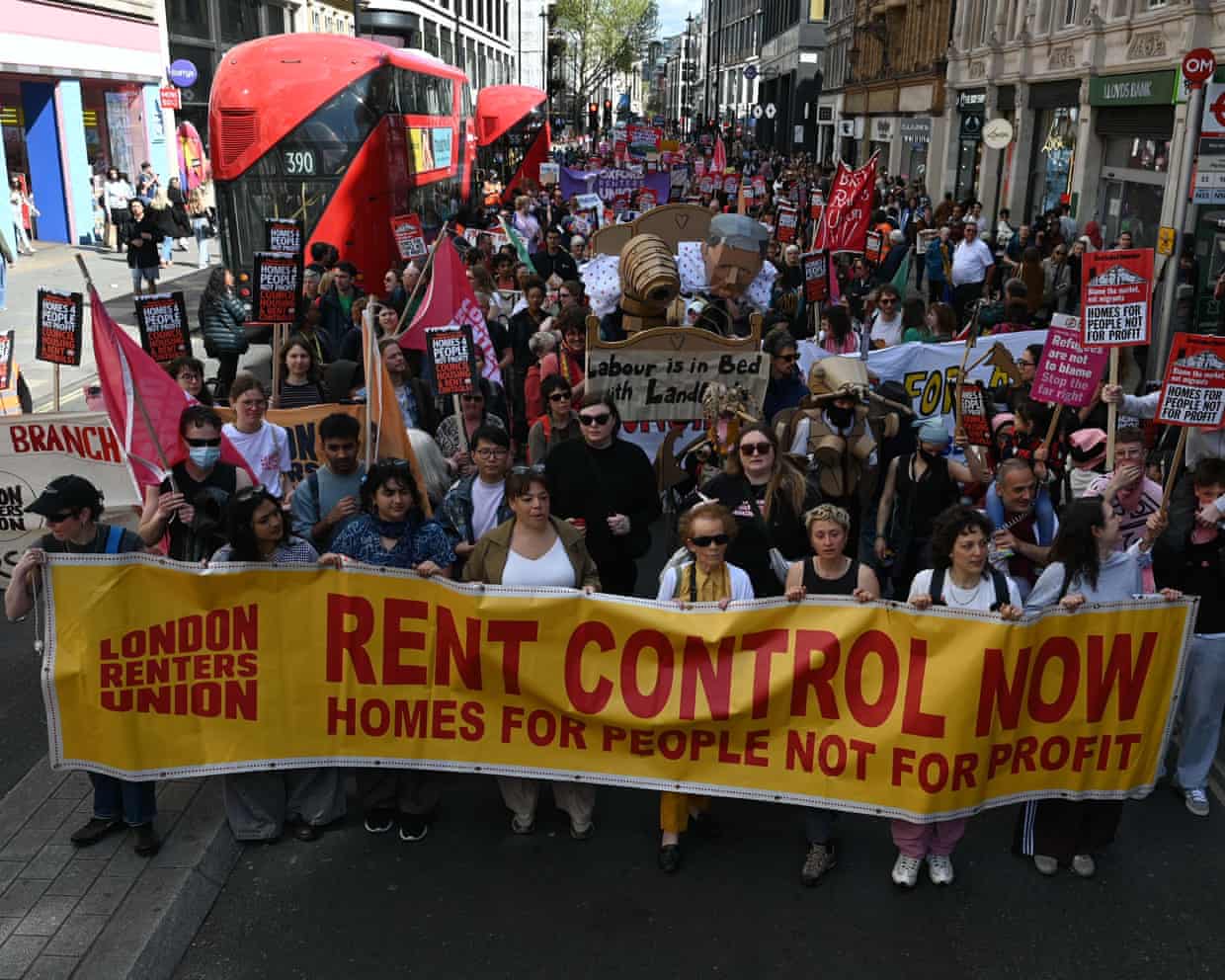
Shares in some of the UK’s biggest buy-to-let lenders such as Paragon and One Savings Bank have fallen after it emerged that the chancellor may make private landlords commit to a one-year rent freeze.In an effort to protect households from rising living costs as a result of the Iran war, Rachel Reeves is considering whether to ban landlords in England from increasing rents for a limited period of time, the Guardian revealed on Monday night.Shares in buy-to-let lenders fell when the London Stock Exchange opened on Tuesday.Stock in OSB Group, one of the UK’s biggest buy-to-let mortgage providers, was down 3.6% at 510p as investors worried the rent freeze would hurt the FTSE 250 company behind the lenders Kent Reliance and Precise Mortgages

Price rises in UK shops slow as retailers apply heavy discounts to lure shoppers
Price rises in UK shops have slowed as retailers applied “heavy discounting” to their goods in an effort to entice shoppers amid weakening consumer confidence, the industry’s trade group said.Shop price inflation rose by 1% year-on-year in April, a slowdown from 1.2% in March and below the three-month average of 1.1%, according to the British Retail Consortium (BRC).Retailers made discounts to clothing, furniture and DIY goods, the BRC said in its monthly survey of its members, compiled with NielsenIQ (NIQ)
Rachel Reeves’s fiscal rules buffer should be ‘significantly larger’, say peers
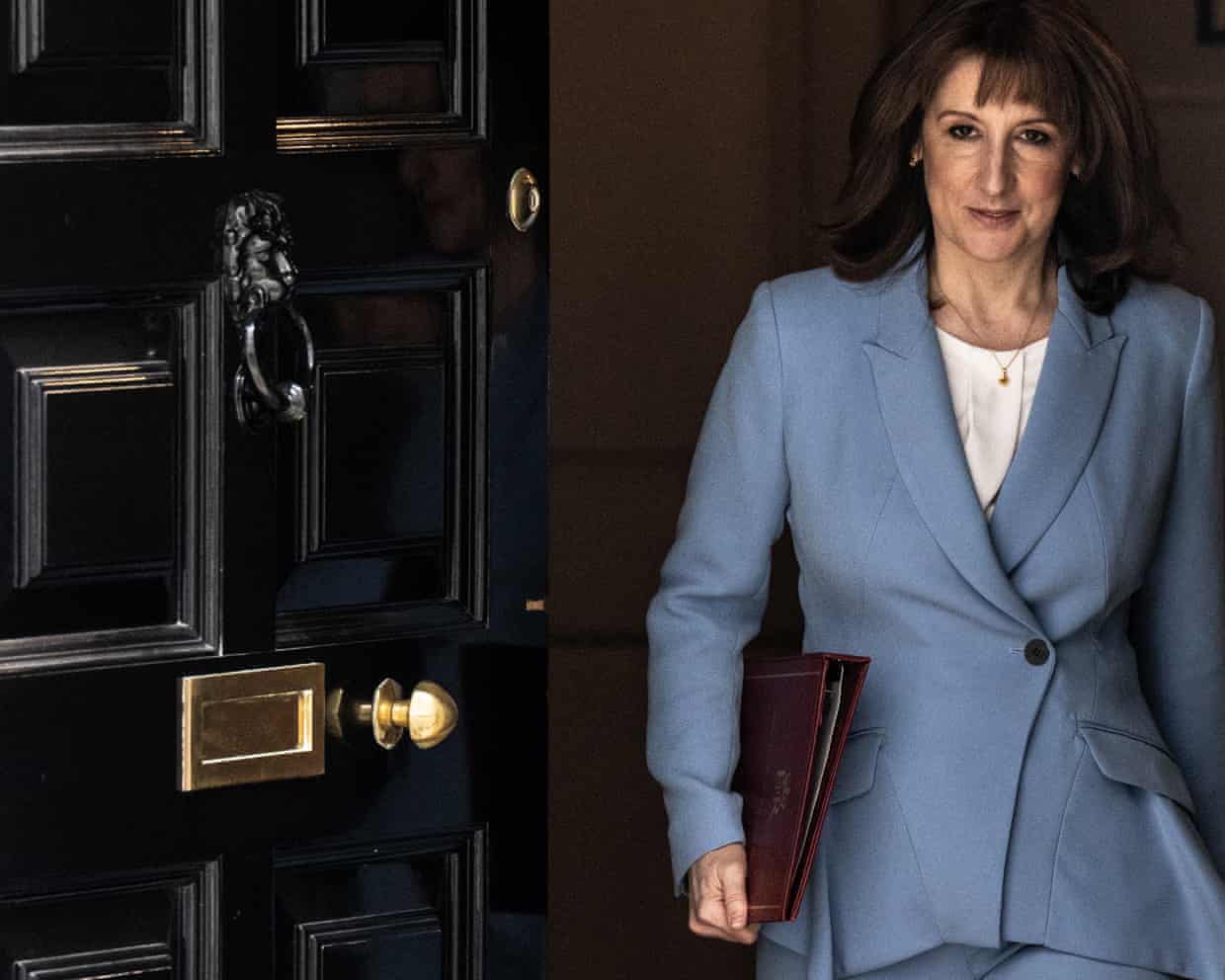
Rachel Reeves should aim to run a “significantly larger” buffer against her fiscal rules, according to a report from a House of Lords committee that says the UK’s public debt is on an unsustainable trajectory.The chancellor raised taxes at last year’s budget in order to more than double the “headroom”, or buffer, against her fiscal rules to £22bn – some of which is expected to be eroded by the impact of the Iran war.But the Lords economic affairs committee says Reeves should aim to raise it more, and complains that she and her recent predecessors have tended to allow themselves too little room for manoeuvre, compared with the £30bn average between 2010 and 2022.“Despite the recent increase in the size of the buffer, it remains at an historically low level and further substantial increases are still required,” it says. “Significantly larger buffers must become the norm

Nationwide should give its boardroom challenger a fair run
James Sherwin-Smith, who is aiming to become the first customer to be voted onto the board of Nationwide in nearly 25 years, deserves top marks for perseverance. A year ago his attempt to get his name on the ballot paper was stymied, or so it seemed, by data protection rules and so forth. This time, he has the necessary 250 nominations to be a candidate at the July annual meeting.It is a development to welcome. As argued here a year ago, there is something of a democracy deficit at Nationwide

Europe’s smaller airports ‘under threat’ if fuel shortages cause many cancellations
Barclays cuts back risky lending after £228m hit from UK mortgage firm MFS

‘They’re supposed to be handmade’: zine creators fight to resist AI influence

MacBook Pro M5 review: serious power, still long battery life

‘Like cutting the head off a hydra’: how Mary Cain exposed Nike’s disgraced coaching team

The Breakdown | Celebrating elite speed machines who can send rugby into the stratosphere