Boosting military spending by slashing welfare is not the answer, senior Labour figures warn Reeves

Senior Labour figures have warned that Rachel Reeves must find alternative ways to increase military spending rather than slashing welfare, saying it risks diminishing public support for investment in defence,Pressure has been mounting from Labour backbenchers for the Treasury to urgently agree the defence investment plan (Dip) after George Robertson, a former Nato secretary general, said there was a “corrosive complacency” on defence funding,But MPs and peers said they did not back calls by the opposition for defence investment to be funded by cuts to welfare spending – saying there were other ways to secure the funds,The chancellor is understood to have proposed increasing the budget by less than £10bn over the next four years amid concerns that any more would be unaffordable,On Wednesday, Keir Starmer said he did not agree with the comments from Robertson, a former Labour defence secretary who co-authored a defence review for the government.
The prime minister insisted defence spending was increasing rapidly,While the government has committed to reach 2,5% of GDP on defence from April 2027, then 3% in the next parliament, military leaders believe there is still a £28bn shortfall after years of the armed forces being hollowed out by successive administrations,With discussions on defence spending due this week, military leaders are understood to have been asked to find £3,5bn in savings this year, even as the armed forces are being readied for conflict.
John Healey, the defence secretary, is understood to be pushing the Treasury for a far larger increase,One senior Labour figure described Healey as being “totally captured” by the Ministry of Defence’s desire for more funding for defence,But they said Reeves was adopting a Treasury scepticism of the “money pit” in his department and it was Starmer who needed to force a creative solution,John Hutton, a Labour peer who was a defence secretary under Gordon Brown, said Starmer needed to “knock heads together here” and ensure the Treasury released more funding without first seeking guarantees on procurement systems,He said: “I think the Treasury rightly feel that the MoD wastes a lot of money at the moment, as they do – the procurement process is notoriously inefficient – and you could really save significant money, which you could then reinvest.
“But I don’t think it’s reasonable for the Treasury to say at the moment that until you come up with a credible plan [for efficiencies] – I think they want six or seven billion from the MoD – until you come up with that plan, we won’t allow you to spend.That is completely wrong.Because that just simply does not take into account the geopolitical situation we’re in.”The trade union Unite, which recently held a protest outside Downing Street calling for the government to fully fund the Dip, said defence spending should be significantly increased but not at the expense of the poorest.Sharon Graham, the general secretary of Unite, said: “The government’s failure to produce the Dip is a threat to national security as well as to jobs and skills.
It is becoming more apparent by the day that our armed forces are overstretched and under-equipped to deal with the global challenges we face.” But she added: “[It is] completely wrong to suggest that caring for the most vulnerable is risking national security.We are the sixth richest country in the world.If the government needs to raise funds it should introduce a wealth tax rather than attack the most vulnerable in society yet again.”Graeme Downie, a Labour MP and one of the most outspoken backbenchers on the need for stronger defence, said: “This cannot be a fight between defence and welfare.
The solution needs to be more creative and focused on a whole-of-government approach to security and resilience.To do anything else creates a false choice that leaves people less safe and makes it harder to protect people living in poverty.”Emma Lewell, a member of the defence select committee, said bolstering defence investment “should not come at the expense of those pensioners and people with disabilities receiving welfare”.She added: “There are always other ways: scrap digital ID, look at some of our net zero policies, rethink some of the fiscal rules.”The Guardian understands there is a deep cross-party frustration in the defence select committee.
Reacting to Robertson’s comments about the government’s “corrosive complacency” on defence funding, one member said: “I think we’re largely on the same page.You should not be driving a government based on welfare, that’s not why you’re here.You should be driving the government based on your first principle, which is security.” But they added: “I’m not sure counterbalancing defence with welfare is necessarily helpful.Actually we should be worried about the bond market and the amount we’re spending on debt repayment.
” Some have been lobbying the government to join up to the Defence, Security and Resilience Bank, which would give loans to allied governments, allowing countries to borrow directly for military procurement at a lower cost.The British government has previously ruled out backing the initiative.Peter Hain, a former cabinet minister, has raised the idea with Reeves and Starmer of the government issuing defence bonds – saying it would be a far better long-term investment than cuts to welfare, which could end up costing the government significantly more.“Kemi Badenoch says pay for that by ‘cutting welfare’,” Hain said.“But the longer people are out of work, the more costly it is to prepare them for work, as I witnessed when I was cabinet minister for work and pensions.
“Today the problem inherited by Labour is much bigger.Helping these millions into jobs will mean extra short-term costs, yet promises a big long-term payoff.So, unless it is intended to be punitive, slashing spending on welfare is no answer to paying for increases in defence.“If the alternative is not yet more public service cuts, it is essential that the financial markets finance extra borrowing without imposing higher interest rates on UK government debt – in other words, without jacking up yields on bonds.”A government spokesperson said: “We are delivering the largest sustained defence spending increase since the cold war – 2.
6% of GDP from 2027 – with an additional £5bn for defence this financial year alone, and £270bn investment across this parliament, ensuring no return to the hollowed-out armed forces of the past.“The government keeps the introduction of new debt instruments under review but would need to be satisfied that any new instrument would meet value-for-money criteria, enjoy strong and sustained demand in the long term and be consistent with wider fiscal objectives.”

MacBook Air M5 review: Apple’s best consumer laptop speeds up
Apple’s latest MacBook Air is its most powerful yet, comes with double the starting storage and is better than ever for getting work done and as the benchmark for a consumer laptop. But this year the new lower-cost MacBook Neo has muddied the waters.The Guardian’s journalism is independent. We will earn a commission if you buy something through an affiliate link. Learn more

China now the ‘good guy’ on AI as Trump takes ‘wild west’ approach, MPs told
China is now the “good guy” on AI rather than Donald Trump’s US, where the technology is being pursued in a dangerous “wild west” manner, a former UN and UK government adviser has told MPs.Prof Dame Wendy Hall, who was a member of the UN’s AI advisory board and co-wrote a review of AI for Theresa May’s government, told the House of Commons business and trade committee that China was backing multinational attempts to introduce global governance of AI, in contrast to America, which had set up a race between profit-hungry companies that relied on hype.“China is doing some amazing work in AI, and in fact, at the moment they’re acting as the good guys because the US is totally against any regulation and talk about global governance,” said Hall, who is director of the Web Science Institute at the University of Southampton. “It’s all Maga. It’s all: we’re going to win at all costs

Bosses say AI boosts productivity – workers say they’re drowning in ‘workslop’
Ken, a copywriter for a large, Miami-based cybersecurity firm, used to enjoy his job. But then the “workslop” started piling up.Workslop is an unintended consequence of the AI boom. It’s what happens when employees use AI to quickly generate work that seems polished – at least superficially – but is in fact so flawed or inaccurate that it needs to be heavily corrected, cleaned up or even completely redone after it’s passed on to colleagues.For Ken, the problem started after his company’s CEO laid off several of his colleagues and mandated that remaining workers use AI chatbots, saying it would boost their productivity

AI companies make powerful tech – but they’re also savvy marketers
Hello, and welcome to TechScape. I’m your host, Blake Montgomery, the Guardian’s US tech editor, writing to you from my happy village in Pokopia.Artificial intelligence companies make powerful products. They also make outlandish claims.Last week, Anthropic released Claude Mythos, an AI model focused on cybersecurity, which has inspired widespread thrill and panic over how capable it is said to be

Don’t make Marshal Foch’s mistake on AI | Letters
Emma Brockes’ article struck a chord (It’s finally happened: I’m now worried about AI. And consulting ChatGPT did nothing to allay my fears, 8 April). I am reading Marc Bloch’s Strange Defeat, in which the eminent French historian and soon-to-be-executed resistance worker gives a first-hand account of the collapse of the French army in 1940. He attributes the debacle at least in part to a failure of imagination on the part of the French general staff, who were incapable of grasping that technology, and war, had fundamentally changed since 1918.Brockes’ article suggests that we, and our leaders, are suffering from the same inability to understand that a technology which is currently amusingly alarming will develop in less amusing ways – the future Marshal Ferdinand Foch had, according to Bloch, earlier dismissed aircraft as being a toy for hobbyists and not of any military interest

Meta creating AI version of Mark Zuckerberg so staff can talk to the boss
If you are one of Meta’s almost 79,000 employees and cannot get hold of the boss, do not worry. The owner of Facebook and Instagram is reportedly working on an AI version of Mark Zuckerberg who can answer all your queries.The AI clone of Zuckerberg, Meta’s founder and chief executive, is being trained on his mannerisms and tone as well as his public statements and thoughts on company strategy.The rationale behind the project, according to the Financial Times, is that employees could feel more connected to one of the most powerful people in Silicon Valley.The Meta chief has a history of creating and experimenting with digitalised versions of himself

Europe has only six weeks’ supply of jet fuel left owing to Iran war, says energy chief

Tesco warns profits could fall amid Iran war uncertainty

Snap Inc blames AI as it lays off 1,000 workers

Amazon enters agreements for nine Australian renewable projects to power datacentres
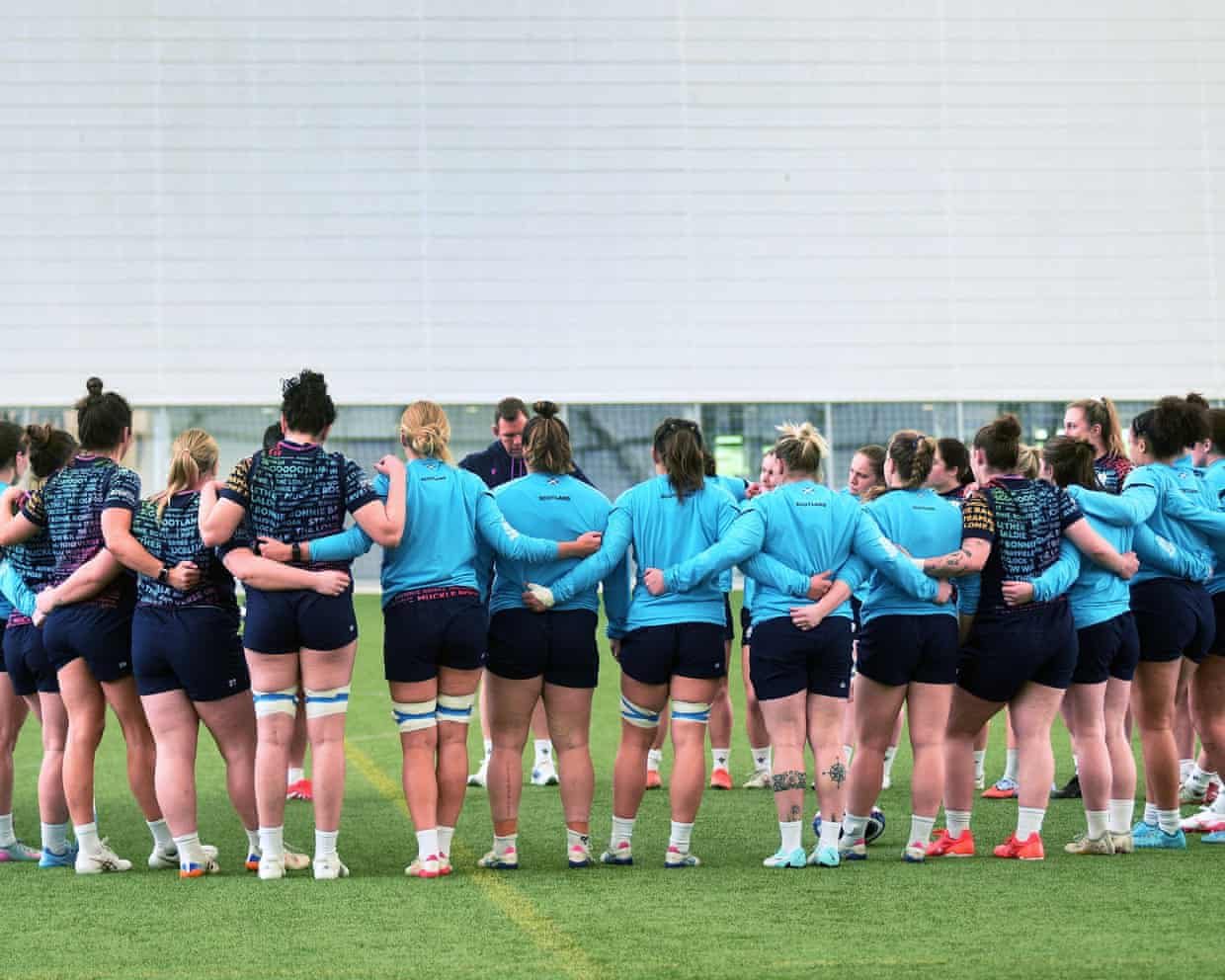
‘It was stressful’: inside Scotland women’s Rugby World Cup contract wrangle

Gossip around Azzi Fudd and Paige Bueckers’s relationship misreads the WNBA