Energy crisis: why ‘keep calm but cut down’ may be a better message for Labour
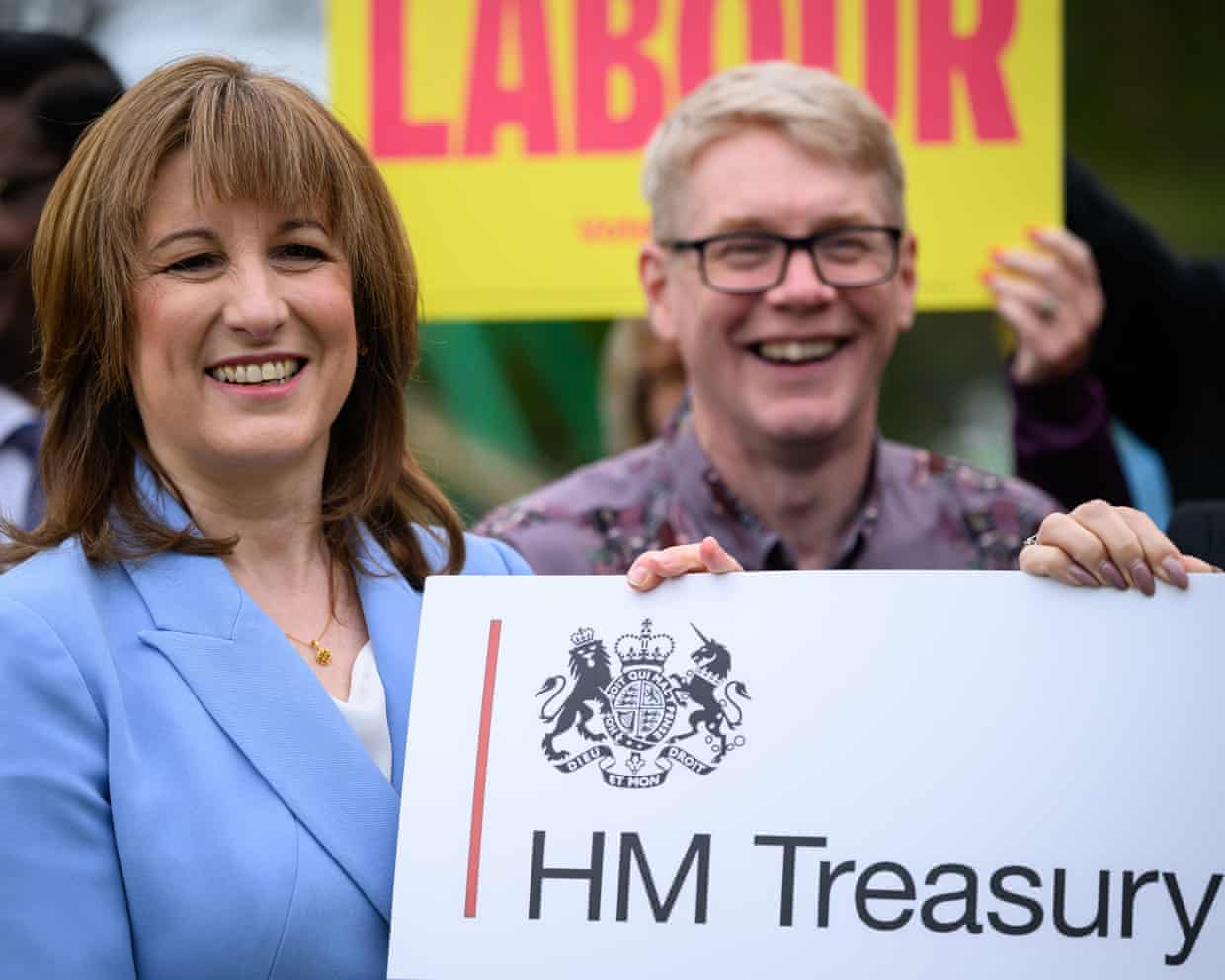
Labour ministers asked in recent days about the looming energy crisis sparked by the Iran war, including Keir Starmer himself, have essentially stuck to that reassuring wartime slogan: keep calm and carry on.“I think people should go about their lives as normal, knowing that the government is taking action to bring energy bills down,” James Murray, the chief secretary to the Treasury, told BBC Radio 4’s Today programme on Tuesday.But there are growing fears the government’s “don’t panic” messaging may be underplaying the scale of the challenges ahead and crowding out sensible advice on cutting consumption.“It’s the wrong message,” says Andrew Sissons, the director of the climate programme at the research foundation Nesta, referring to the government’s communications on the war’s impact.“The reality is that the global supply of oil and gas is going to be down by maybe 20%.
It’s a supply crisis, which means everybody needs to consume less.”Part of Labour’s challenge is that it dearly wants to claim credit for the £117-a-year cut to household utility bills that was a central theme in the chancellor Rachel Reeves’s autumn budget.That reduction, paid for by shifting the cost of green schemes on to general taxation and scrapping a flawed energy efficiency scheme, comes into effect in April.“Today your energy bills will be cut, because of our action at the budget and whatever happens in Iran, that price is now fixed until July,” Starmer stressed, at his Wednesday press conference.Yet it is already clear that the cost of household energy will rise again in the summer, when the next quarterly price cap is set.
The latest forecast from the consultancy Cornwall Insight estimates the cost of a dual-fuel bill will rise by 17.6% from July – swamping the 7% cut in April.Meanwhile, oil and petrol prices have leapt since the start of Donald Trump’s bombing campaign and Iran’s retaliatory strikes.Over time, these higher costs are expected to feed through to prices across a wide range of products.So having put tackling the cost of living at the heart of their pitch to the public, ministers now face having to explain why energy inflation is expected to increase once again.
No government wants to sow panic – less still panic buying – so the “keep calm” message is understandable,Talking down the economy, by denting fragile consumer confidence, is also the last thing they want to do,And the government is also trying to face down a vociferous campaign from opposition parties about Reeves’s plans to reverse the Tories’ 5p cut to fuel duty, in three steps from September to next March,While income from VAT on fuel will rise as a result of higher prices, wider tax revenues will be hit by the increasingly expected economic slowdown – and the government’s cost of borrowing has risen too since the crisis began, jeopardising Reeves’s fiscal targets,It is these fears over tax and spend that have prompted the chancellor to insist that any help with utility bills must be “targeted” – a view widely shared by thinktanks, including the Institute for Fiscal Studies and the Resolution Foundation.
But the government has found itself unwilling or unable to make the other part of this argument – that many people will have to brace themselves for higher bills, and it would be a good thing if, as a society, we could crimp our energy use.Sissons argues: “The message from the government should be: number one, be more efficient wherever you can – where you can save energy without going cold or stopping travelling, then do; and number two, this is a great time to be switching away from oil and gas on to clean electricity, on to heat pumps and electric vehicles, which is exactly what the government wants us to be doing anyway.”Jill Rutter, of the Institute for Government thinktank, once a senior civil servant in the Treasury, says she would prefer a message that was more like “keep calm, but you can probably find some quite useful savings”, adding: “There are things you can do to manage down your consumption.”At his press conference, Starmer had nothing to say about actions consumers can take: in contrast to the Australian prime minister, Anthony Albanese, for example, who has urged people to use public transport and not overfill their cars.Labour is understandably keen to avoid anything that might smack of the “nanny state”, let alone the dread word “rationing”.
But the risk is that, as the conflict continues, “keep calm and carry on” sounds increasingly adrift from reality.

Stellantis recalls 44,000 UK vehicles over fault that could cause fires
The European carmaker Stellantis has issued a recall for 44,000 UK vehicles after discovering a fault that could result in its cars catching fire.The fault has been found in certain models across its Peugeot, Citroën, DS Automobiles, Vauxhall, Lancia, Alfa Romeo, Jeep and Fiat brands, produced between 2023 and 2026. Key vehicles affected by the recall include the Citroën C3, Peugeot 208 and Vauxhall Mokka.The manufacturer said the issue related to a lack of clearance between the gas filter pipe and a component of the belt starter generator, which could cause water to leak into the engine bay during wet driving conditions. That created a “potential risk of fire” in the engine, in the worst-case scenario

UK firms expect to raise prices more quickly as Iran war pushes up costs
Companies in the UK expect to raise their prices more rapidly over the coming months as the war in the Middle East drives up costs, Bank of England research shows.The Bank’s regular survey of more than 2,000 chief financial officers conducted last month, after the Iran conflict began, shows they now expect to raise their prices by 3.7% over the coming year.That was a rise from 3.4% in February, while the bosses’ expectation of inflation across the economy has risen from 3% to 3

Claude’s code: Anthropic leaks source code for AI software engineering tool
Anthropic accidentally released part of the internal source code for its AI-powered coding assistant, Claude Code, due to “human error”, the company said on Tuesday.An internal-use file mistakenly included in a software update pointed to an archive containing nearly 2,000 files and 500,000 lines of code, which were quickly copied to developer platform GitHub. A post on X sharing a link to the leaked code had more than 29m views early on Wednesday, and a rewritten version of the source code quickly became GitHub’s fastest-ever downloaded repository. Anthropic issued copyright takedown requests to try to contain the code’s spread. Within the code, users spotted blueprints for a Tamagotchi-esque coding assistant and an always-on AI agent, per the Verge
SpaceX confidentially files to go public at $1.75tn, reports say
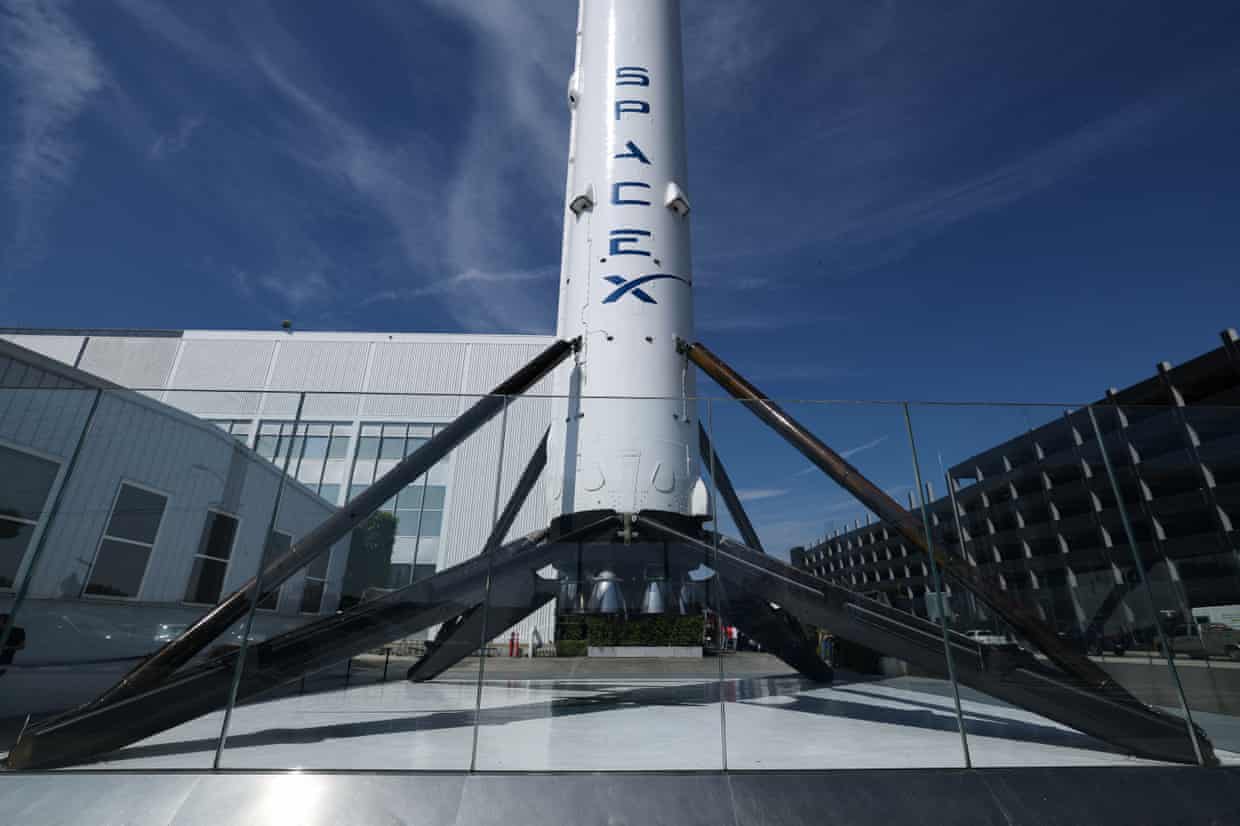
SpaceX has confidentially filed for an initial public offering on the US stock market, according to reports from Bloomberg and the Wall Street Journal. The IPO is set to be one of the most closely watched and highly valued listings in market history.Elon Musk’s company, which has become a dominant power in both space travel and satellite communications, could potentially seek a valuation upwards of $1.75tn. The confidential filing will give regulators a period to review and discuss the company’s financial disclosures before investors and the public are able to view them

Rams star Puka Nacua in rehab amid claims of antisemitic remark and biting incident
Los Angeles Rams star Puka Nacua is in rehab and was there before he was sued by a woman who says he made an antisemitic statement and bit her on the shoulder, according to his attorney. “He was in [rehab] a substantial period of time before any of these allegations broke ... and he’s scheduled to be there for a while longer,” Levi McCathern told The California Post

‘From the ground up’ – How Black Country volunteers are tackling the highest levels of inactivity in England
“Being in nature and among the trees, getting some nice air and oxygen and exercise, that’s what clears the mind,” says Kelvin Gilkes, the human dynamo behind the Pendeford Community Bike Hub.A place where he fixes old and abandoned bicycles and helps people ride them, Kelvin also hopes his hub can expand horizons. “I’ve got one lady who has ADHD and she’s a big woman,” he says. “When she comes back from a ride, she’s so tired, she’s like: ‘Oh, my legs hurt.’ But she also says: ‘Oh, I slept really good

How to turn a leftover roast lamb bone into Wales’ national dish – recipe | Waste not

Australian supermarket Easter eggs taste test: ‘The quality of Easter chocolate is simply worse’

What a slip-up! The shop in Orkney that accidentally ordered 38,000 bananas
Ways to use mint sauce without having to roast a lamb

Sami Tamimi’s recipes for slow-cooked lamb with spicy pickled lemon and jewelled Easter rice

I can’t believe it’s got butter: this double-dairy ice-cream has gone viral – but how does it taste?