‘I’d smoke Biscoff if I could’: how a little Belgian biscuit became a social media sensation
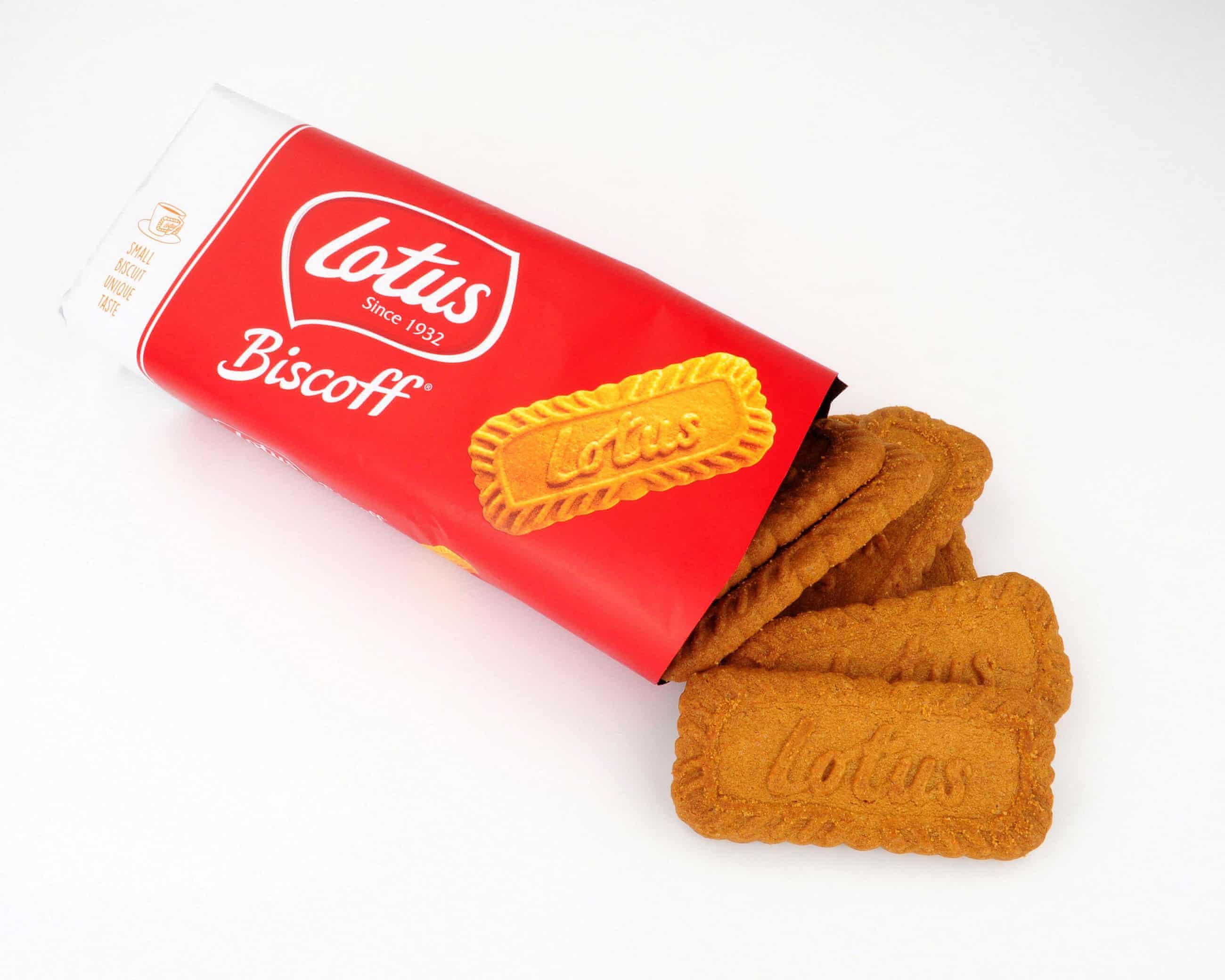
Biscoff-based recipes are breaking the internet – everything from cheesecakes and milkshakes to prawn dishes and salads.A few traditionalists are even enjoying the biscuits on their own.What’s behind this sweet success story?Around 15 years ago, Ashley Markle was admitted into a secret world, introduced to the treasures of an exclusive supply chain.She was staying at her aunt’s house and, one morning, when her aunt made her a coffee, she placed a little plastic-wrapped biscuit on the side.“I’d never seen them before,” says Markle.
She bit into it: “It was a warm flavour that I’d never really had in a cookie.I’m like, what is this?”Her aunt had discovered the small, gently spiced Biscoff biscuits as an airline snack.She loved them so much that she contacted the maker, Belgian company Lotus, and asked them to ship a box to her in the US.At that time, says Markle, “I think she was the only person who actually had them in her home.” But, as we all know, the world changes rapidly.
Last year, Biscoff was the fastest-growing biscuit brand in the US.Created in 1932, the spiced caramel biscuit has been described as a “gen Z obsession” by the Times, while Biscoff-branded treats, or rival companies’ “caramelised biscuit” products, appear to be everywhere this spring, from Easter eggs to hot cross buns.There have been Biscoff peaks every few years over the last decade.In 2014, the spreadable version was being described as “crack in a jar”.In 2016, Biscoff was whisked into the freakshake trend.
By 2021, fuelled by the Covid lockdown home-baking boom, the brand had taken off across social media, while the chef Jon Watts demonstrated three Biscoff recipes in just under seven minutes on the daytime TV show This Morning.“That was my worst ever TV appearance,” he says with a laugh.In January this year, Biscoff took off once again, with people across TikTok and Instagram obsessing over a viral “Japanese cheesecake” – so named because it started with Japanese creators sinking biscuits into a tub of yoghurt and leaving it overnight.Markle is a social media creator who posts snack recipes on her channels each day.Whenever she does a Biscoff post – french toast sticks and milkshakes, among others – her videos always fly; her attempt at the cheesecake in January has had more than 4m views on TikTok, and her two-ingredient Biscoff cookies from last summer are on 5.
6m.“I think it’s kind of like a cult following at this point,” she says.My friend Raj, a teacher, developed a taste for Biscoff around 2014, after raiding someone else’s stash.He bought her a replacement packet, plus 10 more packets for himself (ordering online, he accidentally turned out to have bought 10 boxes full of multipacks, ending up with a huge stockpile).At his school, a colleague keeps a packet of Biscoff as an incentive for the year 11 students to show up for out-of-hours tutoring.
“I ate them all.From his drawer,” Raj says.“I bought him a replacement pack, as well.I’d smoke Biscoff if I could.”What makes a viral food trend? Manufacturers are desperate to know.
Lisa Harris, co-founder of the food and drink consultancy Harris and Hayes, says Biscoff isn’t a single trend in itself, more an “expression of various converging trends”.The first element is nostalgia.Biscoff is a modern version of the traditional Belgian speculoos, spiced biscuits that have been around since the middle ages, when they were eaten to celebrate December’s feast of Saint Nicholas.For consumers in the UK and US, the Proustian rush is a more recent phenomenon – a faux-fancy biscuit with its individual wrapper and exotic Euro-feel, the kind of thing you’d find served with coffee on a flight in the 80s, or at the hairdresser’s in the 90s.“It’s quite an old-fashioned flavour,” says Harris.
“I associate it with being on the side of a cup of tea.It’s got nostalgic relevance.” Another trend, she says, is “accessible indulgence, within most people’s price range.With the cost of living, people are looking for simple ways to feel as if they’ve done something special.”Biscoff’s versatility, she says, is another reason it has taken off: “It can be in drinks, ice-cream, desserts, hot chocolate.
” And Biscoff’s partnerships with other brands – an example of modern “collab culture” says Harris – is another big trend.Often, products that have distinctive or strong flavours, such as Marmite, Nutella, Guinness and Biscoff, take on a life of their own among consumers.“Fans run with it and feel as if they have ownership over the product as much as the brand itself does,” says Harris.This plays out across social media.“Because of the democratisation of content creation, it will be fans that create these trends, more so than the brands – although I’m sure the brand managers are absolutely rubbing their hands with glee.
” The success of Biscoff, she says, “is a confluence of those larger trends.The active ingredient, the kind of spark, is really that it’s a social media first recipe.” It’s a self-sustaining relationship – social media creators know that jumping on the Biscoff bandwagon is an easy way to get views and followers.Niamh Leonard-Bedwell, fast-moving consumer goods editor of trade publication the Grocer, has been following Biscoff’s rise.She says that the makers haven’t been particularly active in driving social media trends, but they are responsive to them, posting customers’ and influencers’ videos on their own channels.
They are also in the process of removing the Lotus embossing on the biscuits themselves, replacing it with the word Biscoff.“I suppose that was in response to the popularity they were seeing on social media.They updated their branding to resonate more with younger shoppers.” The Japanese cheesecake trend, says Leonard-Bedwell, “had a real impact on sales.In the week to 17 January, their volume sales were up 30% on the same time last year.
”In its 2025 annual results, released last month, Lotus announced a 10% revenue increase, with more than half of that revenue coming from the Biscoff brand (Lotus also owns other products including the snack brands Trek and Bear, and the sourdough crackers Peter’s Yard).Last year, it opened a factory in Thailand to expand into the Asia-Pacific market (after launching one in the US, the first outside Belgium, in 2019).Still owned by the founding Boone family (alongside another Belgian baking dynasty), it is now run by the founder’s grandson – and namesake – Jan Boone, said to be one of only five people who know Biscoff’s secret recipe.Last year, he told the Times: “We want to conquer the world.”There have been signs that Biscoff has its sights set on more than just sweets – it could be coming for our main courses, as well.
In a promotional cookbook of the company’s own creation, Lotus included some “surprisingly savoury” recipes – the word “surprisingly” doing a lot of heavy lifting – including prawns in Biscoff sauce, a creamy Biscoff duck breast, and a warm goat’s cheese and Biscoff salad.Watts, book in hand, says that he can’t really see this taking off, even if the product is now a staple within teatime treats and puddings.(He himself likes the “very distinct, caramelly flavour” and his latest cookbook features a recipe for Biscoff cheesecake.)Watts got into Biscoff during the pandemic, by way of its jarred, spreadable form.“It’s very easy to use in desserts: things like brownies, blondies, cheesecakes, those no-bake or simple bakes that everyone was doing at that time,” he says.
The simplicity of the recipes plays well on Watts’s social media; one cake is made with nothing but a whole jar of spread, eggs and bicarbonate of soda.Whenever he posted a Biscoff recipe, he says, “it was going viral”.The brand got a big boost during the lockdowns, says Kiti Soininen, category director for food and drink research at Mintel.“After that, [there was an increase in] the speed of product launches containing specifically Biscoff-branded ingredients.” Its partnership with Mondelēz, owner of Cadbury, led to chocolate bars and Advent calendars.
“And now this spring, you’ve got the Easter eggs.It helps to keep the visibility going, to just keep re-energising that interest over and above what is going on organically online,” she says.Part of Biscoff’s success, says Soininen, is that it’s a “quite a universally likable flavour, if you compare it with something like the matcha trend, which has managed to get into lots of other products, but is a bit more divisive”.Consumers love novelty, she says, but only to a point, so a collaboration with known brands helps.“If it’s that sort of safe adventure, where it’s got that newness, that freshness, but it’s pairing that with familiarity – that hits the mark with a lot of people.
”Will Biscoff survive the wellness trend? Or shoppers’ growing concern about ultra-processed foods (UPFs)? Biscoff biscuits contain palm oil – so do the sandwich biscuit version and the spread – as well as an emulsifier.“What we’re seeing in our consumer research is that most people have a moderation mindset,” says Soininen.“There’s a very small percentage of people who are trying to eat healthily absolutely all the time.You’ve got lots of people who are trying to eat healthily most of the time, and who think it’s OK to have a treat now and then.” The Japanese cheesecake trend took off, she says, partly because of the health benefits of the yoghurt – “but you’ve got that indulgent element to it”.
Biscoff’s traditional feel may insulate them a little from the negative associations of UPFs.There is a disconnect, says Soininen, between what a product actually would be classified as “and the intuition, where the [intuition says], ‘Well, if my grandmother can have bought this then it can’t be truly ultra-processed.’”Few observers see the trend ending any time soon.“I think the fact that a lot of retailers are using Biscoff as inspiration for their own brands shows there’s a clear appetite for that flavour,” says Leonard-Bedwell, pointing to products including porridge, tea, popcorn and breakfast cereal.Markle, who is planning more Biscoff recipes, says: “I don’t see anybody deciding that they don’t like Biscoff any more.
”

No escape from the energy shock for UK business. A long-term strategy is still essential | Nils Pratley
The cost of energy for British business was a crisis even before the Iran war sent prices higher: the UK already had the highest electricity prices for industry among G7 countries. Now comes the next whack. How big will it be?Projections from the energy consultancy Cornwall Insight are steep for electricity and gas. For the former, it thinks increases of 10-30% are on the cards; for the latter 25-80%. The ranges are wide because, unlike with households, there are no price caps for businesses

Stocks rise and oil dips on hopes of 15-point Iran peace plan
The price of oil has dipped and stock markets around the world have moved higher on reports that the US has sent a 15-point framework for peace to Iran, amid hopes of a ceasefire in the Middle East.Positive sentiment may also have been bolstered by reports that Iran had announced it was permitting “non-hostile” ships to pass safely through the strait of Hormuz, a move that could help to reopen the vital shipping lane.Oil prices had fallen by 4% in the early hours of Wednesday, with the Brent crude benchmark sinking below $100 a barrel, as traders reacted to the prospect of an easing of the squeeze on supplies.Stock markets in Asia moved higher, with Japan’s Nikkei closing up 2.9% and Hong Kong’s Hang Seng adding just over 1%

UK iPhone users face over-18 age check to use services after update
Millions of Apple iPhone customers in the UK will now have to confirm they are 18 or older to use all available services, including by showing a credit card or by scanning an ID.The move, believed to be a first for a European market, comes amid pressure on tech companies from the government to do more to protect children online.The new requirement will be included in a software update. It was welcomed by Ofcom, the online regulator, which called it “a real win for children and families” and said it was part of a wider drive to “keep young people away from harmful content”.However, some users complained that it raised concerns about the privacy of the information that is uploaded to prove age

What are the rules on cryptocurrency donations to UK political parties?
Ministers are introducing a temporary ban in cryptocurrency donations following an official review.Philip Rycroft, a former senior civil servant, made the recommendation as part of a review into countering foreign financial influence and interference in UK politics.Rycroft said the moratorium would allow regulators to catch up, although a full ban was not deemed necessary. Nonetheless, “there is a risk that crypto assets are used as a vehicle to channel in foreign money”, he said.Donations of crypto assets – such as bitcoin, stablecoins and non-fungible tokens – to political parties are not illegal, although the moratorium will put these on hold

US runners led off course in chaotic half-marathon given entry to world championships
Three runners who were led off course in a race that served as a qualifier for the World Road Running Championships have been given entry into the upcoming competition.Jessica McClain, Emma Grace Hurley and Ednah Kurgat were leading the USA Track & Field Half Marathon Championships in Atlanta earlier this month when the guide vehicle took the trio off course. Molly Born, who had been more than a minute behind the leaders, came through to win the race, with Carrie Ellwood and Annie Rodenfels in second and third. McClain, Hurley and Kurgat finished in ninth, 12th and 13th respectively, around two minutes behind Born.As well as missing out on the first prize of $20,000, McClain, Hurley and Kurgat were deprived of the three qualifying places for the World Road Running Championships awarded to the top finishers in Atlanta

Lily James, Andy Murray and a million Britons: padel’s rise nears milestone
It was once seen as a quirky upstart or continental fad. But padel now has nearly a million players across the UK after participation levels more than doubled in 2025.According to LTA figures seen by the Guardian, 860,000 Britons played padel at least once last year – up from 400,000 in 2024 and 129,000 in 2023 – as the racket sport’s dizzying rise continued.The LTA, tennis’s national governing body, puts the extraordinary boom down to padel’s accessibility, with beginners able to play in minutes, more courts, and the cool factor from celebrities such as Eva Longoria, Lily James and Cristiano Ronaldo taking up the sport.Rapper Stormzy and tennis star Andy Murray have also become vocal advocates for the fast-paced racket sport, which combines many of the rules and scoring system of tennis with some elements of squash, including a back wall

Matt Brittin: why the BBC’s new Doctor Who-loving boss may not have much time for sleep

Meta ordered to pay $375m after being found liable in child exploitation case

OpenAI shutters AI video generator Sora in abrupt announcement

Baltimore sues Elon Musk’s AI company over Grok’s fake nude images

Protect men and boys from manosphere influencers, Labour MPs tell Ofcom

Divide between Silicon Valley and ordinary people grows ever larger