Divide between Silicon Valley and ordinary people grows ever larger

Hello, and welcome to TechScape.I’m your host, Blake Montgomery.This week in tech, we discuss a moment of divergence between Silicon Valley and everyday people; deep cuts at Meta to maximize spending on AI; writers caught using AI; and the frightening, fiery crashes of the Tesla Cybertruck.Nvidia hosted a conference last week where it emphasized AI agents – semi-autonomous chatbots that can perform digital tasks for you – as the next frontier in tech.The company announced a toolkit for agents, including NemoClaw, an AI agent software suite for businesses.
Nvidia is in the business of riding the cutting edge of technology, and it sees a bright future.At the conference, CEO Jensen Huang predicted that his company would rake in $1tn in sales through 2028, which equates to 3% of the entire US yearly GDP, an astronomically high figure.The “Magnificent Seven”, of which Nvidia is first and foremost, grew nearly four times as much as the S&P 500 in the past 10 years, according to the Motley Fool.As Nvidia and co double down on the AI race, the divide between Silicon Valley and everyday people grows wider and deeper.The novelist William Gibson, who coined the term “cyberspace”, once wrote that “the future is already here.
It’s just not evenly distributed”; his dictum very much applies today.Polling released earlier this month found that 65% of Americans don’t use AI in their work at all – nary a chatbot, much less dispatching an AI agent.Pew Research’s survey also shows that Americans are wary of AI and believe both of the main political parties are regulating it poorly.Residents of other countries polled are even more skeptical, according to Pew.In my own perusal of Guardian readership numbers, I find our readers flock to stories about AI’s evils, failures and costs far more than to positive stories.
The AI industry is splitting away from the lives of everyday people.Exclusive polling conducted for the Guardian last year found that twice as many Americans believe their financial security is getting worse than better, hardly half as optimistic as Huang’s prediction.Two developments at Meta in recent weeks illustrate the all-consuming investment the company is making in artificial intelligence at the expense of its other business units.First, Reuters reported that the social media giant was considering laying off up to 20% of its workforce to offset its ballooning expenditures on AI, which include a datacenter the size of Manhattan.Second, Meta revealed that it would scale down its once-lofty ambitions to create a metaverse, though it later attempted to walk that announcement back.
The company announced last week that it would shutter the virtual reality version of Horizon Worlds, leaving only the mobile and web-based versions of the game operable,A few days later, Meta’s chief technology officer said the game would not shut down entirely,Whatever the end result of those conflicting announcements may be, their upshot is that Meta is placing far less emphasis on virtual reality than it once did,Earlier this year, the company had already laid off members of its Reality Labs division, responsible for the metaverse,Meanwhile, it hired AI researchers at a rapid and expensive clip throughout 2025.
Meta is reallocating huge amounts of its spending to AI.In multiple recent earnings calls, the company disclosed that its spending on AI infrastructure would be larger than anticipated.Despite the continued success of the company’s ad business, that money has to come from somewhere.Reappropriating spending from a division that has never turned a profit and racked up losses larger than a small country’s budget makes sense.Reality Labs has recorded losses of $80bn since 2020, per CNBC.
The scale of Meta’s reshaping is staggering, though, and may portend what’s to come across all of tech; we have not seen a tech giant cut up to a fifth of its workforce to offset just how massive its AI spending has become.Tech giants may start spending the bulk of their cash not on human talent, once the most valuable commodity in tech, but on hardware and infrastructure that will keep them ahead in AI.Even the CEO wants AI to do his job.Mark Zuckerberg is building an AI agent geared towards performing his work as CEO of Meta, the Wall Street Journal reported on Sunday.He’s using it to retrieve information that might be buried within layers of bureaucracy, per the Journal.
Zuckerberg proudly declared that Meta would spend tens of billions to become “a metaverse company”, even renaming it to signal those ambitions in 2021.Now he says Meta is pivoting to become “AI-native from day one”.How the FBI can conduct mass surveillance – even without AIKash Patel admits under oath FBI is buying location data on AmericansWhy is the FBI buying people’s location data and how is it using the information?You might want to bring a window cracker if you do.Cybertrucks have locked passengers inside and burned so hot they have disintegrated drivers’ bones.Victims’ families blame what they say is the faulty design of a truck Elon Musk calls “apocalypse-proof”.
The Guardian has tracked five known Cybertruck fires – a significant number, considering the vehicle has only sold 60,000 units and debuted just two years ago.These incidents involve four fatalities, including the deaths of three college students in California, and have been the subject of four lawsuits against Tesla.In a comprehensive look at fire danger, particularly of Cybertrucks, the Guardian has obtained hundreds of pages of police, fire and autopsy reports and court filings and company manuals, and has interviewed lawyers and safety experts.They – as well as the families suing Tesla – allege the Cybertruck’s design led to these worst-case scenarios where fires rapidly ignite, the vehicle’s electric door handles won’t unlock and passengers are trapped inside.Fires that entrap passengers are a well-documented and recurring problem with every model in Tesla’s lineup of vehicles, but Cybertrucks appear to have a disproportionate number of known deaths.
Safety experts have told the Guardian that the truck’s unique design amplifies the deadly issue.The vehicles come with high-density laminated windows that are harder to break than regular car windows, making escape and rescue difficult when doors won’t unlock.And the trucks are built with materials, such as stainless steel, not commonly used in the industry, which can complicate the work of emergency responders.The Cybertruck is also the first Tesla model to entirely eliminate door handles on the outside of the vehicle.Read the Guardian’s investigation: Inside the fiery, deadly crashes involving the Tesla CybertruckThousands of people are selling their identities to train AI – but at what cost?New crypto regulations likely to be big favor to the Trump family, industry insiders sayGoogle co-founder spends $45m in fight against California billionaire taxInside China’s robotics revolutionMusk responsible for Twitter investors’ stock dropping when he bought company, jury rules
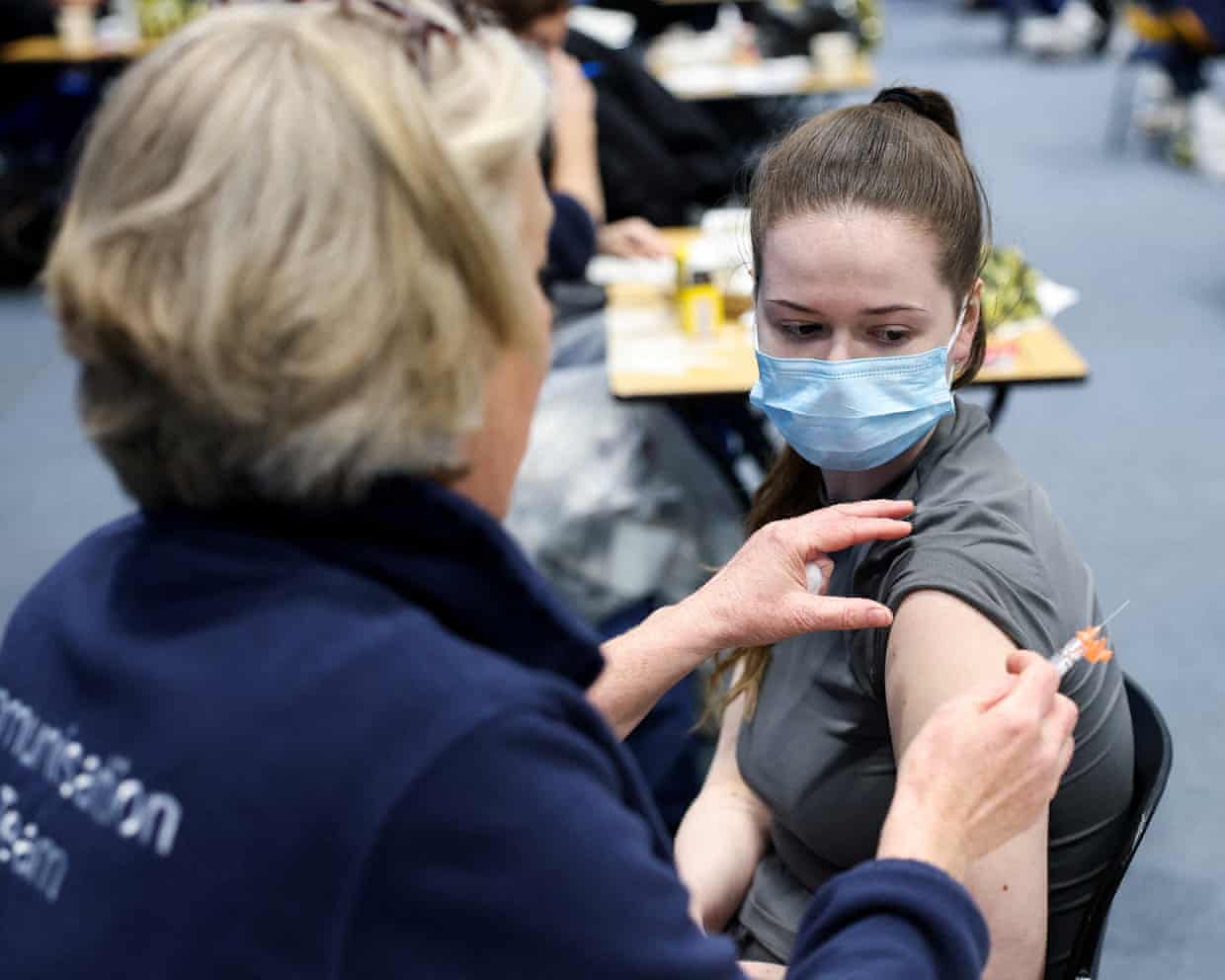
Meningitis B vaccine scheme widened to include some year 11 pupils in Kent
The meningitis B vaccination programme will be expanded to include year 11 pupils at schools affected by the outbreak in Kent, health officials have said.Figures from the UK Health Security Agency (UKHSA) show the number of cases of meningitis have fallen from 29 on Sunday, when 20 cases were confirmed and a further nine were under investigation, to 20 confirmed cases with a further three under investigation, as of 12.30pm on Monday.Officials started vaccinating University of Kent students on Wednesday 18 March. The following day, on a visit to the campus, the health secretary, Wes Streeting, said the programme would be expanded to more people, including sixth form pupils at four schools with known or suspected cases of MenB

Argos faces backlash over ‘influencer kit’ for toddlers
Argos has ignited a debate among parents and child development campaigners after promoting a wooden “influencer kit” aimed at toddlers.Critics have warned that the play set could normalise the precarious world of digital labour and prematurely expose children to the pressures of online visibility.The toy, designed for children aged two and over, is made entirely from wood and includes a tripod stand, a miniature camera with an adjustable aperture lens, a smartphone model, a tablet, and a microphone. All the items can be stored in a carrying pouch.Argos currently advertises the £15 product on its website as a tool designed to “cultivate children’s storytelling skills and creativity through career role-play”

UK medical council overhaul may mean more doctors struck off for racism and antisemitism
An overhaul of the General Medical Council is expected to lead to more doctors that face accusations of racism and antisemitism on social media being struck off.The Department of Health and Social Care (DHSC) has launched a consultation on changes to the legislation governing the regulation of doctors, saying the move will lead to the biggest reform of the medical regulator, the GMC, in four decades.However, the line when it comes to the expression of anti-Zionist and pro-Palestinian views is expected to be a continuing point of contention.Doctors facing disciplinary proceedings over wearing symbols and over social media posts have been bringing lawsuits against hospital trusts over the last year, arguing that their beliefs are protected under the Equality Act 2010.The DHSC says there have been “too many” recent examples of doctors using racist and antisemitic language, particularly on social media, without swift action

Property company denies trying to mass-evict tenants before England’s no-fault evictions ban
A property company accused of trying to mass-evict tenants in the weeks before no-fault evictions are banned has denied doing so, saying it is simply implementing “routine and lawful tenancy management”.A statement from Criterion Capital, set up by the billionaire property magnate Asif Aziz, was issued in response to Matthew Pennycook, the housing minister, who wrote to the company to seek “urgent” answers about its plans.Criterion has reportedly sent section 21 notices, which give notice of proposed eviction, to large numbers of its tenants. At prime minister’s questions this month, the Labour MP Siobhain McDonagh said she knew of at least 130 such notices issued by Criterion at just one development, Britannia Point, in her south London constituency of Mitcham and Morden.In a letter to the directors of Criterion, seen by the Guardian, Pennycook said that if the company was seeking to remove tenants before the Renters’ Rights Act comes into force on 1 May, banning so-called no-fault evictions in England, it would be the actions of a “thoroughly unscrupulous landlord”
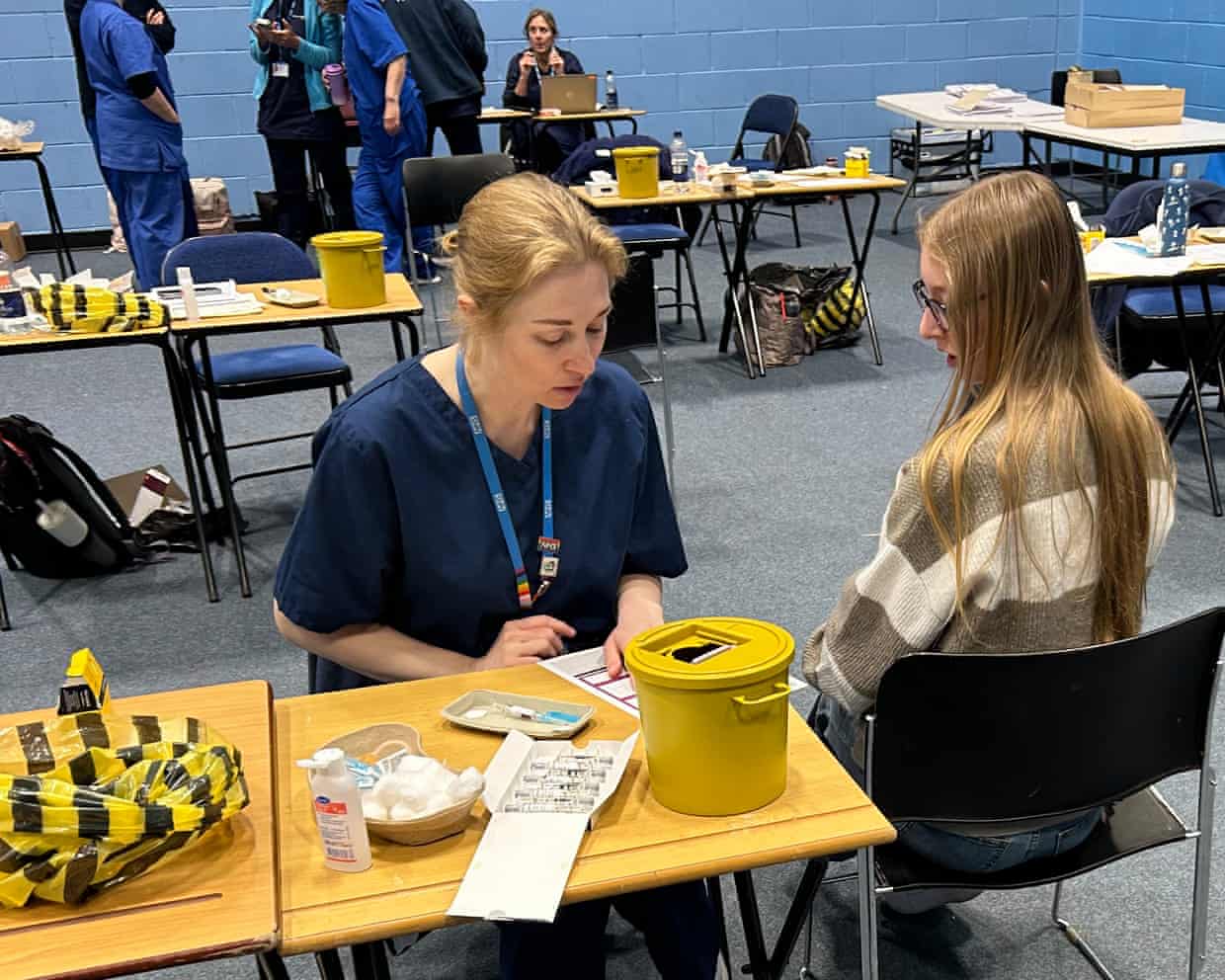
No new meningitis cases linked to Kent outbreak found, health agency says
No new cases of meningitis linked to the outbreak in Kent have been detected, raising hopes that it has been well contained and has not led to people elsewhere catching the disease.The number of people affected remains at 29, of which 20 are are confirmed and nine probable cases in what health officials say is an “explosive” outbreak – the biggest to occur in the UK in a generation.Two of the 20 people confirmed with the disease have died: Juliette Kenny, 18, a secondary school student, and an unnamed University of Kent student. The other 18 are thought still to be in hospital.Nineteen of the 20 confirmed cases were of meningitis B

‘Not just a Jewish service’: Hatzola ambulances serve whole community, say volunteers
‘Accountants, plumbers, surveyors – whatever it might be, they’ve all got day jobs. Everyone has got kits in their car, everyone responds from wherever they are,” said Yossi Richman, on life as a trained volunteer paramedic at Hatzola, the ambulance service funded by Jewish giving.Richman also serves as a governance lead at Hatzola in Golders Green, north London, where four ambulances were attacked by arsonists in the early hours of Monday morning.The attack has left Jewish communities reeling. But alongside the concerns about community safety amid rising antisemitism, there’s a determination to protect the humanitarian civic principles Hatzola represents

Royal Mail owner pushes back against criticisms that service has declined

Crispin Odey: I can’t remember telling female employee ‘I could attack you now’

Baltimore sues Elon Musk’s AI company over Grok’s fake nude images

Protect men and boys from manosphere influencers, Labour MPs tell Ofcom
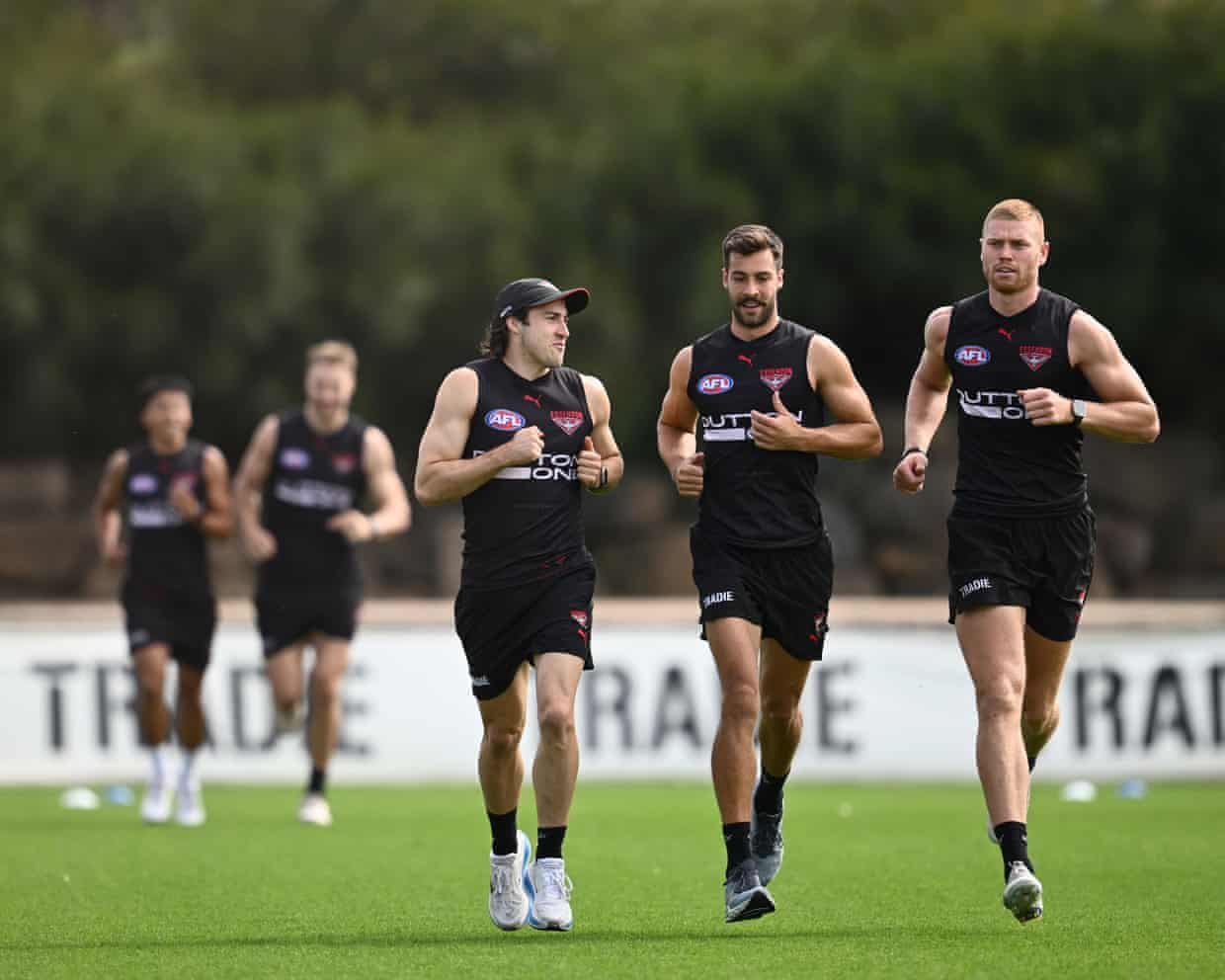
From the Pocket: Essendon have all the hallmarks of a team deep in rebuild – just not the stomach to acknowledge it

Crammed Test cricket schedule risks leaving Australian summers unrecognisable | Geoff Lemon