Demon Slayer economics: how the anime juggernaut became a saviour

An animated drama featuring hordes of carnivorous fiends might not sound like classic box office fodder, but that’s exactly what Demon Slayer: Kimetsu no Yaiba Infinity Castle proved to be in September.The film set new records for anime – Japanese animated films and series – making more than $70m (£52m) on its opening weekend in the US and £535m so far globally.To put that in context, Ghost in the Shell – an anime classic released in 1995 – made about £2m worldwide.In that 30-year period, anime has gone from an underground phenomenon to a saviour during one of the worst autumn box office slumps in recent memory.So how did we get here?Mitchel Berger, an executive vice-president and the head of theatrical at Crunchyroll – the specialist anime streaming service – was pleasantly surprised by the Demon Slayer mania.
He says one of the keys to its success has been the slow building of a worldwide fanbase for franchises such as Demon Slayer, which also has a TV series and had already secured one box office success with 2020’s Demon Slayer the Movie: Mugen Train (that time, the fiends were trying to eat passengers on a train).“We have spent the last eight years building this fandom,” says Berger.“Coming out of the pandemic, that fandom has just continued to grow.”Crunchyroll, which is owned by Sony and co-distributed Demon Slayer with its parent company, passed 17 million subscribers this year, and has 50,000 hours of anime on its service.Anime first emerged from Japan during the 1950s but its world breakthrough moment came in 1988 with Akira, the dystopian tale of a near-future Tokyo ravaged by biker gangs.
Its influence can be clearly seen in everything from cyberpunk to Stranger Things, and ushered in a more grown-up, darker brand of animation.Demon Slayer sees anime gatecrashing Hollywood and establishing Japanese animation as a potential rich resource in an era when IP is king.Most, but not all, anime begin life as manga, Japanese comics, which may have years of backstory.Others come from video games.It provides rich pickings for studios who want to spin things out into Marvel-sized franchises.
And it is not just the cineplex crowd who are getting in on anime.The director of Nomadland, Chloé Zhao, grew up reading manga in China and has set up Kodansha Studios to turn manga into live-action projects.Its new globalised reach means anime can materialise in some unlikely places.Olympic athletes, UFC fighters, Premier League footballers and rugby league stars have all referenced anime shows in their celebrations – while some have described the art form as “a lingua franca for young people all over the planet”.“It’s part of young people’s identity, it’s how they express themselves,” says Patrick Macias, an anime writer who lives in Tokyo.
“I think that really is fuelling this rise of anime, not just in the US, but globally.”Macias also puts the spike in interest around the art form down to “Oshikatsu”, a phenomena which began in Japan but was supercharged by South Korean K-pop where devout fanaticism is the norm.“You’re not just going to the movies,” he says.“You’re buying all the merchandise, you’re taking pictures of all the merchandise you bought, and you’re sharing it with your friends.”The Japanese government is betting big on anime.
It is a key part of its “Cool Japan” plan, a soft-power initiative it is hoping can boost its economy by piggy-backing off the hardcore fandom to drive cultural tourism.The country’s leaders, who are in charge of a lethargic economy, hope the strategy can bring in ¥50tr (£240bn) annually by 2033 – about 8% of Japan’s GDP.It marks a step change in approach from the country which has been protective of its culture traditionally.“The domestic market was big enough here for a long time,” says Macias.“It was an afterthought to spread this culture globally.
”South Korea has already been through this process and seen the benefits of opening up to a global audience: BTS, the country’s biggest K-pop band, contributed almost £3bn annually to its economy in 2020,“K-op showed what a modern version of opening the borders to let this culture spread a little more freely looks like,” says Macias,The other platform that looms large in the world of anime is Netflix,Berger will not comment on the possible Warner Bros deal with Netflix, but whatever happens after the battle between the media CEOs, it is likely that Netflix will remain Crunchyroll’s main competitor,The streamer says the number of subscribers watching anime on its platform has tripled in the last five years, and it currently dubs the latest releases into 33 languages to meet global demand.
Demon Slayer’s second and third instalments are also in the works –although no release dates are confirmed,Before then, the second season of Netflix’s live-action adaptation of One Piece will be released in March 2026, hot on the heels of the third season of Shinya Umemura’s Record of Ragnarok, which sees humans – including Nikola Tesla – fight gods in a battle for the “survival of humanity”,The stories are epic but so are the economic upsides of anime’s seemingly unstoppable rise,This article was amended on 2 January 2026,An earlier version said that Demon Slayer’s second and third instalments would be available in 2027 and 2029; no specific release dates have been confirmed.

We can still rely on the kindness of strangers | Letters
I can readily confirm Martin Kettle’s points (Need cheering up after a terrible year? I may have just the story you’re looking for, 28 December). I tripped up while last-minute Christmas shopping in Nailsworth on Christmas Eve; couldn’t move, very painful. The passersby and staff from a nearby shop were helpful and sympathetic. They must have been busy, but they freely gave me their time and cheered me up. The ambulance came quickly and the amazing paramedics correctly assessed my problem, getting me to Southmead hospital in Bristol

Flu patient numbers in English hospitals fall for second straight week
The number of people in hospital with flu in England has fallen for the second week in a row, NHS figures show, as England’s top doctor said the health service was “far from complacent” as a cold snap takes hold.An average of 2,676 flu patients were in hospital each day during the week ending 28 December, down 13% from 3,061 the previous week.The figure had previously been on an upwards trend, reaching 3,140 in the week ending 14 December. Last winter, weekly flu numbers for England peaked at 5,408 patients.A total of 128 flu patients were in critical care beds in England last week, up from 117 the previous week

Coroner calls for circumcision safety measures after baby’s death in London
A coroner has warned that more babies could die from infected circumcisions in the UK after the death of a six-month-old boy exposed a lack of infection control training and accreditation for circumcisers.Mohamed Abdisamad died in February 2023 of a streptococcus infection. He had a cardiorespiratory arrest on his way to hospital a week after undergoing a non-therapeutic circumcision, an inquest at west London coroner’s court found in October.In a prevention of future deaths report published this week, the assistant coroner Anton van Dellen urged the government to take action to avoid similar tragedies.He wrote: “During the inquest, the evidence revealed matters giving rise to concern

UK children to get chickenpox vaccine with measles, mumps and rubella jab
Children in the UK are to be immunised against chickenpox at the same time as measles, mumps and rubella.The NHS across the UK’s four home nations will administer a combined vaccine to young children to protect them against all four diseases from Friday.The measles, mumps and rubella (MMR) jab, which has been used since 1988, is being replaced by a combined MMRV vaccine that includes immunisation against chickenpox, also known as varicella.Infants will be offered two doses, at 12 and 18 months, to reduce their risk of catching chickenpox. The first appointments at GP surgeries to receive the vaccine are being held on Friday

The reason for Italy’s ‘demographic winter’ | Letters
The Italian “demographic winter” has a number of causes, but rising male biological infertility is not one (A child is born: Italians celebrate village’s first baby in 30 years, 26 December).A lot of worry about falling sperm counts has been generated by some studies, but a more recent meta‑analysis found, through inclusion of regional controls, an increase in US sperm counts between 1970 and 2018. Sperm counts may be falling in places like the Chinese province of Henan, which has substantial air and water pollution, but there is limited evidence that sperm counts are falling in the developed world.In 2024, the Pew Research Center asked women and men over 50 who never had children why they hadn’t. Around a third (31%) didn’t want them, but more prolific reasons included “it just never happened” (39%) and “didn’t find the right partner” (33%)

Two charities that received £1.1m from Sackler Trust kept anonymous to prevent ‘serious prejudice’
Two charities that received a combined total of more than £1.1m from the British charitable trust run by the Sackler family were kept out of its latest accounts to protect their reputations from “serious prejudice”.The trust, which draws on the Sackler fortune that came out of the US opioid crisis, gave £3.8m to arts, eduction and science bodies in 2024, according to its latest accounts, filed on New Year’s Eve.The largest named recipients – each receiving £250,000 – were Veterans Aid, which tackles homelessness in the ex-service community, and the Belvoir Cricket and Countryside Trust, which works to develop an appreciation for the British countryside and promotes a love of sport, especially cricket

What a 14-year-old Instagram sensation and six-hitting superstar tells us about life and cricket | Barney Ronay
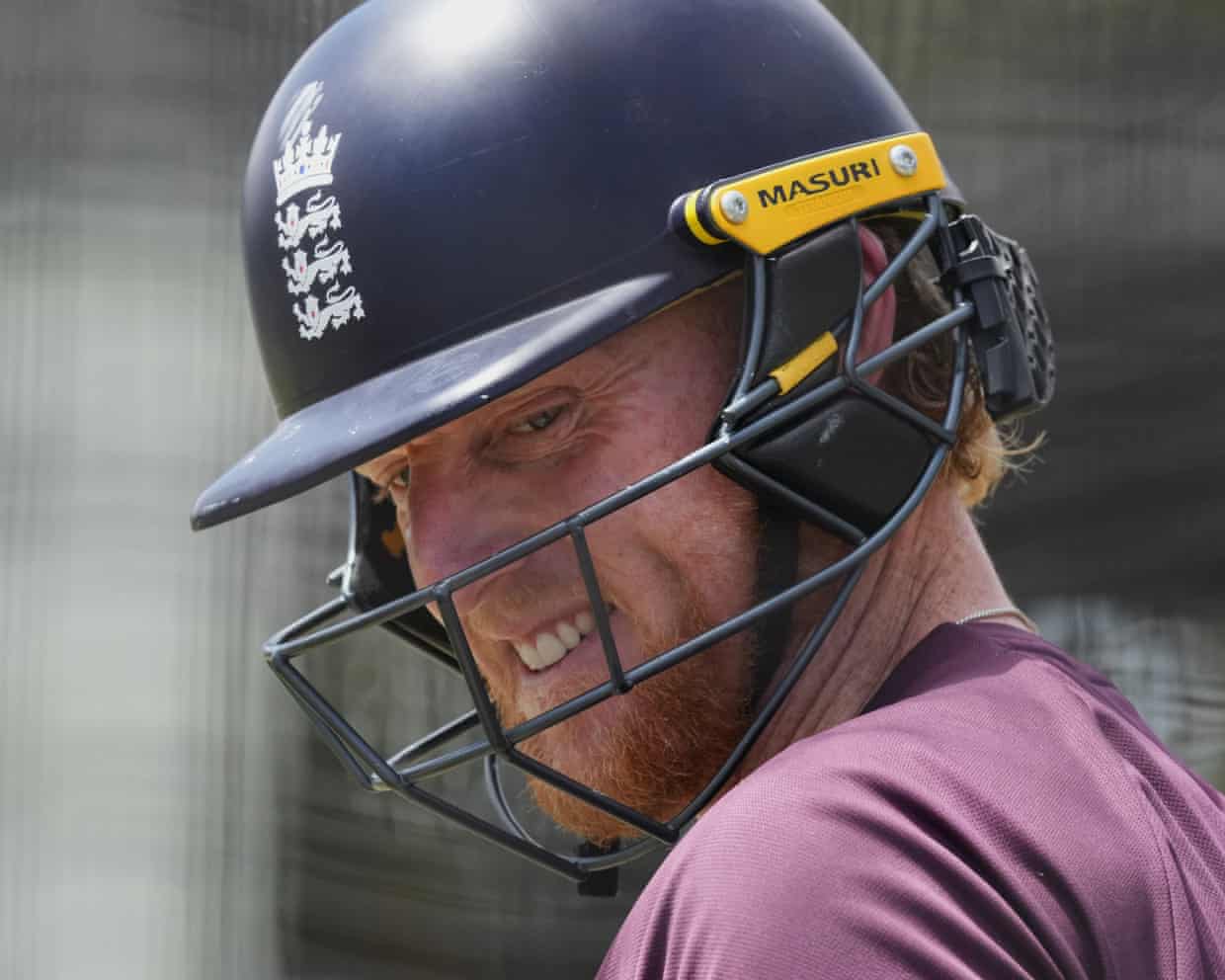
Green shoots no laughing matter as Ben Stokes insists fifth Ashes Test is ‘big game’

Australia have been blessed by England’s disarray but can put own stamp on Ashes triumph | Geoff Lemon

Gian van Veen denies Gary Anderson in epic to set up final against Luke Littler

PDC world darts semi-finals: Van Veen edges Anderson in classic to set up final with Littler – as it happened

Eternal 31 makes Crawley the tallest small person in England’s Ashes pyre