Wake up Labour MPs: the price of electricity is a crisis for industry and growth | Nils Pratley
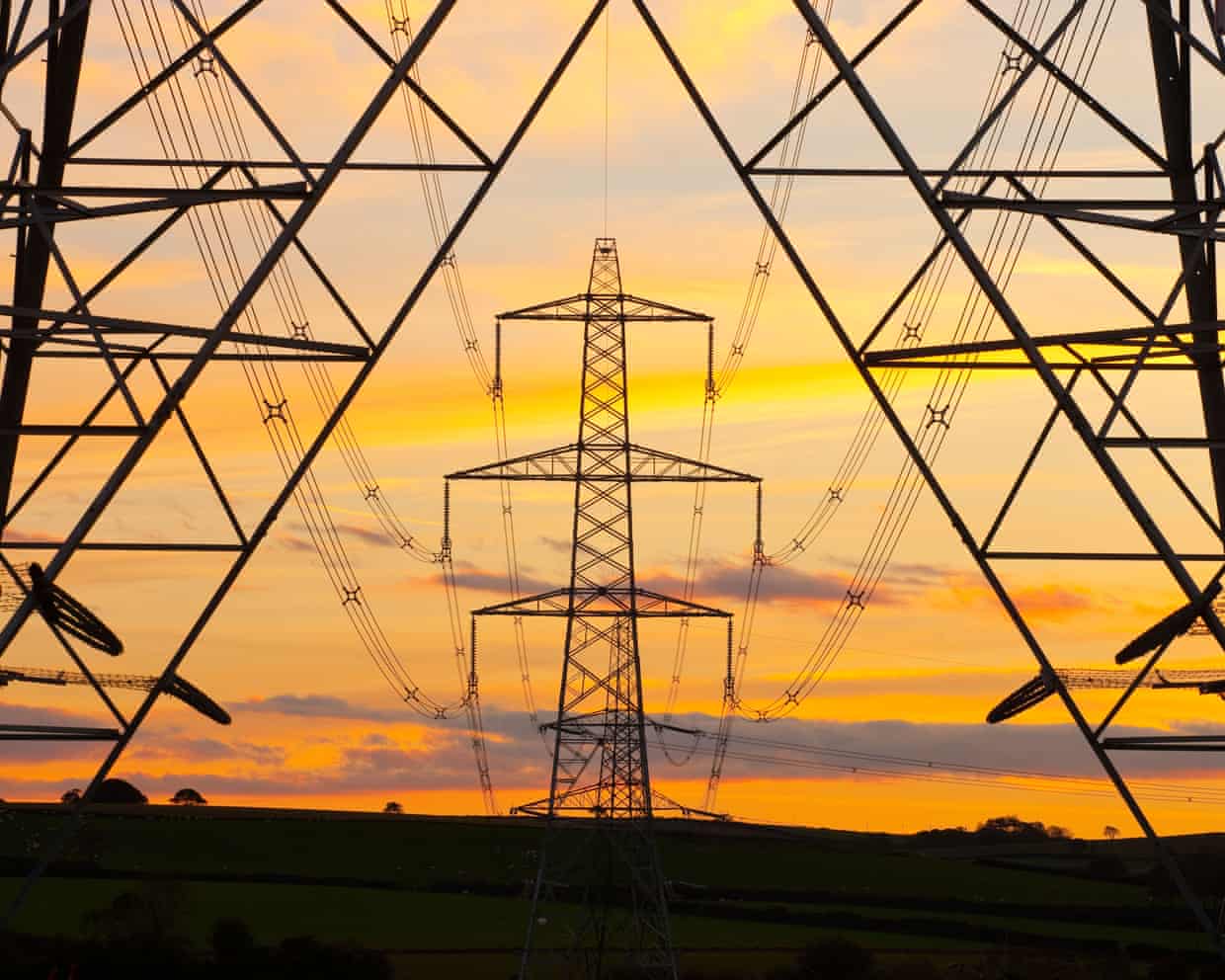
The price of electricity is less entertaining than a bout of leadership plotting but Labour MPs, if they lifted their gaze, could note that the boss of one of our largest energy companies made a significant prediction this week,British electricity prices in 2030 would be higher than they were in 2022 after Russia’s full-scale invasion of Ukraine, said Chris O’Shea, the chief executive of British Gas-owning Centrica,If he’s right, the implications may matter more for those MPs’ re-election prospects than if or when the prime minister goes,O’Shea was not making a point about net zero,He was merely saying all options for the necessary upgrade of the country’s energy infrastructure were expensive.
“We’ve underinvested in the system for many years, and whether it’s the cost of building a new gas-fired power station or a new windfarm, the costs have gone up,” he said.Well, quite.The energy secretary Ed Miliband’s “record” auction for offshore wind last month was declared a triumph because guaranteed prices for developers did not come out at the nose-bleed levels that had been feared, but nobody can call £91 a megawatt hour for 20 years a bargain when the past year’s wholesale price for electricity was £80-ish.Equally, though, the government probably has a point when it says the gas-fired route would be expensive because the price of turbines has gone through the roof (though we may have to buy a few anyway because today’s fleet of gas stations is ageing and some will be needed as backup).Nor are Hinkley Point C and Sizewell C nuclear plants, or the coming small modular reactors, cheap.
And, behind it all, sits the enormous £80bn-ish upgrade of the transmission grid out to 2031, a chunk of which would be required under all scenarios – indeed, some of it relates to gas.O’Shea’s prediction is not controversial, even if it’s striking to hear it spelled out starkly.Most mainstream energy analysts who crunch the numbers on the interplay between falling wholesale prices (because gas will be less influential) and higher network costs (because of the fixed-price contracts for renewables and nuclear and the extra spending on pylons and cables) end up concluding that system-wide savings only start to arrive sometime about 2040.One can quibble over details – and O’Shea was probably referring to the 2022 average price of electricity, not the peak – but one gets the broad picture.The direction is probably up a bit for the next few years.
The government seems to have accepted as much because it has given up claiming its 2030 clean energy plan will – of itself – bring down household bills by £300.From April £150 is being removed by shifting a potion of costs into general taxation.It may be the future mechanism too because Miliband, in front of the energy select committee on Wednesday, called the £150 a “downpayment” by the chancellor to meet his £300 promise on household bills.Let’s hope Rachel Reeves realises.That still leaves British business exposed to some of the highest industrial electricity prices in the world.
One can’t say the government is doing nothing because 500 companies in the most energy-intensive industries will get bigger discounts on their network charges via the established “supercharger” scheme.But that hardly adds up to a rounded strategy to address the inevitable consequences for growth and competitiveness.A “British industrial competitiveness scheme” for another 7,000 companies will arrive in April next year but ministers have yet to say who will qualify or what savings in electricity bills of “up to” 25% will mean.It’s vague stuff.Meanwhile, look at the mood of despair in vital manufacturing sectors.
The Chemical Industries Association this week predicted more closures, on top of the 25 sites that have gone over the past five years.“One of the biggest pressures on the sector has been the crippling cost of energy – needed to not only run factories but also as a feedstock, underpinning production processes,” said its chief executive, Steve Elliott.“In the UK these costs continue to be as much as four times higher than in some key competitor countries – with government policy significantly reinforcing that differential.”Complaints go beyond high electricity prices – theyre also about carbon taxes out of line with those of other countries, unsustainable decarbonisation deadlines and the run-down of the North Sea.The net result, though, is loss of competitiveness in core industries that, according to the government’s own industrial strategy, will be critical in supplying the chosen “high-growth” sectors, including life sciences, defence and advanced manufacturing.
Scunthorpe’s steelworks was rescued and Ineos’s chemicals plant at Grangemouth got £120m of funding to save the UK’s last ethylene plant.But they were 11th-hour interventions made when ministers judged the alternatives to be worse.They don’t add up to a strategy for industry to live with high electricity costs.If prices will be even higher by the end of decade, Labour needs to find some answers.Economic growth used to be its top priority.

Declines in health and education in poor countries ‘harming earning potential’
Deteriorating health, education and training in many developing countries is dramatically depressing the future earnings of children born today, the World Bank has said.In a report, the World Bank urges policymakers to focus on improving outcomes in three settings: homes, neighbourhoods and workplaces.The report, Building Human Capital Where it Matters, finds that in 86 of 129 low- and middle-income countries health, education, or workplace learning declined between 2010 and 2025.Analysing the links with earnings, the World Bank says children born today in low- and middle-income countries could earn 51% more through their lifetime if their country’s human capital matched that of the best-performing nations at similar income levels.Mamta Murthi, its vice-president for people, said: “The prosperity of low- and middle-income countries depends on their ability to build and protect human capital
UK GDP: Chancellor Rachel Reeves predicts ‘stronger growth this year’ after UK economy ends 2025 ‘in the slow lane’ – business live
Reaction to the news that the UK grew by just 0.1% in the final quarter of 2025 (see earlier post) is rolling in, and City experts aren’t impressed.Lindsay James, investment strategist at wealth managers Quilter, warns that the picture is ‘rather bleak at the moment’.“A long list of data revisions from the ONS has revealed the UK economy barely kept its head above water in the final quarter of last year, with GDP growth coming in at just 0.1% after downward revisions to the previous two data prints
Elon Musk posted about race almost every day in January
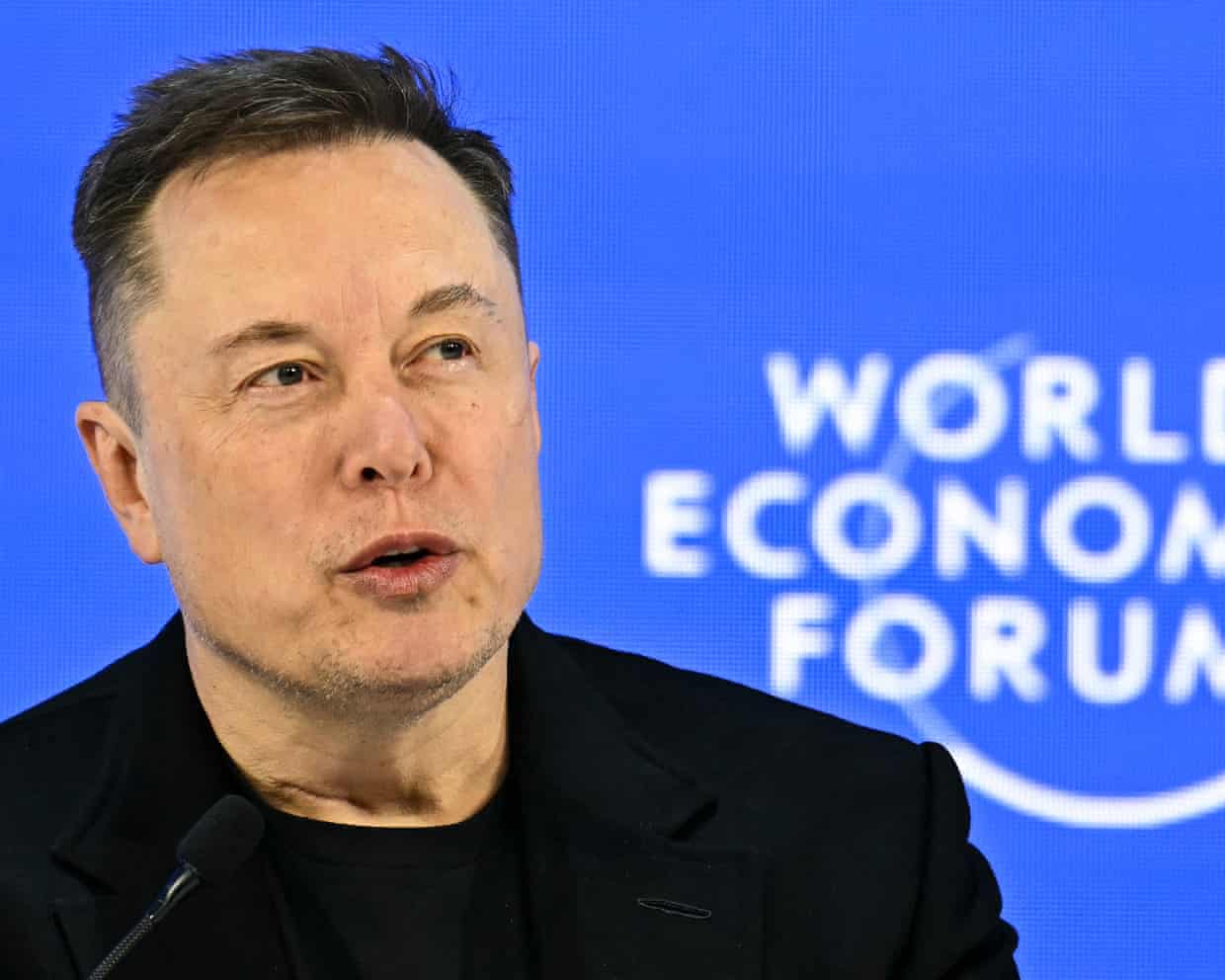
Elon Musk’s longtime fixation on a white racial majority is intensifying. The richest man in the world posted about how the white race was under threat, made allusions to race science or promoted anti-immigrant conspiracy content on 26 out of 31 days in January, according to the Guardian’s analysis of his social media output. The posts, made on his platform X, reflect a renewed embrace of what extremism experts describe as white supremacist material.“Whites are a rapidly dying minority,” Musk said on 22 January, a short time before taking the stage at the World Economic Forum in Davos, while reposting an Irish anti-immigrant influencer’s video about demographic change.Musk’s posts included him repeatedly claiming white people face systemic discrimination, endorsing the conspiracy that there is an ongoing genocide against white people in countries around the world and promoting a claim that white people would be “slaughtered” by non-whites if they become a demographic minority

The big AI job swap: why white-collar workers are ditching their careers
As AI job losses rise in the professional sector, many are switching to more traditional trades. But how do they feel about accepting lower pay – and, in some cases, giving up their vocation?California-based Jacqueline Bowman had been dead set on becoming a writer since she was a child. At 14 she got her first internship at her local newspaper, and later she studied journalism at university. Though she hadn’t been able to make a full-time living from her favourite pastime – fiction writing – post-university, she consistently got writing work (mostly content marketing, some journalism) and went freelance full-time when she was 26. Sure, content marketing wasn’t exactly the dream, but she was writing every day, and it was paying the bills – she was happy enough

The scandals clouding ‘sinister’ French ice dancers who beat Chock and Bates for gold
The American duo of Madison Chock and Evan Bates, the reigning three-time world champions contentiously missed out on Olympic ice dance gold on Wednesday despite a flawless skate. But the controversy surrounding the event is not merely a debate over artistic and technical merits.Gold went by a narrow margin to the French duo of Laurence Fournier Beaudry and Guillaume Cizeron. It was a stunning achievement for a partnership that is less than a year old. But the union was forged after the fallout from sexual assault allegations levelled at Fournier Beaudry’s boyfriend and former ice dance partner, while Cizeron is the subject of allegations of abusive conduct from his erstwhile skating partner
Gregor Townsend warns England not to underestimate wounded Scotland
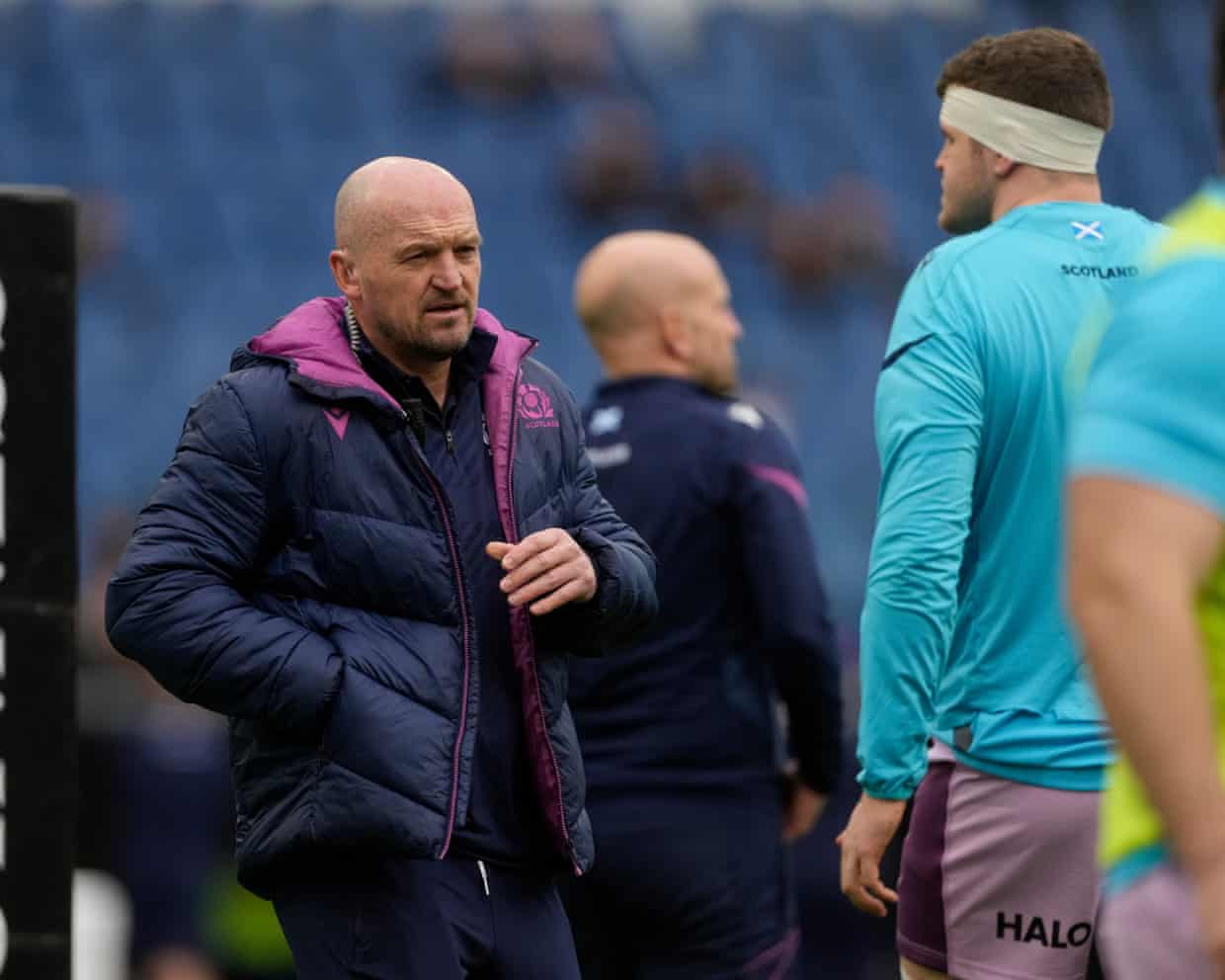
Gregor Townsend has warned England against underestimating his Scotland team and believes the hosts can maintain their fine recent Calcutta Cup record in Edinburgh on Saturday. The visitors have only won two of the last eight fixtures between the two countries and Townsend wants his players to feed off the feelgood memories of previous English losses.While last weekend’s deeply disappointing loss to Italy in Rome has generated plenty of external criticism, England have won only once at Murrayfield since 2017. Townsend is expecting his players to bounce back from their Italian setback and says they will be inspired by past successes. “I would hope they don’t fade into irrelevance because our players have evidence that they’ve won in this fixture,” stressed the head coach

Ratcliffe says immigrants cost too much, while Ineos lobbies for state funding

Ex-Barclays boss Jes Staley was trustee of Jeffrey Epstein’s estate until 2015, files say

Schroders agrees £9.9bn takeover by US investor, ending 200 years of family ownership

UK economy limps along at 0.1% growth – but there are reasons for optimism in 2026

UK economy grows by only 0.1% amid falling business investment

Housing market in England and Wales ‘showing tentative signs of recovery’