ECB could raise eurozone rates ‘as soon as next month’; oil price dips on peace talk hopes – as it happened
Good morning, and welcome to our rolling coverage of business, the financial markets and the world economy,Inflation in the UK was unchanged last month, as expected – before the Iran war drove up global energy costs, threatening a renewed price jump,Official figures showed the consumer prices index (CPI) stayed at an annual rate of 3% in February, the same as in January,Economists had expected it to stay at 3%,Clothing made the largest upward contribution to the monthly change while motor fuels made the largest, offsetting downward contribution, the Office for National Statistics said.
The Consumer Prices Index (CPI) rose by 3.0% in the year to February 2026, unchanged from the 12 months to January 2026 as various price movements offset each other.Read more ➡️ https://t.co/cLNa4ga5bT pic.twitter.
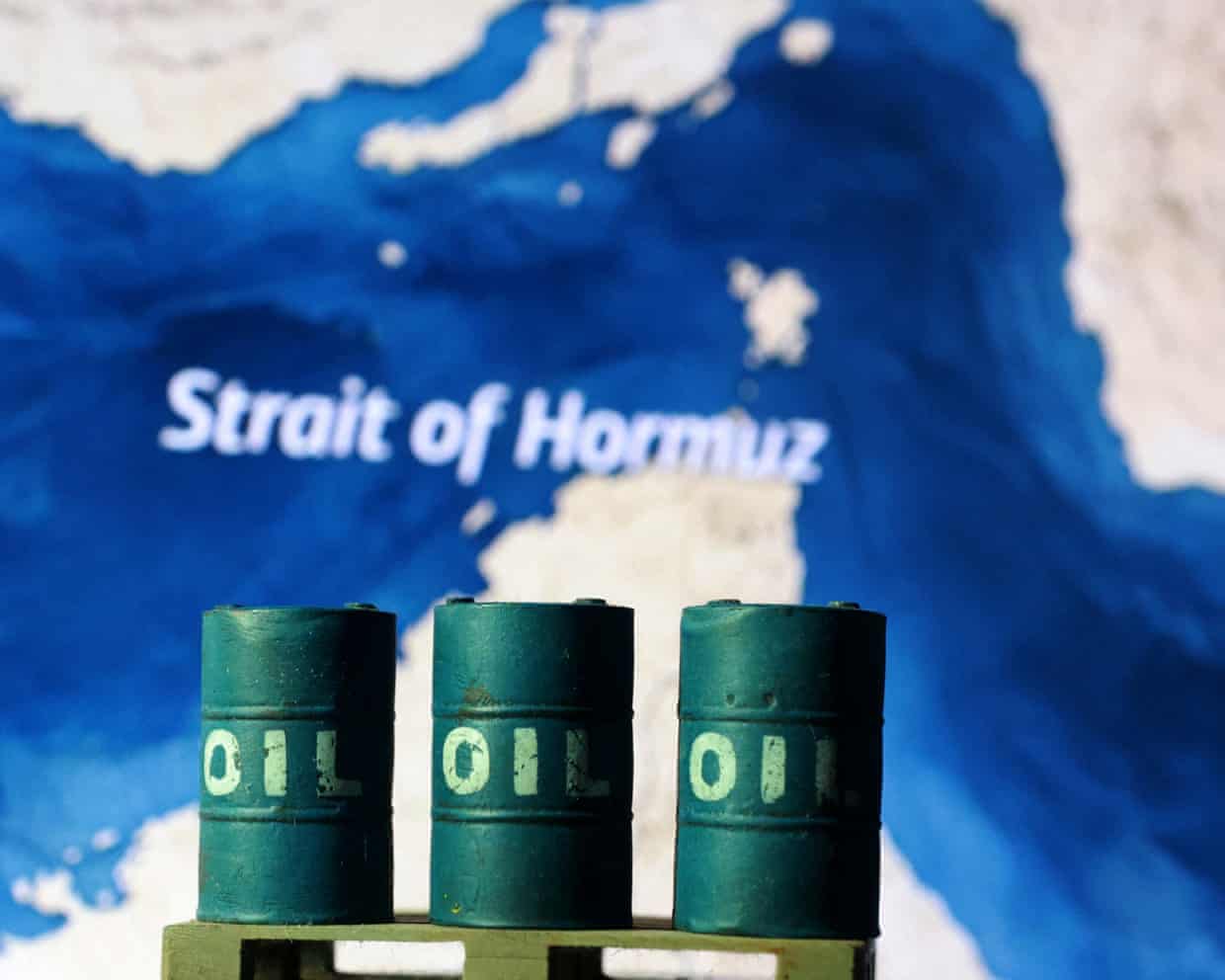
com/DbDfPdr7b0The outlook for inflation has changed dramatically since the onset of the Middle East conflict, which has sent oil and gas prices soaring after the effective closure of the key transit route of the strait of Hormuz.This means the interest rate outlook has also shifted, with markets now expecting several rate hikes, rather than cuts, this year.Charlie Ambler, co-chief investment fficer at wealth management firm Saltus, said:double quotation markWhile we expected February’s inflation data to remain stable around 3%, increasing oil prices are widely expected to push up the headline rate of inflation to near double the 2% target later this year, threatening the Bank’s slow and steady rate cutting cycle and frustrating markets.Should this materialise, markets are unlikely to respond well.While the Bank of England has signalled a cautious and data dependent approach to monetary policy, resulting in a hold at 3.
75% last week, financial markets have already reacted sharply to the changing global outlook.Investors are now pricing in the possibility of multiple interest rate increases this year, with some expectations pointing to as many as four rises before the end of 2026.The gap between market expectations and the Bank’s own guidance highlights just how uncertain the inflation outlook has become.Oil prices dipped this morning to hover around $100 a barrel, after Donald Trump sent a 15-point peace plan to Iran and voiced optimism about ending nearly a month of war.Brent crude fell 4.
1% to $100.2 a barrel, while New York light crude lost 3.5% to $89.12 a barrel.Both benchmarks rose nearly 5% on Tuesday.
However, Iran’s Revolutionary Guards said it had launched a new wave of attacks against locations in Israel including Tel Aviv and Kiryat Shmona, as well as US bases in Kuwait, Jordan and Bahrain, according to Iranian state media.Asian stock markets rebounded strongly, with Japan’s Nikkei up 2.87% while South Korea’s Kospi rose 1.6%.The Agenda8.
45am BST: ECB president Christine Lagarde speaks9am BST: Germany Ifo business climate9,30am BST: UK house prices and rents11am BST: US Weekly mortgage applicationsGlobal stock markets are rising on hopes of de-escalation in the Middle East, although there is confusion over Iran’s response to Donald Trump’s 15-point peace plan,On Wall Street, the Dow Jones rose 300 points, or 0,65%, while the S&P 500 gained 43 points, or 0,67%, and the tech-heavy Nasdaq climbed 216 points, a 1% gain.
In London, the FTSE 100 index has gained 104 points or 1,05% to 10,069,European indices are trading between 1,25% and 1,7% higher.
Brent crude, the global oil benchmark, has hovered around $100 a barrel all day, but is almost 4% lower.Various news agencies and Iranian state media have reported that Tehran has responded “negatively” to the US proposal to end the war, but there are contradictory statements over whether it has rejected it outright.The head of the International Atomic Energy Agency said there might be talks between Iran and the US soon in Pakistan.Rafael Grossi told Italian newspaper Corriere della Sera:double quotation markI think there could be talks this weekend in Islamabad.Our main stories today:The UK inflation rate held steady at 3% in February, before Donald Trump’s Iran war drove up global energy costs, threatening a renewed price jump.
Official figures showed the consumer prices index remained at the same level as the previous month, in line with economists’ expectations but still well above the government’s 2% target.Europe could face a shortage of energy and fuel as soon as next month without a reopening of the strait of Hormuz, Shell’s chief executive has said.The boss of Europe’s biggest oil company said it was working with governments to help them address the oil and gas supply crisis, which has already led to energy rationing in Asian countries.Thank you for reading.We’ll be back tomorrow.
Take care! – JKOn Wall Street, US stocks are extending gains.The Dow Jones is 1.1% ahead while the Nasdaq had gained 250 points or 1.1% and the S&P 500 is also trading just over 1% higher.Over here, the FTSE 100 index in London has enjoyed a 1.
1% gain, up 110 points at 10,075,The German market is 1,7% ahead, the French bourse and Spanish exchange both gained 1,5% while the Italian borsa added 1,4%, as investors have been cheered by suggestions that the US and Iran could engage in talks this weekend.
The head of the International Atomic Energy Agency said there might be talks between Iran and the US soon in Pakistan.Rafael Grossi told Italian newspaper Corriere della Sera, without elaborating:double quotation markI think there could be talks this weekend in Islamabad.Earlier, it emerged that the Trump administration has reportedly forwarded a 15-point ceasefire plan to Tehran, but the Iranians mocked his claims that talks are ongoing.Oil prices are down today, while the price of gold has jumped, on hopes that lower oil prices ease inflationary pressures.Brent crude, the global oil benchmark, has lost 4.
3% to $100.1 a barrel.Spot gold rose more than 2% earlier and is now 1.6% ahead at $4,547 an ounce.Bank of England interest rate-setter Megan Greene has said that she was not close to voting to raise interest rates at this month’s monetary policy committee (MPC) meeting, which was dominated by the economic impact of the conflict in the Middle East.
During a debate organised by US investment bank Jefferies, Greene said:double quotation markI wasn’t tempted to hike.Last week, the MPC voted unanimously to keep rates on hold and said it was “ready to act” to keep inflation on track for its 2% target, as higher energy costs threaten to push inflation higher.While some MPC members said a rate hike might be needed, Greene said in her post-meeting comments that the risk of inflation persistence had risen “perhaps significantly” and that British households may have become more sensitive to inflation shocks.A survey published by US bank Citi on Tuesday showed inflation expectations among the British public for the coming year had surged by the most in more than 20 years, leaping to 5.4% in March from 3.
3% in February.Greene said on Wednesday that this rise in inflation expectations does increase risks to the Bank of England’s target but added that it is not a certainty that it will feed through into big wage rises, as the jobs market is weaker than at the time of the last big inflation surge in 2022, following Russia’s invasion of Ukraine.Greene voted against the last two rate cuts in December and August and previously expressed concern about the stickiness of Britain’s above-target inflation rate.Investors are now betting on at least two quarter-point rate hikes from the Bank of England by the late-July meeting, down from four hikes this year that marketes priced in earlier this week – but a dramatic shift from the two cuts expected before the Iran war.Morrisons said the UK grocery market is “lagging previous expectations” amid pressure on household budgets, as it revealed a 2.
8% rise in sales at established stores.Rami Baitiéh, the chief executive of theBradford-based supermarket chain, said:double quotation markWe know it’s tough for customers right now and we’re doing everything we can to offer them better value.We are watching current international events closely, alert to the impacts on consumer confidence and supply chains, and we will continue to do what we can to mitigate effects on our customers.Baitiéh said total sales at Morrisons increased 2.6% to £4.
1bn in the three months to
25 January,The figures indicate that the UK’s fifth biggest supermarket’s sales rose at a slower pace than inflation over the key Christmas period amid heavy competition from discounters such as Aldi and Lidl, as well as bigger chains Tesco and Sainsbury’s which
have been increasing market share,However, Baitiéh said Morrisons had achieved its targets over the key Christmas period “against a highly competitive backdrop,”Mortgage rates in the US hit the highest level since October last week, and that pushed mortgage demand sharply lower,Total mortgage application volumes dropped 10.
5% last week from the previous week, according to the Mortgage Bankers Association,Applications for a mortgage to buy a home dropped 5% week on week, and were just 5% higher than the same week a year ago,The average contract interest rate for 30-year fixed-rate mortgages climbed to 6,43% from 6,3%, more than 30 basis points higher than at the end of February.
Joel Kan, MBA’s vice-president and deputy chief economist, said:double quotation markThe threat of higher for longer oil prices continued to keep Treasury yields elevated, and mortgage rates finished last week higher.Higher mortgage rates, coupled with affordability constraints and economic uncertainty, pushed some potential homebuyers to the sidelines.Colleen Babcock, property expert at the property website Rightmove, has taken a look at the state of the UK housing market, following the latest data from the Office for National Statistics (where are a bit backward-looking).double quotation markToday’s ONS figures reflect the seasonal uplift we typically see at the start of the year, which mirrors what we’ve already observed in our own January and February data.With the number of homes for sale now at its highest level in over a decade, buyers are benefiting from significantly more choice, and that competition between sellers is becoming more apparent.
We’re seeing the longest average time to secure a buyer at this point in the year since 2019, with homes now taking around 64 days to find a buyer on average.This underlines how important it is for sellers to price realistically from the outset.In a market with plenty of available stock, homes that are priced correctly are better placed to attract early interest and secure a sale.While some movers may be taking a pause with their home-moving plans amid wider global uncertainty, overall activity has remained resilient.Sales agreed are just 3% below the busy market this time last year and still 15% ahead of 2024 levels.
The market is still moving, albeit at a steadier and more considered pace as we head further into spring, despite ongoing global uncertainty.Even a modest overshoot of the European Central Bank’s inflation target on the back of the energy price shock could warrant “measured” policy tightening, the central bank’s president Christine Lagarde said this morning.The ECB left rates unchanged last week but warned about a coming surge in prices, and policymakers are now debating at what stage they would need to raise interest rates to ensure higher inflation doesn’t become entrenched.Lagarde said the ECB would have to respond “forcefully” or in a “persistent” way if inflation looked set to stay well above its 2% target for an extended period, but added that even a modest overshoot could still prompt a “measured” rate move.She said in a speech in Frankfurt:double quotation markIf the shock gives rise to a large though not-too-persistent overshoot of our target, some measured adjustment of policy could be warranted.
To leave such an overshoot entirely unaddressed could pose a communication risk: the public may find it difficult to understand a reaction function that does not react,In the ECB’s most benign “baseline” case, inflation will average 2,6% this year, rising from around 2% in the past year,In the adverse scenario, inflation will peak above 4% in the second half of this year but return to target by mid-2027, while in the severe scenari, inflation peaks above 6% early next year and does not return to target for years to come,Lagarde said:double quotation markIf we expect inflation to deviate significantly and persistently from target, the response must be appropriately forceful or persistent.
Otherwise, self-reinforcing mechanisms would kick in and the risk of de-anchoring would become acute.As expected deviations from our inflation target grow larger and more persistent, the case for action becomes stronger.She said the bank stood ready to act “at any meeting” and, while it would wait for “sufficient information” before shifting policy, it would not allow itself to be “paralysed by hesitation”.Speaking after his boss, ECB chief economist Philip Lane flagged companies’ price-hike expectations and wages for new hires as some of the key indicators that the ECB will monitor.Financial markets now expect two to three rate hikes from the ECB this year as they see inflation above target for several years