US economy added fewer jobs than forecast in December, but January interest rate cut very unlikely – as it happened
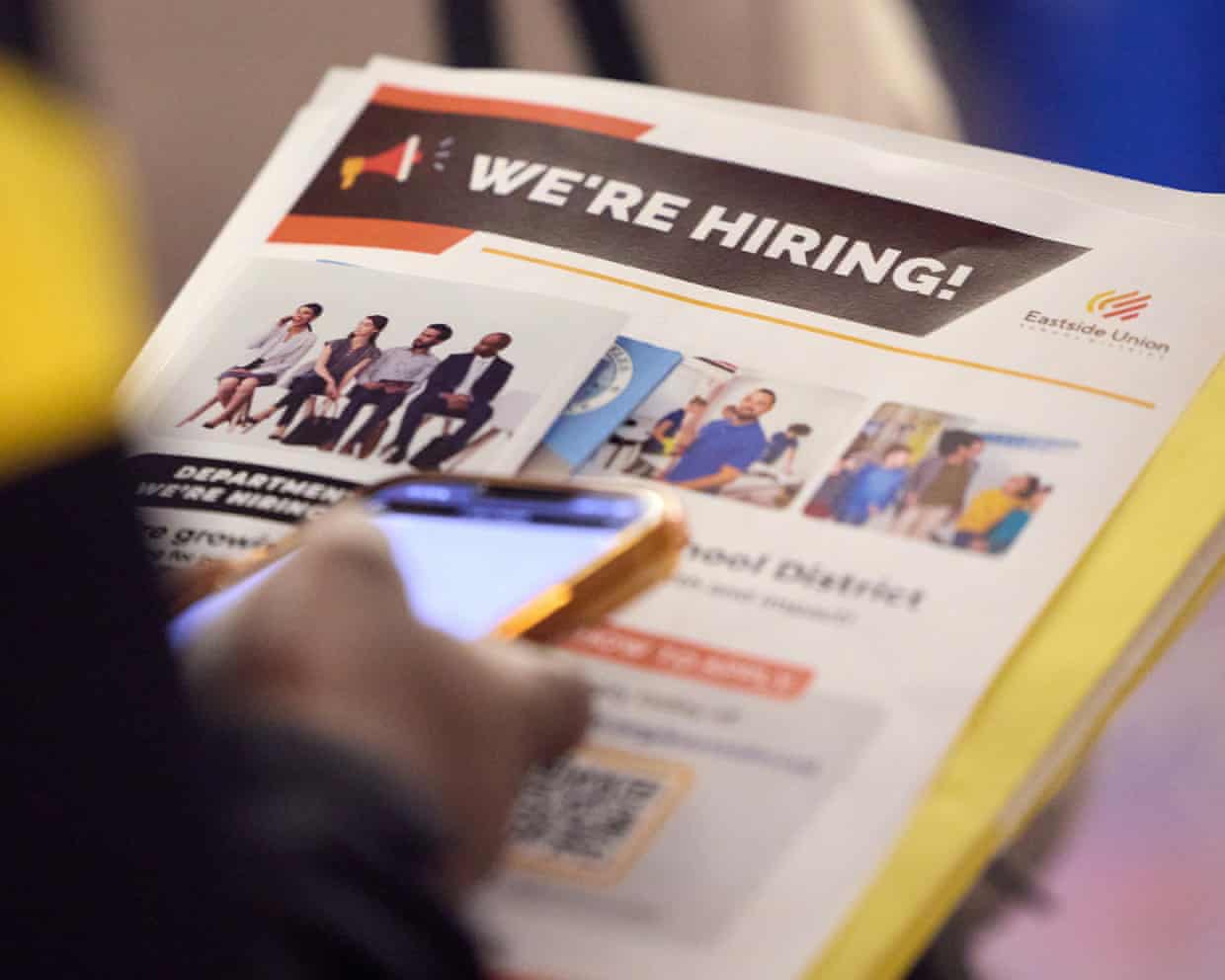
Newsflash: The US economy added fewer jobs than expected last month.America’s non-farm payroll rose by 50,000 in December, missing forecasts of a 60,000 rise.Employment continued to trend up in food services and drinking places, health care, and social assistance, the Bureau of Labor Statistics reports, while retail trade lost jobs.That shows a hiring slowdown, compared with the previous month; the BLS now estimates that 56,000 jobs were created in November, 8,000 fewer than its first estimate of 64,000.Time to wrap up!Hiring held firm in the US last month, official data showed, amid uncertainty over the strength and direction of the world’s largest economy.
Employers added 50,000 jobs to the US labor force last month, capping the weakest year of growth since the pandemic, according to data released from the US Bureau of Labor Statistics on Friday.The closely watched reading was slightly shy of the approximately 73,000 jobs economists expected to be added in the US economy in December.Previous readings for October and November were also revised lower, with the BLS now estimating that the US added 76,000 fewer jobs during those two months.In October, during the longest US government shutdown in history, the US economy shed 173,000 jobs.The unemployment rate, which rose to a four-year high of 4.
6% in November, fell back to 4.4% in December.Economists predicted that a cut to US interest rates this month was very unlikely, given the drop in the unemployment rate.In other news…Rio Tinto and Glencore have restarted talks over a merger that would create the world’s largest mining company.The talks come almost a year after previous discussions between the two mining companies collapsed.
If a deal is agreed, it would create a global mining business with an enterprise value of more than $260bn (£193bn),Sainsbury’s has blamed “significant headwinds” from weak consumer confidence, heavy online competition and widespread discounting for a fall in sales at its Argos chain over the all-important Christmas quarter,The Charity Commission has opened a statutory inquiry into City & Guilds’ sale of its qualification awards business to a private company last year,The announcement has been made after the Guardian revealed last month how City & Guilds bosses were handed million-pound bonuses after the charity privatised its business arm,The London stock market has ended the week at a new closing high.
The FTSE 100 share index has closed at 10,124 points, up 0,8%, slightly higher than its previous closing high set on Tuesday,Mining company Glencore (+9,6%) was the top riser, following the news that it could be taken over by Rio Tinto (-3%),Back in the financial markets, oil has hit its highest level in a month.
US crude is up almost 3% at $59.43 a barrel, the highest since 8 December.Brent crude, the international benchmark, is up 2.5% at $63.47 a barrel.
Both measures also jumped yesterday, as protests spread in Iran.Charalampos Pissouros, senior market analyst at Trading Point, says:Oil prices rebounded strongly on Thursday as tensions in Iran flared up, raising concerns about Iranian oil output.A nationwide internet blackout was reported yesterday, as protests over economic hardships continued.However, oversupply concerns remain as there is no limitation on how much Venezuelan oil will be sold in the foreseeable future, at a time when global inventories continue to rise.So, unless the situation in Iran escalates to something bigger, the rebound in oil prices is likely to remain limited and short-lived.
The US Supreme Court is expected to issue rulings next Wednesday, Reuters reports, so we might get a ruling on the legality of the Trump trade war then….The rollout of artificial intelligence services could also be slowing demand in the jobs market.Daniel Richard Vernazza, chief international economist at Unicredit, explains:There are two main factors behind slower hiring: 1.economic uncertainty triggered by Trump’s policies, particularly on trade, which surged in April last year and led firms to delay hiring, waiting for greater clarity; and 2.the AI investment boom, which for many firms has substituted for the need to hire as much.
We expect heightened economic uncertainty to ease overtime but to remain high,Hiring should pick up modestly, either as uncertainty eases or simply because firms will become used to elevated uncertainty,Due to strong AI investment, we see employment having a lower elasticity to GDP than its historical relationship,The unemployment rate may rise, but likely not by much amid the solid outlook for aggregate demand in the economy,There are no signs of the labour market falling into a downward spiral.
It appears that President Donald Trump posted some details from today’s jobs report last night on social media!A post on Trump’s truth Social site around 14 hours ago declared that “Federal government jobs are down 277,000” since January, a fact that appears in today’s jobs report which was released just over 2 hours ago.Bloomberg explains:The chart, which showed the private sector added 654,000 jobs “since January,” matched figures that were not publicly published until 8:30 a.m.in Washington on Friday.It was posted on Truth Social about 12 hours before the data was set to be released.
The president is typically briefed on the numbers a day before their publication.The jobs report is meant to be kept closely under wraps, given its reputation for moving the markets.Here’s a screengrab of the post:TRUMP SHARES UNRELEASED JOBS DATA ON SOCIAL MEDIAPresident Trump posted a chart on Truth Social Thursday showing private-sector job growth of 654,000, figures not officially released until Friday morning.The post came roughly 12 hours before the December employment report’s… pic.twitter.
com/R74udm2VaBOur US Politics Liveblog is covering the Supreme Court non-decision on tariffs:Alas, we’re not going to get a ruling over the legality of Donald Trump’s trade wars today.The U.S.Supreme Court will not issue a ruling on Friday in a major case which could test the legality of the sweeping global tariffs announced by President Donald Trump last year.Today had been identified as the first day that the SCOTUS might give its ruling on whether the international Emergency Economic Powers Act (IEEPA) permits the imposition of widespread tariffsUS ‘prediction’ markets suggest there’s roughly only a 25% chance that SCOTUS will back Trump, when the decision comes, and a 75% probability that they will rule against the White House.
Consumer confidence has risen across America this month, despite lingering concerns about inflation and the jobs market.The University of Michigan’s Index of Consumer Sentiment has risen to 54.0 this month, up from 52.9 in December.That’s its highest reading since last September.
Surveys of Consumers director Joanne Hsu explains:Improvements in January were seen among lower-income consumers, while sentiment fell for those with higher incomes.All told, while consumers perceived some modest improvement in the economy over the past two months, their sentiment remains nearly 25% below last January’s reading.They continue to be focused primarily on kitchen table issues, like high prices and softening labor markets.Although consumers’ worries about tariffs appear to be gradually receding, they remain guarded about the overall strength of business conditions and labor markets.More than 90% of interviews for this release were collected prior to the capture of president Maduro in Venezuela, so we can’t yet see what impact that has had….
Daniel Casali, chief investment strategy at wealth managers Evelyn Partners, points out that the Trump White House’s immigration crackdown has slowed the jobs market this year:“Monthly non-farm payrolls have slowed throughout 2025 due to a confluence of factors,These include tighter immigration policies under the Trump administration and a wave of federal employees leaving their jobs after the Department of Government Efficiency offered early retirement and redundancy packages though the Federal Government Deferred Resignation Program,”The latest market pricing confirms that a cut to US interest rates this month is very unlikely,CME Group’s Fedwatch tool shows there’s a 95% chance that the US Federal Reserve leaves interest rates on hold at its meeting at the end of January, and just 5% chance of a quarter-point cut,Wall Street has opened a little higher, as investors digest today’s US jobs report.
The Dow Jones industrial average has risen by 170 points, or 0,35%, at the start of trading to 49,436 points,The broader S&P 500 share index is up almost 0,3%,Chris Beauchamp, chief market analyst at IG, also predicts that US interest rates will be left on hold later this month, due to the drop in the jobless rate:“Payrolls may have missed forecasts, and the revisions to October and November may have been brutal, but with unemployment falling to 4.
4% it doesn’t seem like there’s too much stress in the US labour market.This leaves us with the strong expectation that the Fed will hold rates in January, but remain with an easing bias.2025 saw the weakest pace of job creation since 2020, but for now the recent weakness has abated.”Today’s drop in the US unemployment rate means there’s almost no chance of a cut to interest rates this month, argues Seema Shah, chief global strategist at Principal Asset Management, said:“The prospect of a January Fed rate cut has all but vanished following the unexpected drop in the unemployment rate.It is now difficult to argue that the labour market is collapsing and in urgent need of monetary support.
However, the picture remains far from clear: payroll growth undershot expectations, and downward revisions to prior months have pushed the three-month moving average into negative territory.While a tighter labor supply may explain part of the dynamic, sustained job losses hardly inspire confidence.The U.S.economy likely requires additional support from the Fed — just not immediately.
”Richard Carter, head of fixed interest research at Quilter Cheviot, says there’s little sign of an economic bounceback following the end of the US government shutdown:“Today’s US employment situation print shows just 50,000 jobs were added in December.This was below expectations of 60,000 and shows the labour market remains considerably more subdued than in recent years.Healthcare, social assistance, food services and drinking places were among the sectors driving much of the hiring, while retail saw job losses.“The government shutdown resulted in a period of market labour market weakness, and today’s figures show there is yet to be much of a bounce back, though the unemployment rate saw a slight decline to 4.4% from a revised 4.
5% previously,The data also outline the substantial drop in payrolls in 2025 compared to 2024, with just 584,000 jobs added last year compared to 2,0 million the year prior,More than half of the 50,000 jobs created in the US last month were at food services and drinking places, where payrolls rose by 27,000,Health care continued to add workers in December; payrolls rose by 21,000, including 16,000 in hospitals.
Employment in social assistance rose by 17,000.But it was a tougher jobs market in retail, where 25,000 jobs were cut.Federal government employment rose by 2,000, suggesting that the Doge jobs cull may have abated – after 277,000 jobs were lost through 2025America’s jobless rate has fallen, to 4.4% in December, down from 4.5% in November (which I think has been revised down from 4.
6%)Today’s employment data shows that the unemployment total dipped from 7.781m in November to 7.503m in December.The number of people employed rose, month-on-month, but the labor force participation rate dipped from 62.5% to 62.
4%, implying more people were neither in work nor looking for a job.
NFL wildcard weekend predictions: Allen can carry Bills – if he can handle the pressure
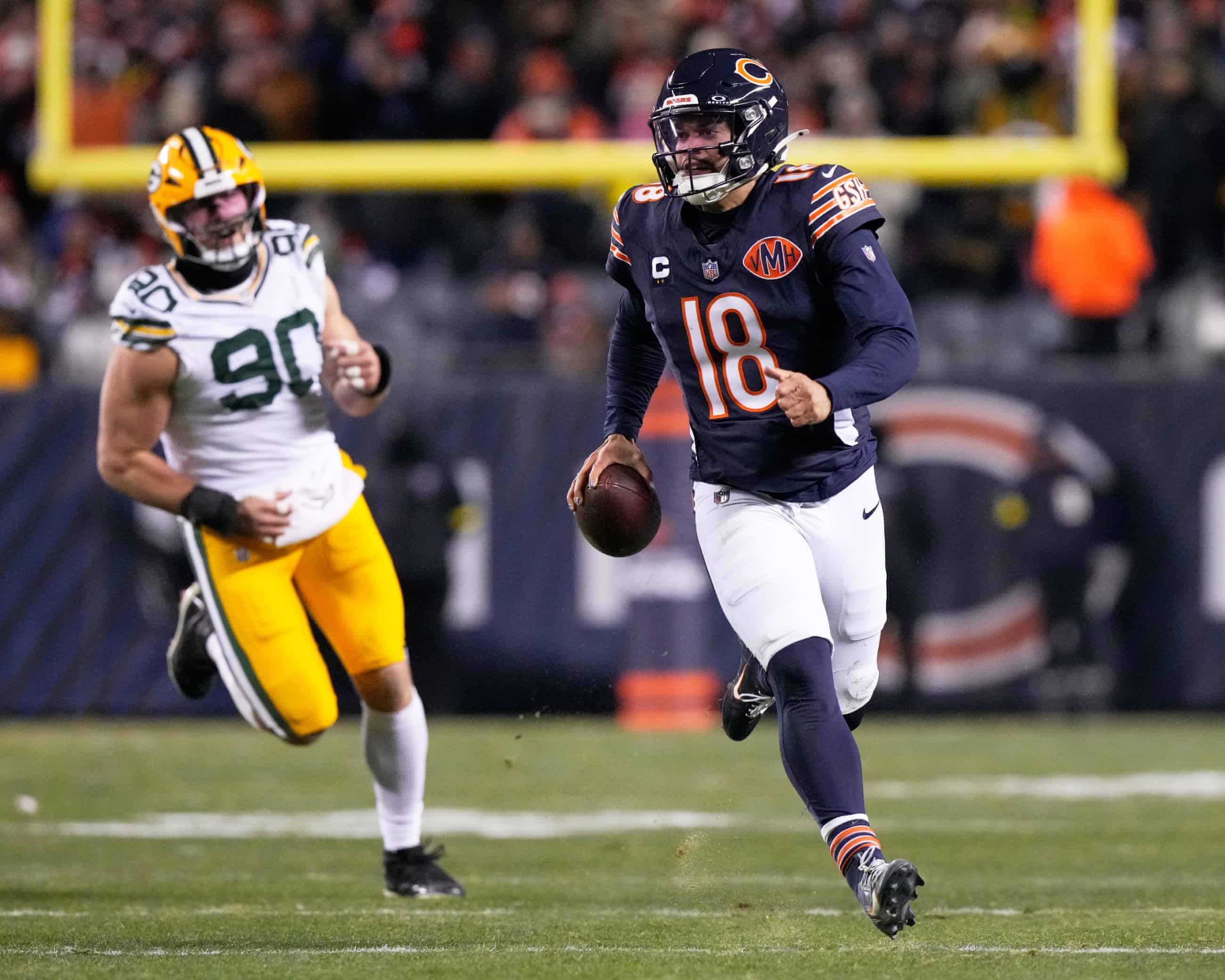
The NFL playoffs kick off with ground-game battles, QB duels and a high-stakes edition of the Packers v Bears rivalryWhat the Rams need to do to win Hold on to the ball. Across five regular-season defeats, Matthew Stafford gave the ball away seven times with six interceptions and a fumble. In the Rams’ worst loss of the season, to the Panthers in November, Stafford held his team back from taking a commanding lead with two picks in the first quarter. Keep it tight.What the Panthers need to do to win The Panthers are massive underdogs but hold an advantage in the vital experience of having already upset the Rams

Ashes 2025-26: our writers’ end-of-series England v Australia awards
Brainless moments, moral victories and tough lessons were abundant during a series that still provided plenty of dramaPlayer of the series Travis Head was the boxing kangaroo at the top of the Australia order. But this one goes to the other animal on the baggy green crest, Mitchell Starc bounding in like an emu, slicing through England during the live bit, and playing all five to finish with 31 wickets at 19 apiece. Elite.Best moment The old guard on both sides have done their thing plenty of times before, so this one goes to Jacob Bethell’s maiden Test century at the SCG. The style, the poise and the family looking on in bits made it poetry and cinema in one

Free agent outfielder Max Kepler hit with 80-game ban for positive drug test
Free agent outfielder Max Kepler has been suspended for 80 games after testing positive for a banned performance-enhancing substance, Major League Baseball announced on Friday, a ruling that sidelines the veteran as he looks for his next club.The suspension stems from a positive test for epitrenbolone, a metabolite of the prohibited steroid trenbolone prohibited under MLB’s Joint Drug Prevention and Treatment Program. The ban takes effect immediately and would apply if Kepler signs with a team during the 2026 season.Kepler, who turns 33 next month, is an 11-year major league veteran who spent the first decade of his career with the Minnesota Twins before joining the Philadelphia Phillies last season. As a free agent, he was not under contract at the time of the announcement but remains subject to the league’s drug program

France taps out as G7 summit moved to avoid clash with White House UFC event
France has delayed this year’s Group of 7 summit by one day to avoid a scheduling conflict with an Ultimate Fighting Championship fight card planned at the White House on 14 June, according to two officials with direct knowledge of the G7’s preparations.The summit, hosted by France in the Alpine resort town of Evian-les-Bains, was originally scheduled for 14 to 16 June, a date that coincides with US Flag Day and US president Donald Trump’s 80th birthday. It will now run from 15 to 17 June, a change that has been reflected on the G7’s official website.The shift follows Trump’s announcement last October that the White House would host a “big UFC fight” on 14 June. Dana White, the president and chief executive of the UFC, mixed martial arts’ biggest promotion, said this week that planning for the event is complete and that it is expected to draw up to 5,000 spectators on the White House South Lawn

England ruthlessly privatised cricket – Australia embraces it with constant public displays of affection | Emma John
The drive to Bowral in New South Wales takes you through some of Australia’s most English countryside. Pastoral hills roll right up to the roadside and finish in grassy verges, flecked with yellow and white wildflowers. Alliums stand sentinel around vibrant lawns. Even the eucalypts are cosplaying as beech and oaks. You might be in Hampshire, if it weren’t for the dazzling sun

Your Guardian sport weekend: FA Cup third round, NFL playoffs begin and the WSL returns
There’s no better way to ease into the football weekend than our essential rolling blog. Sarah Rendell and David Tindall buckle up to bring you breaking news and insights from around the grounds as the Premier League elite join the fray for the FA Cup’s third round. Saturday’s potential giantkillings see Macclesfield meet Crystal Palace, Manchester City host Exeter, Wolves face Shrewsbury, Charlton confront London rivals Chelsea and Burnley face off against Millwall, not forgetting the all-Premier League clash of Tottenham v Aston Villa. Why not join the conversation by emailing matchday.live@theguardian

No 10 condemns ‘insulting’ move by X to restrict Grok AI image tool

X UK revenues drop nearly 60% in a year as content concerns spook advertisers

Spotify no longer running ICE recruitment ads, after US government campaign ends

UK ministers considering leaving X amid concern over AI tool images

Grok turns off image generator for most users after outcry over sexualised AI imagery

Grok being used to create sexually violent videos featuring women, research finds