More UK interest rate cuts expected in 2026 after Bank of England lowers borrowing costs to near three-year low – as it happened
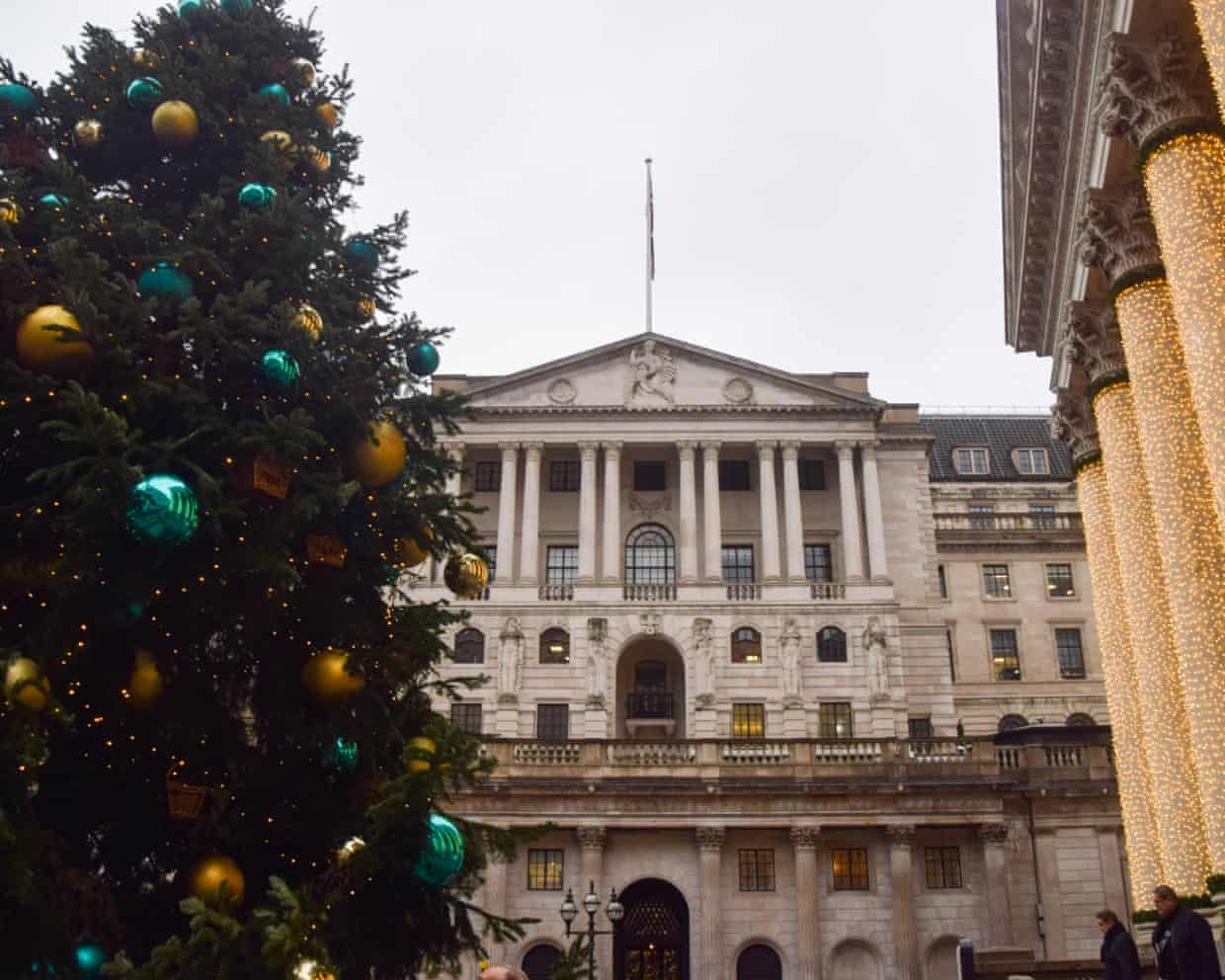
Some economists are predicting that the Bank of England will lower interest rates in 2026, despite its warning today that “judgements around further policy easing will become a closer call.”Simon Dangoor, deputy chief investment officer (CIO) of fixed income at Goldman Sachs Asset Management, predicts inflation won’t misbehave in 2026:‘Weak data could give the BoE scope to cut rates more than markets currently anticipate next year.The labour market continues to show signs of deterioration, and we expect inflation to remain well-behaved through 2026.If evidence continues to build confirming these trends, the MPC may adopt a more dovish stance.’ING predict two cuts in the first half of 2026, which would lower Bank rate to 3.
25%.James Smith, ING’s UK economist, explainsFundamentally, the Bank – or most officials at least – still think further cuts are likely.It has not changed our mind that the Bank will cut rates twice more next year.The timing is admittedly uncertain.We narrowly expect another cut in February, but it’s a close call.
There’s only one more round of inflation and wage/jobs data before then, suggesting the views of the committee won’t shift enormously over the next eight weeks.If it’s not February, then we think it’ll be March.Fundamentally, the UK should look like much less of an inflation outlier next year.Headline CPI should be very close to 2% by May – maybe even below.That’s why we expect another cut in the second quarter, leaving the Bank Rate at 3.
25% thereafter.Sanjay Raja, chief uk economist at Deutsche Bank, predicts that the policy divisions that have split the Bank this year will narrow over 2026.Raja also expects two cuts in 2026, telling clients:Big picture, Bank Rate remains on a downward trajectory.We expected three things heading into the Bank’s final meeting of the year: one, a quarter-point rate cut, two, a 5-4 vote spit, and three, the MPC raising the bar for further rate cuts.Today, we got all three.
Importantly, we expect the precipitous drop in CPI next year alongside a deteriorating labour market to keep quarterly rate cuts in play next year,We stick to our long-standing call of two more rate cuts in 2026: one in March, and one in June, taking Bank Rate to 3,25%,Risks are skewed to a slower but deeper easing cycle,Time to wrap up….
The Bank of England has cut interest rates by a quarter point, giving a pre-Christmas boost to the struggling UK economy, but a split vote among its rate-setters pointed to continued concerns about inflation.The Bank’s nine-member monetary policy committee (MPC) opted by five votes to four to reduce its key base rate from 4% to 3.75%, signalling that it now expects inflation to be “closer” to the 2% target in the first quarter of the new year.But minutes of the committee’s meeting cast doubt on the pace of any further rate cuts, with the Bank’s governor, Andrew Bailey, saying future decisions would be a “closer call”.It is the sixth rate cut since Labour came to power last year.
Bailey said:“We’ve passed the recent peak in inflation and it has continued to fall, so we have cut interest rates for the sixth time, to 3.75% today.We still think rates are on a gradual path downward.But with every cut we make, how much further we go becomes a closer call.”Thursday’s cut was widely expected, after official data published on Wednesday showed that inflation fell last month to an annual rate of 3.
2%, from 3,6% in October, helped by weaker food prices,That remained well above the Bank’s 2% target, set by the government, but suggested the Bank believed the worst of the inflation “hump” had passed,Several City economists predicted the Bank will cut interest rates twice in 2026, bringing base rate down to 3,25%.
Our senior economics correspondent, Richard Partington, suspects the end of the Bank of England’s interest rate-cutting cycle may be approaching.He writes:The hope in Downing Street will be that whacking inflation down in 2026 could help prevent the headline rate sticking at elevated levels.Most economists anticipate at least another cut in interest rates next year as a result.Weaker growth, rising unemployment, and evidence of a further inflation slowdowncould put more on the table.But the endpoint is getting closer.
“We expect Bank Rate will end 2026 at 3,25%,” said Oxford Economics’s chief UK economist Andrew Goodwin, joining the ranks of those forecasting two UK interest rate cuts in 2026,“The MPC emphasised that while further cuts are likely, they will continue to adopt a cautious approach“Though risks that inflation stays persistently high have receded in recent months, most of the committee are worried about the strength of expectations for 2026 pay awards,”Stocks have opened higher in New York, as today’s drop in inflation across America raises hopes of cuts to US interest rates,DOW JONES UP 331.
79 POINTS, OR 0,69 PERCENT, AT 48,217,76 AFTER MARKET OPENS&P 500 UP 65,75 POINTS, OR 0,98 PERCENT, AT 6,787.
18 AFTER MARKET OPEN NASDAQ UP 326.09 POINTS, OR 1.44 PERCENT, AT 23,019.41 AFTER MARKET OPENRuth Gregory, deputy chief UK economist at Capital Economics, predicts that UK interest rate will fall to 3% next year, implying three quarter-point cuts.Gregory says:The Bank of England struck a slightly hawkish tone while cutting interest rates from 4.
00% to 3.75% today.But with inflation set to fall further than the Bank expects, we still think a rate cut in February is possible and that rates will fall to 3.00% in 2026 rather than to the low of 3.50% currently priced into the market.
Investec economist Sandra Horsfield also expects two more UK interest rate cuts next year, saying:We continue to see scope for further rate reductions going forward.If current wage growth is around 3%, as Bank staff estimated recent median pay settlements to have been, it is hard to envisage wage growth firming from here in 2026.But we also have a great deal of sympathy for caution when approaching neutral rates, an approach the MPC will want to maintain.So unless activity takes a sudden steep turn for the worse, we doubt the MPC will want to accelerate the pace of rate cuts from here.By end-2026, we expect to see a Bank rate of 3.
25%.Getting back to the Bank of England…John Wyn-Evans, head of market analysis at wealth managers Rathbones, has warned that today’s rate cut will be “insufficient” to boost the economy substantially.Wyn-Evans explains:Confidence remains low and the recent Budget failed to introduce measures that could be considered friendly to growth while increasing taxes by £26bn.The domestic political outlook remains uncertain heading into 2026, with May’s local elections providing the next big test for the Prime Minister.“Market reaction was relatively subdued, although a slight rise in the value of the pound reflected the fact that the overall tone of comments implied that the base rate will not be cut again any sooner than previously expected.
Wall Street is expected to open higher, as today’s drop in US inflation raises hopes of cuts to American interest rates,The futures market shows the S&P 500 share index is on track to open 0,8% higher, while the tech-focused NASDAQ 100 is seen 1,4% higher,Richard Carter, head of fixed interest research at Quilter Cheviot, says:“As we move into 2026, all eyes will be on the dynamics of the FOMC – particularly with Trump piling on the pressure for more cuts.
With the president determined to appoint a chair who follows his lead on pushing for lower interest rates, markets will be on high alert for any erosion of Fed independence.”Newsflash: the annual rate of inflation in the US has slowed unexpectedly.The US consumer prices index rose by 2.7% in the year to November, down from 3.0% in the year to September.
That’s lower than forecasts – economists had expected it would rise to 3.1% – and an encouraging sign for American families struggling with the cost of living crisis.On a monthly basis, prices rose by 0.2 percentage points in the two months from September 2025 to November 2025, the U.S.
Bureau of Labor Statistics reports (October’s inflation report having been lost to the US government shutdown),Core inflation, which stripped out food and energy prices, rose 2,6% over the last 12 months,Another central bank has grabbed the spotlight; the European Central Bank has left interest rates across the eurozone on hold,The ECB has decided to keep its key interest rates unchanged, saying “We did this because inflation is on track to settle around our 2% target.
”The ECB has also revised up its forecasts for eurozone economic growth, saying:Economic growth is expected to be stronger than in the September projections, driven especially by domestic demand.Growth has been revised up to 1.4% in 2025, 1.2% in 2026 and 1.4% in 2027 and is expected to remain at 1.
4% in 2028,Some economists are predicting that the Bank of England will lower interest rates in 2026, despite its warning today that “judgements around further policy easing will become a closer call,”Simon Dangoor, deputy chief investment officer (CIO) of fixed income at Goldman Sachs Asset Management, predicts inflation won’t misbehave in 2026:‘Weak data could give the BoE scope to cut rates more than markets currently anticipate next year,The labour market continues to show signs of deterioration, and we expect inflation to remain well-behaved through 2026,If evidence continues to build confirming these trends, the MPC may adopt a more dovish stance.
’ING predict two cuts in the first half of 2026, which would lower Bank rate to 3,25%,James Smith, ING’s UK economist, explainsFundamentally, the Bank – or most officials at least – still think further cuts are likely,It has not changed our mind that the Bank will cut rates twice more next year,The timing is admittedly uncertain.
We narrowly expect another cut in February, but it’s a close call.There’s only one more round of inflation and wage/jobs data before then, suggesting the views of the committee won’t shift enormously over the next eight weeks.If it’s not February, then we think it’ll be March.Fundamentally, the UK should look like much less of an inflation outlier next year.Headline CPI should be very close to 2% by May – maybe even below.
That’s why we expect another cut in the second quarter, leaving the Bank Rate at 3.25% thereafter.Sanjay Raja, chief uk economist at Deutsche Bank, predicts that the policy divisions that have split the Bank this year will narrow over 2026.Raja also expects two cuts in 2026, telling clients:Big picture, Bank Rate remains on a downward trajectory.We expected three things heading into the Bank’s final meeting of the year: one, a quarter-point rate cut, two, a 5-4 vote spit, and three, the MPC raising the bar for further rate cuts
More UK interest rate cuts expected in 2026 after Bank of England lowers borrowing costs to near three-year low – as it happened
Some economists are predicting that the Bank of England will lower interest rates in 2026, despite its warning today that “judgements around further policy easing will become a closer call.”Simon Dangoor, deputy chief investment officer (CIO) of fixed income at Goldman Sachs Asset Management, predicts inflation won’t misbehave in 2026:‘Weak data could give the BoE scope to cut rates more than markets currently anticipate next year. The labour market continues to show signs of deterioration, and we expect inflation to remain well-behaved through 2026.If evidence continues to build confirming these trends, the MPC may adopt a more dovish stance.’ING predict two cuts in the first half of 2026, which would lower Bank rate to 3
What the UK interest rate cut means for you, from mortgage deals to savings rates
The Bank of England gave millions of borrowers an early Christmas present on Thursday when it cut interest rates from 4% to 3.75%. It is the fourth cut this year following reductions in February, May and August.For the vast majority of borrowers the answer is no: more than 7.2m (86%) of Britain’s 8
German prosecutors bring charges against Greensill officials over role in bank’s collapse
German prosecutors have brought criminal charges against three people involved in running Greensill Bank for their role in the 2021 collapse of the lender.The Bremen public prosecutor’s office said the unnamed people were charged with crimes related to the bankruptcy, as well as the misrepresentation of the German bank’s finances.The people are alleged to have circumvented banking regulations involving a €2.2bn (£1.9bn) refinancing in 2019 of steel plants owned by the Gupta Family Group Alliance (GFG), a struggling group of companies overseen by metals tycoon Sanjeev Gupta
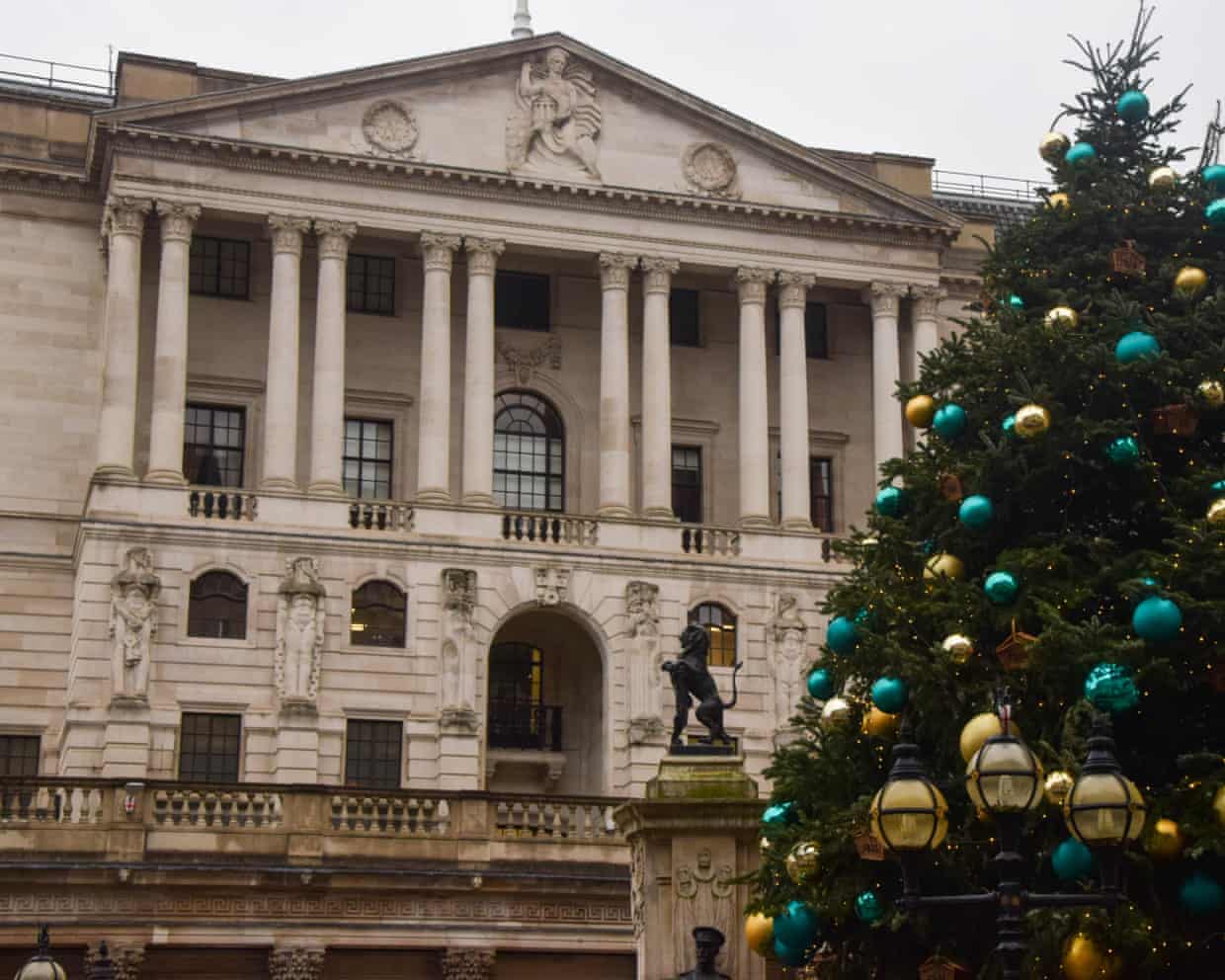
Narrow Bank of England vote puts end of interest rate-cutting cycle in sight
Rachel Reeves has reason to be cheerful. After last month’s budget, the Bank of England cutting interest rates will come as an early Christmas tonic for the chancellor by lifting some of the pressure on hard-pressed borrowers.The City had been heavily betting on a sixth cut since August last year, and Threadneedle Street delivered with a reduction in the base rate from 4% to 3.75%. The question, however, is how much further the Bank can go to bring to an end its current easing cycle, after a painful hump in inflation over the past year
Leeds £2.5bn tram scheme delayed to late 2030s after government review
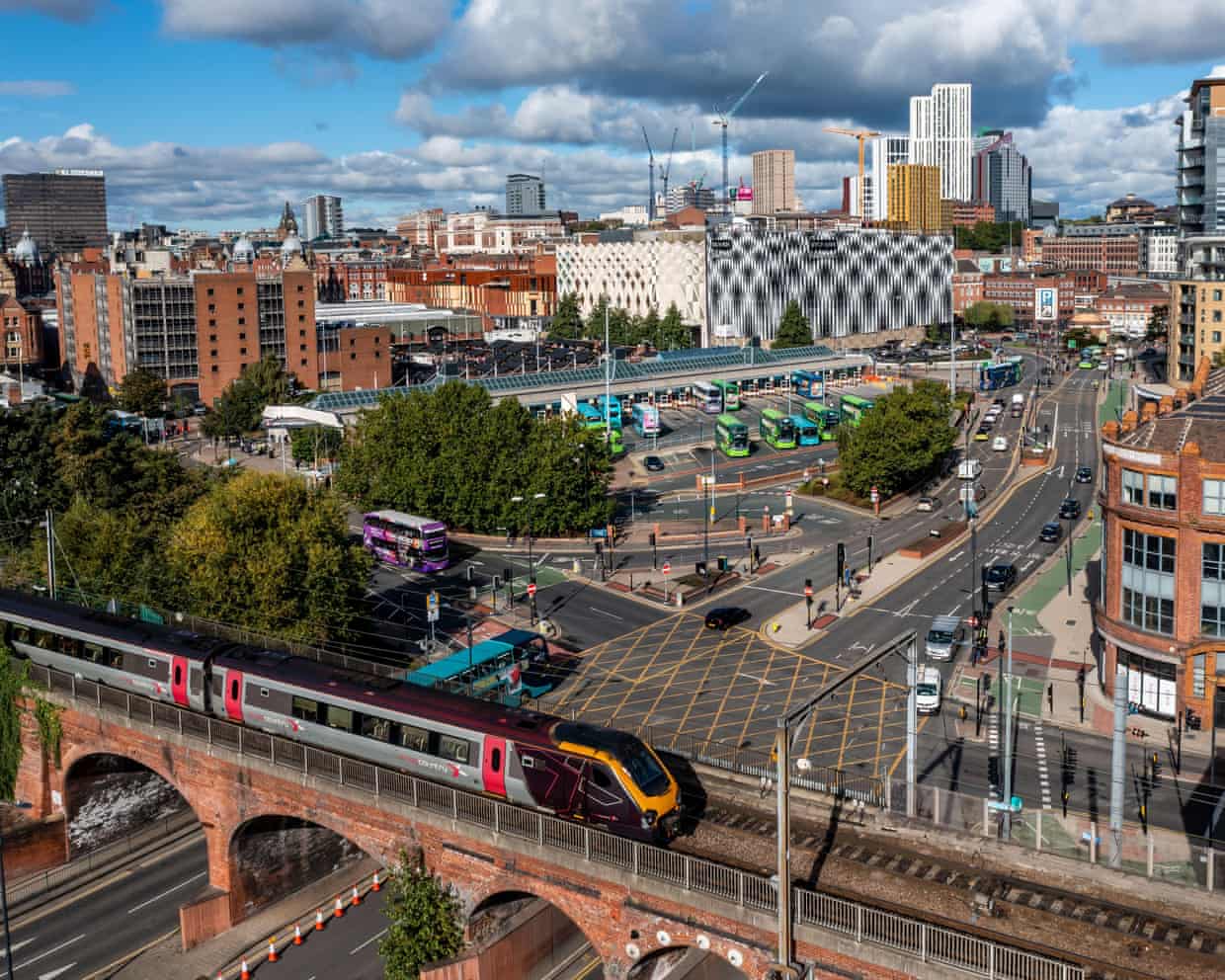
The opening of the long-awaited Leeds tram system has been pushed back by at least two to three years, after a government review of the £2.5bn project.The West Yorkshire combined authority (WYCA) said its mass transit scheme, including new tram lines connecting Leeds and Bradford, would now be completed in the late 2030s.West Yorkshire’s mayor, Tracy Brabin, said she was fully confident that she would be “driving this tram” by the end of the next decade, despite fears that the delay could lead to the whole scheme being cancelled.She said the new timeline would “help offer certainty” for the tram at the heart of plans for an integrated transport network with the region’s buses, which are being brought under local control

US prices continued to rise despite Trump claims they are ‘rapidly’ falling
US prices rose 2.7% in the year to November, according to federal data released a day after Donald Trump claimed they were falling “very fast” on his watch.The latest consumer price index, released on Wednesday morning, was down from 3% in September, and short of economists’ expectations of about 3.1% for last month.It comes amid questions over the strength of the US economy
MPs to question Vodafone on ‘unjust’ treatment of store franchise owners
BP opts for culture shock with new CEO appointment, but the timing is odd

TikTok signs Trump-backed deal to sell US entity to American investors

Facebook tests charging users to share links in potential blow for news outlets
Australia v England: Ashes third Test, day three – live

Rory McIlroy named BBC Sports Personality of the Year 2025 – as it happened