Less financial stability, smaller social safety nets: inside the gen Z investing boom
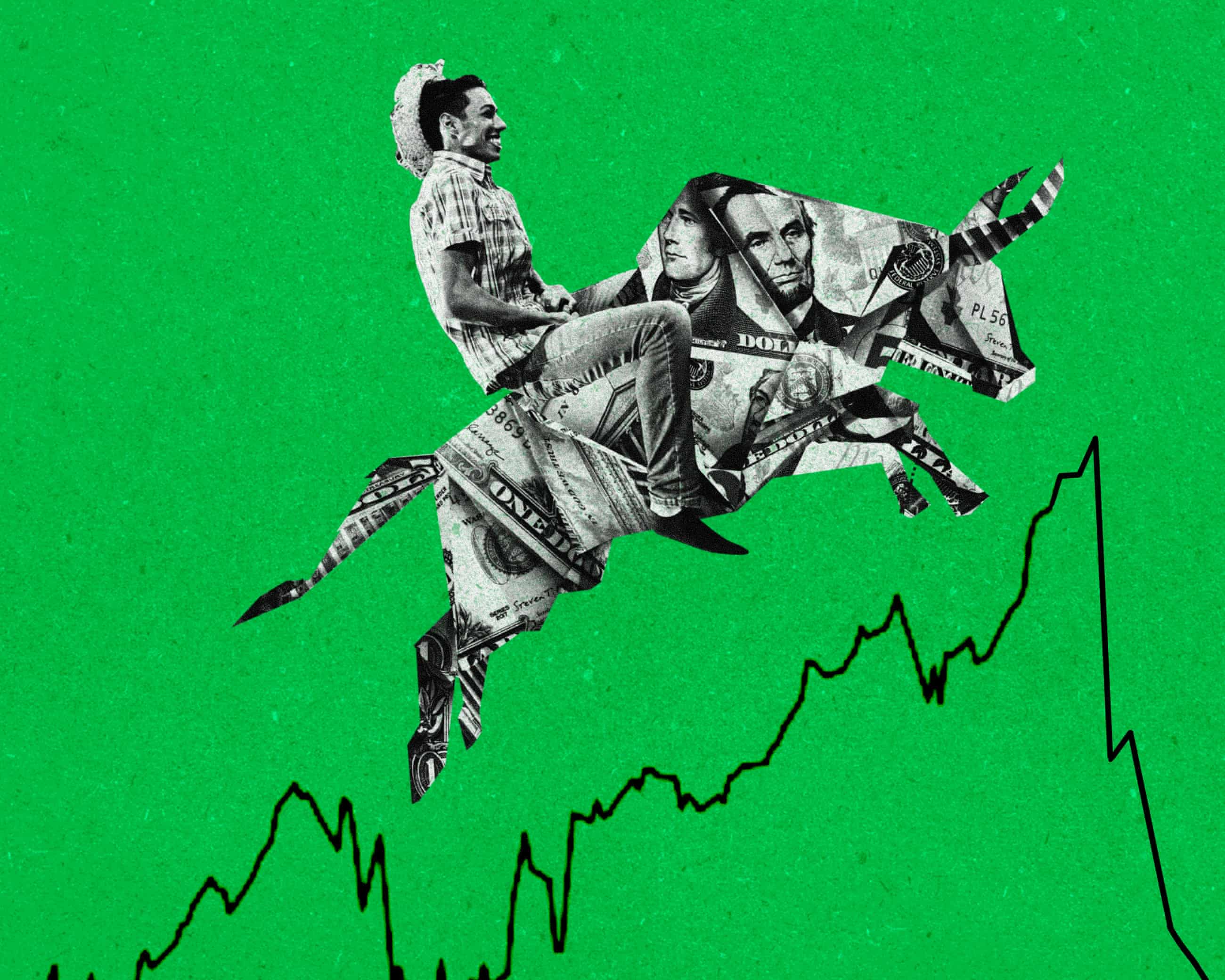
Apps, AI tools and shaky job prospects are pushing gen Z into markets earlier, blending caution with risk-takingAmbrico Ranginui first heard of cryptocurrencies when he was 12 years old.By the time he was 16, he had saved enough from birthday gifts and his allowance to invest.“Growing up in a single-mum household, it made me quite a determined person to get ahead,” Ranginui said.“I wanted to find new avenues to make money and crypto was so fascinating at the time.”He’s part of a new boom of gen Z investors who have jumped into markets more enthusiastically than previous generations, and are putting money into everything from safe-haven bonds to AI startups, earlier than ever before.
Nearly 30% of the generation born from 1997 to 2012 started putting money into markets in early adulthood, before they even entered the workforce, compared to just 15% of millennials and 9% of gen X, according to a World Economic Forum (WEF) report.Crypto taught Ranginui a fast, painful lesson about financial markets’ volatility.Ranginui said he lived in a state of stress and anxiety for about a year, constantly checking his investments instead of living in the moment with his friends or in his classes.He won’t say how much he lost, but it was enough to stop him investing in crypto.“There was always something to be worried about,” he said.
Ranginui, now 21, didn’t swear off investing, however.He’s now an investment analyst at Flatmate Ventures, a six-month-old venture capital firm backing student entrepreneurs, and has put his own money into lithium, robotics and artificial intelligence.The Guardian spoke to more than a dozen active gen Z investors from around the world, who it found through social media and finance discussion threads, about their strategy and motivation.They cite a combination of economic uncertainty, a ubiquitous online investing culture and possibly the lowest barriers to entry in modern history, due to technology and AI, as their reasons for jumping into markets.Ranguini, for example, said New Zealand’s fintech app Sharesies inspired many of his peers to invest: “They showed up in gen Z spaces [on social media], and with all the financial educational resources available on the platform itself, it made it very easy to trust them and invest.
”Gen Z around the world is facing a jobs crisis and a future that may be less economically stable than that of their parents.Unemployment is nearly 8% for all people aged 22 to 27, compared with about 6% seven years ago and 4.3% across the US, while consumer prices continue to rise globally.At the same time, cuts to social welfare programs and the decline of employer-sponsored retirement plans are stripping away what little safety net exists.This generation has “less financial stability and social safety nets, so the onus shifts to the individual to think about their financial wellbeing”, said Natalya Guseva, head of WEF’s financial markets and resilience initiatives.
At the same time, technology is making it easy to invest in markets.“You just have access to investing information in the palm of your hand, which is unlike previous generations,” she said.Many people are being very cautious.The majority of gen Z are leaning towards long-term investing in low-cost, diversified funds such as exchange-traded funds (ETFs), according to Andy Reed, head of behavioral economics research at Vanguard.“They are probably the most cost-savvy generations, which will pay off in the long run,” he said.
“They are learning about investing quite early on and are genuinely showing interest in participating in the market.”About 75% of gen Zers hold ETFs in their retirement accounts, compared with just 60% of baby boomers, according to a recent Nasdaq study.That is exactly what Shivana Anand, 23, software engineer, is doing.As soon as she entered college, she opened a Roth IRA, a tax-free retirement account, and invested in diversified index funds.At the time, she had a paid internship, which helped her fund her investments.
Her account automatically deposits a set amount each month, passively growing her portfolio.She is based in California.“My money should be working for me,” she said.“I invest so money doesn’t become so stressful and I rather invest slowly and steadily, which is the tried-and-true method, than actively manage a portfolio and worry about not calling the right bet.”Anand said her portfolio was currently in the mid-six-figure range.
A smaller cohort of gen z is taking on riskier and speculative bets such as day-trading and crypto.“Young people are taking on risks like gambling and prediction markets without fully understanding that risk that they’re taking on,” he explained.“Ultimately what they might not realize is that these bets can lead to worse outcomes in the long run.”Minwoo Lim, 28, founder of trading app PnL, dove head-first into this world after fulfilling his mandatory military service six years ago in South Korea.Lim often trades commodities like crude oil instead of traditional stocks.
Although he lives in South Korea, his company is based in Dubai.“Gambling, by its definition, is risking everything by earning a lot of money,” Lim said.“It’s the same with trading.”Only about 4% of day traders earn enough to make a living and about 10% are profitable, meaning at least 90% fail.Lim grew up in a family of investors and traders.
To him, it was a natural path to follow once he had gathered enough savings,However, Lim’s degree in neuroscience, he says, gave him a psychological edge that helped him become a profitable trader,Earlier this year, Lim made a €1,000 profit (about $1,200 in US dollars) after holding long positions on crude oil, meaning he bought when the price was low and sold when the price increased significantly after the US and Israel attacked Iran,“Most gen Z traders may not be profitable because they underestimate human behavior,” he said,“First is strategy, then discipline and last is psychology.
It’s a trinity.”Understanding psychology can help traders overcome potential greed, fear and cognitive biases that may cloud judgement, Lim explains, saying: “We [gen Z] are very greedy.We want to earn more and work less.”Despite Lim’s trading career, he doesn’t advise gen Z to follow suit.“Those who invest long term are ultimately going to win over those trading or in crypto,” he said.
“Trading is for those who are willing to commit their lives to it – disappear from the world for two or even more years.You’re probably better off buying S&P 500 and leaving it for 10 years.”Nearly 41% of gen Z reported they would trust the machine to manage their portfolio, and many are actively using it.Kelly Noel Mbunui Kameni, 22, based in Kenya, says she uses AI to double-check her investments.Kameni invests in exchange-traded funds (ETFs) and the S&P 500.
“I would take a picture of my portfolio and ask ChatGPT for suggestions such as diversification,” she said.“AI is just very convenient.If I don’t have the time to read a company’s financial documents, I just turn to AI and it sums up the documents.Then I make a decision based on that.”Kameni, who is on a scholarship for her undergraduate degree in finance, said she allocates a small part of her scholarship to her portfolio.
So far, she has invested about 50,000 Kenyan shillings (roughly $400), enough to start a small business in the country.She plans to continue investing enough so she doesn’t have to work a corporate job while she gets her master’s and doctoral degrees.“I am enjoying learning about finance and putting my money to work through investing,” she said.“I don’t wish to give my life to an exploitative company and, my investments will fund the life I want.”

Political blame game begins and passengers left adrift after Spirit ceases operations
US airlines and government officials battled on Saturday to deal with stranded passengers and stricken employees after discount carrier Spirit Airlines abruptly ceased operations – and a political and business blame game got under way over the collapse of the low-cost carrier.“If you have a flight scheduled with Spirit Airlines, don’t show up at the airport; there will be no one here to assist you,” the US secretary of transportation, Sean Duffy, warned at a press conference after laying out measures for customers booked with the Florida-based company to obtain refunds or find discounted flights on other airlines.Spirit’s airport check-in desks sat empty across the country on Saturday after the company went out of business in the early hours, posting on its website that after 34 years of flying it had “started an orderly wind-down of our operations, effective immediately”.At the Orlando international airport overnight, a digital departure display sign was filled with bright red notifications of canceled Spirit flights.There were no more Spirit planes in the air, with their distinctive bright yellow paint, after the last flight landed in Dallas, Texas, after midnight and Spirit’s management announced it was the end, after talks for a government rescue failed

Spirit Airlines ceases operations and US transportation secretary announces measures to help passengers
The US secretary of transportation, Sean Duffy, has announced a series of measures to help Spirit Airlines passengers following the low-cost airline’s collapse early on Saturday after running out of cash and the failure of rescue talks with the Trump administration.Duffy said that larger US airlines, including United, Delta, JetBlue and Southwest, had agreed to cap ticket prices specifically for Spirit customers who need to rebook canceled flights, subject to a Spirit flight confirmation number and proof of payment.American Airlines and Delta Air Lines would also offer reduced fares on high-volume Spirit routes, and ultra-low-cost carrier Allegiant has committed to freezing fares across routes that overlap with the failed carrier. A third airline, Frontier, would offer a 50% base-fare reduction to affected travelers, it was announced.Duffy also said in a statement on X that most major US carriers will extend travel pass benefits and spare seats to Spirit pilots, flight attendants and other employees who need to return home after being stranded by the company’s collapse
Less financial stability, smaller social safety nets: inside the gen Z investing boom
Apps, AI tools and shaky job prospects are pushing gen Z into markets earlier, blending caution with risk-takingAmbrico Ranginui first heard of cryptocurrencies when he was 12 years old. By the time he was 16, he had saved enough from birthday gifts and his allowance to invest.“Growing up in a single-mum household, it made me quite a determined person to get ahead,” Ranginui said. “I wanted to find new avenues to make money and crypto was so fascinating at the time.”He’s part of a new boom of gen Z investors who have jumped into markets more enthusiastically than previous generations, and are putting money into everything from safe-haven bonds to AI startups, earlier than ever before

Exxon and Chevron quarterly earnings fall despite soaring oil prices
Exxon Mobil and Chevron reported drops in profit in their first quarter despite surging oil prices, a result of stalled deliveries and supply disruptions in the Middle East.Exxon’s quarterly earnings fell to $4.2bn from about $7.7bn the same quarter last year, a decline of about 46%, while Chevron’s profits fell to $2.2bn from about $3

Firm bookings, fast refunds: easyJet and On The Beach aim to reassure jittery travellers with holiday pledges
Forget the best infinity pool or alluring sea view: travel firms are now competing for the summer holidaymakers’ pound with pledges of the least likely cancellation – or the fastest refund.Airlines and travel companies have been vying to announce fresh commitments to reassure jittery consumers who are booking flights ever later since the start of the US-Israel war on Iran.The hostilities have been driving up oil prices, with jet fuel costs rising even more sharply. More worrying for many thinking of a summer trip, as the standoff and blockades around the strait of Hormuz continue, is the prospect of scarcity leading to flights being axed.Some European airlines such as Lufthansa have already cancelled thousands of flights owing to rising fuel costs, while Virgin Atlantic has introduced a fuel surcharge on long-haul flights

Octopus Energy boss: some people would accept blackouts if bills cut
The boss of the UK’s biggest energy supplier has suggested that some households would accept an occasional electricity blackout in exchange for much lower energy bills.A year on from Europe’s largest power outage – which left tens of millions of people in Spain and Portugal without trains, metros, traffic lights, ATMs, phone connections and internet access – the chief executive of Octopus Energy argued against costly investments in the UK’s power grid that are adding to household bills.Greg Jackson told an industry conference that many households in Spain, where Octopus Energy has a growing business, would say they were happy to accept “the odd blackout” in return for electricity costs that are 25% lower.“To be really clear, I’m not advocating for blackouts, but if you asked Spanish consumers, ‘would you accept the odd blackout in return for electricity costs that are 25% lower, or don’t have spikes, or a more reliable economy?’ enough of them would say yes,” he said.People would be “far less bothered” about a blackout now than they might have been in the past, Jackson added, because they could continue watching things on their laptop during a power outage

Rachel Roddy’s recipe for spaghetti with crab, chilli, herbs and lemon | A kitchen in Rome

How to turn old pitta into spiced chips – recipe | Waste not

Why sweet, chewy dates go perfectly with chocolate – and the best ones to try

The perfect birthday cake: tips for the best blow-out

Rukmini Iyer’s quick and easy recipe for green chilli eggs with coriander and coconut | Quick and easy

A pasta bake and a sumac salad: Sami Tamimi’s prep-ahead sharing recipes