Labor says Australia won’t run out of fuel due to the Iran conflict. So how much do we have and how long will it last?
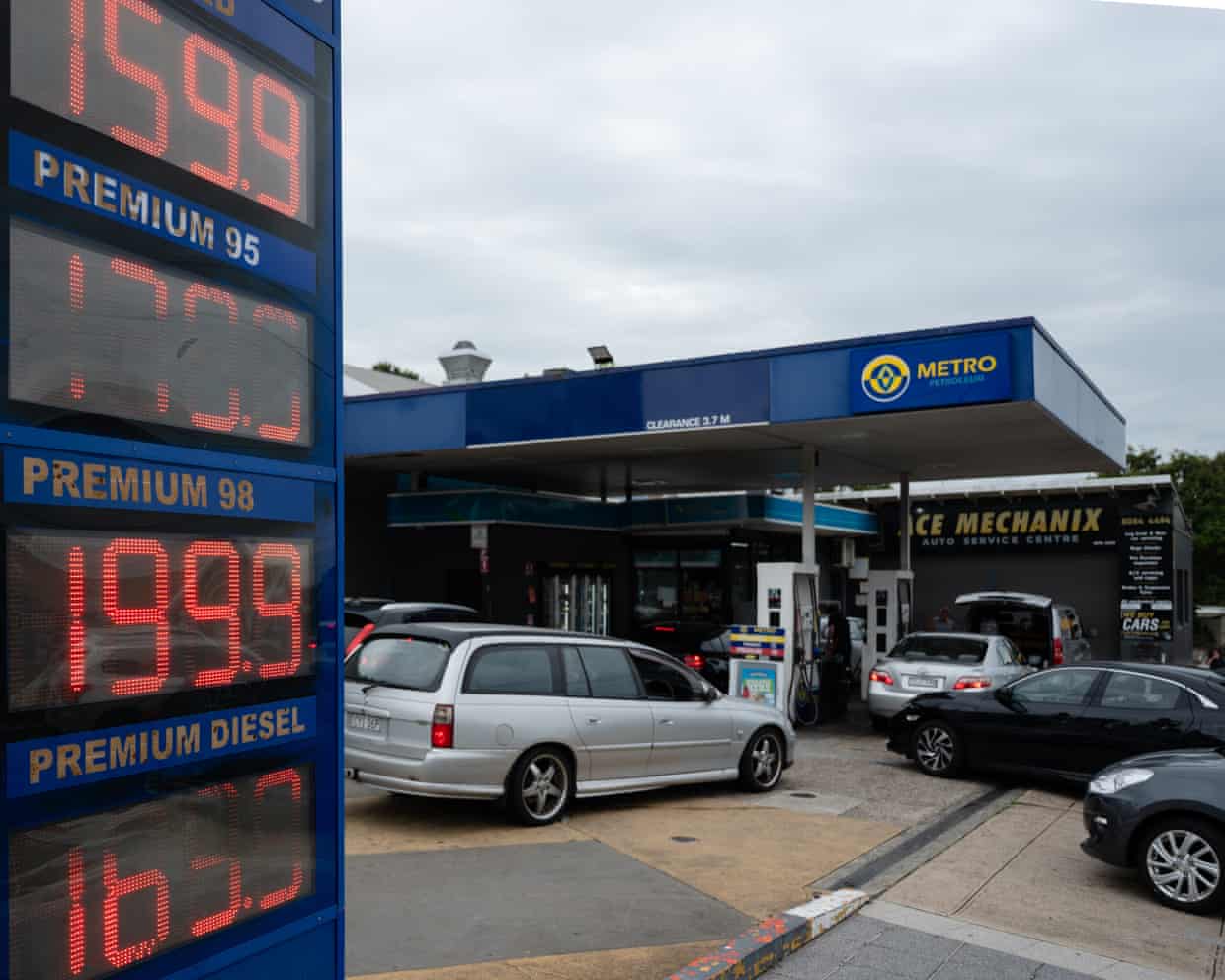
“There is no need to panic-buy petrol.”Those words from the treasurer, Jim Chalmers, on Wednesday were a bid to reassure Australians that the US-Israeli war on Iran did not mean our nation was about to run out of fuel.There has been some breathless reporting of Costco service stations running out of petrol, and long lines at other servos as motorists rush to fill up before the anticipated price rises.Three days after the start of missile strikes on one of the world’s biggest oil producers, Chris Bowen, the energy minister, on Tuesday suggested that the only thing to fear was fear itself.“There are real challenges, but there is no need for panic-buying; that will just make the situation worse,” Bowen said, in advice reminiscent of the Covid toilet paper shortages.
Sign up: AU Breaking News emailWhile there is no such thing as an official toilet paper stockpile, Australia does maintain a strategic reserve of petroleum products.So what is this reserve, and is it enough? How worried should we be?The ongoing attacks on Iran, alongside retaliatory attacks, have essentially closed the strait of Hormuz, restricting one-fifth of the world’s seaborne crude oil supply, and sending energy commodity prices soaring.Expensive oil is bad news for motorists as it will make petrol more expensive.But price is one thing – availability is another.Australia imports about 90% of its liquid fuel including petrol, diesel and aviation fuel.
Most of those products come from refineries in Singapore, South Korea, and Japan.They, in turn, rely on Middle Eastern crude oil.The number of Australian oil refineries has dwindled over the years from 12 to just two today – both of which are propped up by government support.There were six refineries at the start of the Coalition’s most recent decade in power, and two by the time Labor was elected in May 2022.(Two refineries closed during opposition leader Angus Taylor’s tenure as energy minister).
That reflects the choice under governments of both persuasions to not intervene as locally refined products were replaced by cheaper – much cheaper – imported fuels.But in the current world where every country is focused on economic security, our overwhelming reliance on overseas fuel now appears a glaring vulnerability.There’s no clear and present threat that petroleum and oil imports are about to dry up.A 2020 federal government liquid fuel security review – released under freedom of information in early 2024 – examined a scenario where the strait of Hormuz was closed.It concluded that “fuel supplies in Australia are unlikely to be physically affected as long as the disruption is resolved within six months and IEA [International Energy Agency] countries release emergency stocks to maintain global supplies”.
And even if oil shipments out of the Middle East were disrupted beyond that time frame, Australia would still be able to secure what we needed as long as we were prepared to pay, the review said.That assessment may or may not be true, but it suggests we are a long way from finding out.Since 2023, importers and refiners have been required to maintain a baseline level of fuel stocks across petrol, diesel and jet fuel as part of Australia’s long-term fuel security framework.This minimum stockholding obligation is set out in law: petrol refiners need to maintain reserves of at least equivalent to 24 days of usual demand, and 27 days for importers.The minimum for refiners of diesel is 20 days’ worth of supply, and 32 days’ worth for importers.
The businesses need to report their holdings weekly, and Department of Climate Change, Energy, the Environment and Water (DCCEEW) reports average stockholding data on a quarterly basis.“Australia’s refineries and companies are required to keep a stock of fuel on hand in Australia just for this type of eventuality,” Bowen said.“And I’m pleased to say that we [have] 36 days’ worth of petrol, 34 days’ worth of diesel, and 32 days’ worth of jet fuel on hand as we speak.”Separate DCCEEW petroleum statistics tracking fuel reserves go back to 2010.These figures show that as at the end of last year, we had enough petrol reserves to cover 26 days of usual demand, diesel stocks to cover 25 days of consumption, and 20 days’ worth of jet fuel.
(There’s also a second debate about whether we are meeting an obligation to hold fuel stocks equivalent to 90 days of imports as per an agreement with the International Energy Agency.The answer is: we never have.)So if Australia was totally cut off from the world today, and assuming we just kept burning at the same rate, we could last until early April before running out of fuel.The first thing to say, again, is that nobody is talking about a complete stop to international supply lines.It would take something like a regional conflict that shut down all shipping to Australia – not impossible, but not what we are talking about today.
So taking a bigger-picture view, are our stockpiles big enough?Tony Wood, a senior fellow at the Grattan Institute’s energy and climate change program, says there’s no obvious answer to how much we need to be holding in strategic reserve.The cost of stockpiling – the cost of insurance, essentially – is high, and both sides of politics have struggled with the question.“Clearly the geopolitical situation is less stable now than it was, and if the risks are increasing, it makes sense to take out more insurance,” Wood said.“This is a decision both sides had avoided.At least you’d think now’s the time to think carefully about whether 35 days of reserves is enough.
” Patrick Commins is Guardian Australia’s economics editor
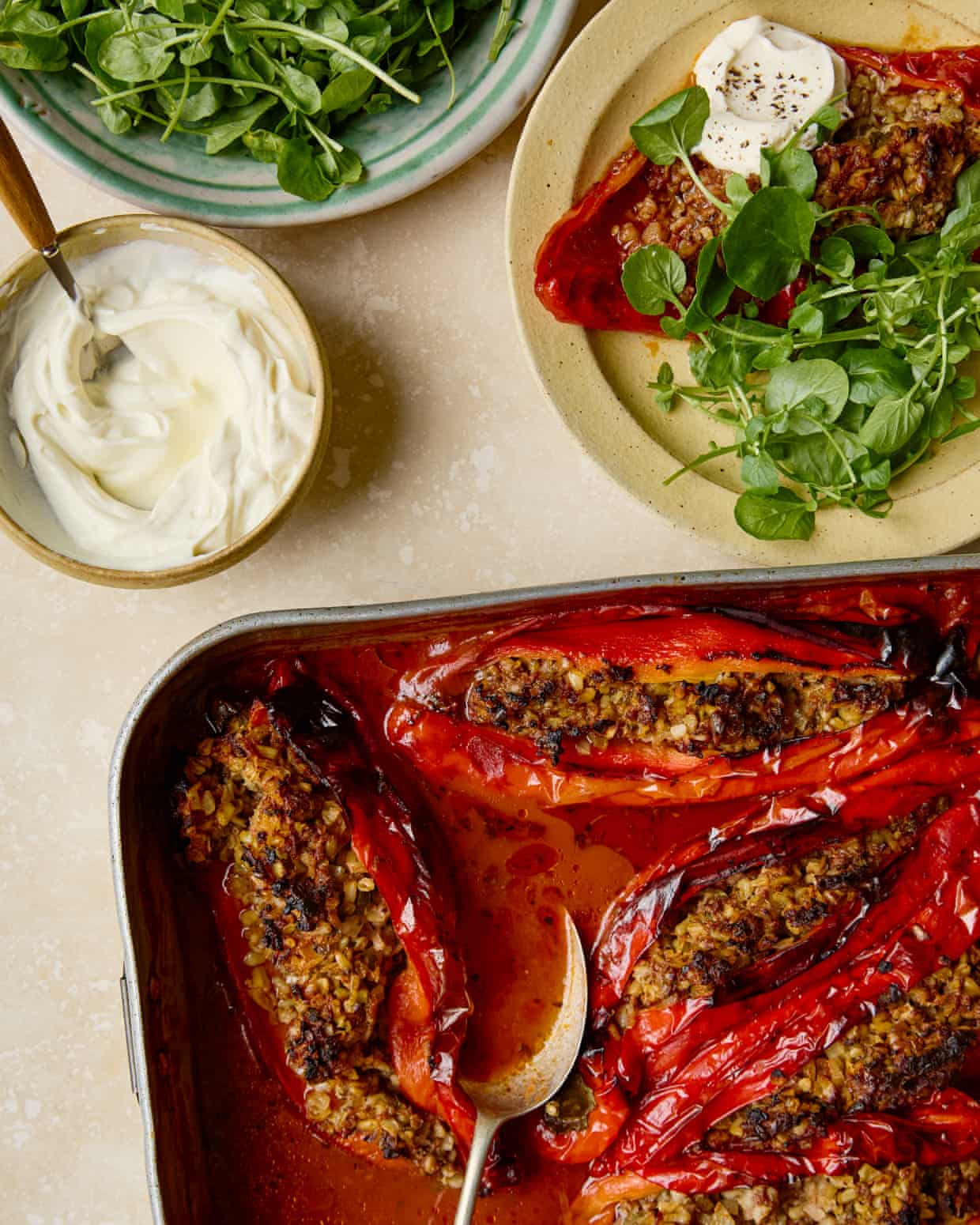
Stuffed peppers and aubergine dip: Sami Tamimi’s recipes for savoury Palestinian snacks
I still remember, when I was a kid, the end of spring and early summer when markets in Jerusalem and across Palestine overflowed with freshly harvested freekeh. As you approached, the air carried a smoky, earthy aroma. Freekeh is an ancient grain, a staple across the Middle East and Turkey, made from green wheat roasted over open fires to burn off the husks, which gives it the characteristic nutty flavour. The name comes from the Arabic freek, meaning “to rub”, which describes how the grains are cleaned, dried, cracked and stored for the year.Throughout the Middle East and Palestine, mahashi (stuffing vegetables) is a true labour of love, creating dishes that are designed to be shared

Australian supermarket muesli bars taste test: the worst is ‘both dry and moist’
During a blind taste test of 19 muesli bars, for the first time in his life Nicholas Jordan asks: ‘Is this too much cinnamon?’Get our weekend culture and lifestyle emailIf you value our independent journalism, we hope you’ll consider supporting us todayI have a long history with muesli. Muesli bars were a recess staple during my school years. As a uni student, I made muesli in 20kg batches and sold it from my sharehouse back yard like a drug dealer. In lockdown, I started an Instagram account where I would review and rate a different muesli every three or four days (I am the only contributor to the hashtag #mueslireviewsli). Even before this taste test, I would guess that I’ve tried more than 80% of all the muesli and muesli bar brands available in my area
Why do my potatoes go black after cooking? | Kitchen aide
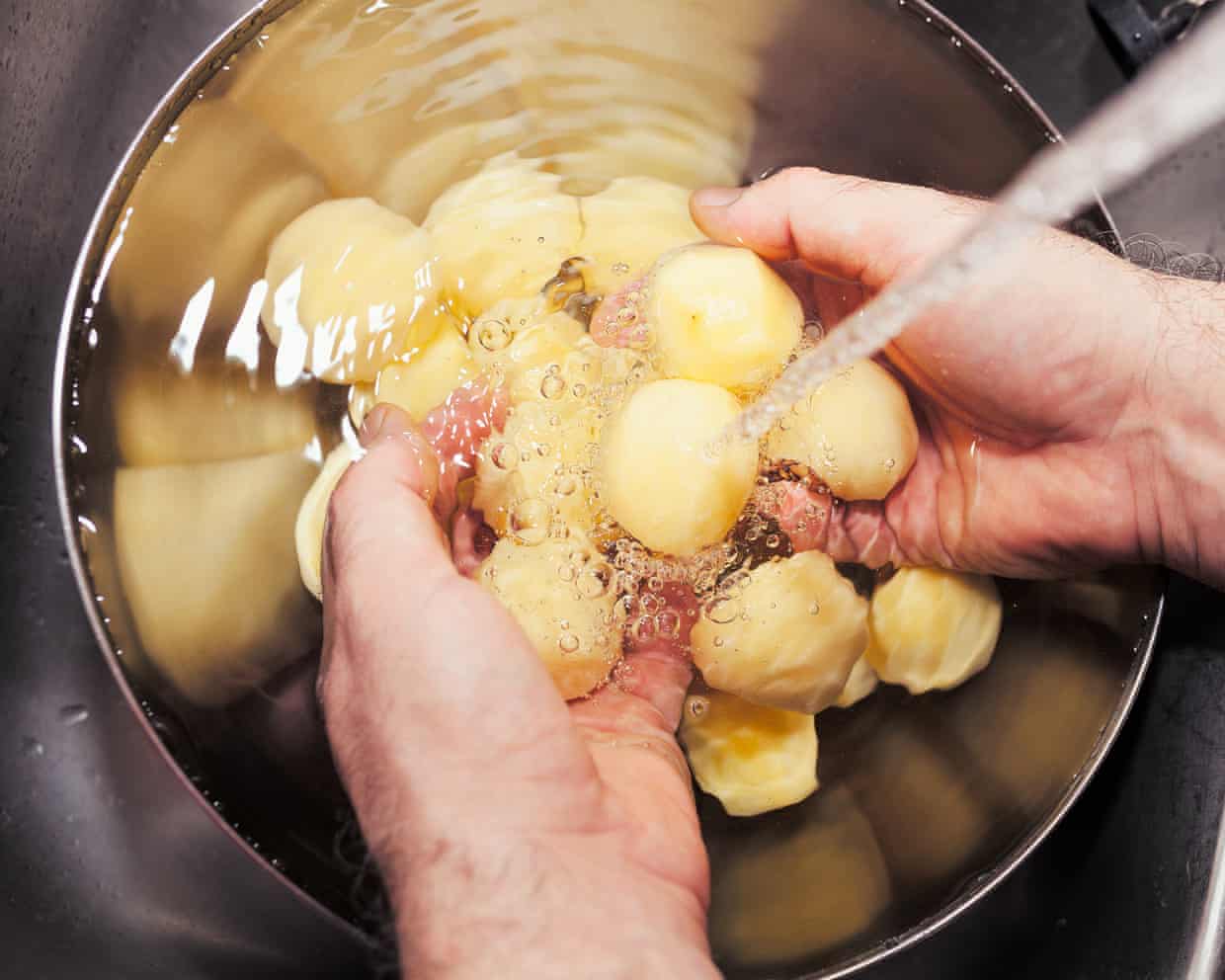
Why do some potatoes turn black on cooking, and how do I stop this happening? I usually leave them to cool in the cooking water, but should I plunge them in cold water instead?”Jean, Hampshire“We’ve all been there,” sympathises spud queen Poppy O’Toole. “It’s a harmless chemical reaction,” the author of The Potato Book continues, “but it looks rank and only gets worse with the slow cooling process that Jean’s using.” But let’s wind things back for a moment. According to the food science guru Harold McGee, in his bible On Food & Cooking, the darkening of cooked potatoes “is caused by the combination of iron ions, a phenolic substance [chlorogenic acid] and oxygen, which react to form a pigmented complex”. So what’s the solution? Make the pH of the water “distinctly acidic”, which McGee does by adding cream of tartar or lemon juice “after the potatoes are half-cooked”

‘Where the magic really happens’: the influencers out to celebrate – and save – Britain’s ‘proper boozers’
The Calthorpe Arms on Gray’s Inn Road is a fairly atypical central London pub. With patterned red carpets, brass fittings, leather bar stools, a pool table and Christmas tinsel still hanging in early February, it feels very much a “local”, although on a Thursday evening it’s busy with the post-work crowd.It’s the fifth time Niall Walsh, who works nearby and runs the Proper Boozers Instagram account, has visited in recent months. “It’s just off the beaten track, but easy to get to,” Walsh says over a pint of Harvey’s. “You can get a real, authentic pub experience
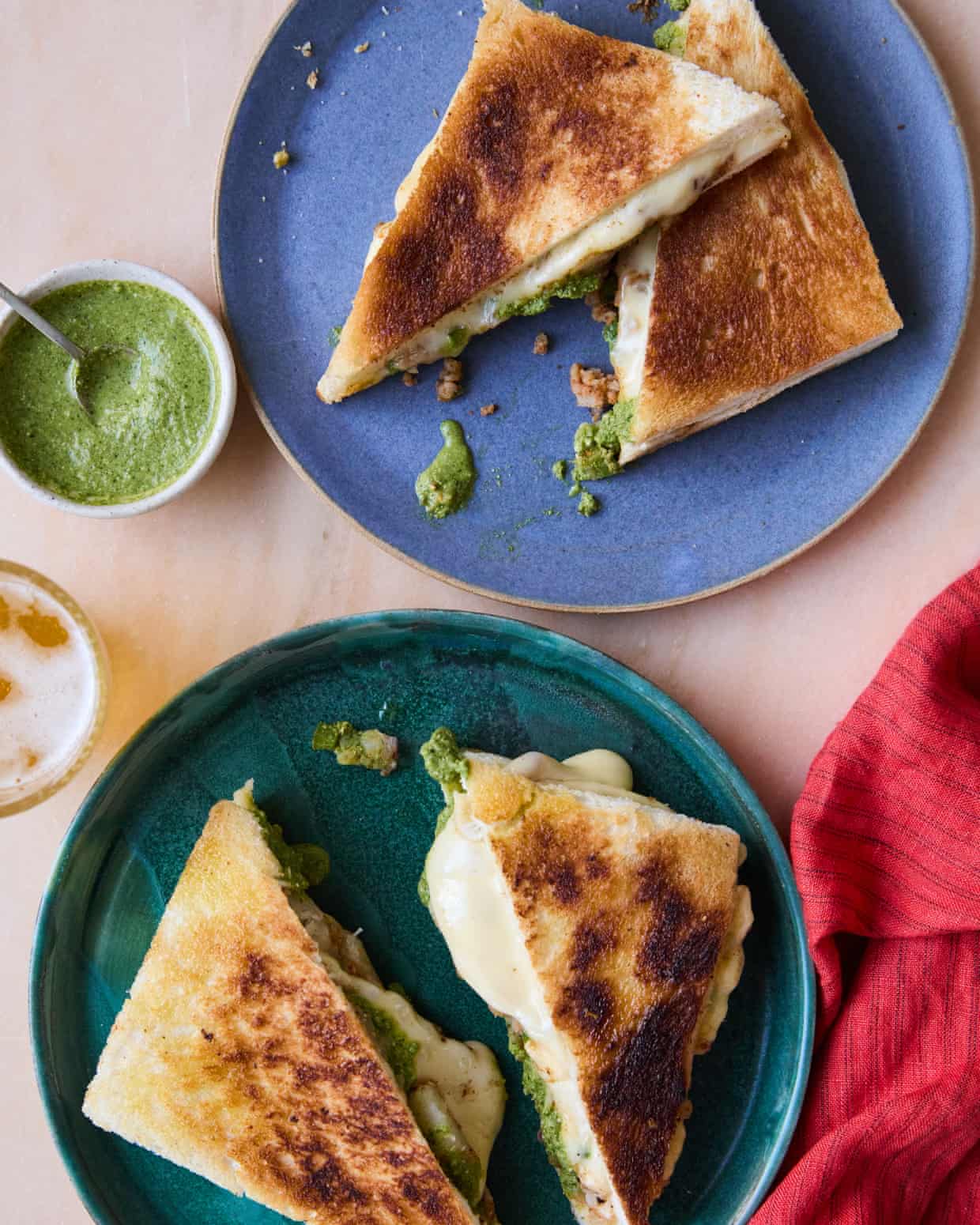
Stuffed battered chillies and chilli cheese toasties: Maunika Gowardhan’s favourite Holi snacks – recipes
Celebrate Holi, the festival of colours and the arrival of spring, with sumptuous, delicious and addictive snacks. The bharwa mirchi pakode ki chaat is full of flavour and topped with tamarind, green chutney and chaat masala. Alongside it, a street-food favourite from my home town of Mumbai: the classic chilli cheese toastie stuffed with potato, peppers and green chutney. Both are the sort of dishes you can eat at any time of day, and the unifying ingredient is the humble potato, which I feel is the backbone of Indian cooking, be it in curries, stir-fries, flatbreads, snacks and even raitas.I’d happily eat this delicious street-food classic on any day of the week
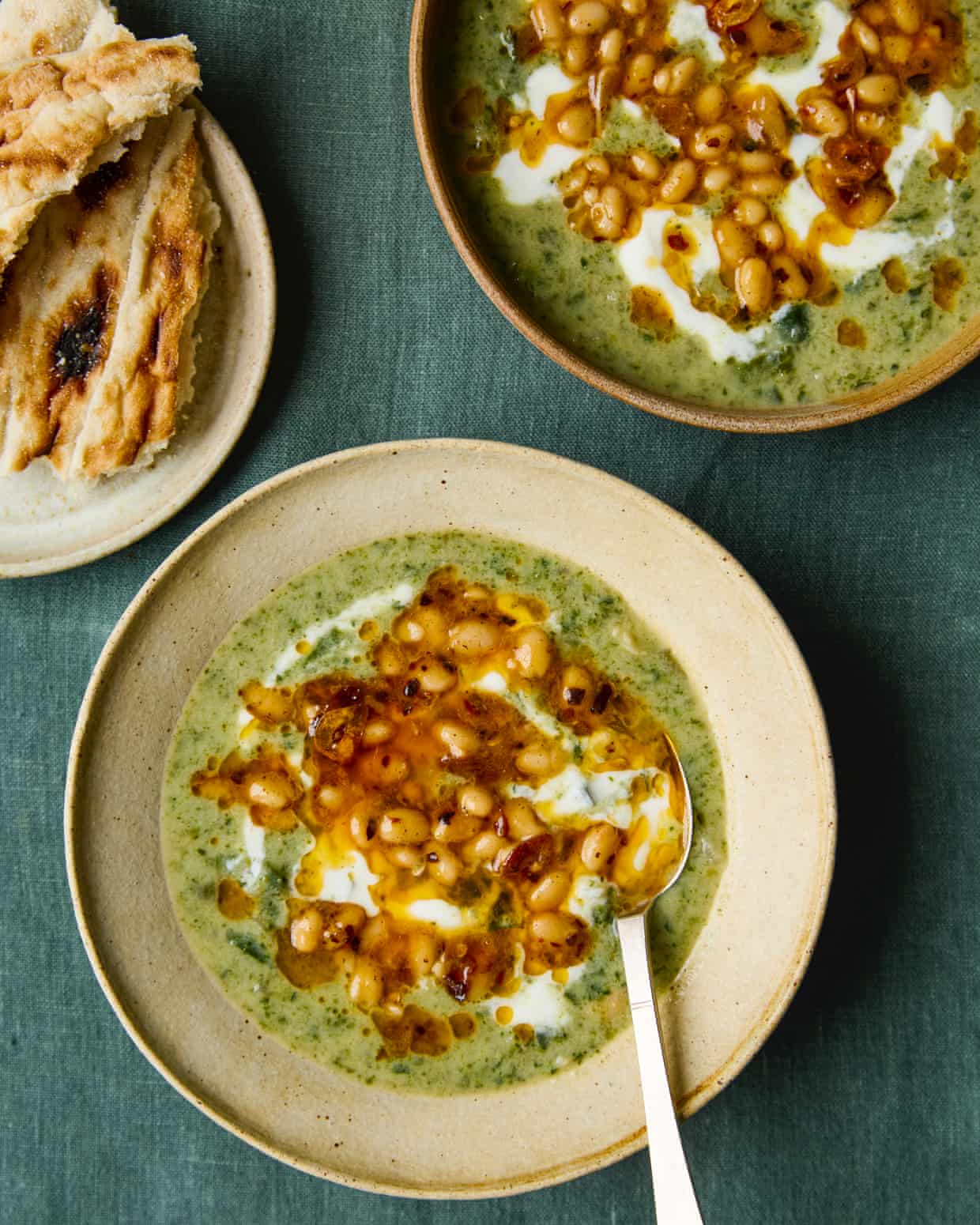
Rukmini Iyer’s quick and easy recipe for chard borani soup with yoghurt, crispy garlic and beans | Quick and easy
I am emphatically not a dip person (see also: salad), but the first time I tried chard borani, a Persian dip made with chard and yoghurt, I became so obsessed that we’ve been having it on repeat at home ever since. Today, I’m sharing my soup version, thickened with beans and topped with crisp garlic and brown butter. It’s perfect served with flatbreads, and takes just minutes to put together: a homage to the excellent original.If you’re making this in advance, reheat it very gently so as not to split the yoghurt.Prep 15 min Cook 30 minServes 3-42 tbsp olive oil 1 large onion, peeled and roughly sliced2 garlic cloves, peeled and finely grated400g rainbow or Swiss chard, stems roughly chopped, leaves roughly sliced2 tsp sea salt flakes 1 400g tin haricot beans, drained and rinsed (260g drained weight)Juice of ½ lemon150g natural or greek yoghurt, at room temperature , plus extra to serve For the crisp garlic butter 40g salted butter2 garlic cloves, peeled and finely sliced2 tsp aleppo pepper (optional)Heat the oil in a large, wide-based pan, add the onion and stir-fry on a medium to high heat for five minutes

Burner account or not, Kevin Durant is bitter, petty and entirely relatable

Borthwick’s Six Nations spring clean makes a fresher-looking mix but raises questions over logic | Robert Kitson

Winter Paralympics 2026: who are Australia’s top medal contenders? | Kieran Pender

From the Pocket: AFL’s Final Siren documentary is slick but forgettable

Dennis Cometti, Australian sports commentary great, dies aged 76

NRL 2026: the big questions to be answered over the course of the season | Jack Snape