Buy now, pay later: how to use it without getting into debt
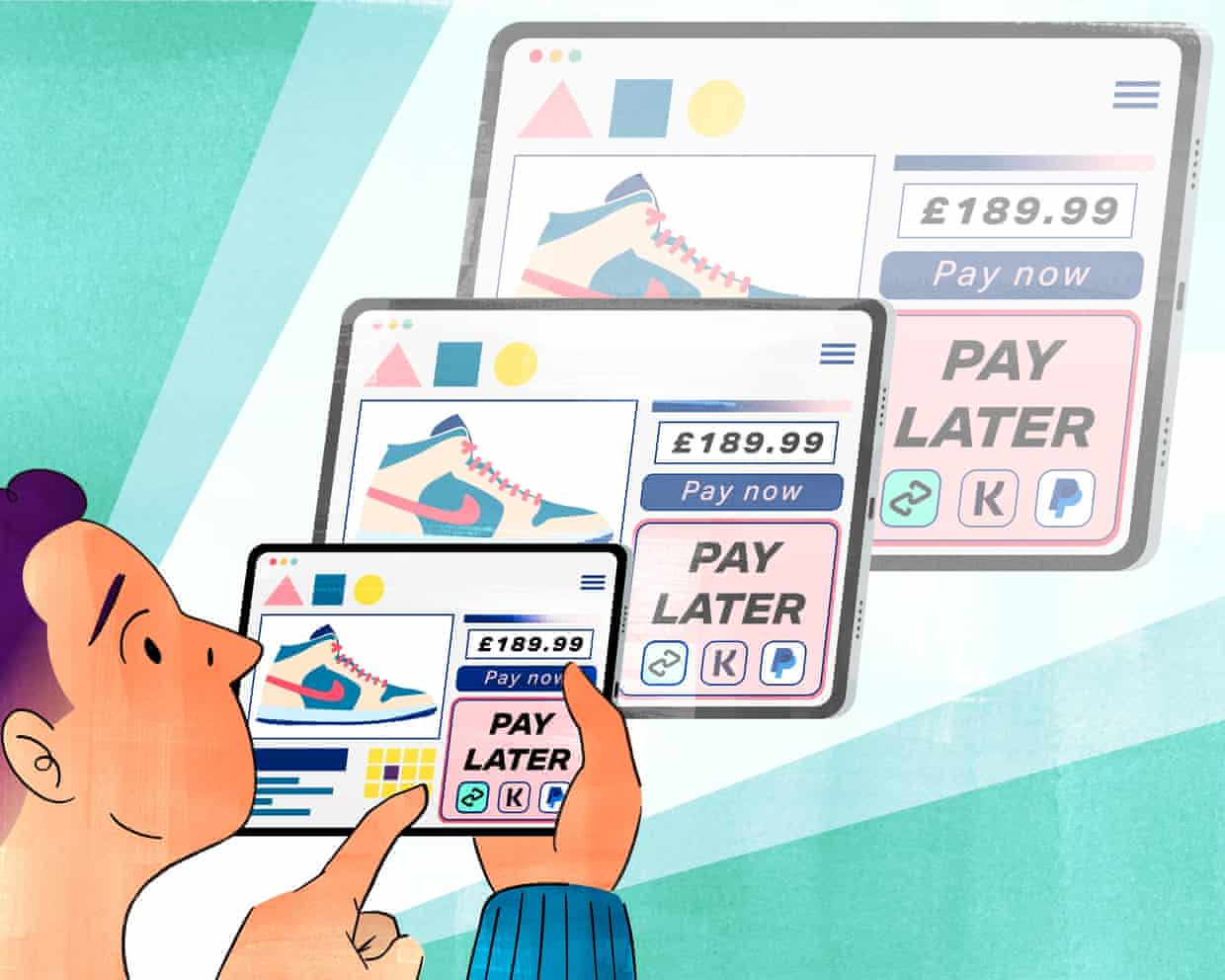
Buy now, pay later (BNPL) is a form of credit that lets you spread payments for everything from clothes, jewellery and white goods to concert tickets, hotel rooms and takeaway meals.Typically the cost is split into three or four instalments that you pay off over a few weeks or months, and if you keep up with your repayment plan, you won’t pay interest or charges, so it can be completely free to use.BNPL is offered by a vast array of retailers, usually at the checkout of online stores.It is also available at some physical shops.Three brands – Klarna, Clearpay and Paypal – dominate the UK market.
Many BNPL providers have their own app, and sometimes these offer “exclusive” deals,Some retailers offer just one BNPL option, while others have two or more,At least 11 million people in the UK use BNPL, but regulators and consumer bodies have voiced worries that some will end up borrowing money they cannot afford to pay back on time, thereby incurring charges, getting into debt and damaging their credit score,Sebrina McCullough, at Money Wellness, which provides free money and debt advice, says: “BNPL can be a really helpful way to spread the cost of bigger purchases, but it only works if it’s treated like a short-term loan rather than free money,We often see people thinking it’s harmless, but missing even one payment can lead to fees and unnecessary stress.
”The biggest issue with BNPL is that it isn’t regulated in the same way as other consumer credit products.That’s set to change on 15 July this year, when the Financial Conduct Authority will start regulating BNPL, which means users will get greater protection and more rights.BNPL lenders will have to carry out an affordability check before each loan is taken out, even if it’s only for a small amount.They will need to provide clear, upfront information and offer support to customers in financial difficulty.And if something goes wrong, shoppers will be able to complain to the Financial Ombudsman Service.
For those who have never used BNPL or have other options, there is an argument for holding off until at least mid-July, after which there should be less chance of encountering problems, and more help available if you do.BNPL’s big plus point is that, when used correctly, it is interest-free and fee-free.However, it makes sense to consider it against more traditional forms of credit such as a 0% spending credit card or 0% bank overdraft, says Martin Lewis’s MoneySavingExpert.com website.A 0% credit card charges no interest on things you buy, usually for a number of months or even years.
Alternatively, a few banks give at least some of their current account holders a small-ish, interest-free overdraft.In the case of First Direct it’s £250.What is best for you will depend on your individual circumstances and preferences.The government-backed MoneyHelper website has a tool that can help you choose the best way to borrow money.“The first thing to ask is: why are you using BNPL?” says Andy Webb of the website Be Clever With Your Cash.
“If you have the money in your bank and you don’t need it for essential bills, then it’s almost always better to use this [to pay for something] and only borrow at a later date if you really need to.”He adds that if you can’t afford the item now, “then really consider if you need it.And if you do need it, do you need it now? It’s going to be better for your bank balance if you save and wait.”If you are going to use a BNPL company, make sure you know exactly what’s on offer.Payments are usually collected automatically on specific dates, which should have been made clear at the outset.
With Klarna’s Pay in 3, your purchase is split into three equal payments.The first will be taken from your debit card, bank account or credit card when your order is shipped, and the remaining two will be collected 30 and 60 days later.(Klarna also offers an option where you pay nothing at purchase and the full amount within 30 days.)PayPal’s Pay in 3 is very similar: you make the first payment at the time of purchase, then make two more payments on the same date each month.With Clearpay, you pay in four instalments over six weeks.
The first payment is due when your order is approved, and the next three are due every two weeks, with the dates set out in a payment schedule,“Remember it’s a debt, just like a credit card or an overdraft,” says James Daley, at the consumer organisation Fairer Finance,“If you miss payments, you’ll be hit with late fees as well as a mark on your credit file,”At Klarna, a £5 fee will be charged for late payments after a seven-day grace period,Each fee is capped at 25% of the order value, with a maximum of two late fees per order.
Clearpay charges a £6 fee for a late payment (that is, you don’t make the due date), and a further £6 if it is still unpaid seven days later.Late fees are capped at £6 for orders under £24, and at the lower of £24 or 25% of the order value for orders over £24.With PayPal’s Pay in 3 there are no late fees.But it warns that missing payments may damage your credit record and make other borrowing harder or more expensive.You may be able to get a bit of extra time to pay: for example, Clearpay lets customers delay up to three payment dates by seven days a year (there are conditions attached).
BNPL is a useful and cheap way to manage cashflow if you need to pay for something today and you know you won’t have the money for a few weeks, says Daley.“But only use it if you know you’ll have the money by the time the payments are due.”You should set up a direct debit or use your debit card to make repayments, says MoneyHelper.“Making repayments with a credit card means that you still owe money to the card provider.”Keep a record of how much you have spent and when your payments are due, which will help keep it front of mind, and look out for notifications from your BNPL company reminding you when your next payment will be collected.
It will probably be easier to keep track if you have the provider’s app (assuming it has one), as these typically let you view your payment schedule and get reminders.Never borrow to pay off your BNPL loan or loans.“If you’re having to borrow to make your BNPL payments, you can quickly spiral into much greater debt problems,” says Daley.One of the most common problems encountered by Money Wellness is people juggling multiple BNPL accounts with different payment dates alongside their other costs and debts.“Suddenly you’re trying to keep track of several payments and worrying about deadlines,” says McCullough.
Niall Alexander, at Fair4All Finance, a not-for-profit financial inclusion organisation, says that while many shoppers use BNPL responsibly, its ease of access can attract people who already have other forms of financial stress.“That’s why it’s important for people to keep track of how many active BNPL arrangements they have, limit it to planned purchases they can afford, and avoid stacking multiple plans at once,” he adds.
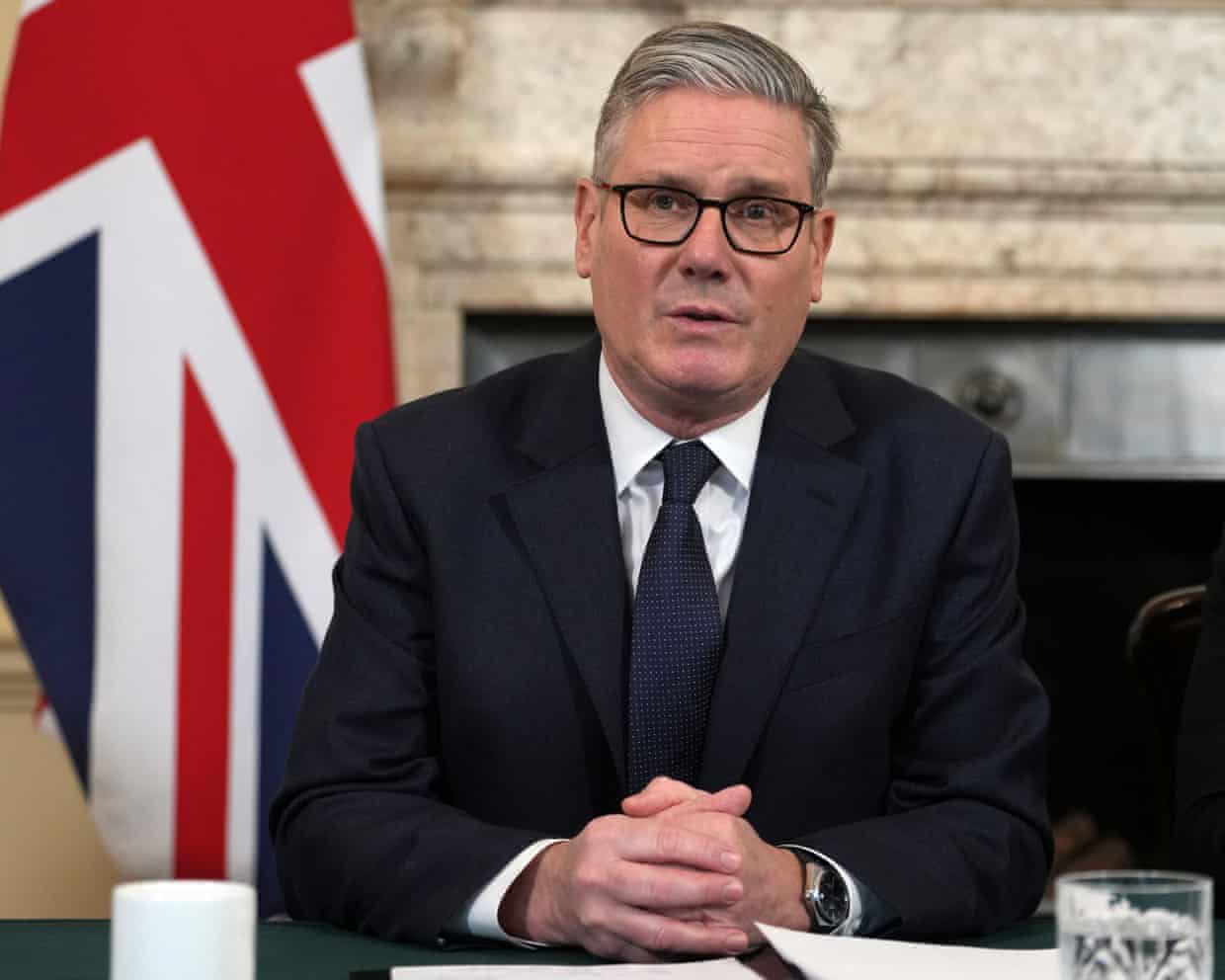
Starmer says ‘more to do’ on cost of living despite £117 fall in energy bills from April - business live
Good morning, and welcome to our rolling coverage of business, the financial markets and the world economy.Energy bills in Great Britain will fall by £117 to a typical annual bill of £1,641 from April, the regulator Ofgem announced this morning.It announced a 7% reduction of the energy price cap for the period covering 1 April to 30 June.This change amounts to a reduction of about £10 a month for the average household using both electricity and gas, Ofgem said. This is more than £200 lower than a year ago
HSBC bankers to share $3.9bn bonus pot, the highest in more than a decade
Bankers at HSBC are set to share a bonus pot worth $3.9bn (£2.9bn), the highest in more than a decade, after Europe’s largest lender reported better-than-expected annual results.The bonus pool for staff was 10% higher than a year earlier, which the bank said it had determined “based on a review of our performance against financial and non-financial metrics”, while the bank’s chief executive’s pay also rose.It came as Georges Elhedery, who took over as the CEO in 2024, signalled that his sweeping turnaround of the lender was drawing to a close
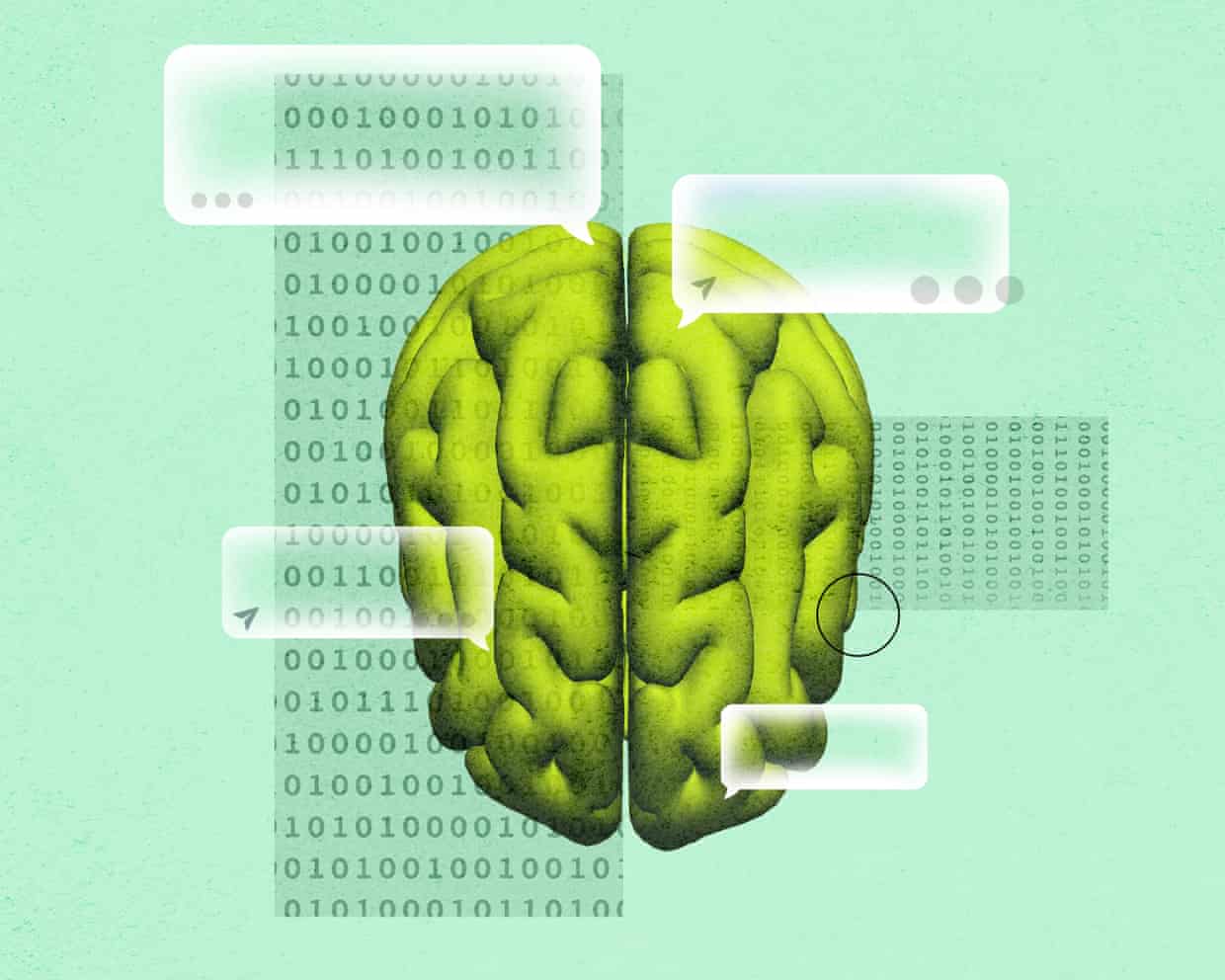
Signs of psychosis seen in Australian users’ interactions with AI chatbots, expert warns
A leading AI expert has warned some Australians are showing signs of psychosis or mania in their interactions with chatbots, arguing Silicon Valley is being “careless” with the technology amid a pursuit of profit.During an address at the National Press Club on Wednesday, Toby Walsh, scientia professor of artificial intelligence at the University of New South Wales, said he believed the AI race will be both “boom and doom”, with some benefits.But his speech – a copy of which was provided to Guardian Australia – also warned about dangers he said had outraged him since the technology began maturing in recent years.“My childhood dreams are turning into a reality that is both good and bad,” he said in his prepared remarks.Sign up: AU Breaking News emailWalsh’s speech highlighted the legal case against OpenAI by the family of US teenager Adam Raine – along with its data that showed more than a million of its users each week send messages that include “explicit indicators of potential suicidal planning or intent”

Reddit fined £14.5m in UK over use of under-13s’ data
The UK information regulator has fined the social news service Reddit £14.5m for using the data of children under the age of 13 unlawfully and potentially exposing them to inappropriate and harmful content.The hefty punishment from the Information Commissioner’s Office (ICO) is the largest fine yet for a breach of children’s privacy and comes after the US-based company introduced age checks in July, including age verification to access mature content. Prior to this, the ICO said, there were “a large number of children under 13 on the platform and Reddit did not have a lawful basis for processing their personal information”.Reddit asks users to declare their age when opening an account but the ICO said relying on self-declaration presented risks to children as it was easy to bypass

Among the gangsters, gamblers and high rollers: a master bookie’s life in Las Vegas
Forty years ago, the New England Patriots played in their first Super Bowl. It ended disastrously for New England, who lost 46-10 to the Chicago Bears. The Bears’ mammoth defensive tackle, William “The Refrigerator” Perry, even got involved in the scoring with a touchdown.That moment looked like it would cause serious problems for Art Manteris, who at the time ran the sportsbook at Caesars Palace in Las Vegas. Under Manteris, Caesars had offered odds on whether Perry would score during the game – and, as fans scrambled to back the popular player, the house stood to lose a significant sum if he did

The Spin | Zimbabwean breakout at T20 World Cup has fans rejoicing renaissance
Dean du Plessis could tell that Zimbabwean cricket had turned a corner by the noise of the crowd. The veteran broadcaster, who was born blind, has forged a remarkable career as a commentator by distinguishing the game’s almost imperceptible audio shifts. He can tell a slower ball has been bowled by the fractional delay before ball meets bat. He can tell if a batter has pressed forward or back by the scratch of spikes against the hard pitch. And he could tell, in 2018, that the sport he loved would never be the same again

US men’s hockey team visit White House as some players with Minnesota ties stay away
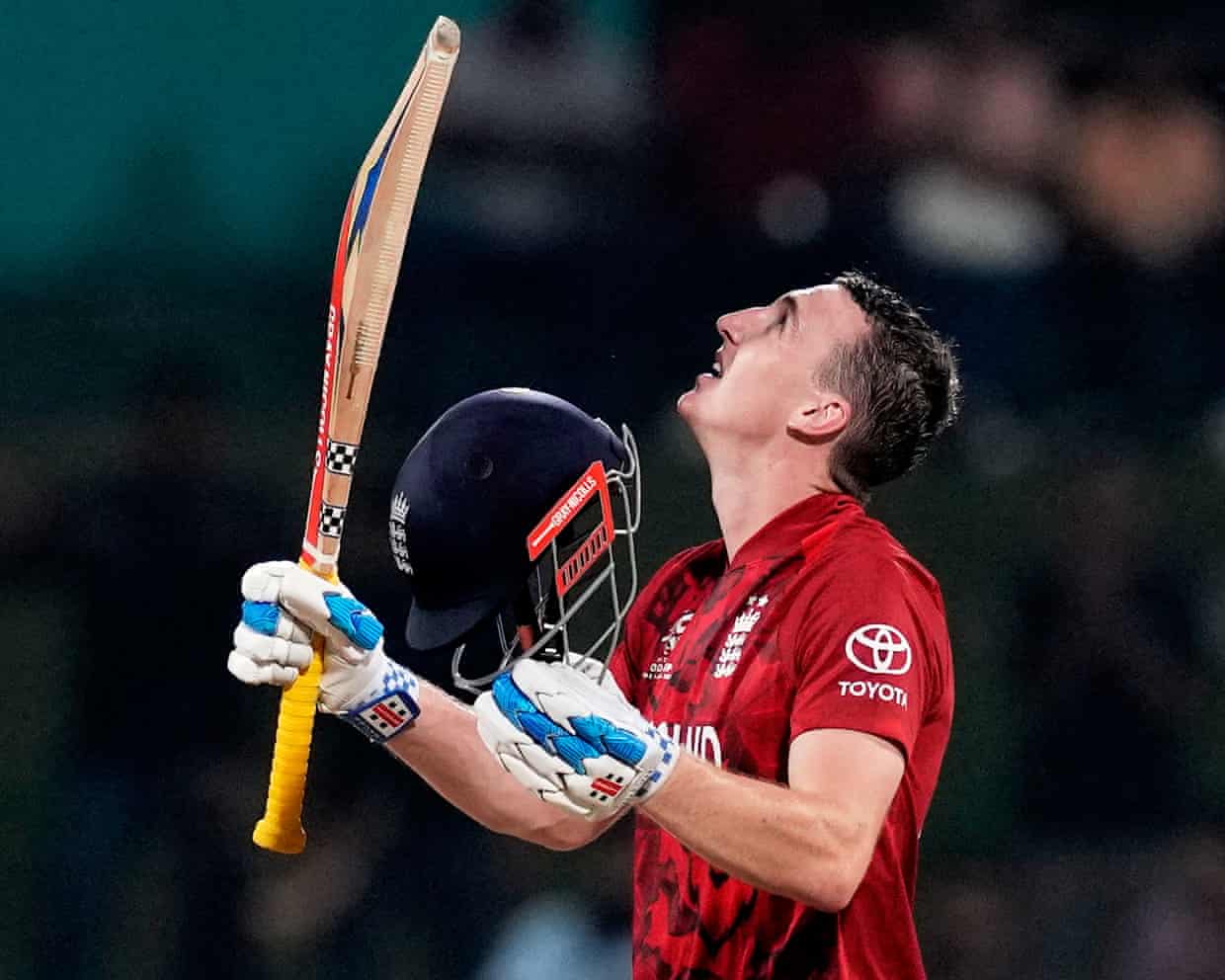
Harry Brook relieved to lead England into last four after ‘the hardest winter of my life’

England edge past Pakistan: T20 Cricket World Cup Super 8s – as it happened

Harry Brook’s 50-ball century blazes England past Pakistan into T20 World Cup semi-finals
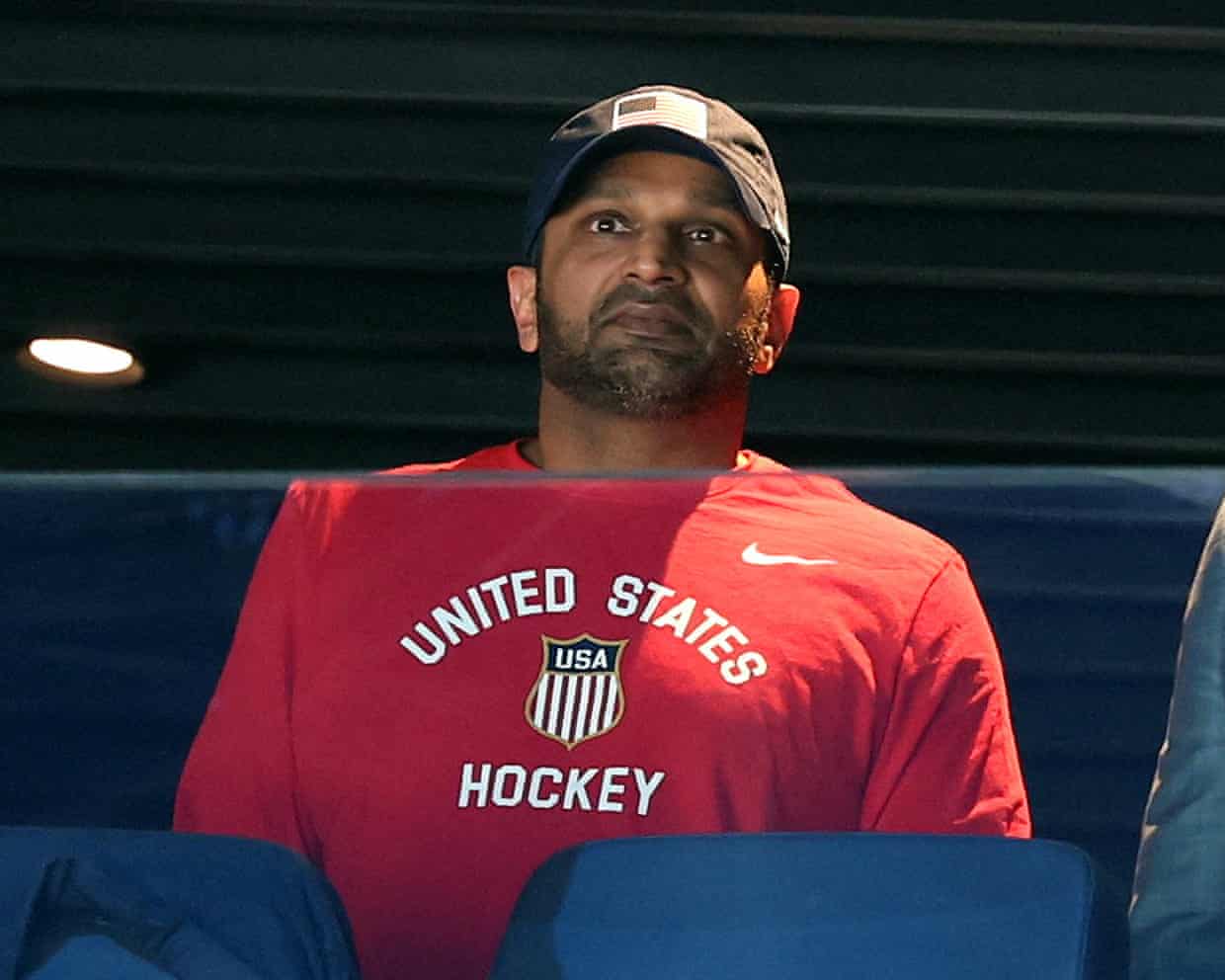
US hockey was bathed in a golden Olympic glow. Then Donald Trump and Kash Patel stepped in | Beau Dure

‘I felt tears welling in my eyes’: our readers’ Winter Olympics highlights