France and Germany agreed to build the fighter jet of the future. Now they can’t agree who is in charge
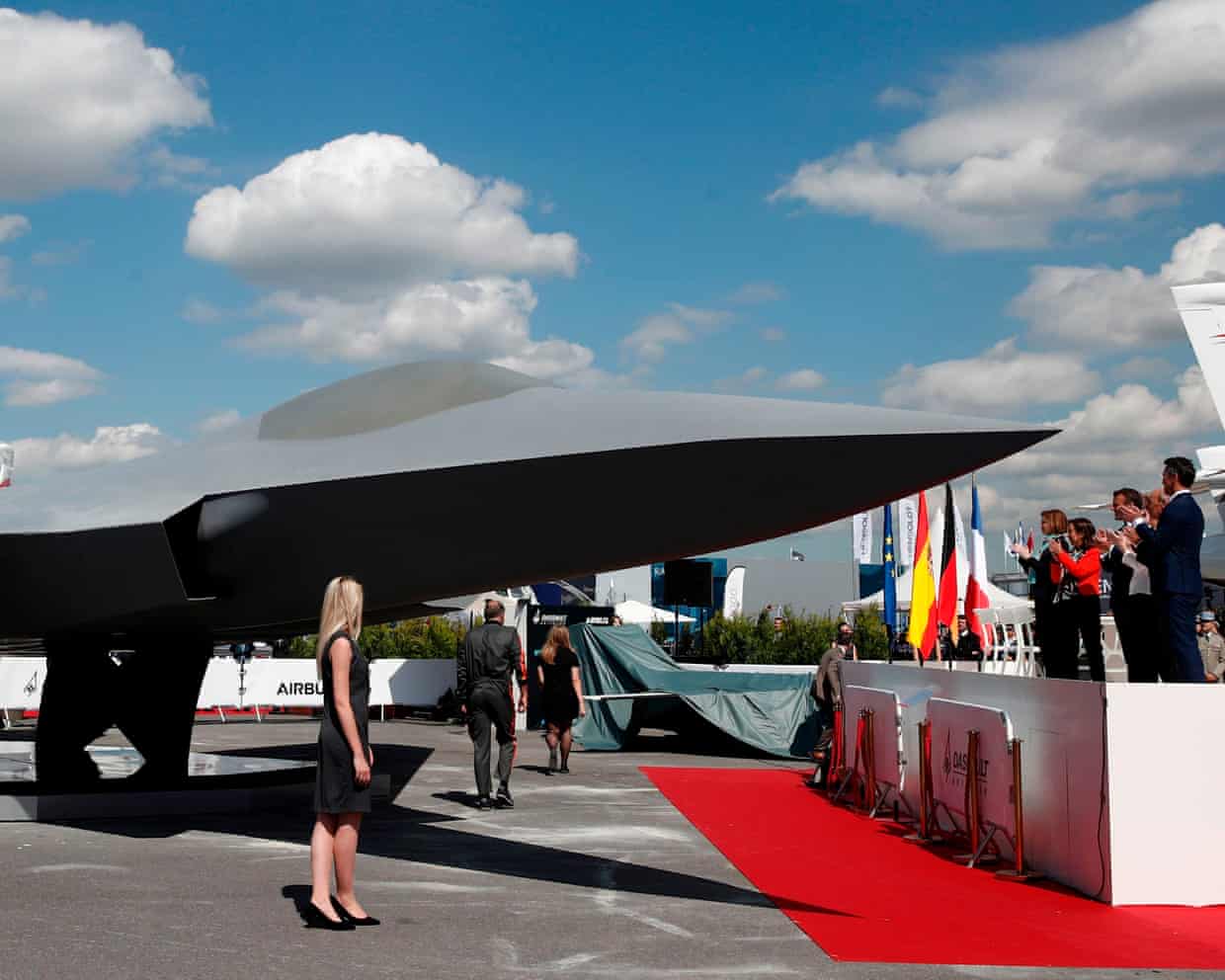
France and Germany’s plan to build a fighter jet of the future, planned to come with a swarm of drones and a “combat communications cloud”, is collapsing,Friedrich Merz, the German chancellor, said this week that the €100bn programme no longer worked for him,He insisted it was “not a political dispute”, but a technical one,France needs a jet that can carry nuclear weapons and launch from aircraft carriers, while Germany does not,However, the problems go back much further.
Known as the Future Combat Air System (FCAS), the programme was announced to great fanfare in 2017 by the French president, Emmanuel Macron, and then German chancellor, Angela Merkel.Spain joined in 2019.The jet was meant to replace France and Germany’s existing fighters by 2040, equipped with stealth capabilities and surrounded by drones scouting ahead or drawing enemy fire, all sharing data in real time.Europe already fields three competing fighter jets – the Eurofighter Typhoon, France’s Rafale and Sweden’s Gripen.Successive chief executives of the pan-European aerospace company Airbus have warned the continent must consolidate these projects.
Yet the collapse of FCAS would do the opposite, with a British-Italian-Japanese Tempest project and a mooted Gripen successor already in the mix.For a bloc that collectively spent €381bn (£333bn) on defence last year but struggles to turn that into military capability, the stakes are high.Threats from Russia are mounting and Donald Trump has told Europe it is time to pay for its own security.But for years, the companies building the Franco-German jet have not been able to agree who is in charge.Dassault Aviation, France’s storied jet maker, insists on leading the fighter part of the project.
The family-controlled company and its chief executive, Éric Trappier, have fought to keep control despite opposition from Airbus’s German-based defence arm, the other lead partner on the project.A former senior French official, who asked to remain anonymous, said the project appeared to have been conceived “at a very high political level”, without wider discussions in the ministry of defence about whether the countries had the same needs.“We do not have the same way of doing war, Germany and France,” they said.“I was quite troubled by this.”Trappier made the company’s position clear at a factory inauguration last year.
“If they [the Germans] want to do it on their own, let them do it on their own,” he told reporters.“We know how to do everything from A to Z.”The Rafale remains hugely successful on the export market, with orders stretching into the mid-2030s, underscoring Dassault’s leverage over the other players – including the French government.“Dassault is not easy,” said the former senior French official.“They have got amazing engineers … but on the political side they behave how they want.
And now they don’t even need this programme, they have many export sales coming from Rafale.So they are very comfortable, and their collaborative spirit is not good.They piss me off.”The dynamic was on full display this week, as Macron flew to Delhi to push India to buy more than 114 Rafales – essentially acting as Dassault’s salesman – while back home, the company refuses to cooperate on its replacement.Dassault also has form on this.
The company walked away from the Eurofighter programme in the 1980s because it wanted to be in charge.That jet was eventually built by the UK, Italy, Germany and Spain – without France.The problem is that Trappier might have a point.Of the three countries involved, only France had the proven capability to design a fighter jet alone from scratch, said Francis Tusa, a defence analyst.“Dassault is absolutely correct,” he said.
“But if you’re going to cooperate and collaborate, you shouldn’t rub other people’s noses in the dirt.”The dysfunction is not only on the French side.Bertrand de Cordoue, Airbus’s former head of EU and Nato public affairs, said tensions had existed between the two companies from the start, with Airbus engineering teams regarding Dassault as the competition.“For the German part of Airbus, it was not natural to accept coming out of the existing Eurofighter scheme,” said de Cordue, who is now an adviser at the Jacques Delors Institute, a thinktank.“The teams working on Eurofighter were not spontaneously accepting the idea to totally change their mindset and work with a French company that, on the export market, was a competitor, not a partner.
”Dassault, in turn, has resisted handing over its fighter-building know-how to Airbus, fearing a competitor would acquire French expertise.De Cordoue argued that since the technology was funded by French taxpayers, it should be “more the ownership of the French authorities” – and that Dassault should cooperate.Even if the French and German governments could control their respective companies, the political will to do so appears to be fading – symptomatic of a growing rift between the two countries on defence.Earlier in February Johann Wadephul, Germany’s foreign minister, suggested France needed to spend more on its military.Nato member states last year committed to spend 5% of GDP on defence and security by 2035, but Wadephul said French efforts had been “insufficient to achieve this so far … France, too, needs to do what we are doing here with difficult discussions.
”Germany’s more assertive approach is partly a result of a shifting power dynamic.When the FCAS programme started in 2018, its defence spending was modest.Now, after the decision to rearm following Russia’s invasion of Ukraine, Berlin expects to spend €150bn by 2029 – nearly twice France’s budget – after a historic deal last year to loosen its “debt brake”.“France has 60 years of being the accepted leader,” said Tusa.“Suddenly Germany is saying: ‘We don’t have to be deferential.
’”In reality, going it alone with a fighter jet would be difficult for Germany, Tusa added.Despite Airbus’s expertise in commercial jets, building a fighter from scratch would be “their equivalent of the Manhattan Project” because of the lack of experience in doing so, he said.Even the Eurofighter was a joint project with Britain’s BAE Systems and Leonardo.Germany would be “really starting from ground zero and mobilising every single resource”, he added.What happens next remains unclear.
Germany could try to join the rival British-Italian-Japanese Global Combat Air Programme (GCAP), dubbed Tempest, which is due to enter service by 2035 – five years earlier than FCAS is nominally due to arrive – though it would probably be accepted only as an observer rather than a full partner,But Airbus has not given up yet,Guillaume Faury, its chief executive, signalled a potential route forward on Thursday, suggesting France and Germany could each develop separate jets, but link them through the shared combat cloud and drone systems,Speaking as the the company’s annual results were announced, he said the deadlock “should not jeopardise the entire future of this high-tech European capability, which will bolster our collective defence”,“If mandated by our customers, we would support a two-fighter solution and are committed to playing a leading role in such a reorganised FCAS delivered through European cooperation.
”While FCAS was at a “difficult juncture”, he added, “we continue to believe that the programme as a whole makes sense.”Failure would leave Europe fragmented.Instead of one next-generation fighter, the continent could end up with three or four separate programmes – between FCAS if it survives, GCAP, potentially separate French and German national efforts and the mooted successor to Sweden’s Gripen fighter.“I think they should have kept going with a single aircraft,” Tusa said.“They [Airbus and Dassault] need to go to counselling and basically be told: ‘Come on guys, play nice.
’”Dassault declined to comment.Macron, meanwhile, has continued to insist publicly that the project can be saved, telling the Munich Security Conference this month: “It’s hard for me to understand how we will build new common solutions if we destroy the few ones that we have.”The former French official was more downbeat, pointing to Macron’s presidency ending in May 2027.His possible successor, Marine Le Pen’s far-right National Rally party, is softer on Russia and may abandon the project entirely.“My feeling is that this project was born with Macron,” the official said, “and could die with Macron.
”

Mind launches inquiry into AI and mental health after Guardian investigation
Mind is launching a significant inquiry into artificial intelligence and mental health after a Guardian investigation exposed how Google’s AI Overviews gave people “very dangerous” medical advice.In a year-long commission, the mental health charity, which operates in England and Wales, will examine the risks and safeguards required as AI increasingly influences the lives of millions of people affected by mental health issues worldwide.The inquiry – the first of its kind globally – will bring together the world’s leading doctors and mental health professionals, as well as people with lived experience, health providers, policymakers and tech companies. Mind says it will aim to shape a safer digital mental health ecosystem, with strong regulation, standards and safeguards.The launch comes after the Guardian revealed how people were being put at risk of harm by false and misleading health information in Google AI Overviews

West Virginia sues Apple over child sex abuse material stored and shared on iCloud
West Virginia’s attorney general filed a lawsuit on Thursday accusing Apple of allowing its iCloud service to become a vehicle for distributing child sexual abuse material.The state alleges that the company facilitated the spread of child sexual abuse material by declining to deploy tools that scan photos and videos and detect such material in iCloud users’ collections.JB McCuskey, a Republican, accused Apple of prioritizing user privacy over child safety. His office called the case the first of its kind by a government agency over the distribution of child sexual abuse material on Apple’s data storage platform.“These images are a permanent record of a child’s trauma, and that child is revictimized every time the material is shared or viewed,” McCuskey said in the statement

Skiers stranded by California avalanche used iPhone SOS feature to seek help
California’s deadliest avalanche killed at least eight people in a ski group near Lake Tahoe on Tuesday. The six survivors used the iPhone’s emergency SOS feature to help first responders find them as they waited under a tarp and discovered some of the bodies, according to the Nevada county sheriff. Apple’s feature, introduced in 2022, allows users to text law enforcement, even if there’s no cell service or wifi by connecting the phone to a satellite.First responders reached the skiers’ location and learned of the six survivors based on conversations held through the feature, Sheriff Shannan Moon said at a press conference on Wednesday.California office of emergency services law enforcement chief Don O’Keefe said his staff spoke with one of the stranded guides for more than four hours to relay information to the sheriff’s office, which was leading rescue efforts

US builds website that will allow Europeans to view blocked content
The US has built a portal that will allow Europeans to view blocked content including alleged hate speech and terrorism, according to Reuters.The portal, “freedom.gov”, will allow worldwide users to circumvent government controls on their content. The site features a graphic of a ghostly horse galloping above the Earth, and the motto: “Information is power. Reclaim your human right to free expression
Accenture ‘links staff promotions to use of AI tools’
Accenture has reportedly started tracking staff use of its AI tools and will take this into consideration when deciding on top promotions, as the consulting company tries to increase uptake of the technology by its workforce.The company told senior managers and associate directors that being promoted to leadership roles would require “regular adoption” of artificial intelligence, according to an internal email seen by the Financial Times.The consultancy has also begun collecting data on weekly log-ins to its AI tools by some senior staff members, the FT reports.Accenture has previously said it has trained 550,000 of its 780,000-strong workforce in generative AI, up from only 30 people in 2022, and has announced it is rolling out training to all of its employees as part of its annual $1bn (£740m) annual spend on learning.Among the tools whose use will reportedly be monitored is Accenture’s AI Refinery

Tell us: have you ever used AI to navigate everyday life and social relationships?
Lots of people now use chatbots as personal assistants, not just for work but in everyday life and social interactions. We want to hear your stories about the ways you’re using chatbots to navigate your social life or significant life decisions.Have you ever drafted a breakup text using AI? Or crafted a message to delicately cancel plans? Have you consulted AI on whether to take, or quit, a job? Or sought advice from a chatbot on a tricky friendship or relationship?Did that advice work, or backfire?Tell us about it in the form below or by messaging us. Please include as much detail as possible. Please include as much detail as possible

Colbert on RFK Jr’s Maha workout video: ‘Senior softcore that feels like dropping acid’

Colbert on Trump’s Epstein ties: ‘Apparently he does not know the meaning of exonerated’
‘He invented a style’: war chronicler Robert Capa refashioned himself and revolutionised photography
Australian screen industry crushed as Universal shutters Matchbox Pictures, with 30 jobs lost

Javier Bardem and Tilda Swinton among those to condemn Berlinale’s ‘silence’ on Gaza

Colbert on Kristi Noem: ‘Everyone can’t wait to tell a reporter how awful you are’