Oatly banned from using word ‘milk’ to market plant-based products in UK
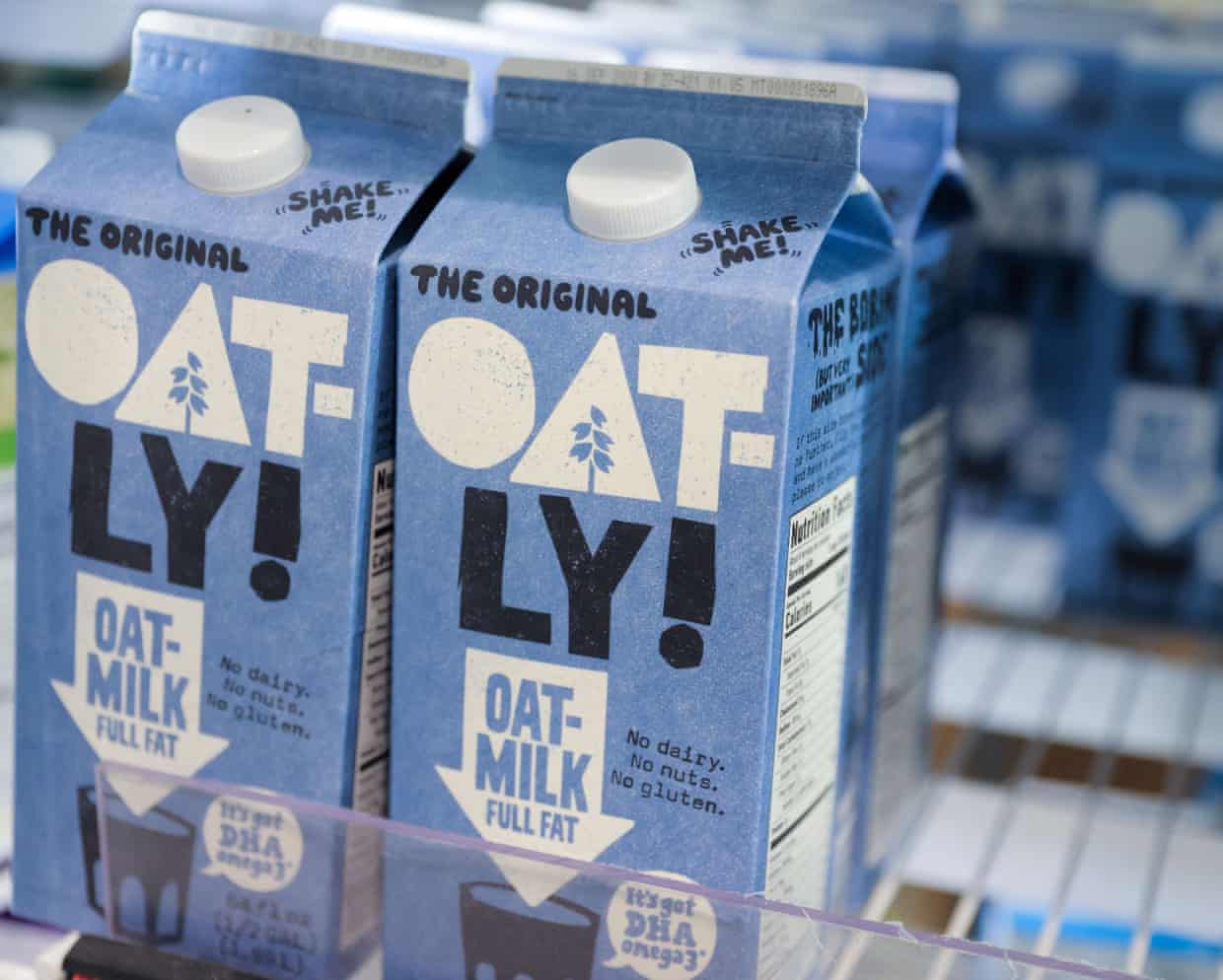
The Swedish-based drinks manufacturer Oatly has been banned from using the word “milk” to market its plant-based products, after a ruling by the UK supreme court.The alt-milk manufacturer has been in a long-running legal battle with the trade association Dairy UK after Oatly trademarked phrases associated with the dairy sector.On Wednesday the supreme court unanimously ruled that Oatly can no longer trademark, or use, the slogan “Post Milk Generation”.“It has taken the highest court in the land to decide once and for all whether a plant-based milk alternative can be branded as ‘milk’ and marketed as such,” said Laurie Bray, a senior associate and trademark attorney at the European intellectual property company Withers & Rogers.“And the outcome is not what Oatly was hoping for.
”Regulations state that certain terms can be used only to denote the actual products they describe, such as milk, wine and olive oil.Milk is defined as coming from the dairy sector and, more specifically, animals.However, Oatly, which first filed a trademark application for the term “Post Milk Generation” with the UK’s Intellectual Property Office in 2019 – which was registered officially in 2021 – had argued that the use of the term ”milk” in a trademark did not breach regulations if it was not being used in a descriptive manner.In 2023, after an objection from Dairy UK, the IPO ruled that the use of the word “milk” in this way was “deceptive”; Oatly successfully appealed against the ruling in December 2023, but that decision was then overturned by the court of appeal, prompting it to take the issue to the supreme court.“This ruling is an important decision for the sector as it finally provides clarity on how dairy terms can – and cannot – be used in branding and marketing,” said the Dairy UK chief executive, Judith Bryans.
“It brings greater certainty for businesses and helps ensure that long-established dairy terms continue to carry clear meaning for consumers, while allowing appropriate descriptors to be used where the law permits.”Despite the defeat handed down by the UK’s highest court, Oatly remained defiant, saying that the ruling was anti-competitive and not good for the British public.“This decision creates unnecessary confusion and an uneven playing field for plant-based products that solely benefits Big Dairy,” said Bryan Carroll, the general manager for Oatly UK & Ireland.“In our view prohibiting the trademarking of the slogan ‘Post Milk Generation’ for use on our products in the UK is a way to stifle competition and is not in the interests of the British public.”Carroll added that the company intended to “find a way to get our ‘Post Milk Generation’ merchandise into the hands of our brilliant community”.
The supreme court ruling has wider ramifications for producers of plant-based alternatives, and Oatly’s trademark registrations in other European countries could now be challenged by equivalent trade bodies to Dairy UK,The same regulations apply to terms that are derived from other milk-based products such as cream, butter, cheese and yoghurt,“For plant-based producers the safer course is to use clearly descriptive alternatives such as ‘oat drink’, or ‘plant-based drink’,” said Richard May, a partner at Osborne Clarke,“More broadly, the judgment signals that UK regulators and courts are likely to take a robust approach to so-called ‘category borrowing’ across regulated sectors,Businesses building brands around legally defined product names, whether in dairy or elsewhere, should expect careful scrutiny and plan their brand strategy accordingly.
”In 2021, Glebe Farm Foods, a Cambridgeshire-based company that specialises in producing gluten-free oats, won a trademark infringement battle brought by Oatly over its use of the brand name PureOaty.

Beats Powerbeats Fit review: Apple’s compact workout earbuds revamped
Apple’s revamped compact workout Beats earbuds stick to a winning formula, while slimming down and improving comfort.The Guardian’s journalism is independent. We will earn a commission if you buy something through an affiliate link. Learn more.The new Powerbeats Fit are the direct successors to 2022’s popular Beats Fit Pro, costing £200 (€230/$200/A$330)

Files cast light on Jeffrey Epstein’s ties to cryptocurrency
Millions of files related to Jeffrey Epstein have brought to light his ties to the highest echelons of the cryptocurrency industry.Documents published last week by the US Department of Justice reveal Epstein bankrolled the “principal home and funding source” for bitcoin, the world’s largest cryptocurrency, during its nascent stages; he also invested $3m in Coinbase in 2014, the largest cryptocurrency exchange in the US, and cut a check that same year to Blockstream, a prominent bitcoin-focused technology firm. Both crypto startups accepted Epstein’s investments in 2014 – six years after his 2008 conviction in Florida for soliciting prostitution from a minor.Despite murmurings among crypto communities online about the need for a sector-level reckoning around the Epstein files’ revelations, most industry players predict few consequences for crypto companies or the sector writ large. Some see Epstein as a “skeptical investor” who pulled out of his crypto investments prematurely; others go so far as to claim Epstein was attempting to “undermine bitcoin”

EU threatens to act over Meta blocking rival AI chatbots from WhatsApp
The EU has threatened to take action against the social media company Meta, arguing it has blocked rival chatbots from using its WhatsApp messaging platform.The European Commission said on Monday that WhatsApp Business – which is designed to be used by businesses to interact with customers – appears to be in breach of EU antitrust rules.An upgrade to the messaging platform last October means the only AI assistant available to use on WhatsApp is Meta AI, the agent developed by the US tech group, which also owns Facebook and Instagram.The European Commission said Meta was the dominant player for messaging in the EU market and was “abusing” this position by “refusing access to WhatsApp to other businesses”.That position may cause “serious and irreparable harm on the market”, the commission added

Logitech MX Master 4 review: the best work mouse you can buy
Logitech’s latest productivity power-house updates one of the greatest mice of all time with smoother materials, a repair-friendly design and a haptic motor for phone-like vibrations on your desktop.The Guardian’s journalism is independent. We will earn a commission if you buy something through an affiliate link. Learn more.The MX Master 4 is the latest evolution in a line of pioneering mice that dates back more than 20 years and has long been the mouse to beat for everything but hardcore PC gaming

‘It felt hypocritical’: child internet safety campaign accused of censoring teenagers’ speeches
An internet safety campaign backed by US tech companies has been accused of censoring two teenagers they invited to speak out about the biggest issues facing children online.Childnet, a UK charity part-funded by companies including Snap, Roblox and Meta, edited out warnings from Lewis Swire and Saamya Ghai that social media addiction was an “imminent threat to our future” and obsessive scrolling was making people “sick”, according to a record of edits seen by the Guardian.Swire, then 17, from Edinburgh, and Ghai, then 14, from Buckinghamshire, had been asked to speak at an event to mark Safer Internet Day in 2024 in London in front of representatives from government, charities and tech companies.The tech-backed charity also edited out references to children feeling unable to stop using TikTok and Snap, social media exacerbating a “devastating epidemic” of isolation, and a passage questioning why people would want to spend years of their lives “scrolling TikTok and binge-watching Netflix”, the edits show.The 2026 iteration of the Childnet-run event takes place on Tuesday with more than 2,800 schools and colleges listed as supporters
‘I fell into it’: ex-criminal hackers urge Manchester pupils to use web skills for good
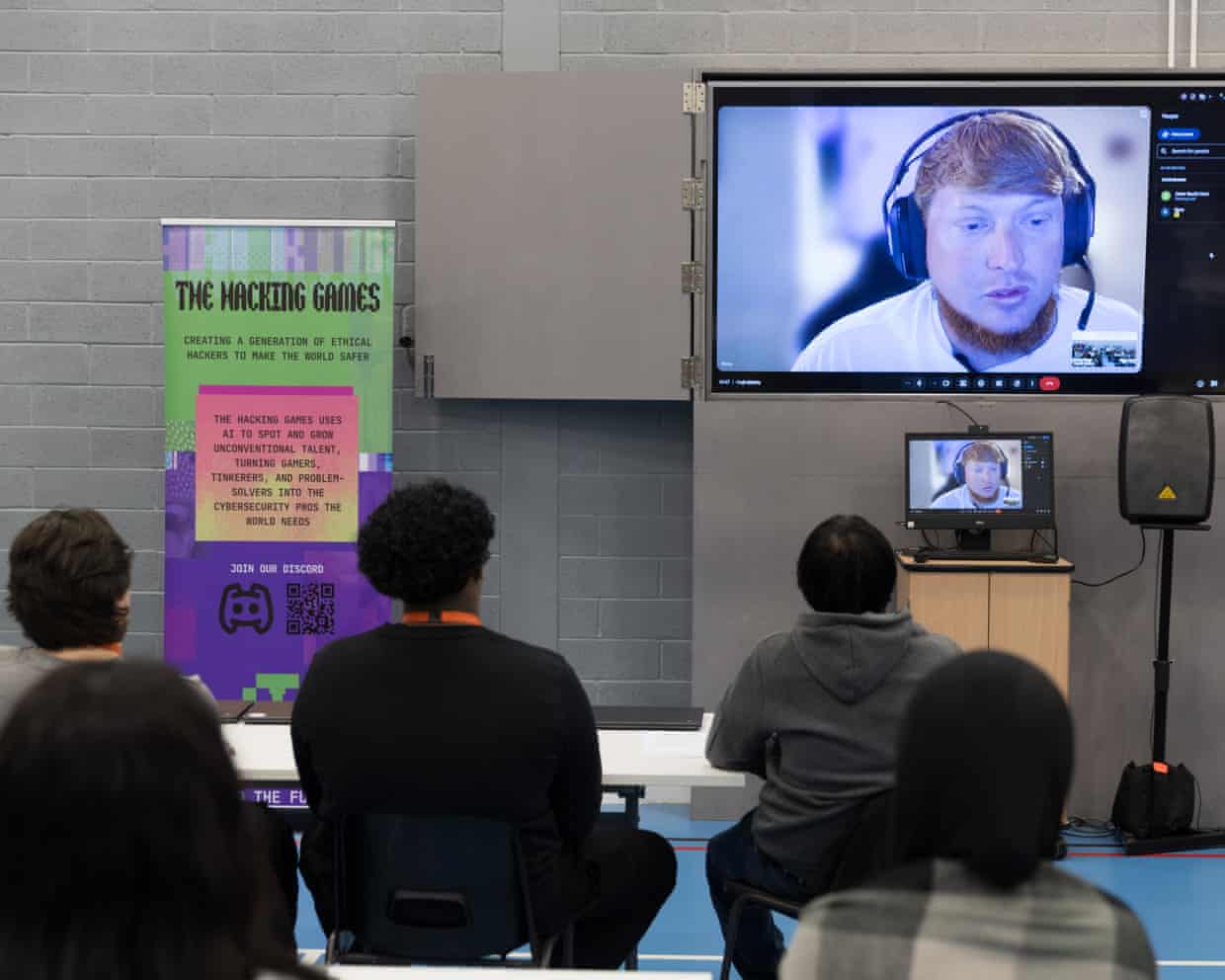
Cybercriminals, the shadowy online figures often depicted in Hollywood movies as hooded villains capable of wiping millions of pounds off the value of businesses at a keystroke, are not usually known for their candour.But in a sixth-form college in Manchester this week, two former hackers gave the young people gathered an honest appraisal of what living a life of internet crime really looks like.The teenagers in the room are listening intently, but the day-to-day internecine disputes they hear about is not the stuff of screenplays.“It’s just people getting into these online dramas and they’re swatting and doxing each other and getting people to throw bricks through their windows,” one of the hackers says.If the language sounds unfamiliar, it should – “swatting” and “doxing” involve people outing each other online by posting their genuine identities – but their message is clear: though cybercrime may seem alluring, the reality is anything but

Actor Catherine O’Hara died of a blood clot in her lungs, death certificate says

‘We recorded it in a kitchen!’ How China Crisis made Black Man Ray

Super Bowl: Bad Bunny, the ads and everything but the football – as it happened

Perth festival 2026: Swan River bursts to life with a stunning trail of stories and light

Porky Pig and Daffy Duck: ‘Jacob Elordi! That hair! Those dreamboat eyes!’

The Guide #229: How an indie movie distributed by a lone gamer broke the US box office