EU threatens to act over Meta blocking rival AI chatbots from WhatsApp

The EU has threatened to take action against the social media company Meta, arguing it has blocked rival chatbots from using its WhatsApp messaging platform.The European Commission said on Monday that WhatsApp Business – which is designed to be used by businesses to interact with customers – appears to be in breach of EU antitrust rules.An upgrade to the messaging platform last October means the only AI assistant available to use on WhatsApp is Meta AI, the agent developed by the US tech group, which also owns Facebook and Instagram.The European Commission said Meta was the dominant player for messaging in the EU market and was “abusing” this position by “refusing access to WhatsApp to other businesses”.That position may cause “serious and irreparable harm on the market”, the commission added.
It said it “considers that WhatsApp is an important entry point” for AI chatbots such as OpenAI’s ChatGPT, to “reach consumers”.The warning comes amid heightened tension between European authorities and Donald Trump’s administration over the regulation of US tech companies.Brussels is reportedly preparing to intensify enforcement of its key anti-competition rules and the Trump administration has said this is “discriminatory” against US companies.“It is very obvious that we need to defend, to implement and to enforce our rules, to defend our market, a well-functioning market,” the EU competition commissioner, Teresa Ribera, told Bloomberg.In December the US imposed sanctions on the former European Commissioner Thierry Breton as well as four other European “activists”, accusing them of censorship and “suppress[ing] American viewpoints”.
The move was widely seen as an escalation in response to European regulation of US tech platforms.Breton is challenging the sanctions, and the commission has announced it will back him.Asked about a potential US response to the EU’s measures against WhatsApp, Ribera said: “I don’t know how it may be read by any government, but my sense is that this is not connected to politics, but connected to well-functioning markets.”A Meta spokesperson said: “The facts are that there is no reason for the EU to intervene in the WhatsApp Business API.There are many AI options and people can use them from app stores, operating systems, devices, websites, and industry partnerships.
“The commission’s logic incorrectly assumes the WhatsApp Business API is a key distribution channel for these chatbots.”Last month, Brazilian authorities brought a similar case against WhatsApp Business, saying that there were “potential anti-competitive practices” in the new terms, Reuters reported.That case was suspended, with Meta saying its claims were “fundamentally wrong,” and that the “emergence of AI chatbots on the WhatsApp Business Platform overloads our systems, which were not designed for this type of support”.
EU threatens to act over Meta blocking rival AI chatbots from WhatsApp
The EU has threatened to take action against the social media company Meta, arguing it has blocked rival chatbots from using its WhatsApp messaging platform.The European Commission said on Monday that WhatsApp Business – which is designed to be used by businesses to interact with customers – appears to be in breach of EU antitrust rules.An upgrade to the messaging platform last October means the only AI assistant available to use on WhatsApp is Meta AI, the agent developed by the US tech group, which also owns Facebook and Instagram.The European Commission said Meta was the dominant player for messaging in the EU market and was “abusing” this position by “refusing access to WhatsApp to other businesses”.That position may cause “serious and irreparable harm on the market”, the commission added

Logitech MX Master 4 review: the best work mouse you can buy
Logitech’s latest productivity power-house updates one of the greatest mice of all time with smoother materials, a repair-friendly design and a haptic motor for phone-like vibrations on your desktop.The Guardian’s journalism is independent. We will earn a commission if you buy something through an affiliate link. Learn more.The MX Master 4 is the latest evolution in a line of pioneering mice that dates back more than 20 years and has long been the mouse to beat for everything but hardcore PC gaming

‘It felt hypocritical’: child internet safety campaign accused of censoring teenagers’ speeches
An internet safety campaign backed by US tech companies has been accused of censoring two teenagers they invited to speak out about the biggest issues facing children online.Childnet, a UK charity part-funded by companies including Snap, Roblox and Meta, edited out warnings from Lewis Swire and Saamya Ghai that social media addiction was an “imminent threat to our future” and obsessive scrolling was making people “sick”, according to a record of edits seen by the Guardian.Swire, then 17, from Edinburgh, and Ghai, then 14, from Buckinghamshire, had been asked to speak at an event to mark Safer Internet Day in 2024 in London in front of representatives from government, charities and tech companies.The tech-backed charity also edited out references to children feeling unable to stop using TikTok and Snap, social media exacerbating a “devastating epidemic” of isolation, and a passage questioning why people would want to spend years of their lives “scrolling TikTok and binge-watching Netflix”, the edits show.The 2026 iteration of the Childnet-run event takes place on Tuesday with more than 2,800 schools and colleges listed as supporters

‘I fell into it’: ex-criminal hackers urge Manchester pupils to use web skills for good
Cybercriminals, the shadowy online figures often depicted in Hollywood movies as hooded villains capable of wiping millions of pounds off the value of businesses at a keystroke, are not usually known for their candour.But in a sixth-form college in Manchester this week, two former hackers gave the young people gathered an honest appraisal of what living a life of internet crime really looks like.The teenagers in the room are listening intently, but the day-to-day internecine disputes they hear about is not the stuff of screenplays.“It’s just people getting into these online dramas and they’re swatting and doxing each other and getting people to throw bricks through their windows,” one of the hackers says.If the language sounds unfamiliar, it should – “swatting” and “doxing” involve people outing each other online by posting their genuine identities – but their message is clear: though cybercrime may seem alluring, the reality is anything but
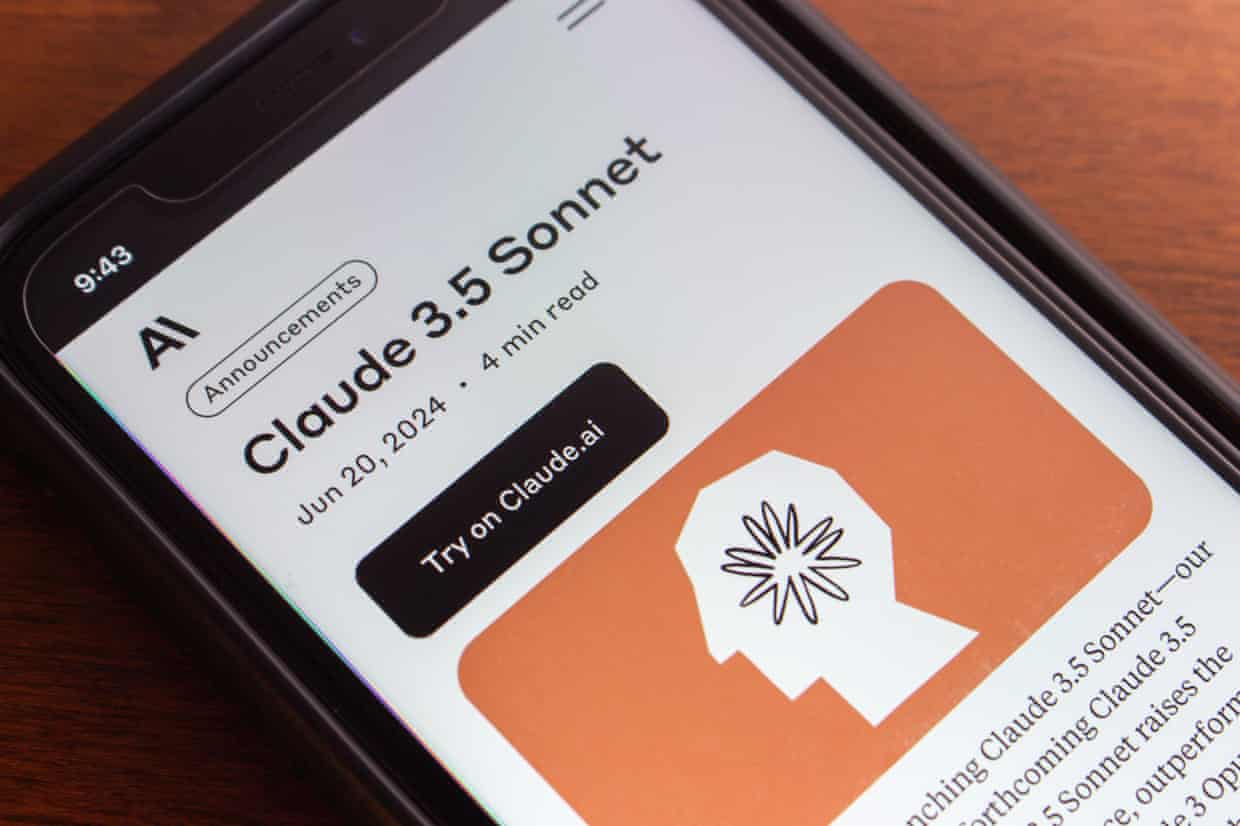
Battle of the chatbots: Anthropic and OpenAI go head-to-head over ads in their AI products
The Seahawks and the Patriots aren’t the only ones gearing up for a fight.AI rivals Anthropic and OpenAI have launched a war of ads trying to court corporate America during one of the biggest entertainment nights of the year.Ahead of the Super Bowl, Anthropic has launched a series of ads going hard at its rival.For the scrawny 23-year-old who wants a six-pack, a ripped older man who is supposed to depict a chatbot suggests insoles that “help short kings stand tall” because “confidence isn’t just built in the gym”. And for the man trying to improve communication with his mom: his therapist prescribes “a mature dating site that connects sensitive cubs with roaring cougars” in case he can’t fix that relationship

Why has Elon Musk merged his rocket company with his AI startup?
The acquisition of xAI by SpaceX is a typical Elon Musk deal: big numbers backed by big ambition.As well as extending “the light of consciousness to the stars”, as Musk described it, the transaction creates a business worth $1.25tn (£920bn) by combining Musk’s rocket company with his artificial intelligence startup. It values SpaceX at $1tn and xAI at $250bn, with a stock market flotation expected in June to time with Musk’s birthday and a planetary alignment.However, there are questions over the deal, such as whether it is good for SpaceX’s non-Musk shareholders and whether the technological premise behind it can succeed

Winter Olympics briefing: Klæbo triumphs again … and is hungry for golden record

Suffocating Scotland key to Borthwick’s plan for England Calcutta Cup success | Robert Kitson

Super League 2026: team-by-team guide to the new season

Qatar’s beIN Sports wins LA 2028 media rights in buildup to 2036 Olympics bid

Jordan Stolz: the American speed skater who could define the Olympics

Ashes fallout continues as Seven faces $7m revenue hit from two-day Tests