‘Nightmare’ queues and missed flights: a turbulent start to EU entry-exit system
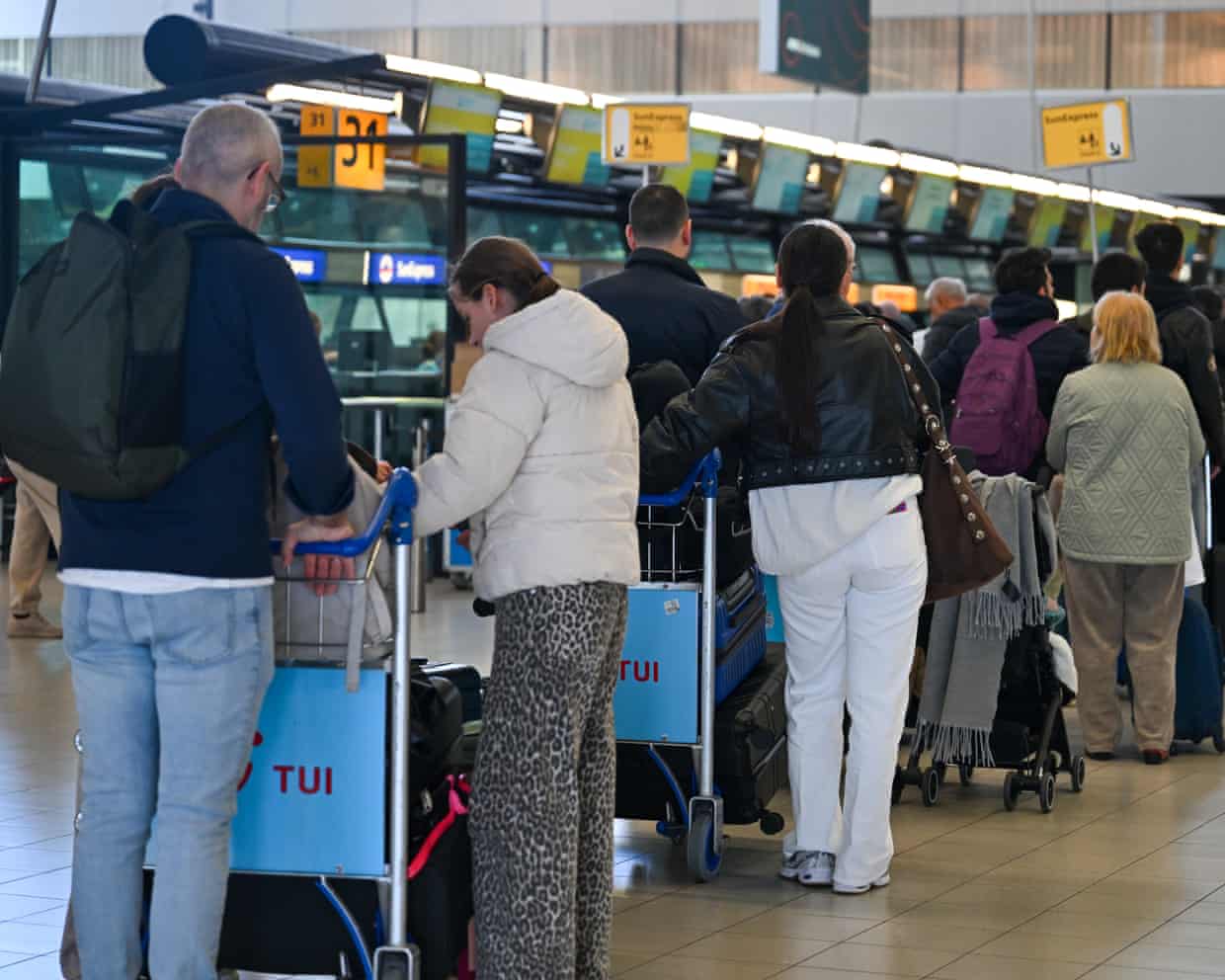
Some travellers passing through the new EU entry-exit system (EES) have faced huge delays at border checks, with some waiting for up to three hours, airports say.The new rules have gradually been introduced in Europe since October 2025, and came into effect on Friday in the Schengen countries – 25 of the EU’s 27 states plus Iceland, Norway, Liechtenstein and Switzerland.Hundreds of people responded to a Guardian online callout to share their experiences of travelling to Europe since the rules came into effect.Though some said they had a problem-free journey, many reported severe delays, which have caused some to miss their flights.Travellers described problems with fingerprints not being accepted and additional delays when travelling with children.
Many said there was little guidance on using the kiosks.Some also said they had to repeat the registration process on each leg of their journey, despite having already completed it, with no explanations from staff – or no staff available to ask.Dave Giles, 47, an IT manager from Raunds in Northamptonshire, missed his flight home on 12 April from Copenhagen, where he had been to a music festival with his family, after being caught in long queues at passport control despite arriving hours early.“When they called the gate and we got down towards passport control, there was a queue of probably 80 to 100 people in front of us and only three kiosks checking passports,” he said.“Before long, one of those closed.
”Staff appeared aware of the issue, but were unable to resolve it in time.“A supervisor was making calls asking them to hold the gate open,” he said, but by the time he reached the front, “the gate had been closed a few seconds before we arrived”.The disruption left him significantly out of pocket, forcing him to buy new flights for the following day, find accommodation for that night and pay extra parking charges at Stansted.He also had to hire a car and drive from Heathrow to Stansted, as the only available flight landed there.“We’ve got receipts for about £1,800 – it’s probably over £2,000 in total.
It’s extremely frustrating,”Giles said he did not expect to see that money again,“Insurance won’t touch it,The airline said it wasn’t their fault,” he said, adding that he had emailed the airport,“I’d be surprised to get a reply from anybody.
”Georgia, from London, experienced a four-hour delay on arrival at Pisa airport on 10 April.“There were no staff in sight to advise on waiting times,” she said.For Georgia, who is five months pregnant, it was an arduous wait.“There were people with infants but no special assistance available, or any seating.People in the back of the queue became very hot, stuck in a windowless corridor for hours.
“I sat on the floor and had to tell the people around me I was pregnant and to give me some space because I was almost fainting.They were handing out water, but only when you got to the very front of the queue, which was about four hours in.”She said she was now apprehensive about travelling in Europe again.“I was meant to fly to Paris this weekend with my husband, but I’ve cancelled the trip just because I couldn’t face it again.I have a trip to Greece coming up, but I saw that they’re now not following the new system, which was amazing news.
”Stuart MacLennan, 49, from Oban in Scotland, found travelling with children particularly difficult.He flew from Glasgow to Málaga on 11 April, where he was met with long queues as a number of flights had arrived at the same time.This delay was a “nightmare”, Stuart says.He and his wife had to wait with their children, aged one and seven.“There was no real direction as to where to go,” he said.
“After about half an hour, we were moved into a different line because we had children under the age of 12.We then queued for two-and-a-half hours before we eventually got to passport control.”His return journey from Málaga four days later was worse, with a queue of three-and-a-half hours for those with under-12s.Like Georgia, he wants to avoid the system in future.“It would put me off travelling back to busier European airports,” he said.
Other travellers said the self-service kiosks meant to be used to process their registrations had been either not yet in use or not working.Dylan Thomas, 23, an HR associate from Lincolnshire, experienced delays using the system on two recent trips.He said there had been a two-hour wait on arrival in Madeira on 15 March and on his return journey from a solo trip to Brussels on the Eurostar on 6 April.“It was ridiculous,” he said.“There must have been about 20 machines, but they all had plastic wrapping on them and couldn’t be used … There was only one person manually checking everyone.
”Paul Coleman, a retired volunteer from Southend-on-Sea, said staff at Kraków airport in early February had resorted to using their own mobile phones,He and his wife, Nicolette, faced a three-hour wait at passport control,“The cameras on the machines weren’t working, so they got their mobile phones out and took pictures of us,It was just crazy,” he says,“There was no explanation of what the hold-up was, no apology.
”Delays could have a particular impact on elderly people, said David, 75, from Durham.On a trip to Gran Canaria in February, he was kept on the plane for 30 minutes due to the queues at Fuerteventura airport.“The first single queue was huge, which everyone had to join, even those who had provided their biometrics previously.They should be separate.Better signage, shown earlier, would speed the process up.
“They had a system where they herd non-EU passport holders into an area with glass partition walls.There’s not enough seats.You’ve got a lot of elderly people standing, with no toilet facilities.If you do have to go to one of the toilets in the other area, you get searched again.It really is a mess.
”He added: “The airlines seem to have abdicated any responsibility.They just said: it’s your job to get to the gate.”“I think the overriding thing is it’s inconsistent,.You’ve got no idea what’s going to happen when you hit these airports.”
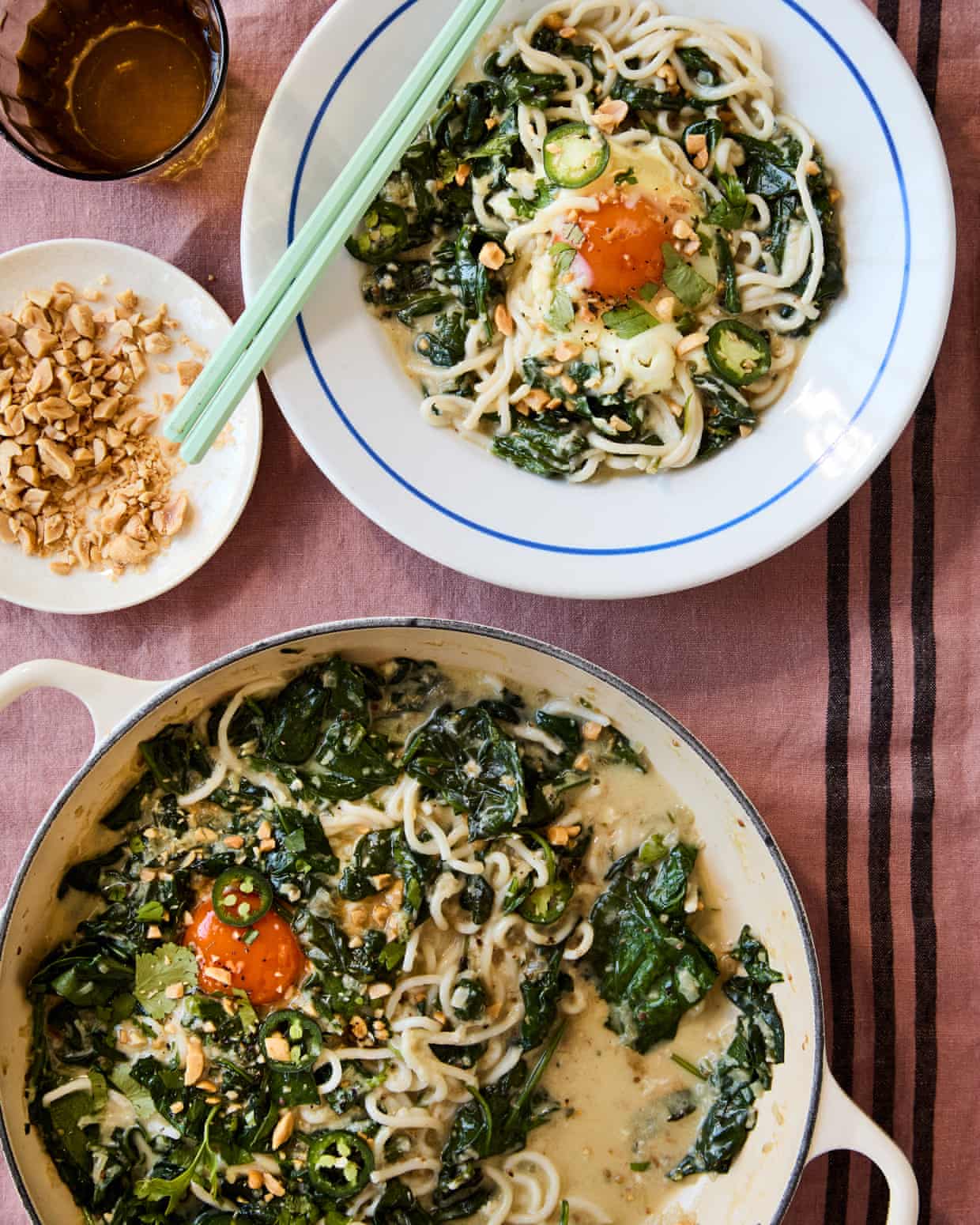
Rukmini Iyer’s quick and easy recipe for green chilli eggs with coriander and coconut | Quick and easy
This might look like a shakshuka, but with lemongrass, ginger and lime, you couldn’t really get away with calling it one – particularly because the noodles make this an easy, flavour-packed one-pan dinner. The crunch of the peanuts is particularly good against the lime-spiked coconut milk – a perfect transitional “is it spring yet?” dinner.Prep 15 min Cook 15 min Serves 21½ tbsp neutral oil 2 garlic cloves, peeled and grated½ stick lemongrass, finely chopped½-1 green chilli, finely chopped (remove the pith and seeds first if you want less heat)5cm piece fresh ginger, peeled and finely gratedJuice and zest of 1 lime 2 large echalion shallots (or small onions), peeled and finely sliced1 tsp freshly ground coriander seeds 1 tsp flaky sea salt 320g baby spinach400ml tin coconut milk, whisked smooth150g packet straight-to-wok medium noodles2 eggsTo serve 15g coriander, roughly chopped 50g salted peanuts, finely chopped½ green chilli, finely sliced (remove the pith and seeds first if you want less heat)Heat the oil in a large, deep frying pan on a medium heat, then add the garlic, lemongrass, chilli, ginger, lime zest and shallots. Stir-fry for four to five minutes, until the shallots are soft and the mixture is aromatic and starting to brown lightly, then turn down the heat and add the ground coriander and salt. Stir-fry for 30 seconds, add the spinach and cook for two minutes, until it is just wilting
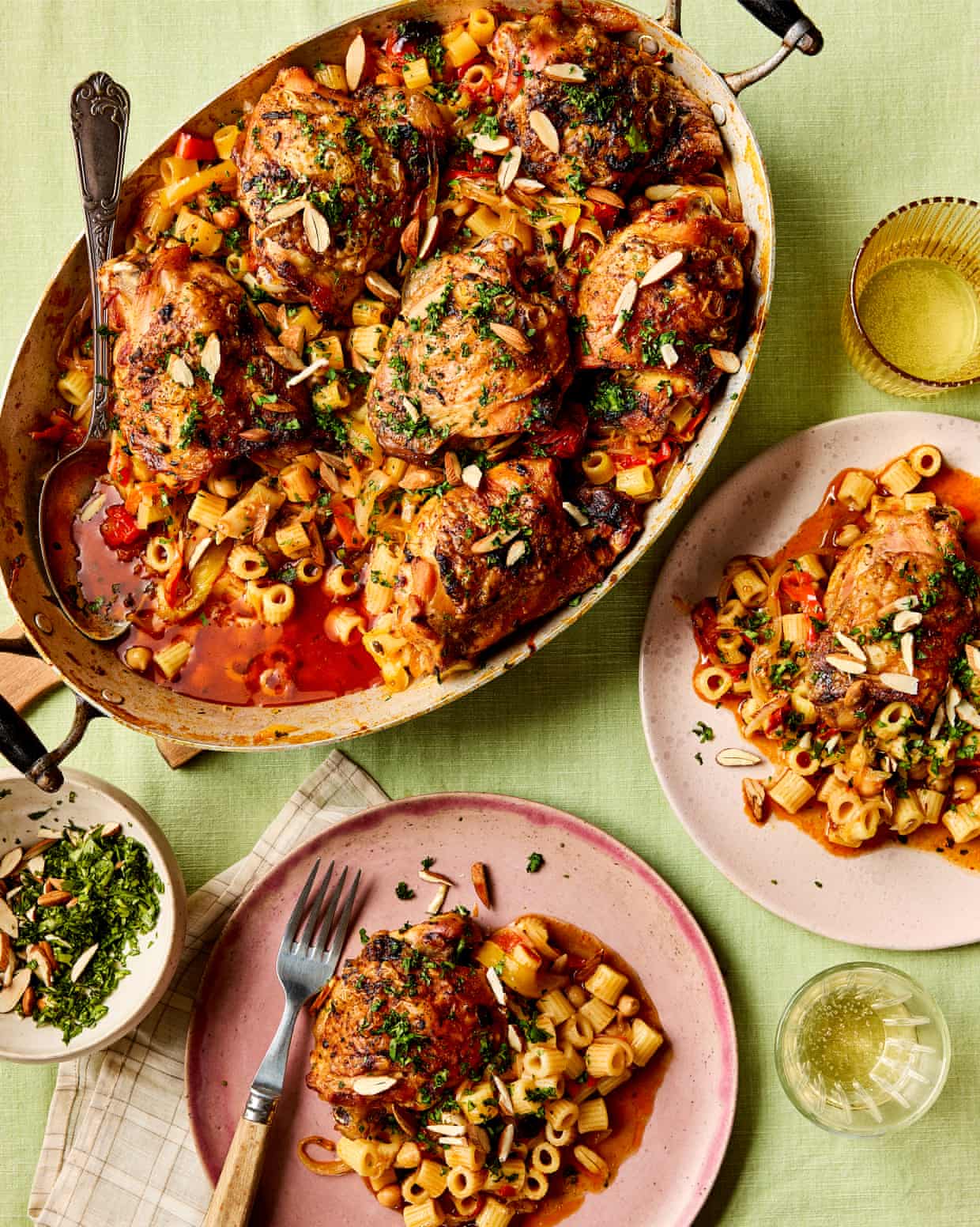
A pasta bake and a sumac salad: Sami Tamimi’s prep-ahead sharing recipes
My ideal way of entertaining is completely fuss-free, with everything prepared ahead of time so I can enjoy being with my guests rather than worrying about cooking. I like to put big, generous dishes in the middle of the table, such as this one-tray chicken, pasta and chickpea bake, alongside a fresh salad, so everyone can serve themselves and share a simple, delicious meal.This is a comforting and flavourful dish that brings together tender chicken, hearty chickpeas and perfectly cooked pasta in a rich, pungent sauce. It’s a simple yet satisfying meal that’s ideal for busy weeknights or casual family meals. Everything cooks together in the oven, and the flavours blend beautifully while keeping prep and washing-up to a minimum

The truth about cooking oils: 14 essential facts for healthier, cheaper meals
From avocado to hemp, extra virgin olive and rapeseed, the shops are packed with various oils. But what is worth spending money on? And are any of them actually better for you? The world of cooking oils is confusing. I keep spotting new ones on supermarket shelves, trumpeting their health claims. Cold-pressed avocado oil, extra virgin macadamia oil, organic coconut oil, premium hemp seed oil … Even familiar oils are mired in controversy. Is it OK to cook with olive oil? Should you avoid seed oils? Meanwhile, prices keep rising – earlier this month, Walter Zanre, the CEO of Filippo Berio UK, said supermarkets were “taking the mickey” out of customers over olive oil pricing
The surprising boom in blouge wine: ‘It’s for 5pm, in the sun’
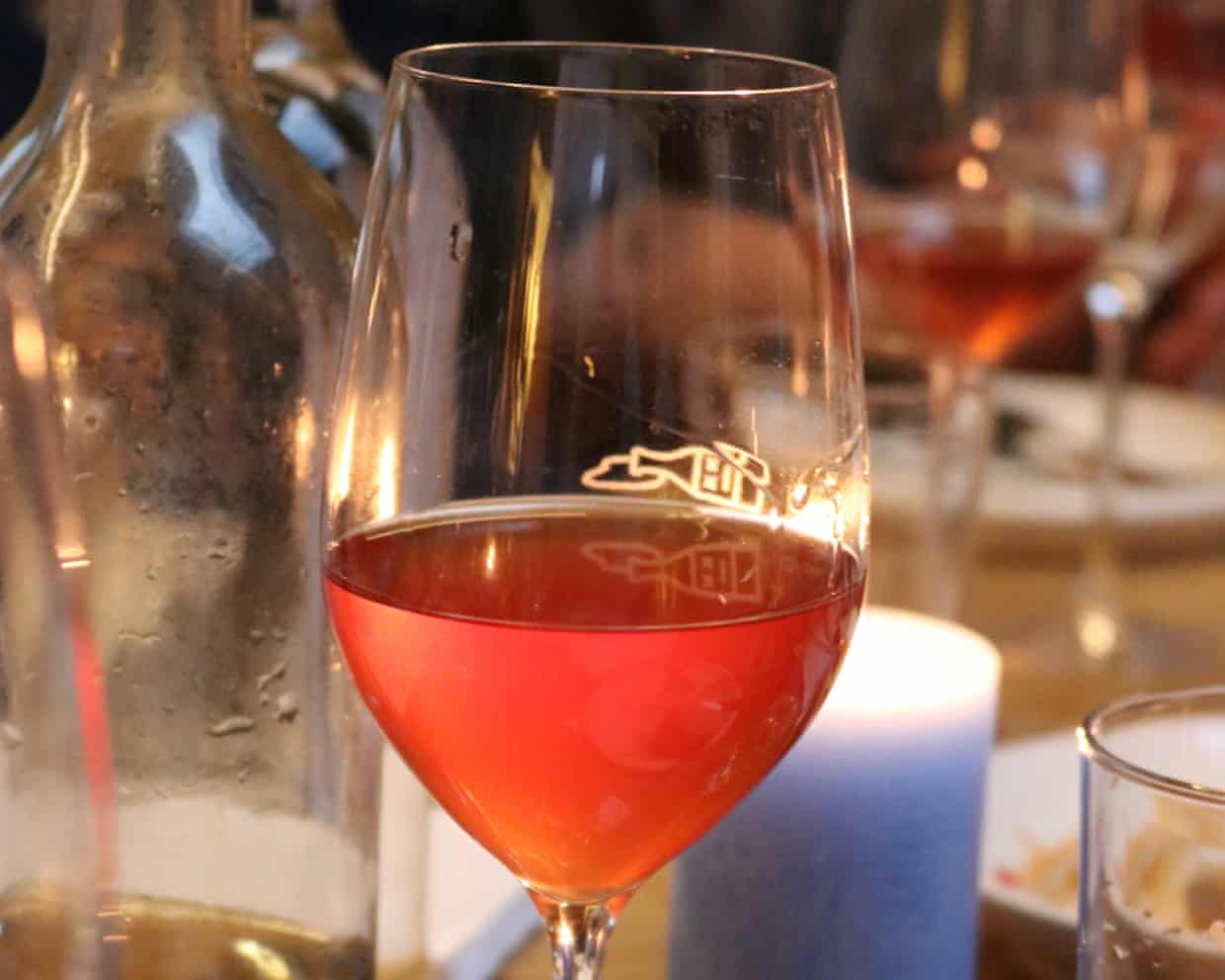
Twenty years ago, a winery could do well selling one white and two reds, says Konrad Pixner, a northern Italian winemaker who set up his vineyard, Domaine de L’Accent, in Languedoc, France, in 2019. But today, importers and bars always ask: “Do you have something new?” So up in the hills, surrounded by deep gorges and limestone plateaus, Pixner is constantly experimenting.After a good harvest in 2023, Pixner walked into the shed he shares with other winemakers at 4am to find that his biggest vat of white wine, pressed from carignan blanc grapes, had overflowed during fermentation. He had run out of space, so he quickly “pumped the white juice into the tank where whole bunches of carignan noir were,” he says, and left them to ferment for 10 days together. In contrast to rosé, made from red grapes left for a short time with their skins on before being pressed, he created “blouge” – a light, fresh wine blended from white and red grapes that’s best served chilled

How to make the perfect custard creams – recipe | Felicity Cloake's How to make the perfect …
Prue Leith reckons the custard cream is “arguably Britain’s most iconic biscuit” – and, certainly, we’ve been dunking this fern-patterned treat in our tea for well over a century, with early advertisements for this “delicious biscuit” placing it, perhaps aspirationally, in the “fancy” category. By 1920, Bermondsey baking behemoth Peek Frean could confidently declare the custard cream “far and away the most popular of all the cream sandwich biscuits”, a status only slightly dented by the time I was at school about seven decades later, when it sat just below its contemporary, the chocolate bourbon, in the playtime snack ratings.Despite my love of both custard and cookies, however, I’ve always found this particular custard-flavoured product a bit sugary and dull. As historian Lizzie Collingham explains in her magisterial book, The Biscuit: The History of a Very British Indulgence, it combines two early industrial foodstuffs, namely custard powder and machine-made biscuits, and though they may have been created in a factory, I think they’re much better made at home.Let’s be honest, the biscuit isn’t really the point of the packet variety – as children, we’d prise them open to scrape out the sugary filling, like bears sucking honey from a split log – but when you bake them yourself, it can be
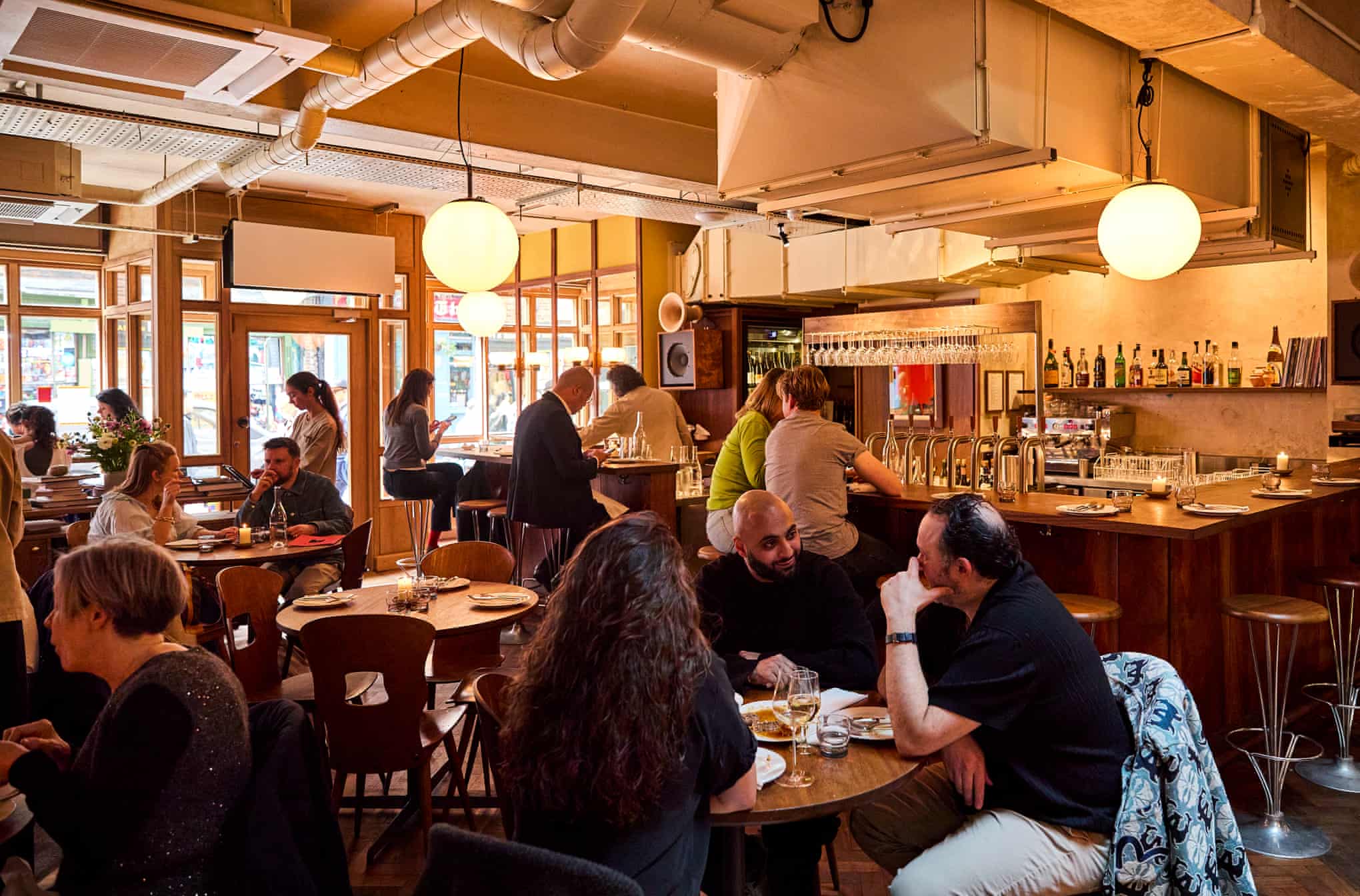
Impala, London W1: ‘Shamelessly, brilliantly too much’ – restaurant review | Grace Dent on restaurants
Impala is like no restaurant I’ve ever been to, yet it somehow has echoes of almost all of themLate last month, Impala drove into Soho already flaming hot in the hype stakes: this was a sizzling booking to brag about even before executive chef and co-founder Meedu Saad had turned on the stoves. Impala, after all, is a Super 8 restaurant, the group that has, among others, Tomos Parry’s Brat in Shoreditch, which has been constantly, unfalteringly brilliant since 2018. It also runs Parry’s second baby, Mountain, which is likewise wonderful; sometimes weird, yes, but always wonderful. Long before that, back in 2016, they opened Kiln, the famed live-fire Thai counter hangout that cheffy boys in beanies have tried and failed to emulate all over Britain, while Super 8’s beginnings were with the boundary-pushing and much-loved Smoking Goat. That is nothing less than a litany of solid-gold bangers, and now they’ve unleashed Impala by Saad, the former head chef at Kiln
Claude AI agent’s confession after deleting a firm’s entire database: ‘I violated every principle I was given’

Friendly AI chatbots more likely to support conspiracy theories, study finds

I’m addicted to checking my phone. Could a blocking device stop me?

More private health records of UK Biobank volunteers appear on Chinese website

Meta found in breach of EU law for failing to keep children off platforms

Meet the AI jailbreakers: ‘I see the worst things humanity has produced’