Live Nation and Ticketmaster had monopoly over big venues, US jury finds
The concert giant Live Nation and its Ticketmaster subsidiary has a harmful monopoly over big concert venues, a Manhattan federal jury has found, dealing the company a loss in a lawsuit over claims brought by dozens of US states.The jury deliberated for four days before reaching its decision on Wednesday in the closely watched case, which helped peel back the curtain on a business that dominates live entertainment across much of the world.Live Nation Entertainment owns, operates, controls booking for or has an equity interest in hundreds of venues.Its Ticketmaster booking platform is widely considered to be the world’s largest ticket-seller for live events, from music to sports.The civil case, initially led by the US federal government, accused Live Nation of using its reach to smother competition – by blocking venues from using multiple ticket sellers or retaliating against them when they did, for example.
“It is time to hold them accountable,” Jeffrey Kessler, an attorney for the states, said in a closing argument, calling Live Nation a “monopolistic bully” that drove up prices for ticket buyers,The jury found that Ticketmaster had overcharged buyers by $1,72 a ticket,The judge still needs to decide total damages,Live Nation insisted it was not a monopoly, saying that artists, sports teams and venues decide prices and ticketing practices.
A company lawyer insisted its size was simply a function of excellence and effort.“Success is not against the antitrust laws in the United States,” David Marriott, an attorney, said in his summation.Live Nation has said in a statement that it plans to appeal the ruling.“We remain confident that the ultimate outcome of the States’s case will not be materially different than what is envisioned by the DOJ settlement,” the statement read.Ticketmaster was established in 1976 and merged with Live Nation in 2010.
The company now controls 86% of the market for concerts and 73% of the overall market when sports events are included, according to Kessler,Live Nation noted in its 2023 securities filings that it is the largest live entertainment company, producer of live music concerts and live entertainment ticketing sales and marketing company in the world,Its business brings in over $22bn in yearly revenue,Ticketmaster has long drawn ire from fans and some artists,Grunge rock titans Pearl Jam battled the business in the 1990s, even filing an anti-monopoly complaint with the US Department of Justice, which declined to bring a case then.
Decades later, the justice department, joined by dozens of states, brought the current lawsuit during Joe Biden’s administration,Days into the trial, Donald Trump’s administration announced it was settling its claims against Live Nation,That agreement required Live Nation to create a $280m settlement fund for states that participated in the lawsuit,The deal also included a cap on service fees at some amphitheaters, plus some new ticket-selling options for promoters and venues – potentially allowing, but not requiring, them to open doors to Ticketmaster competitors such as SeatGeek or AXS,But the settlement does not force Live Nation to split from Ticketmaster.
A handful of the states joined the settlement.But more than 30 pressed ahead with the trial, saying the federal government had not won enough concessions from Live Nation.The trial brought the Live Nation CEO, Michael Rapino, to the witness stand, where he was questioned about matters including the company’s Taylor Swift ticket debacle in 2022.Rapino blamed a cyber-attack.The proceedings also aired a Live Nation executive’s internal messages declaring some prices “outrageous”, calling customers “so stupid” and boasting about the company “robbing them blind, baby”.
The executive, Benjamin Baker, apologetically testified that the messages were “very immature and unacceptable”.The Federal Trade Commission imposed a requirement on Ticketmaster last May to disclose concert ticket fees upfront.In response, the company eliminated a processing fee it would charge at the end of a transaction.But a Guardian investigation found that Ticketmaster raised other fees to make sure it didn’t lose money.“To account for the loss of order processing revenue, we must adjust fees to offset the revenue loss,” Ticketmaster wrote in an email to the Findlay Toyota Center in Arizona last year.
Former regulators told the Guardian the company may be running afoul of the FTC’s ban on misleading fees,US senators have criticized Ticketmaster for what they see as ignoring consumer protection laws,“Ticketmaster has taken every opportunity to drive bait-and-switch practices, manipulate the market and drive up the cost of tickets,” said Richard Blumenthal, a Democratic senator from Connecticut,Associated Press contributed reporting
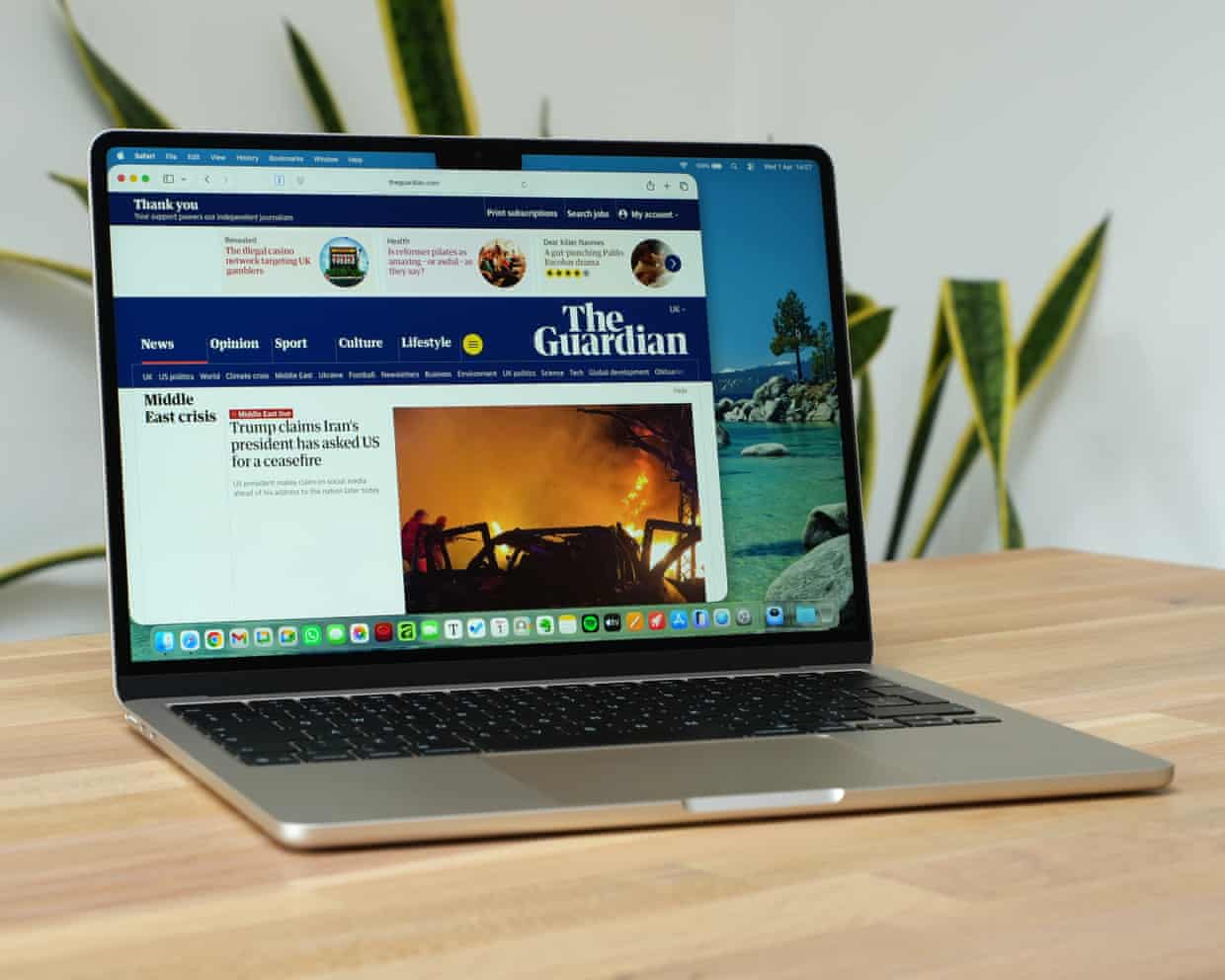
MacBook Air M5 review: Apple’s best consumer laptop speeds up
Apple’s latest MacBook Air is its most powerful yet, comes with double the starting storage and is better than ever for getting work done and as the benchmark for a consumer laptop. But this year the new lower-cost MacBook Neo has muddied the waters.The Guardian’s journalism is independent. We will earn a commission if you buy something through an affiliate link. Learn more

China now the ‘good guy’ on AI as Trump takes ‘wild west’ approach, MPs told
China is now the “good guy” on AI rather than Donald Trump’s US, where the technology is being pursued in a dangerous “wild west” manner, a former UN and UK government adviser has told MPs.Prof Dame Wendy Hall, who was a member of the UN’s AI advisory board and co-wrote a review of AI for Theresa May’s government, told the House of Commons business and trade committee that China was backing multinational attempts to introduce global governance of AI, in contrast to America, which had set up a race between profit-hungry companies that relied on hype.“China is doing some amazing work in AI, and in fact, at the moment they’re acting as the good guys because the US is totally against any regulation and talk about global governance,” said Hall, who is director of the Web Science Institute at the University of Southampton. “It’s all Maga. It’s all: we’re going to win at all costs

Bosses say AI boosts productivity – workers say they’re drowning in ‘workslop’
Ken, a copywriter for a large, Miami-based cybersecurity firm, used to enjoy his job. But then the “workslop” started piling up.Workslop is an unintended consequence of the AI boom. It’s what happens when employees use AI to quickly generate work that seems polished – at least superficially – but is in fact so flawed or inaccurate that it needs to be heavily corrected, cleaned up or even completely redone after it’s passed on to colleagues.For Ken, the problem started after his company’s CEO laid off several of his colleagues and mandated that remaining workers use AI chatbots, saying it would boost their productivity

AI companies make powerful tech – but they’re also savvy marketers
Hello, and welcome to TechScape. I’m your host, Blake Montgomery, the Guardian’s US tech editor, writing to you from my happy village in Pokopia.Artificial intelligence companies make powerful products. They also make outlandish claims.Last week, Anthropic released Claude Mythos, an AI model focused on cybersecurity, which has inspired widespread thrill and panic over how capable it is said to be

Don’t make Marshal Foch’s mistake on AI | Letters
Emma Brockes’ article struck a chord (It’s finally happened: I’m now worried about AI. And consulting ChatGPT did nothing to allay my fears, 8 April). I am reading Marc Bloch’s Strange Defeat, in which the eminent French historian and soon-to-be-executed resistance worker gives a first-hand account of the collapse of the French army in 1940. He attributes the debacle at least in part to a failure of imagination on the part of the French general staff, who were incapable of grasping that technology, and war, had fundamentally changed since 1918.Brockes’ article suggests that we, and our leaders, are suffering from the same inability to understand that a technology which is currently amusingly alarming will develop in less amusing ways – the future Marshal Ferdinand Foch had, according to Bloch, earlier dismissed aircraft as being a toy for hobbyists and not of any military interest
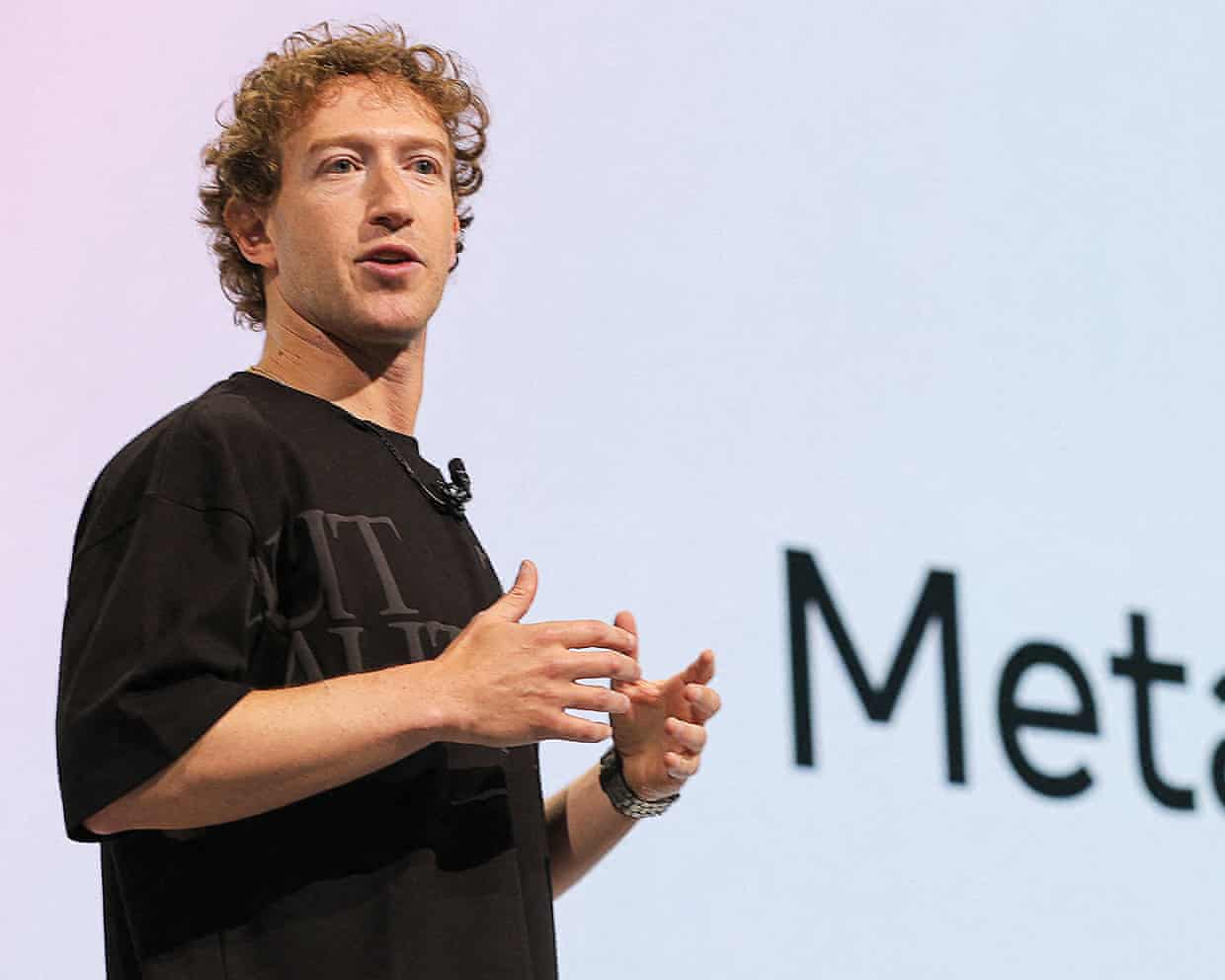
Meta creating AI version of Mark Zuckerberg so staff can talk to the boss
If you are one of Meta’s almost 79,000 employees and cannot get hold of the boss, do not worry. The owner of Facebook and Instagram is reportedly working on an AI version of Mark Zuckerberg who can answer all your queries.The AI clone of Zuckerberg, Meta’s founder and chief executive, is being trained on his mannerisms and tone as well as his public statements and thoughts on company strategy.The rationale behind the project, according to the Financial Times, is that employees could feel more connected to one of the most powerful people in Silicon Valley.The Meta chief has a history of creating and experimenting with digitalised versions of himself

Andy Simpson, the unluckiest England rugby player in history, finally gets his Test cap

Will revival of Crystal Palace’s ‘hallowed turf’ create more athletics history?

The secret is out as Wests Tigers threaten to end 15-year NRL finals drought | Jack Snape

LIV Golf meeting in New York fuels speculation over rebel tour’s future

Sir Craig Reedie obituary

Unhappy Verstappen ‘has to be listened to’ over new rules, says F1 chief Domenicali