40 years on, did Proposition 48 protect US college sports – or punish Black athletes?
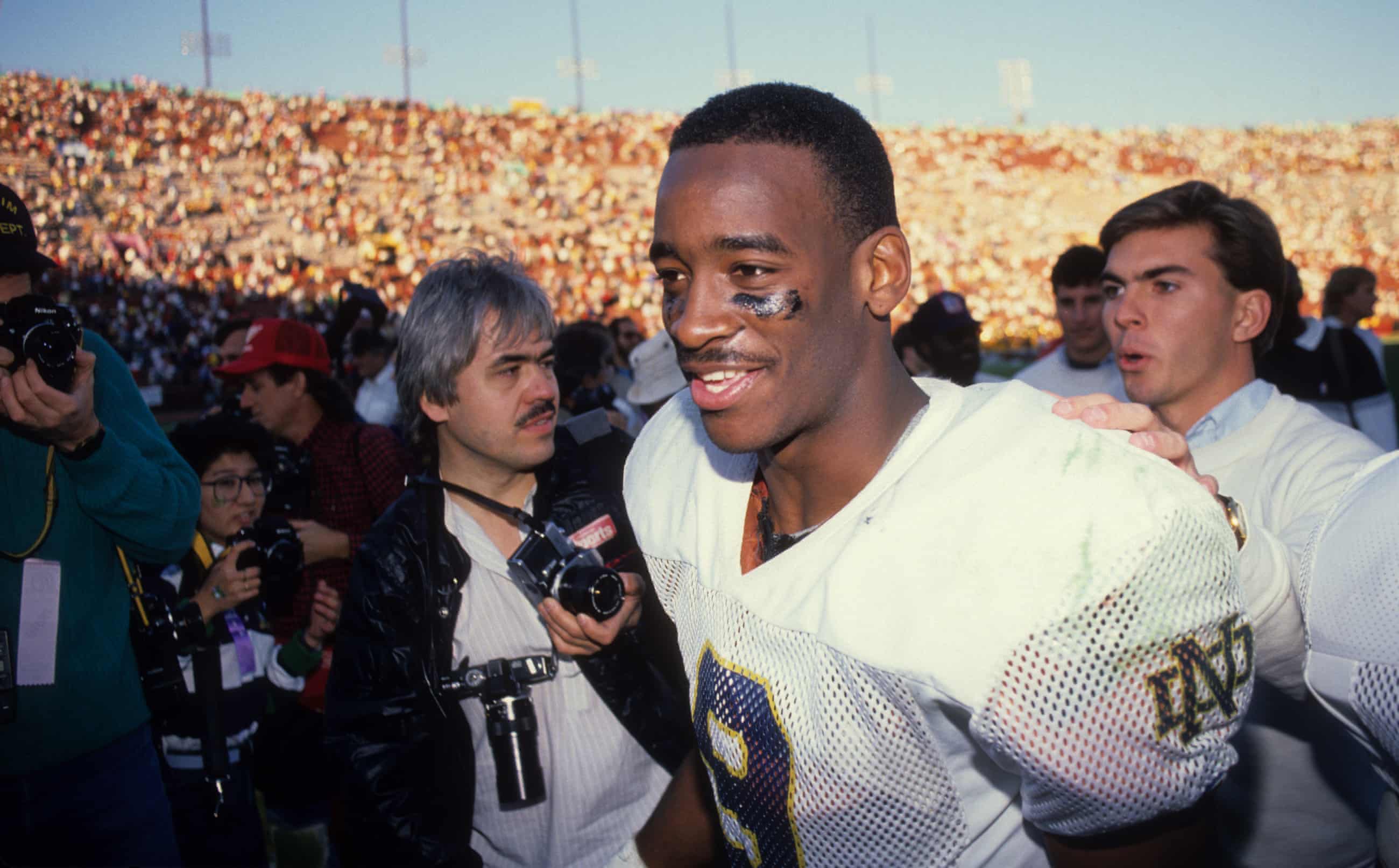
When the NCAA tied eligibility to standardized test scores in 1986, hundreds of recruits were barred from competition.But its legacy is still a subject of debateTony Rice noticed the looks and smirks during his first week of freshman classes in the fall of 1986 at Notre Dame.He had accepted his fate a few months earlier when standardized test results led to the decision that he would not be eligible to participate in collegiate sports his freshman year.But nothing prepared him for this.“People were looking at me,” Rice says.
“They knew I was a football player and they knew why I wasn’t playing,I’m sure they were thinking, ‘Why is he here when he can’t cut it at Notre Dame academically,’”Tuesday marks the 40th anniversary of Proposition 48, approved by member schools of the National Collegiate Athletic Association, which tied freshman athletic eligibility to minimum grade-point averages and standardized test scores,Four decades later, Proposition 48 remains one of the NCAA’s most controversial decisions – a policy its architects said would protect academic standards but which critics viewed as a blunt instrument that disproportionately punished Black athletes and students from underfunded schools,The rule barred hundreds of freshmen from competition based on test scores that many educators questioned as measures of college readiness, forcing athletes like Rice to sit out while facing stigma on campus.
Though the policy has since evolved, its legacy still shapes debates over standardized testing, racial equity, and who gets to define merit in college athletics.Rice wasn’t alone in that stigma.In the fall of 1986, 401 recruits were ineligible to compete that season under the new rule.In football, 81% of players ruled ineligible were Black, according to the NCAA.These student-athletes arrived on campuses as recruited prospects but were immediately marked as academic failures, unable to practice with teams or suit up for games, their scholarships intact but their status uncertain.
“It was kind of hard to sit out that year after playing sports my whole life,” Rice says.“There were three other guys at Notre Dame who had to sit out.We encouraged each other to do our best.”The NCAA said it was trying to improve the academic perception of its student-athletes.The road to Proposition 48 began in the early 1980s when a series of academic scandals – including revelations that some athletes were graduating functionally illiterate – pressured the NCAA to act.
Led by the American Council on Education and college presidents concerned about the integrity of their institutions, the reform movement culminated in January 1983, when delegates at the NCAA convention in San Diego voted 427–93 to approve new academic standards.The NCAA adopted the proposal, setting minimum requirements: a 2.0 grade-point average (on a 4.0 scale) in 11 core courses and a minimum score of 700 on the Scholastic Assessment Test (SAT) or a minimum score of 15 on the ACT.NCAA member schools implemented Proposition 48 on 13 January 1986, and it went into effect with the fall freshman class that year.
But the new policy quickly drew criticism because it disproportionately affected Black student-athletes,While Black students made up roughly 25 percent of Division I athletes in major sports, they accounted for more than 80 percent of those barred under Proposition 48 in its early years,The SAT score requirement of 700 – later raised to 820 – hovered near the national average at the time, yet still eliminated disproportionate numbers of Black recruits, particularly those from under-resourced schools in the South and inner cities,The criticism was swift and fierce,Civil rights leaders, educators, and coaches argued that standardized tests were culturally biased measures that had long been used to exclude Black students from educational opportunities.
The NAACP and the National Alliance of Black School Educators condemned Proposition 48, arguing it would reduce opportunities for Black students without addressing the root problem: unequal K-12 education.They pointed to research showing that standardized tests often under-predicted the college success of Black students, who frequently performed better academically than their test scores suggested.“Proposition 48 appears to be racially discriminating legislation, but it’s actually an economic discriminatory practice,” says Gary “Doc” Sailes, an author and sport psychologist.“Plenty of studies have proven that.It affects poor Blacks, poor females, poor whites and poor Asians.
My research also disclosed that the higher the income in a county, the higher the tax base, the more resources that are available for education.”Supporters of Proposition 48 pushed back, arguing that without minimum standards, colleges were exploiting athletes and setting them up for failure.They pointed to athletes who left school without degrees, unprepared for life after sports.The debate, they insisted, wasn’t about access but about accountability – for both athletes and the institutions recruiting them.The NCAA made changes.
In 1992, the organization replaced Proposition 48 with Proposition 16, introducing a sliding scale that allowed students with higher GPAs to qualify with lower test scores – and vice versa.A student with a 3.5 GPA, for example, could be eligible with an SAT score as low as 620, while a student with a 2.0 GPA would need at least 1,010.The NCAA continued tweaking the requirements over the next two decades.
In 2003, it raised the number of required core courses from 13 to 16.In 2016, it increased the minimum GPA to 2.3 for Division I athletes.Each adjustment was presented as a step toward higher academic standards.But the landscape around Proposition 48 was shifting in ways its architects never anticipated.
By the 2020s, more than 1,800 colleges and universities had made SAT and ACT scores optional for admission, citing the same concerns about bias and inequity that critics had raised decades earlier.The Covid-19 pandemic accelerated that trend, with even elite institutions such as Harvard and Yale modifying their test-score requirements.The NCAA, however, still requires standardized test scores for initial eligibility.Four decades later, the question remains: did Proposition 48 achieve what it set out to do?The NCAA points to improved graduation rates as evidence of success.In 1984, just 52% of Division I football players graduated within six years.
By 2023, that number had climbed to 81% for players who entered college in 2016.Men’s basketball showed similar gains, rising from 41% to 90% over the same period.Since 2002, Black student-athlete graduation rates have increased from 56% to 82% in 2023.When analyzed by sport, Black Football Bowl Subdivision student-athlete graduation rates rose from 54% to 82%, and from 46% to 84% for Black men’s basketball players.For Hispanic/Latino student-athletes the graduation rate rose from 64% to 89% and the rate for all student-athletes went from 74% to 91%.
But researchers caution against drawing a direct line from Proposition 48 to those improvements,The rise in graduation rates across higher education during that period may relate to expanded support services, tutoring programs, and greater attention to student retention,Many academic support systems for athletes today, such as study halls, academic advisors, and progress tracking, emerged not because of Proposition 48, but as schools worked to help admitted athletes succeed,Among those who proved doubters wrong was Rice, who said the situation Proposition 48 put him in helped him in the long run,Sitting out his first year became an unexpected gift.
Without the demands of practice and games, he immersed himself in his studies, determined to prove that the test score that sidelined him did not define his capabilities.“Academically, I had something to prove to my critics and to myself,” Rice says.“Sitting out that first year gave me opportunities other football players didn’t have.I was able to develop relationships with other members of the student body that wouldn’t have happened if I was playing football my first year.It was a blessing.
”Rice became eligible as a sophomore.After a solid junior year, he guided the Fighting Irish to an undefeated 12–0 season, which included victories over Michigan, USC, and Miami.He ended the season with a national title – the school’s most recent one.He received the Johnny Unitas Golden Arm Award and finished fourth in Heisman Trophy voting.He achieved a higher goal after the football season.
He earned his degree in Psychology.“Graduating was important because I didn’t want to let my mother, grandmother, or anyone affiliated with me down,” says Rice, who now works in insurance for the Howden Group.“I didn’t want to be considered a failure.If I’m out in public and someone’s hating on my school, I just show them my ring and tell them, ‘I got two things you don’t have – a national championship and a Notre Dame degree.’”

Nick Kyrgios delights rowdy fans as tennis cultures clash at Kooyong Classic
The sign at the Kooyong Lawn Tennis Club reads “dress code applies”, but on Tuesday the rules were relaxed. Thousands from all walks of life streamed into the leafy grounds in Melbourne’s inner east to enjoy the first day of the Kooyong Classic, where Nick Kyrgios brought his own brand of tennis to the storied Australian Open warmup event.The 30-year-old announced on Friday he would not be playing singles at Melbourne Park, but he had already committed to Kooyong as he works his way back into shape. So under cloudy skies in Melbourne’s mid-afternoon, he found himself across the net from Chinese former world No 31 Zhang Zhizhen, now ranked 362, and returning from injury himself.Kooyong Lawn Tennis Club was the home of the Australian Open between 1972 and 1987 and is – outside Wimbledon – a bastion of tennis’s grasscourt traditions

Watching James Bond play my great uncle Brendan in Giant was surreal and spooky | Sean Ingle
The first time I watched Prince Naseem Hamed train, my jaw couldn’t have dropped any faster if he had hit me with one of his lassoing uppercuts. I had followed all his fights on TV, of course. But to see him in the flesh in September 1994, a year before he became world champion, was an altogether more visceral and mesmeric experience.Hamed’s punches sounded like firecrackers welcoming in the new year as they smashed into the pads. He was almost impossible to hit

Alyssa Healy shifted the dial to propel women’s cricket to its modern heights | Megan Maurice
“I’m not cut out for this.”This is not a sentiment that anyone who has observed Alyssa Healy’s long and storied career would have associated with such a champion of the game. But it was this thought that hit Healy early in her career for Australia, trying her hand at opening for her country for the first time and finding herself unable to hit the ball off the square, that demonstrates the depths of her humility and humanity.Always an immense talent growing up, Healy also had the blessing and curse of a famous surname. A blessing in that it ensured doors were always open for her, but a curse in the form of giant expectations that hung like a dark cloud above her head at all times

Mark Allen advances past Williams in Masters despite battle with food poisoning
Mark Allen shrugged off a bout of food poisoning to beat Mark Williams 6-2, winning five successive frames, and book a Masters quarter-final with Judd Trump or Ding Junhui, who play on Wednesday.Speaking to the BBC, Allen, the 2018 champion, said: “I prepare properly for these events, but I couldn’t prepare for this at all as I’ve been lying in bed all week with food poisoning. I just thought: ‘Go out there and give my best.’ I wouldn’t have had much left if it had got much closer.”Zhao Xintong stepped up his quest to complete snooker’s triple crown after breezing into the quarter-finals
Swiss resort Crans-Montana, scene of fatal bar fire, will be an Olympic venue in 2038
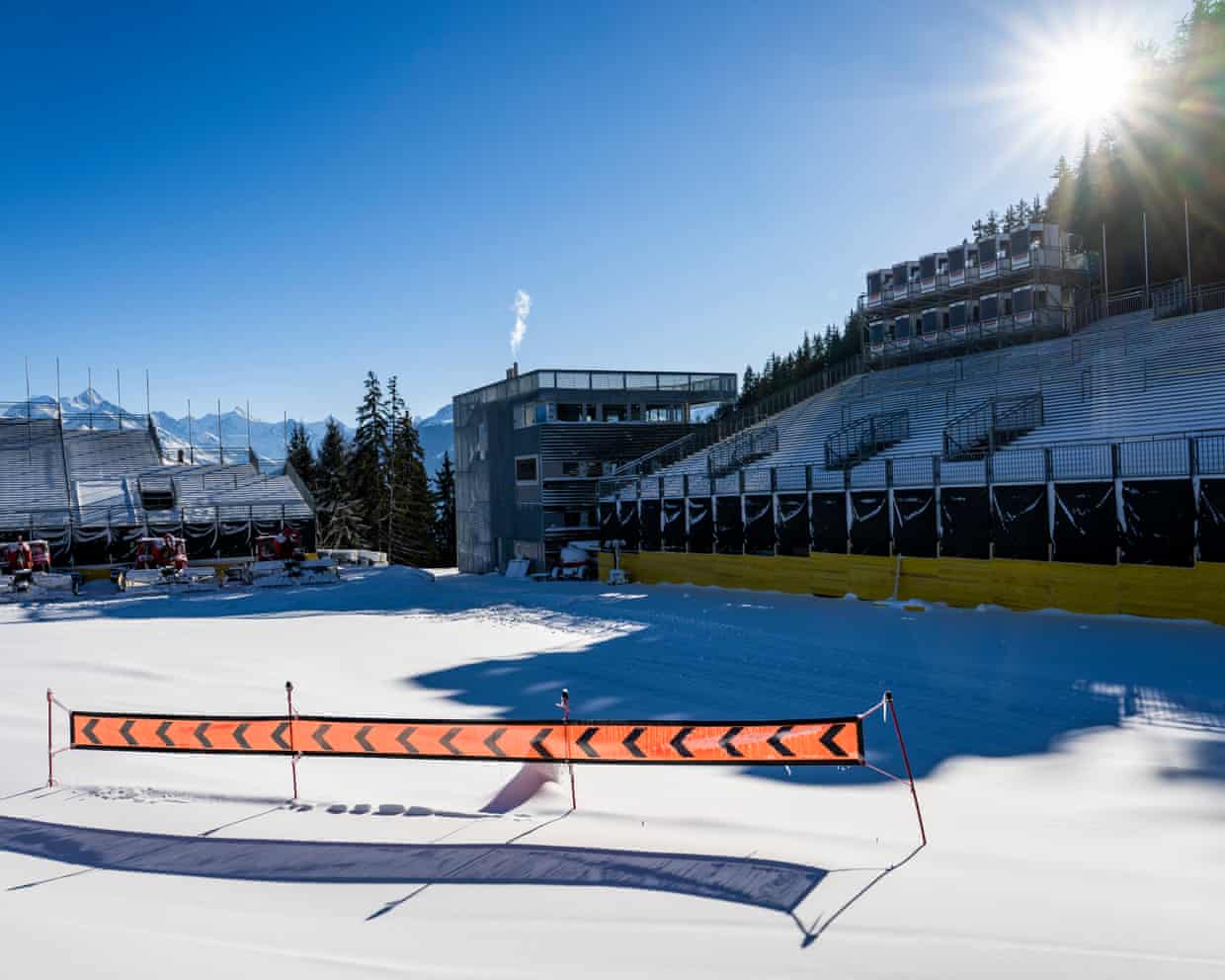
The Swiss ski resort of Crans-Montana, which was the scene of a fatal bar fire on New Year’s Day, is set to host the Alpine ski races at the 2038 Olympics.Less than a fortnight after the blaze at Le Constellation that killed 40 and injured 116 other people, officials for the bid have said that the municipality is a key site in their proposals for the Games in 12 years’ time.Switzerland has been granted privileged status by the International Olympic Committee, which means no other country will be allowed to bid while it finalises its proposal. Barring an unexpected development, therefore, it will host the 2038 Games.On Monday organisers confirmed that Crans-Montana would stage events as part of its plan to host competitions across the country in 12 years’ time in order to avoid taxpayer spending on construction
Olympic tensions flare as US skeleton star alleges Canadian coach rigged qualifying event
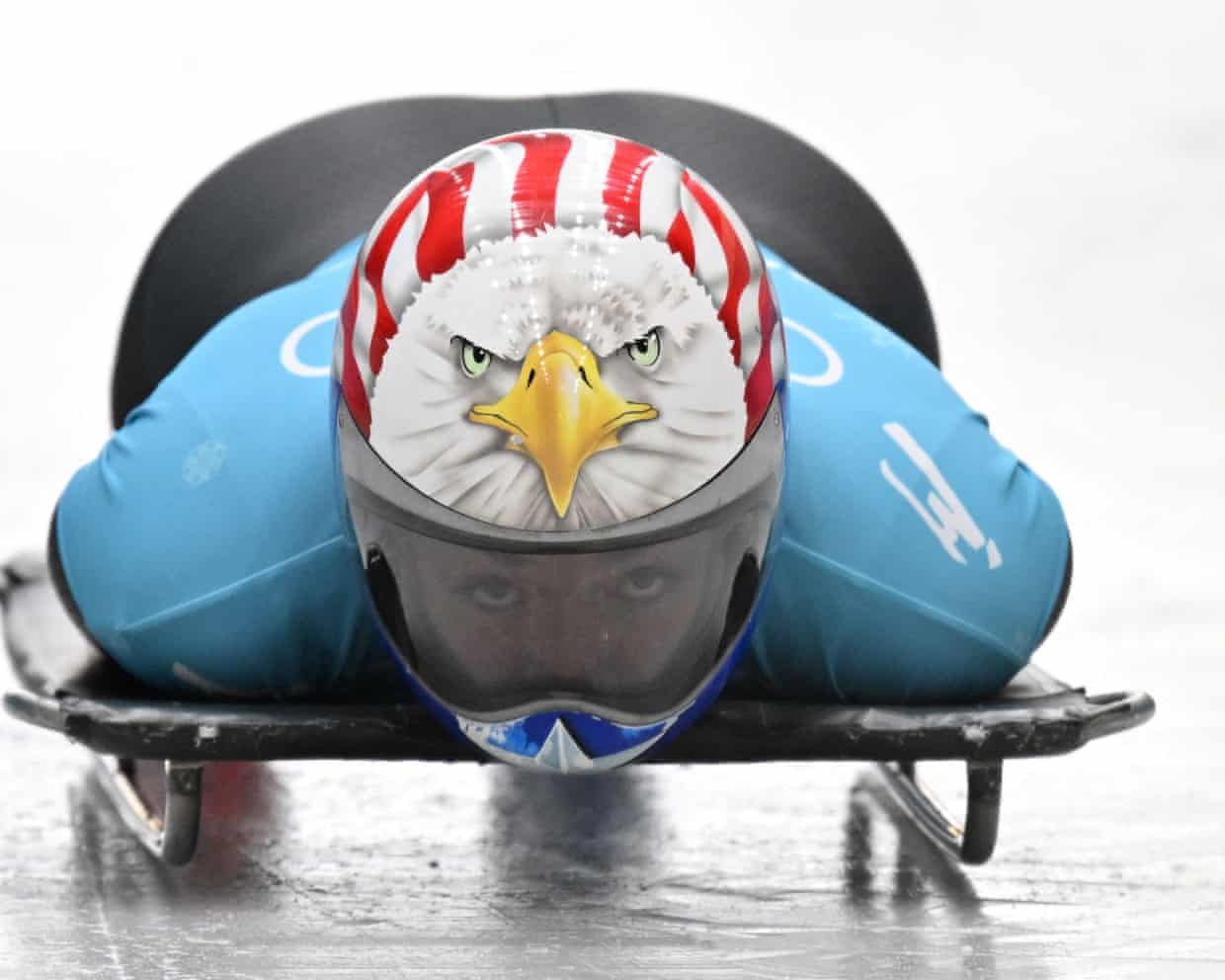
Sporting tensions between the USA and Canada have erupted once again, this time in skeleton as next month’s Winter Olympics approach.The USA’s Katie Uhlaender, a five-time Winter Olympian in skeleton, has accused the Canadian team of depriving her of a place at the Milan-Cortina Games by manipulating a qualifying event over the weekend.Uhlaender says that Canada deliberately pulled four of its six athletes from the race in the North American Cup in Lake Placid, New York. That meant the field was reduced to under 21 athletes and fewer qualifying points were on offer due to the lack of competition. Uhlaender believes the Canadian team did so to prevent American athletes from catching them in the standings for Olympic qualifying

UK threatens action against X over sexualised AI images of women and children

‘Dangerous and alarming’: Google removes some of its AI summaries after users’ health put at risk

Elon Musk says UK wants to suppress free speech as X faces possible ban

Behind the Somali daycare panic is a mother-and-son duo angling to be top Maga influencers

Elon Musk’s X threatened with UK ban over wave of indecent AI images

Robots that can do laundry and more, plus unrolling laptops: the standout tech from CES 2026