Mobile phones to be banned in schools in England under new plans
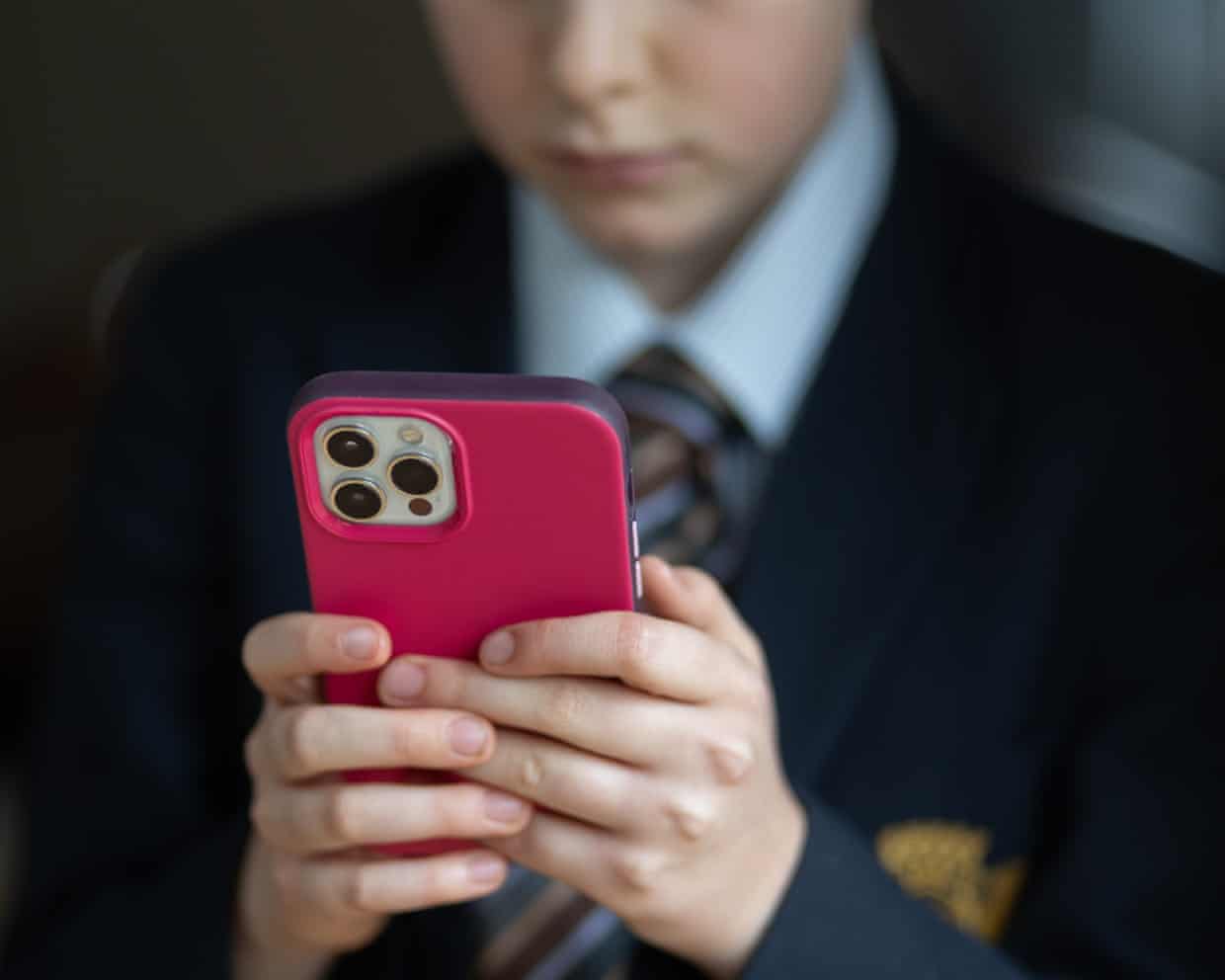
A ban on mobile phones in schools in England is to be introduced by the government to ensure that “critical safeguarding legislation” is passed.The government will table an amendment to the children’s wellbeing and schools bill in the House of Lords after the bill was held up by peers on opposition benches.It will make existing guidance on mobile phone bans in schools statutory, a move that ministers have resisted until now.The government had consistently argued that the vast majority of schools had already banned mobile phones, and that there was no need to add a legal requirement.They finally capitulated, however, describing it as “a pragmatic measure” to get the bill through.
Announcing the move on Monday, the education minister Jacqui Smith told the Lords: “We recognise the strength of feeling on this issue, both in this house and beyond.”“Notwithstanding the fact that we think the guidance we already have in place provides headteachers and schools with a range of approaches to be able to deliver the objective that we all share, we are committing to tabling an amendment in lieu which will place the existing guidance on a statutory footing on the face of the bill, creating a clear legal requirement for schools.”“We’ve listened to concerns about how we support headteachers in delivering on this policy and we have listened to parliament.”The bill is regarded by many as the biggest piece of child protection legislation in decades and includes proposals for a compulsory register for children who are not in school, a crackdown on profiteering in children’s social care, and a “single unique identifier” to help agencies track a child’s welfare.Pepe Di’Iasio, the general secretary of the Association of School and College Leaders, said: “A statutory ban on mobile phones in schools doesn’t really change very much.
Most schools already have policies in place under which pupils are not permitted to use mobile phones.“What would really be helpful is for the government to make funding available to schools for the safe and secure storage of mobile phones, such as storage lockers or locked pouches.”The education secretary, Bridget Phillipson, has previously written to headteachers in England to stress that schools should be phone-free throughout the entire school day, but the guidance has been non-statutory.Research from the children’s commissioner for England last year found that 99.8% of primary schools and 90% of secondary schools already had policies in place that limited or restricted the use of mobile phones during the school day.
However, many headteachers, dealing with challenges from parents, will welcome the move, which will provide clarity in classrooms.Ministers have only grudgingly agreed to it.A government spokesperson said: “The repeated attempts by the Conservatives and Liberal Democrats to kill off some of the most far-reaching child protection legislation is utterly abhorrent, and a dismal failure of some of the most vulnerable children in our country.“After more than a decade where children’s social care and the system of child safeguarding was left to rot by these parties in office, and that saw horrific child abuse cases such as those of Arthur Labinjo-Hughes, Star Hobson and Sara Sharif, this government moved quickly to fix what was broken – only to be thwarted at every turn by unelected opposition peers.“The blocking of measures in this legislation, which includes direct manifesto commitments, such as the introduction of free breakfast clubs and limits to branded school uniform, saving families hundreds of pounds, by unelected Conservative and Liberal Democrat peers is a complete affront to democracy.
”A Department for Education spokesperson said: “We have been consistently clear that mobile phones have no place in schools, and the majority already prohibit them.This amendment makes existing guidance statutory, giving legal force to what schools are already doing in practice.”A Liberal Democrat spokesperson said: “We promised to put children’s wellbeing before party politics, and by dragging the government kicking and screaming to adopt our mobile phone ban in schools, the Liberal Democrats have delivered a major win for pupils, teachers, and families.“Now the government must ensure all schools have the necessary support and funding to manage this transition, so that every classroom can be a smartphone-free zone.”Paul Whiteman, the general secretary of the National Association of Head Teachers, said: “Statutory guidance will give school leaders the clarity they need to implement a ban, and will remove any ambiguity or differences between how schools approach smartphone policies.
”
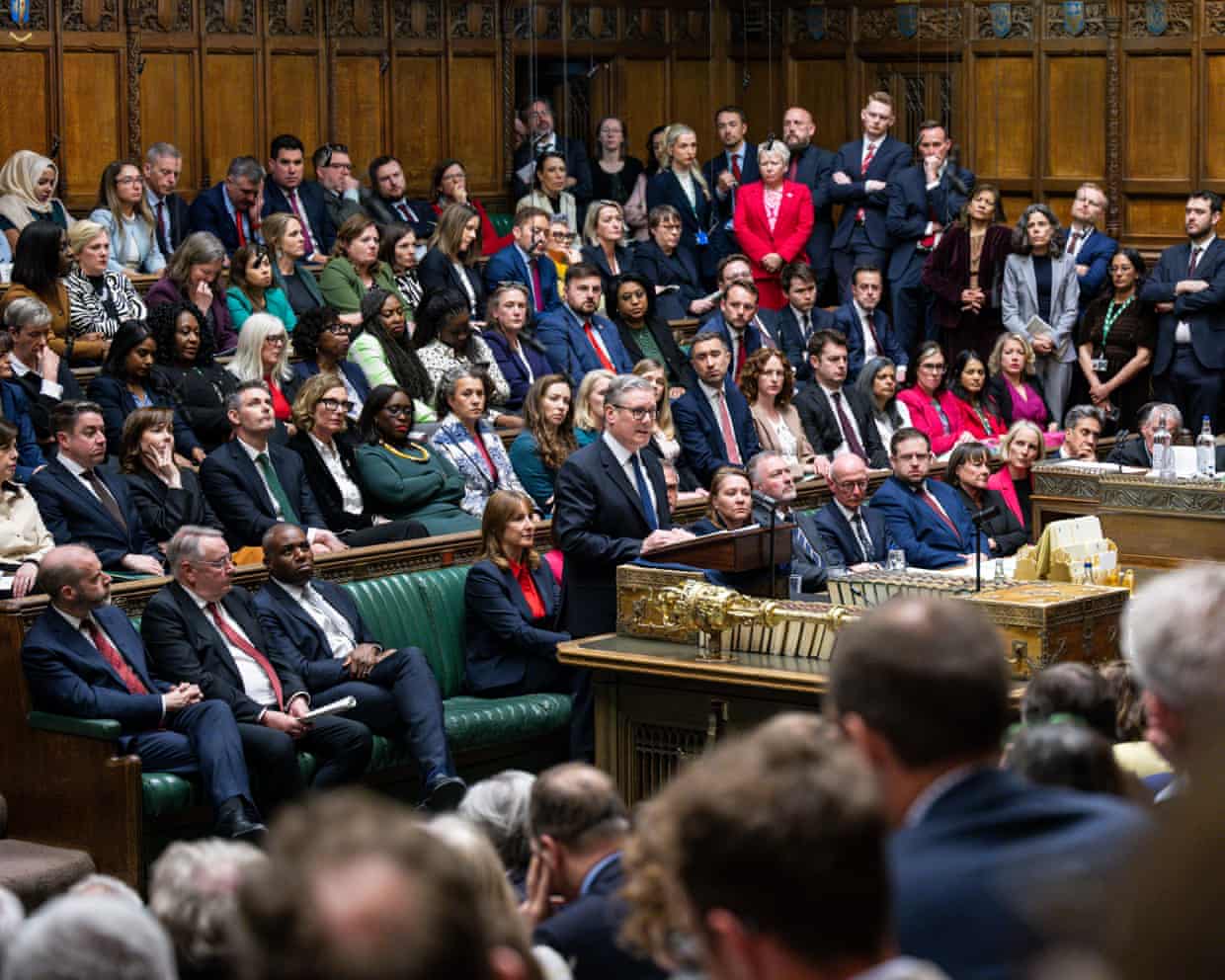
Starmer says it ‘beggars belief’ he wasn’t told about Mandelson vetting failure as he faces down the Commons – UK politics as it happened
It wasn’t much of a win, but as Keir Starmer heads back to Downing Street he will probably count that as a sort of success. Labour MPs did not turn on him; there was no one on his side calling for his resignation, and those who did speak out were mostly from the Corbynite left (whose views are discounted by No 10 anyway), and who were more keen to aim their fire at Morgan McSweeney and Peter Mandelson.If Kemi Badenoch thought there was more mileage in this, she could have tabled a no confidence motion on this which would have to be debated tomorrow, but she didn’t. She can be brutal in the Commons, but her speech today did not cause the PM any difficulties.Last week she was saying he was clearly lying
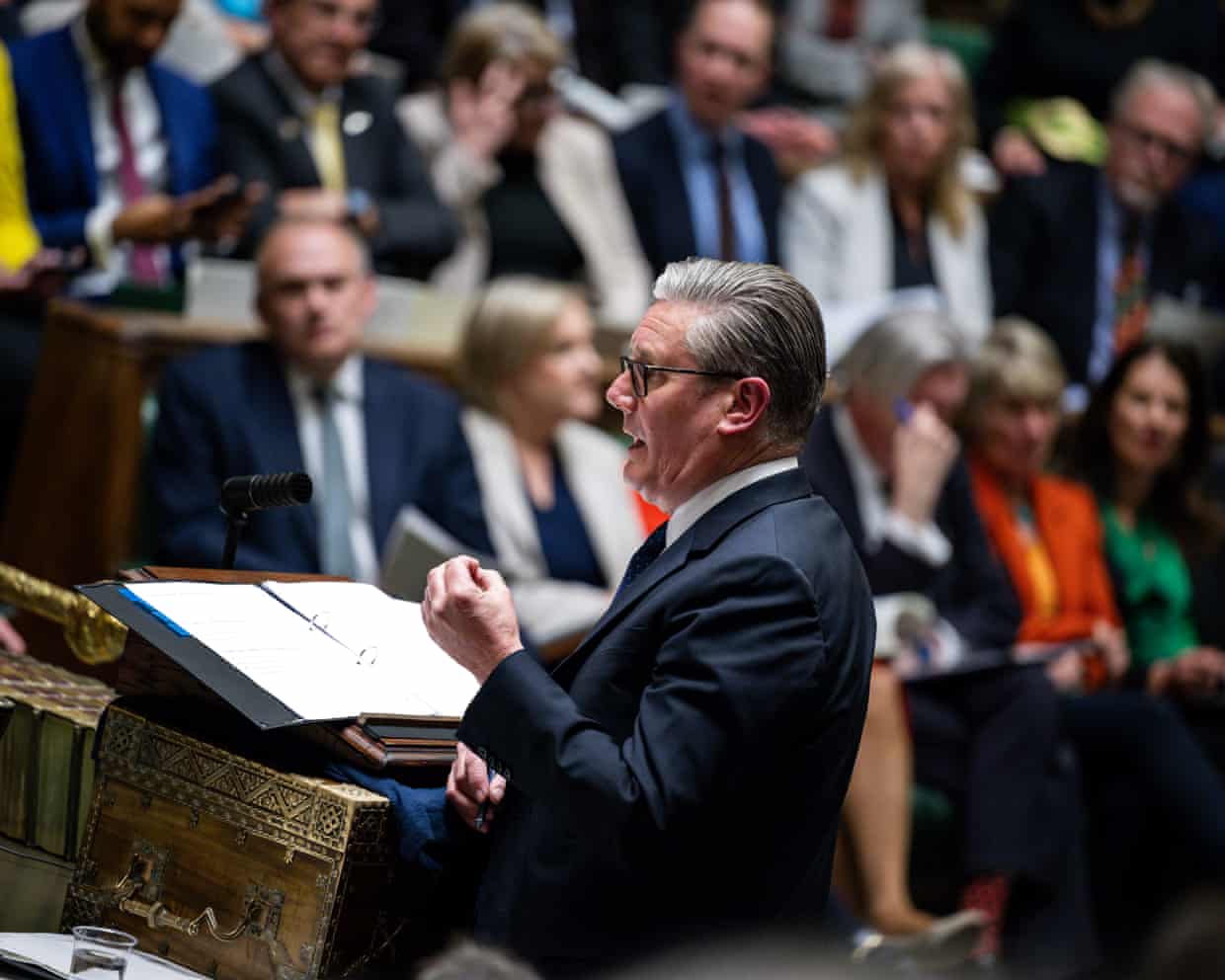
What Starmer said, and didn’t say, in the Commons about the Mandelson saga
Keir Starmer has laid out a detailed timeline of events leading up to Peter Mandelson being refused security vetting and how the message was not passed to No 10. Here’s what his statement did tell us – and what it was more vague on.double quotation markI will now set out a full timeline of the events in the Peter Mandelson process.”In a statement that leaned heavily on Starmer’s time as a lawyer, and was framed almost as a prosecution opening case against the Foreign Office and its now-ousted head civil servant, Olly Robbins, the PM set out events from 18 December 2024, when the decision to appoint Mandelson was confirmed, to last Tuesday, when he finally learned that security vetting had been initially refused.This included moments when, Starmer argued, he or others should have been told about Mandelson initially being refused security vetting: the initial refusal; when the foreign affairs select committee was assured that normal procedures were followed; and when Starmer began a wider review into vetting this year
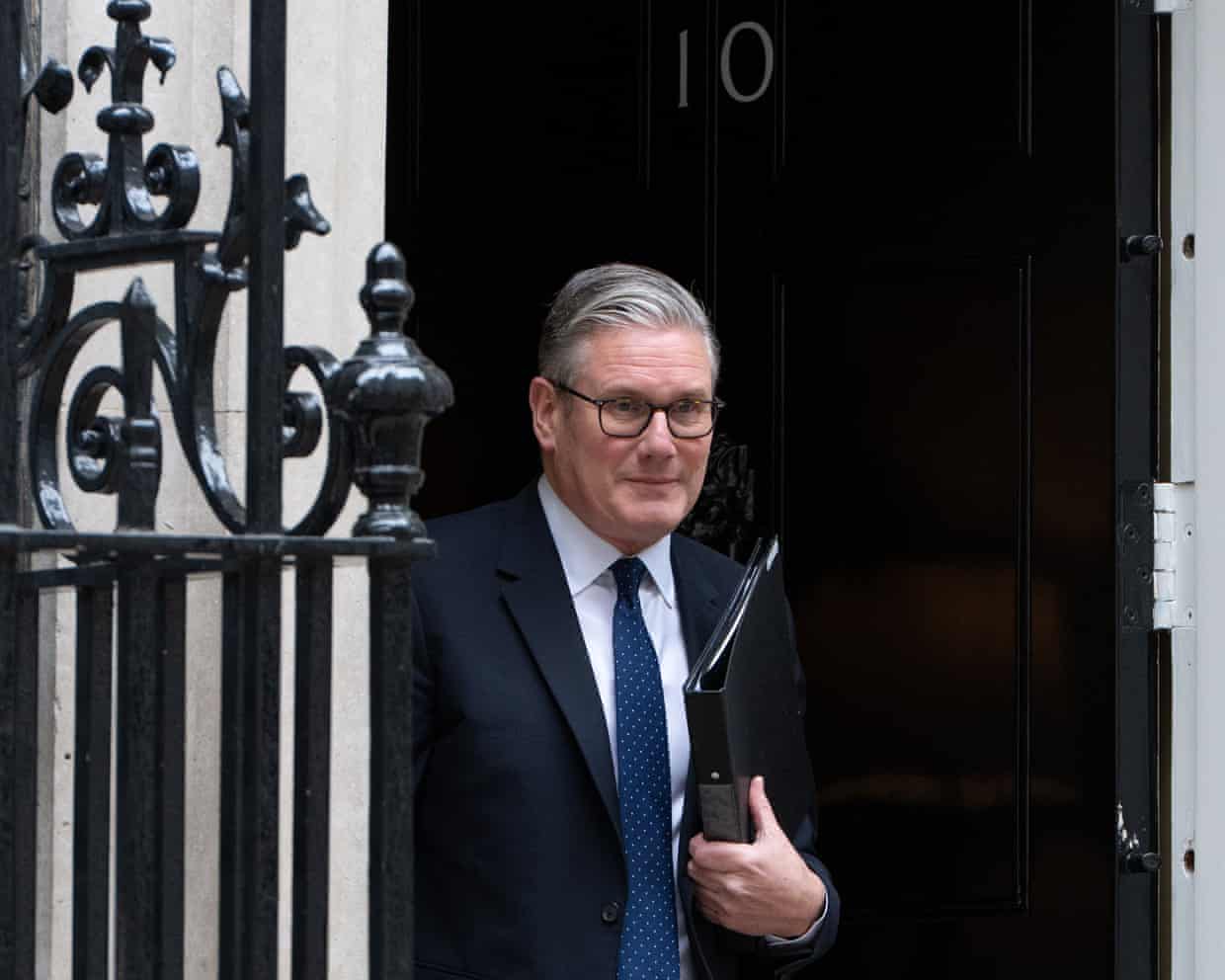
Starmer the Incurious asks no questions and sees no Mandy-shaped red flags
Things could be worse. The prime minister can still catch a break. Some had called Monday’s Commons statement Keir Starmer’s judgment day. But that was a category error. Many Labour MPs had long since made up their minds

Is Richard Tice’s picture AI-manipulated? Here are five giveaways
After Richard Tice posted a picture of an apparent Reform campaign event on Sunday, experts and social media detectives took a closer look and concluded from a variety of telltale signs that the image had either been edited or generated by artificial intelligence. Here are some of the elements that critics called into question.One woman has six fingers on one hand and extra long ones on the other. The man in the beige jacket has three extremely long fingers which look like sausages. AI often gets fingers wrong

Mandelson vetting saga reveals flaws in Starmer’s judgment, not process | Letters
The emerging account of Peter Mandelson’s appointment as US ambassador raises a question not of process, but of judgment (Revealed: Mandelson failed vetting but Foreign Office overruled decision, 16 April). The prime minister was warned repeatedly. Briefings in November and December 2024 flagged reputational risks, including well-documented associations and potential exposure if the appointment went wrong. Keir Starmer’s national security adviser raised concerns directly. Yet the appointment proceeded at pace
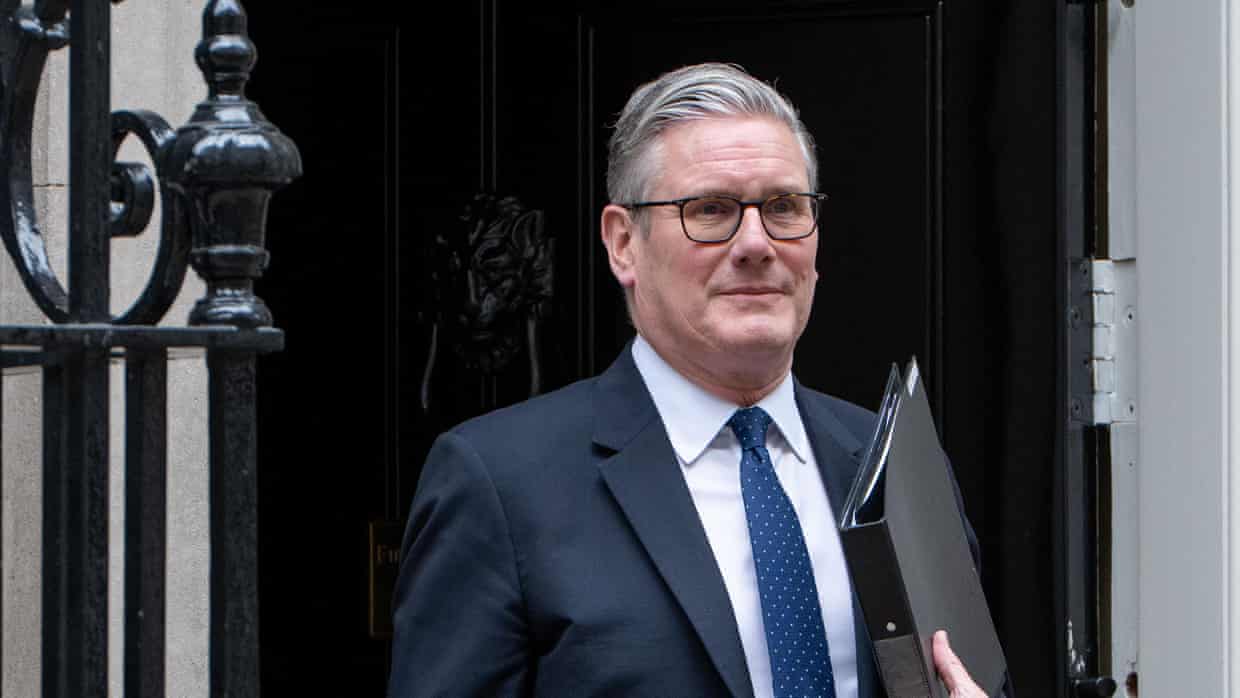
Starmer orders inquiry into any security concerns over Mandelson’s tenure in US
Keir Starmer has ordered an investigation into any security concerns relating to Peter Mandelson’s tenure as UK ambassador to the US, as he set out a series of practical measures in the wake of the controversy over Mandelson’s vetting.Setting out to the Commons what he called the “frankly staggering” way that Mandelson was appointed to the job despite initially being turned down for security vetting, Starmer said he had ordered a full review into the vetting system.He went on: “Separately, I have asked the government security group in the Cabinet Office to look at any security concerns raised during Peter Mandelson’s tenure.”The prime minister also set out how rules had been changed to make sure that, as happened with Mandelson, someone could not be publicly named as an ambassadorial appointee before they were vetted, even for a political choice like Mandelson.“I want to make clear to the house that for a direct ministerial appointment it was usual for security vetting to happen after the appointment, but before starting in post

Why time is not on big-spending Joorabchian’s side in make-or-break season

Brian McDermott to be named new England rugby league head coach this week

London to host historic first team time trial for Tour de France Femmes in 2027

Floods, baskets and Billie Jean King: how the rough and tumble WBL set the stage for the WNBA

Jack Draper faces French Open fitness race as knee injury worries deepen

LeBron James is 41. And he’s somehow still carrying his team in the playoffs