The Guide #220: The best things we watched, read and listened to this year – that weren’t from 2025

We’ve just inched into December, which of course means Christmas list season.Already, five days in, plenty of publications have shared their cultural best-ofs for 2025 – you can read the Guardian’s best books and songs of the year right now, with our countdowns in TV, film and music coming very soon.Meanwhile, many of you will have been bombarded on social media by screengrabs of your colleagues/friends/enemies’ Spotify Wrapped playlists (though Mood Machine author Liz Pelly has written pretty convincingly about why you shouldn’t share yours).This year’s Wrapped includes a “listening age” feature, which uses the release dates of the music you streamed to determine how horribly out-of-date your tastes are – revealing to some users that they are, in fact, centenarians.But there is, of course, no shame in taking a break from the deluge of new releases to catch some forgotten or not-forgotten classics.
So in this week’s Guide we’re sharing some of the best non-2025 culture we watched, listened to, read or played in 2025 …FilmFuelled by the appreciation for old films on Letterboxd and podcasts like Blank Check and The Big Picture, revival houses or repertory cinemas are having a moment on both sides of the Atlantic.I had a great time watching Jean-Pierre Melville’s noir classic Le Samouraï (available to stream on Prime Video, amazingly), with Alain Delon slinking about Paris in a trenchcoat on the big screen.And was pretty blown away seeing Billy Wilder’s The Lost Weekend (available to rent on most streaming services) for the first time, a movie that may have received a bit of a viewing bump through the Oscars success of Anora, which joined The Lost Weekend in being one of four Palme d’Or winners to go on to win best picture (The other two? Parasite, of course, and 1955’s Marty, which is still on my to-view list.)In a big year for Richard Linklater (he has two films, Blue Moon and Nouvelle Vague, now out in the US), I revisited his breakthrough, Slacker (sadly not on streaming, but the DVD is pretty widely available).A trippy amble round early 90s Austin, Texas, in which you encounter a series of often defiantly odd (and defiantly unemployed) characters, it’s a film I absolutely loved in my own Slackerish early 20s, but worried I might have grown out of today.
Not a bit of it: it’s still completely mesmerising, a world that you want to climb through the screen and live in.GMTelevisionWith Adolescence dominating this year’s TV landscape, I stumbled on an old British drama with a lot of parallels: Jake’s Progress (Channel 4), Alan Bleasdale’s 1995 drama about a dysfunctional middle-class Liverpool family struggling to deal with a pyromaniac child.It is quite of its time – both the acting and the score are grand – but it is compelling and, like all of Bleasdale’s stuff, it avoids the easy and cliched for something perceptive and lived-in.Meanwhile, while we already did a pretty exhaustive deep dive into the old documentaries available on streaming earlier this year in the Guide, there’s one more non-2025 documentary on iPlayer that I want to flag, though it is a bit of a cheat really: S4C doc Ffa Coffi Pawb! was released just eight days before 2025 began.It’s worth a look though, offering up an exhaustive, entertaining account of the DIY, defiantly anti-commercial Welsh language music scene that bubbled up in the 1980s, and launched the career of a young Gruff Rhys (later of Super Furry Animals fame).
The archive footage is brilliant: clips of sweaty gigs in the back rooms of north Walian pubs, and a clip of a pre-puberty Rhys telling a Welsh chatshow host about the punk fanzine he just made,Fantastic,GMMusicReading an article by an indie record label boss on the desperate state of the industry is an unlikely way of discovering some music, but Jagjaguwar founder Darius Van Arman’s piece for Stereogum did introduce me to a great record his label put out in their early days: Drunk’s A Derby Spiritual (1996), a backwoods indie-folk album sat somewhere between Bonnie Prince Billy and Neutral Milk Hotel, which Van Arman says has received a grand total of $100 in streams in the 15 years it has been on Spotify,Bleak! Give it a listen,Elsewhere, the new album by Zamrock veterans Witch got me digging into their 70s heyday.
Their self-titled album, the last one before they splintered and became a disco group, is full of great, summery, psych-tinged tunes.Finally, the best “needle drop” in a film this year came in One Battle After Another, as Steely Dan’s Dirty Work soundtracked an extremely stoned Leo attending a parent-teacher meeting.Between all these, my “listening age” must be hovering around the late 60s.GMSign up to The GuideGet our weekly pop culture email, free in your inbox every Fridayafter newsletter promotionBooksI finally got round to reading Self-Help by American writer Lorrie Moore earlier this year, the 1985 short story collection that earned her cult status.Sardonic, cutting and aggressively clever, Moore’s collection pokes fun at the self-help genre through stories written in the second person imperative, with titles like How to Be an Other Woman, How to Talk to Your Mother (Notes), and The Kid’s Guide to Divorce.
Witty wordplay and experimental chronology mark out these stories exploring womanhood, relationships, illness, family and loss.And Moore manages to be both snarky and profound.Ella Creamer.Ella writes the Guardian’s Bookmarks newsletter.Sign up here.
GamesI’ve got a book about Nintendo coming out soon, so I have had a tremendous time this year playing a bunch of very old Nintendo games from the Nintendo Switch 2’s online retro-game library.It has an eclectic selection of classics from the N64, SNES, Game Boy and more – some of which I’ve never played before, such as 2005’s Chibi-Robo!, a game about being an obliging miniature robot helping out a weird little girl in a frog hat.I also finished the superbly creepy Super Metroid for the first time, a sci-fi all-timer.Keza MacDonald.Keza writes the Guardian’s Pushing Buttons newsletter on gaming.
Sign up here.If you want to read the complete version of this newsletter please subscribe to receive The Guide in your inbox every Friday

Elon Musk’s X fined €120m by EU in first clash under new digital laws
Elon Musk’s social media platform, X, has been fined €120m (£105m) after it was found in breach of new EU digital laws, in a ruling likely to put the European Commission on a collision course with the US billionaire and potentially Donald Trump.The breaches, under consideration for two years, included what the EU said was a “deceptive” blue tick verification badge given to users and the lack of transparency of the platform’s advertising.The commission rules require tech companies to provide a public list of advertisers to ensure the company’s structures guard against illegal scams, fake advertisements and coordinated campaigns in the context of political elections.In a third breach, the EU also concluded that X had failed to provide the required access to public data available to researchers, who typically keep tabs on contentious issues such as political content.The ruling by the European Commission brings to a close part of an investigation that started two years ago

Home Office admits facial recognition tech issue with black and Asian subjects
Ministers are facing calls for stronger safeguards on the use of facial recognition technology after the Home Office admitted it is more likely to incorrectly identify black and Asian people than their white counterparts on some settings.Following the latest testing conducted by the National Physical Laboratory (NPL) of the technology’s application within the police national database, the Home Office said it was “more likely to incorrectly include some demographic groups in its search results”.Police and crime commissioners said publication of the NPL’s finding “sheds light on a concerning inbuilt bias” and urged caution over plans for a national expansion.The findings were released on Thursday, hours after Sarah Jones, the policing minister, had described the technology as the “biggest breakthrough since DNA matching”.Facial recognition technology scans people’s faces and then cross-references the images against watchlists of known or wanted criminals

Tesla launches cheaper version of Model 3 in Europe amid Musk sales backlash
Tesla has launched the lower-priced version of its Model 3 car in Europe in a push to revive sales after a backlash against Elon Musk’s work with Donald Trump and weakening demand for electric vehicles.Musk, the electric car maker’s chief executive, has argued that the cheaper option, launched in the US in October, will reinvigorate demand by appealing to a wider range of buyers.The new Model 3 Standard is listed at €37,970 (£33,166) in Germany, 330,056 Norwegian kroner (£24,473) and 449,990 Swedish kronor (£35,859). The move follows the launch of a lower-priced Model Y SUV, Tesla’s bestselling model, in Europe and the US.The cheaper Model 3 and Model Y cars drop some premium finishes and features of the more expensive versions, but still offer driving ranges above 300 miles (480km)

Russia blocks Snapchat and restricts Apple’s FaceTime, state officials say
Russian authorities blocked access to Snapchat and imposed restrictions on Apple’s video calling service, FaceTime, the latest step in an effort to tighten control over the internet and communications online, according to state-run news agencies and the country’s communications regulator.The state internet regulator Roskomnadzor alleged in a statement that both apps were being “used to organize and conduct terrorist activities on the territory of the country, to recruit perpetrators [and] commit fraud and other crimes against our citizens”. Apple did not respond to an emailed request for comment, nor did Snap Inc.The Russian regulator said it took action against Snapchat on 10 October, even though it only reported the move on Thursday. The moves follow restrictions against Google’s YouTube, Meta’s WhatsApp and Instagram, and the Telegram messaging service, itself founded by a Russian-born man, that came in the wake of Vladimir Putin’s invasion of Ukraine in 2022

Google’s AI Nano Banana Pro accused of generating racialised ‘white saviour’ visuals
Nano Banana Pro, Google’s new AI-powered image generator, has been accused of creating racialised and “white saviour” visuals in response to prompts about humanitarian aid in Africa – and sometimes appends the logos of large charities.Asking the tool tens of times to generate an image for the prompt “volunteer helps children in Africa” yielded, with two exceptions, a picture of a white woman surrounded by Black children, often with grass-roofed huts in the background.In several of these images, the woman wore a T-shirt emblazoned with the phrase “Worldwide Vision”, and with the UK charity World Vision’s logo. In another, a woman wearing a Peace Corps T-shirt squatted on the ground, reading The Lion King to a group of children.The prompt “heroic volunteer saves African children” yielded multiple images of a man wearing a vest with the logo of the Red Cross
Chatbots can sway political opinions but are ‘substantially’ inaccurate, study finds
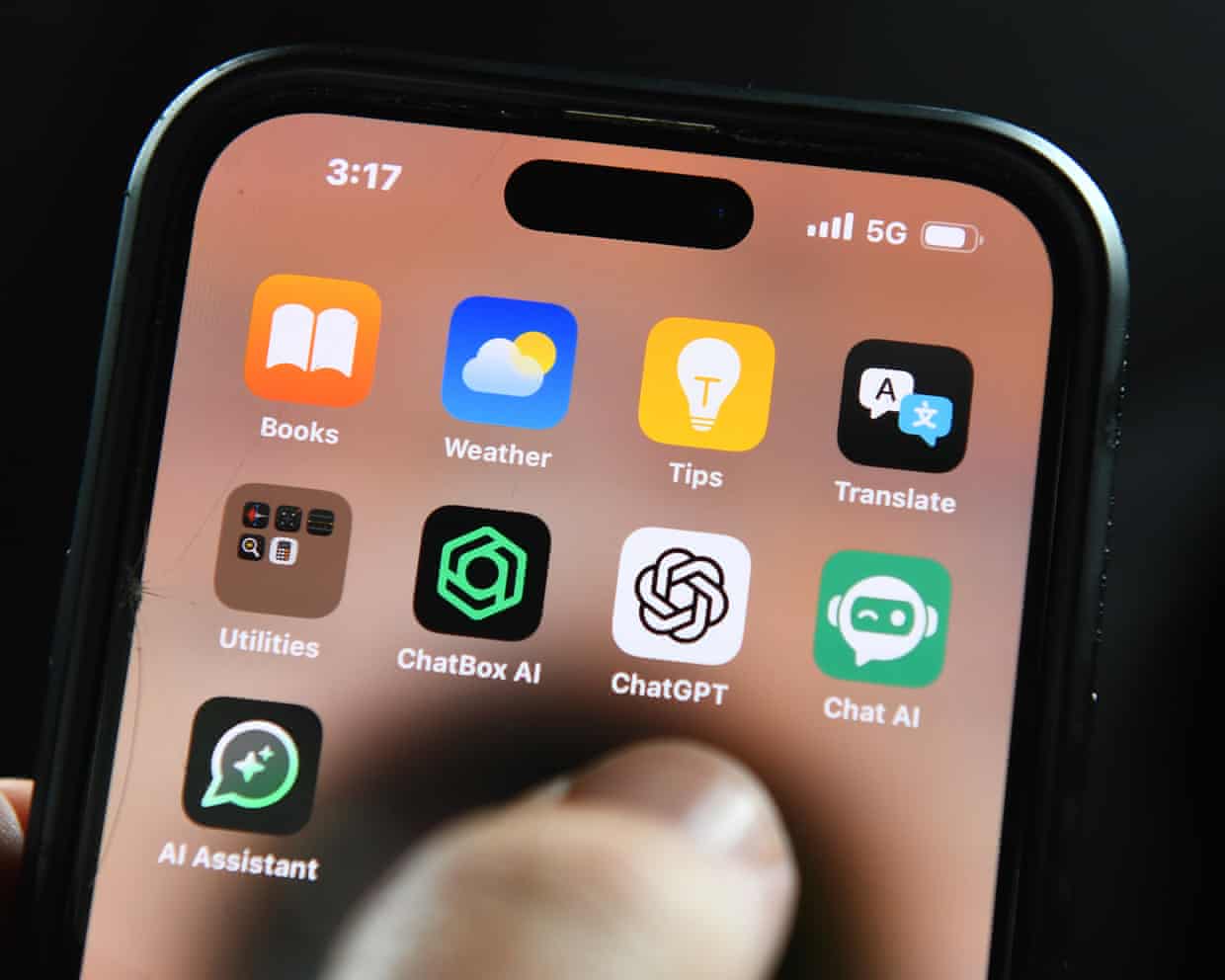
Chatbots can sway people’s political opinions but the most persuasive artificial intelligence models deliver “substantial” amounts of inaccurate information in the process, according to the UK government’s AI security body.Researchers said the study was the largest and most systematic investigation of AI persuasiveness to date, involving nearly 80,000 British participants holding conversations with 19 different AI models.The AI Security Institute carried out the study amid fears that chatbots can be deployed for illegal activities including fraud and grooming.The topics included “public sector pay and strikes” and “cost of living crisis and inflation”, with participants interacting with a model – the underlying technology behind AI tools such as chatbots – that had been prompted to persuade the users to take a certain stance on an issue.Advanced models behind ChatGPT and Elon Musk’s Grok were among those used in the study, which was also authored by academics at the London School of Economics, Massachusetts Institute of Technology, the University of Oxford and Stanford University

Chocolate tart and zabaglione: Angela Hartnett’s easy make-ahead Christmas desserts – recipes

I called my recipe book Sabzi – vegetables. But the name was trademarked. And my legal ordeal began

Goodbye avocado, hello ssamjang: here is the new posh nosh
Choice taste test: the best Australian supermarket Christmas ham is also ‘one of the cheapest’

How to turn excess nuts and seeds into a barnstoming festive pudding – recipe | Waste not

The great Christmas taste test: I tried seven fast food offerings. Which will make me feel festive?