Bank of England tipped to raise UK interest rates twice this year to fight inflation shock from Middle East crisis, as oil and gas prices rise – as it happened
Time for a recap….A turbulent day in the financial markets has seen energy prices surge, and European stock markets fall.UK and European gas prices have jumped 15% today, after yesterday’s attacks by Iran on energy infrastructure across the Middle East.QatarEnergy has revealed that Iran’s strikes have damaged facilities responsible for producing 17% of the company’s LNG export capacity, and it could take three to five years to repair the damage.Brent crude jumped by 10% at one state – extending the gap between Brent and US oil – before slipping back to $110 a barrel, up 3.
3% today,With anxiety over a lengthy period of disruption to energy supplies growing, European stock markets have tumbled,The UK’s FTSE 100 share index fell by almost 3% at one stage, dipping below the 10,000-point mark for the first time since early January,European airline chiefs have warned that a prolonged conflict in the Middle East would lead to higher air fares as flight cancellations drive up costs and aviation fuel prices,UK energy bills are on track to jump this summer too.
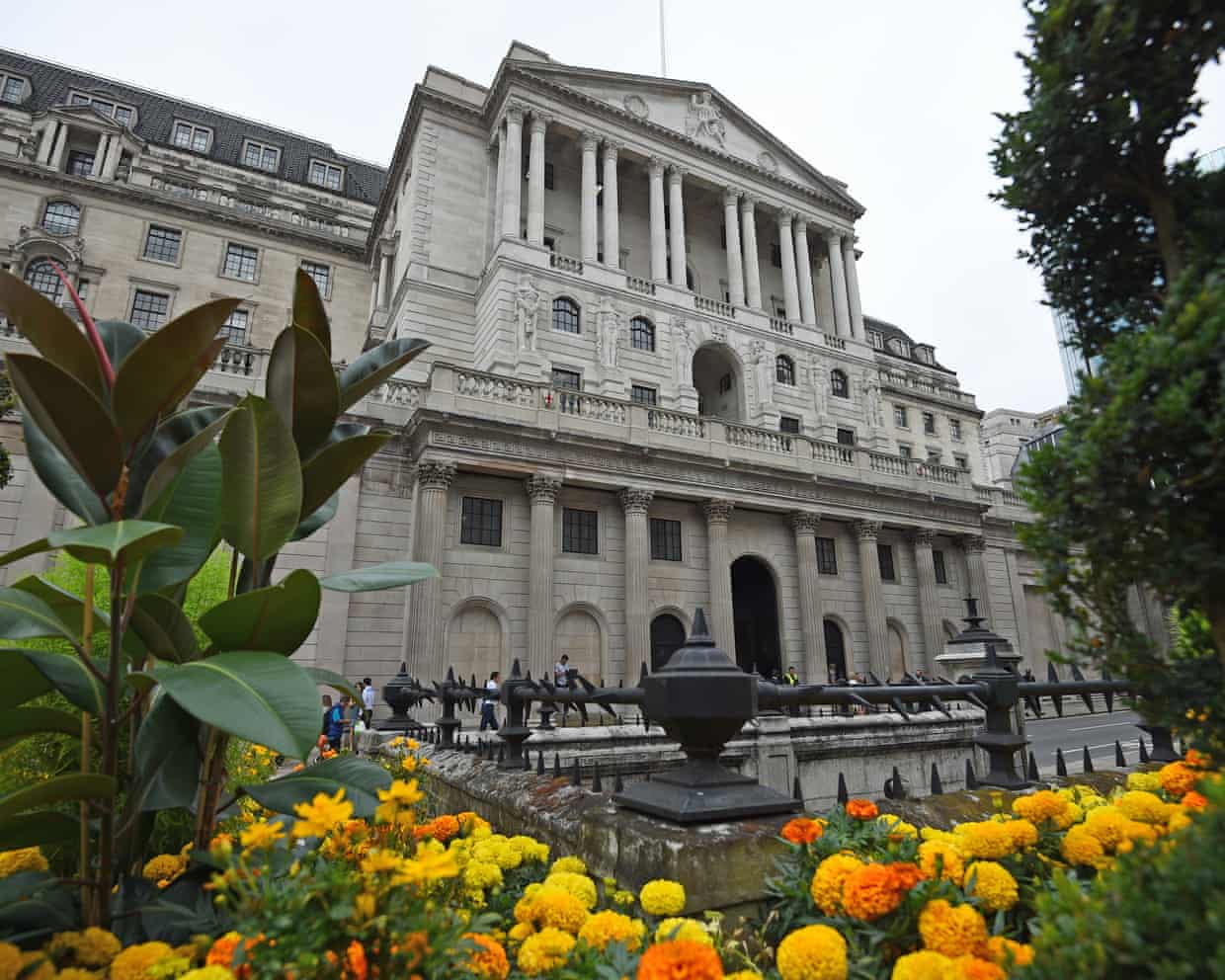
Faced with this disruption, central bankers are choosing to leave interest rates on hold until the situation is clearer.The Bank of England maintained UK interest rates at 3.75% today, but also signalled that it could be forced to increase borrowing costs within the coming months.It warned:double quotation markConflict in the Middle East has caused a significant increase in global energy and other commodity prices, which will affect households’ fuel and utility prices and have indirect effects via businesses’ costs.Prior to this, there had been continued disinflation in domestic prices and wages.
CPI inflation will be higher in the near term as a result of the new shock to the economy.The BoE now believes the US-Israel war on Iran threatens to drive inflation in the UK above 3%, and is fearful of ‘second round’ effects – a jump in wages, and prices in the shops.The City money markets are now pricing in two rises in UK interest rates this year, which would lift them back to 4.25% by December.Andrew Bailey, governor of the Bank, has pushed back against such forecasts, saying:double quotation mark“I would caution against reaching any strong conclusions about us raising interest rates.
,,,Today we’ve given a very clear message,The right place to be is on hold.
”The Bank’s decision came hours after new data showed a slowdown in pay growth across the UK:The European Central Bank left its interest rates on hold today too, as did Switzerland and Sweden this morning.The World Trade Organisaion has cut its forecast for trade growth this year, and warned that an extended period of high oil prices could “crimp” the AI boom.The UK is to double tariffs on Chinese and other foreign steel in a bid to save its remaining plants from collapse.Late developments: The governor of the Bank of England has said that the “longer” the war in the Middle East continues the “larger” the effects on the UK economy.Andrew Bailey told LBC’s Tonight with Andrew Marr show:double quotation mark‘Well, the longer it goes on, I’m afraid to say, but it is rather an obvious point, the effect will be larger.
So, I think that’s why it’s imperative that, as I know the government is doing, that everything is done that can be done to alleviate this effect.That’s the critical thing.’Bailey also said that the best thing for the world economy would be to reopen energy supply lines, “because that is in the best interests of the people of the world.”And finally, the UK stock market has posted its biggest daily drop in over two weeks.The blue-chip FTSE 100 index has closed down 242 points, or -2.
35%, at 10,063 points.That’s its biggest one-session decline since 3 March, in the first week of the Iran war.Housebuilder Barratt (-8.4%) was the top faller, reflecting forecasts of UK interest rate rises this year which would hurt demand for new homes.Banks also weakened, with NatWest down 8%.
The Bank of England has had a “crude awakening”, points out Deutsche Bank economist Sanjay Raja, as the rise in energy prices threatens to push up inflation.Raja has abandoned his previous forecast for interest rate cuts this year, telling clients:double quotation markPolicy risks are now one-sided.We are changing our BoE call.We no longer expect any rate cuts this year.We expect Bank Rate to stay put at 3.
75% for the remainder of the year.And the prospect of rate hikes can no longer be discounted.The bar for rate hikes, we think, has fallen meaningfully – contrary to our previous view.What will it take for the MPC to hike rates? One, limited fiscal support to curb inflation.And two, duration of the Iran conflict lasting into April (and beyond), extending the length of the inflation shock.
Should fears of second-round effects ratchet higher, the case for a policy pivot in Q2-26 will likely strengthen.We will be monitoring this closely.America’s Russell 2000 index of smaller companies has also been caught up in today’s market slide.The Russell 2000 is down 0.7%, having briefly touched a 10% loss from its all-time intraday high earlier in the session.
Time for a recap….A turbulent day in the financial markets has seen energy prices surge, and European stock markets fall.UK and European gas prices have jumped 15% today, after yesterday’s attacks by Iran on energy infrastructure across the Middle East.QatarEnergy has revealed that Iran’s strikes have damaged facilities responsible for producing 17% of the company’s LNG export capacity, and it could take three to five years to repair the damage.Brent crude jumped by 10% at one state – extending the gap between Brent and US oil – before slipping back to $110 a barrel, up 3.
3% today,With anxiety over a lengthy period of disruption to energy supplies growing, European stock markets have tumbled,The UK’s FTSE 100 share index fell by almost 3% at one stage, dipping below the 10,000-point mark for the first time since early January,European airline chiefs have warned that a prolonged conflict in the Middle East would lead to higher air fares as flight cancellations drive up costs and aviation fuel prices,UK energy bills are on track to jump this summer too.
Faced with this disruption, central bankers are choosing to leave interest rates on hold until the situation is clearer.The Bank of England maintained UK interest rates at 3.75% today, but also signalled that it could be forced to increase borrowing costs within the coming months.It warned:double quotation markConflict in the Middle East has caused a significant increase in global energy and other commodity prices, which will affect households’ fuel and utility prices and have indirect effects via businesses’ costs.Prior to this, there had been continued disinflation in domestic prices and wages.
CPI inflation will be higher in the near term as a result of the new shock to the economy.The BoE now believes the US-Israel war on Iran threatens to drive inflation in the UK above 3%, and is fearful of ‘second round’ effects – a jump in wages, and prices in the shops.The City money markets are now pricing in two rises in UK interest rates this year, which would lift them back to 4.25% by December.Andrew Bailey, governor of the Bank, has pushed back against such forecasts, saying:double quotation mark“I would caution against reaching any strong conclusions about us raising interest rates.
,,,Today we’ve given a very clear message,The right place to be is on hold.
”The Bank’s decision came hours after new data showed a slowdown in pay growth across the UK:The European Central Bank left its interest rates on hold today too, as did Switzerland and Sweden this morning.The World Trade Organisaion has cut its forecast for trade growth this year, and warned that an extended period of high oil prices could “crimp” the AI boom.The UK is to double tariffs on Chinese and other foreign steel in a bid to save its remaining plants from collapse.Berenberg economist Andrew Wishart reckons the future direction for UK interest rates is still down, not up:double quotation markBeware of whiplash: The Bank of England’s (BoE’s) hawkish shift in tone does not mean an interest rate hike is next.Yes, the BoE removed its bias towards rate cuts.
Whereas in February it said “Bank Rate is likely to be reduced further” now it “stands ready to act as necessary” to ensure that inflation meets the 2% target in the medium term.Nonetheless, investors responded by pricing in at least two interest rate hikes this year.double quotation markThe shift will immediately tighten financial conditions by raising the interest rates available on fixed-rate mortgages and corporate loans.In our view, this will help to ensure demand is too weak for a new price-wage spiral to form, and that the future direction of interest rates is down, not up.The US-Israel attack on Iran has already driven prices higher and not just at the petrol pumps, the Bank of England said on Thursday in a gloomy assessment of the UK’s economic outlook.
An inflation rate that was on track to fall from 3% to the Bank’s 2% target in the coming months is now expected to rise to 3.5%.That is one probable impact of the US and Israel’s war on Iran.Higher transport and energy costs can quickly flow through to higher food prices, ratcheting up the consumer prices index when the previous trajectory was down.It is not the news households wanted to hear after a long period of high inflation that everyone thought was over.
Likewise, businesses large and small will be reconsidering their investment decisions and how many people they hire as a result.For the government, another rise in the cost of living is the last thing it needs heading into already difficult local elections…More here:European gas prices have slipped back a little from their earlier highs, but are still on track for significant gains today.The UK month-ahead gas contract is up almost 15% at 160p a therm, having hit 175p this morning.The continental European month-ahead gas contract is up almost 16%, at €63.2 per Megawatt hour.
Traders will have noted the news that Iran’s strikes on Qatar damaged facilities responsible for producing 17% of the company’s LNG export capacity (see earlier post).UK energy bills are on track to exceed £2,100 per year, according to consultancy CEBR, due to the surge in oil and gas prices this month.That would be a steep increase on the latest energy price cap, of £1,641 a year from April-June.CEBR has calculated that the quarterly cap will rise sharply when it is next set (it is calculated from wholesale energy prices), saying:double quotation markThe latest developments in the Middle East, including the recent strike on the Ras Laffan export facility, have pushed up wholesale energy prices.At current levels, this implies a Q3 Ofgem price cap exceeding £2,100 if sustained, with higher bills likely even if prices ease.
The conflict is also expected to shave around 0.1 to 0.3 percentage points off UK GDP growth over the next year.Global oil prices have surged in response to escalating military aggression against key energy infrastructure in the Gulf - but in the US oil prices have barely budged in what could prove a double blow to Asian economies.The widening gap between the international benchmark, Brent crude, and the US oil price known as the West-Texas Intermediary (WTI) has reached an 11 year high as traders begin to weigh the differing fortunes of world regions in response to the global energy supply shock.
The price of Brent has climbed by over 10% to over $119.13 a barrel earlier today, close to the peak touched on March 9, fuelled by fears that attacks on the Gulf’s regional infrastructure could prolong the supply crisis facing the Gulf’s biggest energy buyers in Asia and Europe.It’s now up 4% at $111.62/barrel.But in the US, the world’s biggest energy producer, the WTI is up just 1.
7% at $97,95 a barrel, reflecting the economy’s strong domestic production and strategic reserves,While Brent crude typically trades at a premium to the WTI, the current oil price shock risks turning the crisis “into a regional wrecking ball”, according to asset manager Stephen Innes,Economies in Asia and Europe will be forced to weather higher outright oil prices relative to the US, but also contend with a stronger US dollar which makes buying oil on the dollar-denominated market even more expensive,Innes said:double quotation mark“If escalation continues, the next phase is not just higher oil but enforced behavioral change, where demand is rationed through price and inflation becomes embedded rather than episodic
Prem ‘train’ returns with Saracens looking for instant lift at Bath
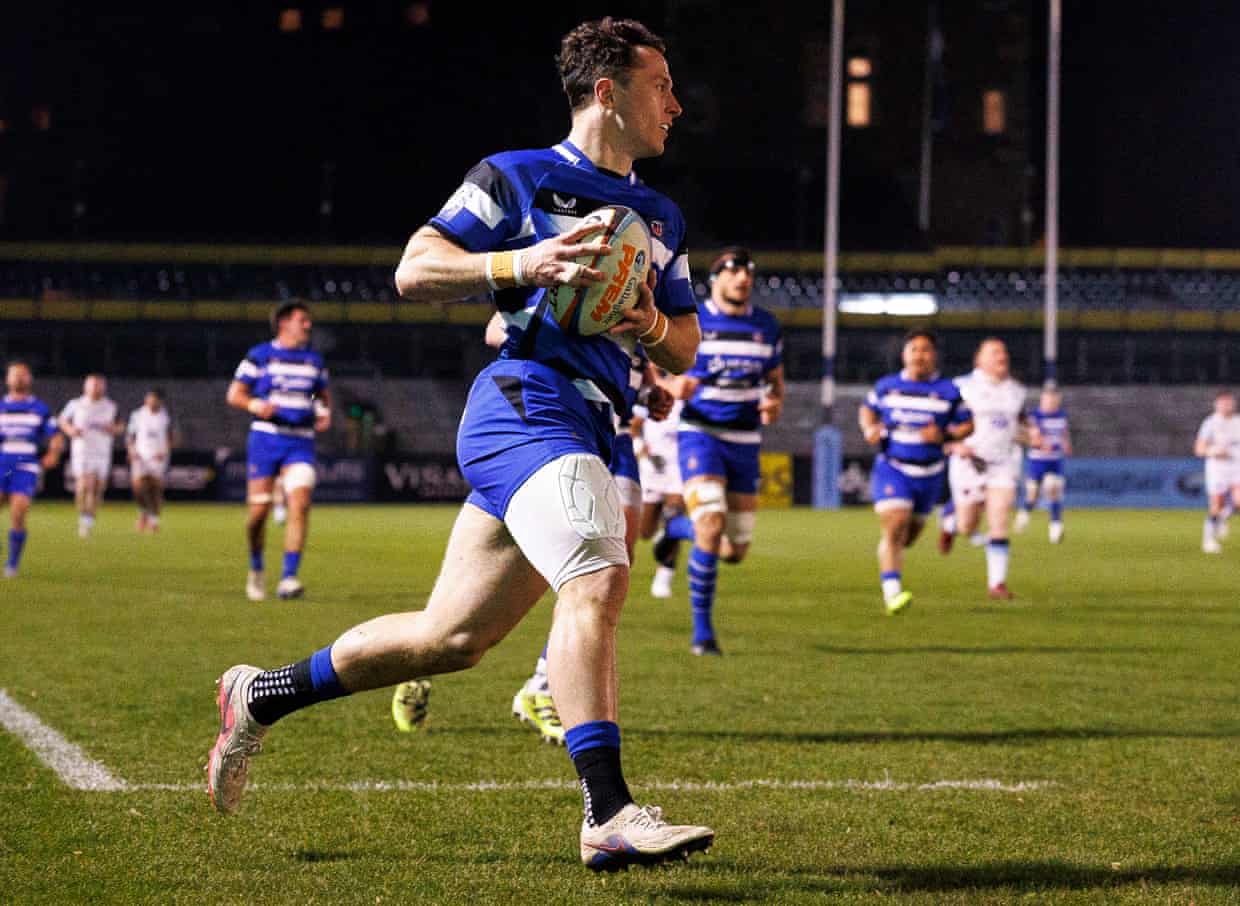
Remember the Prem? It’s been in hibernation almost as long as your tortoise. The last sighting of England’s elite men’s domestic league was on 24 January but now, finally, it is re-emerging from the shadows of the Six Nations, starting under the Friday night lights at the Rec where second-placed Bath are hosting sixth-placed Saracens.It has certainly felt like a protracted hiatus, even if the lower-profile Prem Cup has taken up some slack. And with only eight regular season rounds remaining every would-be playoff contender has no choice but to hit the ground running. As Bath’s head coach, Johann van Graan, says: “It doesn’t really matter what you’ve done before

March Madness 2026 women’s predictions: can anyone thwart a UConn repeat?
Can anyone derail the Connecticut juggernaut? Our contributors pick the winners, sleepers and upsets for this year’s women’s NCAA TournamentThere have been just four women’s Final Fours featuring all No 1 seeds. This year feels like it could give us the fifth. UConn v South Carolina would be a tantalizing rematch of last year’s national championship game – made even more interesting by the fact they didn’t meet in the regular season for the first time since 2013-14. Texas held off a late UCLA comeback when they played in November, but the Bruins have rolled off 25 straight wins since. EBCircle the date for UConn v South Carolina in the national semi-finals on Friday 3 April

‘The only thing left for me was death’: meet the meth-addict long jumper who has been to hell and back
Three years ago Luvo Manyonga knew he must change his life or die. In Poland this week, the former world champion makes an extraordinary return to athletics’ top tableSprawled prone in the dirt, the cold metal of a baseball bat cracking against his skull, spine and down to the legs that had once propelled him to glory, Luvo Manyonga experienced an epiphany. This existence could not continue; he must change his life or die.Manyonga had been a drug addict for as long as he could remember, seeking recreational highs that provided the opposite of the performance-enhancing shortcuts that some of his deceitful athletics rivals might have pursued.At times, he just about kept his habit in check

Jack Draper adds new string to his bow as he rebuilds his game
Two and a half hours into one of the most unforgettable battles of his career, Jack Draper resolved to attack without hesitation, regardless of the outcome. On two pivotal points in his Indian Wells fourth-round match against Novak Djokovic, at 4-4 in the tie-break and then on match point at 6-5, Draper forced himself inside the baseline and unleashed two backhands, those shots driving him to victory.It would have been understandable for Draper to have played passive tennis in those decisive moments. Not only did Indian Wells mark his second ATP tournament back after sustaining a bone bruise to his left arm that forced him off the tour for seven months, the injury has forced him to make dramatic changes to his game.Draper returns to the circuit using natural gut strings in a hybrid string setup
Judge in rugby brain injury lawsuit tells legal teams to hurry up as cases drag on
The judge overseeing the pretrial phase of the two landmark litigation cases about brain injuries in rugby has issued another rebuke to the legal teams on both sides over their lack of progress.Senior Master Jeremy Cook started the latest round of case management hearings by reminding both the defendants and the claimants that “it won’t have escaped anybody’s notice that some of these claims are now over five years old, and we haven’t made much progress”.Since the cases involve claims of degenerative brain diseases, Cook said, time is at a premium. He has told both sides to provide him with written updates between now and a scheduled case management hearing in October, when both sides will be required to have identified their lists of 28 lead claimants from among the hundreds involved.The idea is these 28 will then be whittled down into a smaller group, who will represent the entire cohort
The WNBA’s new labor deal explained: what it means for pay, power and the league’s future
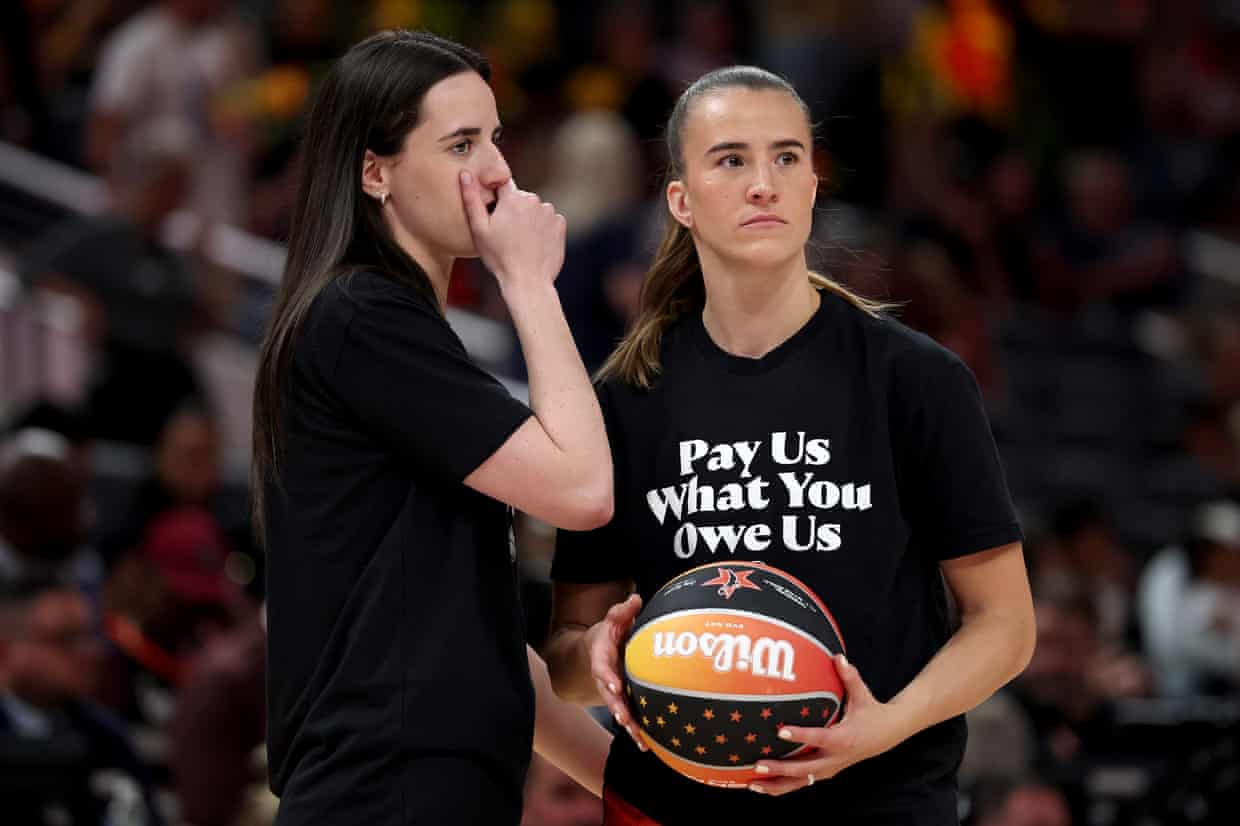
The WNBA and its players’ union (WNBPA) have reached a verbal agreement on a new collective bargaining agreement, ending 17 months of negotiations after players opted out of the previous deal and averting mounting fears of a strike.The agreement would be the sixth in league history and is being framed by both sides as a major step forward for player empowerment and the league’s growth.Commissioner Cathy Engelbert said Wednesday the two sides have “aligned on key elements”, though a formal term sheet still needs to be finalized. Union leaders echoed that sentiment, calling the deal a reflection of players using their collective voice.Full details have not yet been released, and the agreement must still be ratified
Farage backs Tory attack on Muslim iftar event, saying public prayer ‘was a shock’ – UK politics live
Kemi Badenoch channels her fantasies as she launches the Tories’ local election campaign | John Crace
Kemi Badenoch backs Nick Timothy after he calls Islamic public prayers ‘act of domination’
Ban corporate donations to UK political parties to protect elections, says thinktank
Sadiq Khan urges Labour to campaign on rejoining EU at next election
Angela Rayner’s allies say HMRC inquiry set to be resolved before May elections