Are a record number of mom and pops going bankrupt? Kinda but not really
Are mom-and-pop stores going bankrupt at historically high levels? That would seem to be the impression you’d get from recent news reports referencing data released from Epiq Bankruptcy Analytics, a provider of legal services that specializes in bankruptcy services.Uh-oh! Some have seen this as proof that Donald Trump’s policies are bankrupting Main Street.Well, no, not quite.It is true that, according Epiq’s data, there were 2,221 filings for bankruptcy protection under a special provision for small businesses of the bankruptcy code – subchapter V – that was created for this purpose back in 2019.And it is true that the number of filings increased last year.
But by how much? Ten,No, you’re not misreading this,There were 2,211 filings in 2024, 10 fewer than 2025,What about prior years? Between 2020 (the first year of inception of subchapter V) and 2023 there were an average of 1,379 filings, so you can make a case that, as the law became more well known, more filings were made by small businesses,However, let’s remember that there are more than 33m small businesses in the US, according to the Small Business Administration.
The historically high 2,221 bankruptcies is statistically (and laughably) meaningless.And even if you consider all the bankruptcies filed for all business sizes, the numbers are still not a cause for concern.Bankruptcy filings by the end of the Biden administration in 2024 had risen more than 25% compared with when Joe Biden took office.Covid didn’t help.And yet those filings were still 25-50% lower than the bankruptcy filings from 2009 to 2019 and remained that way in 2025.
The number of US businesses going bankrupt is still at historically low levels.But should they be this low?It’s common knowledge that the typical lifespan of a startup is two to five years, with 70% going out of business before reaching their fifth year.The period between 2019 and 2024 saw the largest spike in new business filings in US history, with more than 21m new business applications submitted during that period.Intuit says that side-gig activity is “booming” and “33% of US adults plan to start a business or side hustle next year – a 94% year-over-year increase”.LinkedIn reports that small business creation jumped 69% as “entrepreneurs bet big on growth”.
Good for them,But where are all the busts? Given all these new companies and, given the rate of failure for such companies, shouldn’t there be more going out of business in those subsequent years? Why aren’t bankruptcy filings spiking as a result? One big reason is that bankruptcy filings are pretty rare for small businesses and startups,I’ve worked directly with hundreds of businesses over the past two decades and have hardly ever encountered one that files for bankruptcy,That’s because when a business goes belly up, many business owners walk away rather than paying the costs of bankruptcy,And because small businesses spend smaller dollars, their suppliers generally write off their losses, lick their wounds and move on.
This doesn’t happen in every case, obviously.But for the most part, people know the risks they’re incurring and don’t want to throw money at lawyers to make up for their bad decisions.The reality is that most small businesses did pretty well in 2025 and a great majority are optimistic about the next year.The National Federation of Independent Businesses reports optimism higher than its 52-year average.Comerica Bank says that 79% of small businesses are expecting revenue growth next year.
The US Chamber of Commerce reports a high level of confidence among its members heading into 2026.Sure, mom-and-pop bankruptcies under a special section of the bankruptcy code are now at a “historic high”.However, the numbers need to be put into a better context.There are plenty of other legitimate reasons to criticize Trump.An increase in mom-and-pop bankruptcies isn’t one of them.
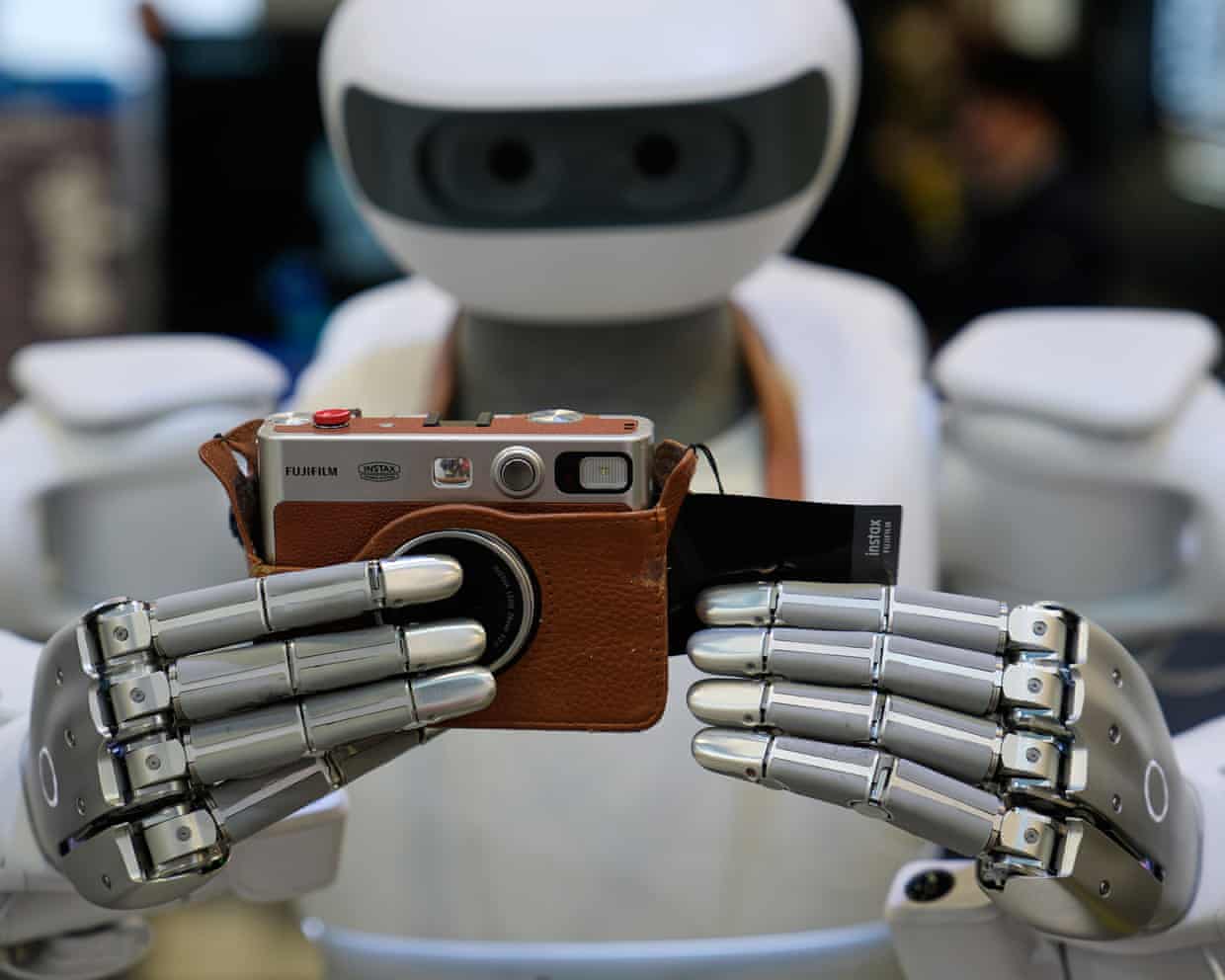
Robots that can do laundry and more, plus unrolling laptops: the standout tech from CES 2026
This year will be filled with robots that can fold your laundry, pick up objects and climb stairs, fridges that you can command to open by voice, laptops with screens that can follow you around the room on motorised hinges and the reimagining of the BlackBerry phone.Those are the predictions from the annual CES tech show in Las Vegas that took place this week. The sprawling event aims to showcase cutting-edge technology developed by startups and big brands.Many of these fancy developments will be available to actually buy, moving from outlandish concepts to production devices, although some are still limited to costly prototypes.The rise of the humanoid robot continues, with the show floor filled with myriad prototypes, some of which operated autonomously rather than being remotely controlled or performing set routines this year
No 10 condemns ‘insulting’ move by X to restrict Grok AI image tool
Downing Street has condemned the move by X to restrict its AI image creation tool to paying subscribers as insulting, saying it simply made the ability to generate explicit and unlawful images a premium service.There has been widespread anger after the image tool for Grok, the AI element of X, was used to manipulate thousands of images of women and sometimes children to remove their clothing or put them in sexual positions.Grok announced in a post on X, which is owned by Elon Musk, that the ability to generate and edit images would be “limited to paying subscribers”. Those who pay have to provide personal details, meaning they could be identified if the function was misused.Asked about the change, a Downing Street spokesperson said it was unacceptable
X UK revenues drop nearly 60% in a year as content concerns spook advertisers
UK revenues at Elon Musk’s X fell by almost 60% in a year as advertisers pulled their spending over concerns about the social media platform’s content.News of the plummeting financial performance comes after X switched off the image creation function on its AI tool Grok for the vast majority of users after a widespread outcry about its use to create sexually explicit and violent imagery.In the UK, the social media site recorded a 58.3% fall in revenues from £69.1m in 2023 to £28

Spotify no longer running ICE recruitment ads, after US government campaign ends
Spotify is no long running advertisements for the US Immigration and Customs Enforcement (ICE), the streaming service has confirmed, after the Trump administration campaign ended in late 2025.“There are currently no ICE ads running on Spotify,” the Swedish company said in a statement. “The advertisements mentioned were part of a US government recruitment campaign that ran across all major media and platforms.”Since April, the government ads have also run on Amazon, YouTube, Hulu and Max among other streaming companies, with the aim of recruiting more than 10,000 deportation officers by the end of 2025.Previously, Spotify said that the ads, which encouraged US listeners to “fulfil your mission to protect America” and offered $50,000 in signing bonuses, did not “violate our advertising policies”
UK ministers considering leaving X amid concern over AI tool images
UK ministers are considering leaving X as a result of the controversy over the platform’s AI tool, which has been allowing users to generate digitally altered pictures of people – including children – with their clothes removed.Anna Turley, the chair of the Labour party and a minister without portfolio in the Cabinet Office, said on Friday that conversations were happening within the government and Labour about their continued use of the social media platform, which is controlled by Elon Musk.The government has come under mounting pressure to leave X after the site was flooded with images including sexualised and unclothed pictures of children generated by its AI tool, Grok.Turley told BBC Radio 4’s Today programme: “X, first and foremost, has to get its act together and prevent this. It has the powers to do this, and we need to make sure there are firm consequences for that

Grok turns off image generator for most users after outcry over sexualised AI imagery
Grok, Elon Musk’s AI tool, has switched off its image creation function for the vast majority of users after a widespread outcry about its use to create sexually explicit and violent imagery.The move comes after Musk was threatened with fines, regulatory action and reports of a possible ban on X in the UK.The tool had been used to manipulate images of women to remove their clothes and put them in sexualised positions. The function to do so has been switched off except for paying subscribers.Posting on X, Musk’s social media network, Grok said: “Image generation and editing are currently limited to paying subscribers

UK wants any transition of power in Iran to be peaceful, says minister

Sir Patrick Duffy obituary
Zarah Sultana’s Your Party membership launch may be ‘criminal’ matter for police, ICO says
Reform UK accused of betraying election pledges after council tax rises
It is Labour’s party machine that is out of touch | Letters
UK politics: Reform UK mayoral candidate apologises for Lammy ‘go home’ tweet – as it happened