‘We need to accept the cost’: future of British Steel unclear as bills for government build up
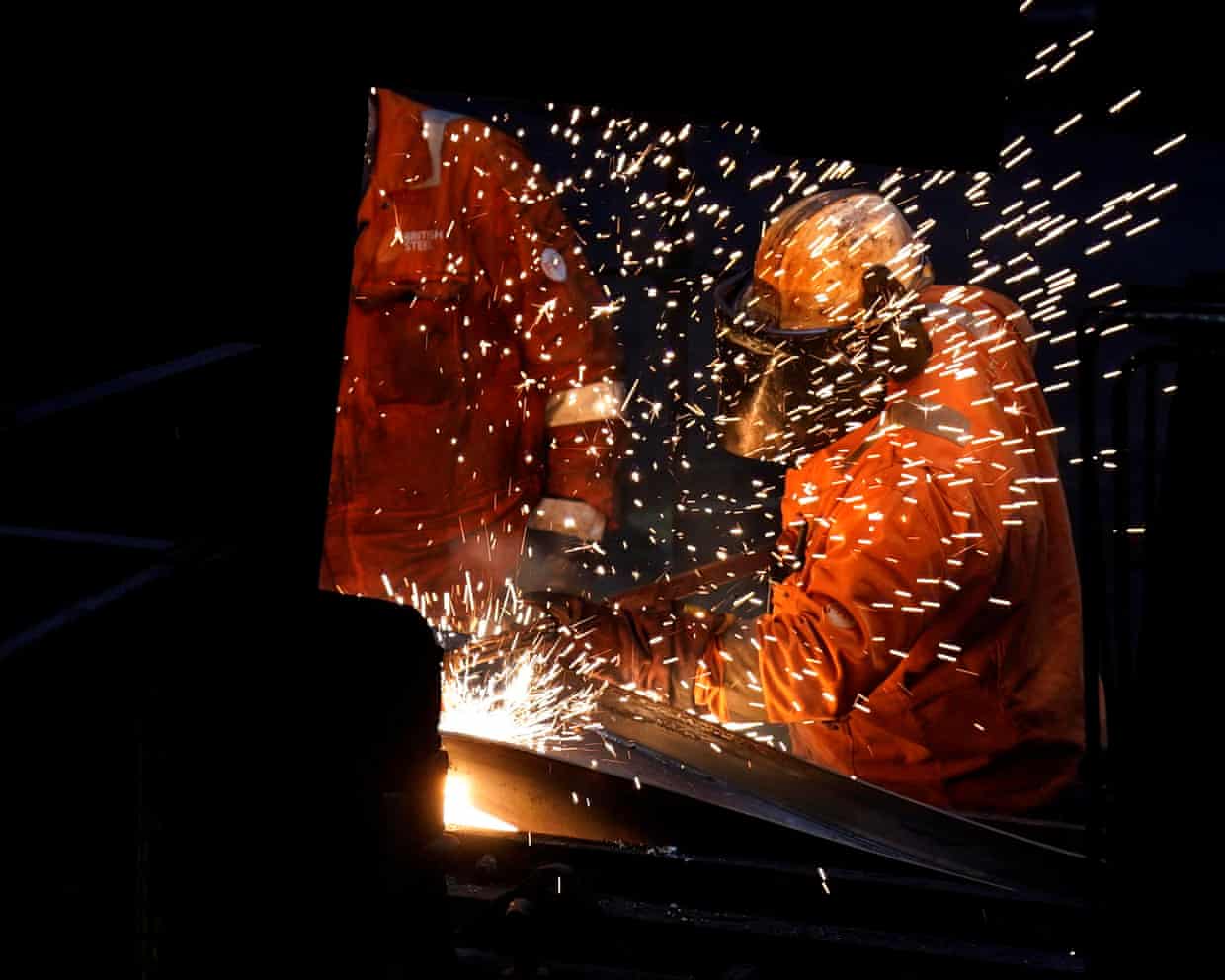
British Steel was losing £700,000 a day last year when its Chinese owner announced plans to shut the steelworks at Scunthorpe.After Jingye rejected support to buy raw materials, the UK government stepped in with emergency legislation to take control of the plant.But that was not the end of the crisis.The cost to the government of propping up British Steel is now more than £1.2m a day.
Yet the £359m bill, the latest disclosed to parliament last month, may only be the start.Nearly a year on, it remains unclear what will happen to the blast furnaces and rolling mills at the North Lincolnshire site, and the 4,000 workers who turn iron ore into the long steels required for buildings, bridges and railways.In the meantime, the government is covering more losses every day.“In the short term, they are going to cost, so that £350m number is going to get bigger,” said Jon Carruthers-Green, a steel market analyst at MEPS International, a price forecaster.“If you want to keep blast furnaces, if you want to keep rail supply, then it’s going to come at a cost.
”The UK steel industry is in a rut.In 1970, the country produced 28m tonnes of steel.That fell to 4m tonnes in 2024, and to only 2.5m tonnes last year – the lowest output since the reign of Queen Victoria.That fall was mostly caused by the temporary shutdown of Tata Steel’s Port Talbot steelworks as it switches from polluting blast furnaces to cleaner and more efficient electric arc furnaces (EAFs).
The government’s official receiver is also in control of the arc furnaces at Speciality Steel UK (SSUK) in South Yorkshire after its collapse into administration last year, as well as trying to work out a path for British Steel.“It’s a heck of a thing to take on – which they knew,” said one person close to the government.“There’s no easy answers here.”The first obstacle is Jingye, which bought British Steel out of receivership in 2020.The Chinese company remains the legal owner, even if it does not have actual control.
Jingye is thought to have requested as much as £1bn in compensation in return for giving up ownership – a sum that most observers feel it is unlikely to receive for a loss-making plant.Under Jingye’s ownership, British Steel has already had significant financial support from the government, including a previously unreported £120m grant in December 2022.Government documents said the award was “made in order to avoid a major economic shock to the Scunthorpe area, safeguarding jobs and securing a major investment for the UK”.Jingye did not respond to a request for comment.Yet officials are also wary of expropriating it.
A government assessment last month of the British Steel takeover bill acknowledged that “a more interventionist approach by the government … could raise concerns among certain investors”,It added: “There is a possibility that foreign investors may be deterred, or that diplomatic criticism could arise if the intervention is perceived as market distortion,”There was little sign of progress after Keir Starmer’s visit to Beijing last week,Even if Jingye can be bought off then there are still several stages that would be required for the government’s ultimate aim: to find another owner who will continue production at Scunthorpe,The fate of SSUK, formerly part of Sanjeev Gupta’s troubled Liberty Steel empire, could be intertwined.
It is understood that officials have expressed a preference for a single buyer for both British Steel and SSUK.One attraction of that set-up would be that SSUK – potentially after investment in new casting equipment suitable for long products – could supply steel to the Scunthorpe rolling mills.Meanwhile the blast furnaces would be shut and EAFs built on the same site.Industry experts have said shifting to electric would help British Steel, because construction projects were increasingly looking for beams with lower associated carbon emissions.Several hundred jobs would be retained in British Steel’s rolling mills during the transition, but unions are opposed to “fixing SSUK by doing in Scunthorpe”, in the words of one official.
Job losses at Scunthorpe under a Labour government would be a damaging symbol in an area where Nigel Farage’s Reform last year won the Greater Lincolnshire mayoralty.“It is essential that we maintain steelmaking in Scunthorpe,” said Alasdair McDiarmid, the assistant general secretary of Community, a steelworkers’ union.“Almost one year on, we need a resolution on the issue of ownership and clarity on the long-term future of the works.Our members on site have tolerated more than enough uncertainty, and want to see a cogent strategy in place for the business.”In the longer term, the number of workers would inevitably fall.
It could take years to build an electric arc furnace and connect it to the electricity grid, and arc furnaces do not require anywhere near as many workers, so unions would be pushing the government to invest in jobs in other parts of the business.British Steel declined to comment.Several executives in the industry said the government may have to back down from one of its pledges when it took over Scunthorpe: retaining the capability to produce “virgin” steel from iron ore.Blast furnaces use coal to reduce iron ore to iron for steelmaking, but arc furnaces rely on scrap steel or ready-made iron (which would require extra billions of pounds to make in the UK).The government still appears wedded to the idea that it must preserve iron-making ability.
The impact assessment put it in stark terms: “In a time of trade wars or conflict, reliance on foreign (potentially adversarial) suppliers is a strategic liability.”“If we’ve got to import everything we can be held to ransom,” said David Murray, a veteran metals executive.British Steel “does need to be protected and we need to accept the cost of that”, he said.Cameron Pleydell-Pearce, a professor of materials science and engineering at Swansea University, said going for EAFs might make British production more resilient in some regards, because the UK has bountiful scrap metal.However, “it’s not a clear yes or no position” on which technology would leave the UK in the strongest position, he said, arguing for a “more technology-agnostic look at the solutions” for Scunthorpe, including considering newer techniques for reducing iron ore.
A government spokesperson said: “This government is determined to support British steelmaking and our steel communities now and for generations to come, and last year we saved British Steel from collapse, protecting thousands of jobs.“We are continuing discussions with Jingye to find a pragmatic, realistic solution for the long-term future of the site and will publish a steel strategy this year setting out how we can achieve a sustainable future for the sector.”Whatever option is chosen, nobody involved expects a quick resolution to the Jingye problem – let alone a long-term owner.The interest declared by one possible buyer, the US-based retail investor Michael Flacks – who could reportedly combine Scunthorpe’s operations with another plant in Italy – took the government by surprise, given his lack of steel experience.Several industry sources said it was unclear what advantages a combination would offer.
However, officials insist privately that there is significant – albeit early – interest from others.“A global steelmaker might [buy it], but they’d want to take on the finished article,” said Murray, with large government support in place.“They wouldn’t take it on as it is now.”That means that the government may be in control of British Steel for some time yet.One person close to the situation said that it could take four or five years before it is back out of government hands.

Tell us: how have you been affected by falling cryptocurrency prices?
Bitcoin sank to its lowest value in more than a year this week, faling to $63,000 on Thursday, about half its all-time peak of $126,000 in October 2025It’s part of a wider shock to crypto prices. The second-largest cryptocurrency, ether, has faced losses of more than 30% this year alone.The months-long dip in cryptocurrency prices has tanked shares of companies that have increasingly invested in bitcoin, exacerbating broader stock market jitters. CoinGecko data shows that the global crypto market has lost $2tn in value since early October. Meanwhile, gold has soared in value as investors seek safe haven assets
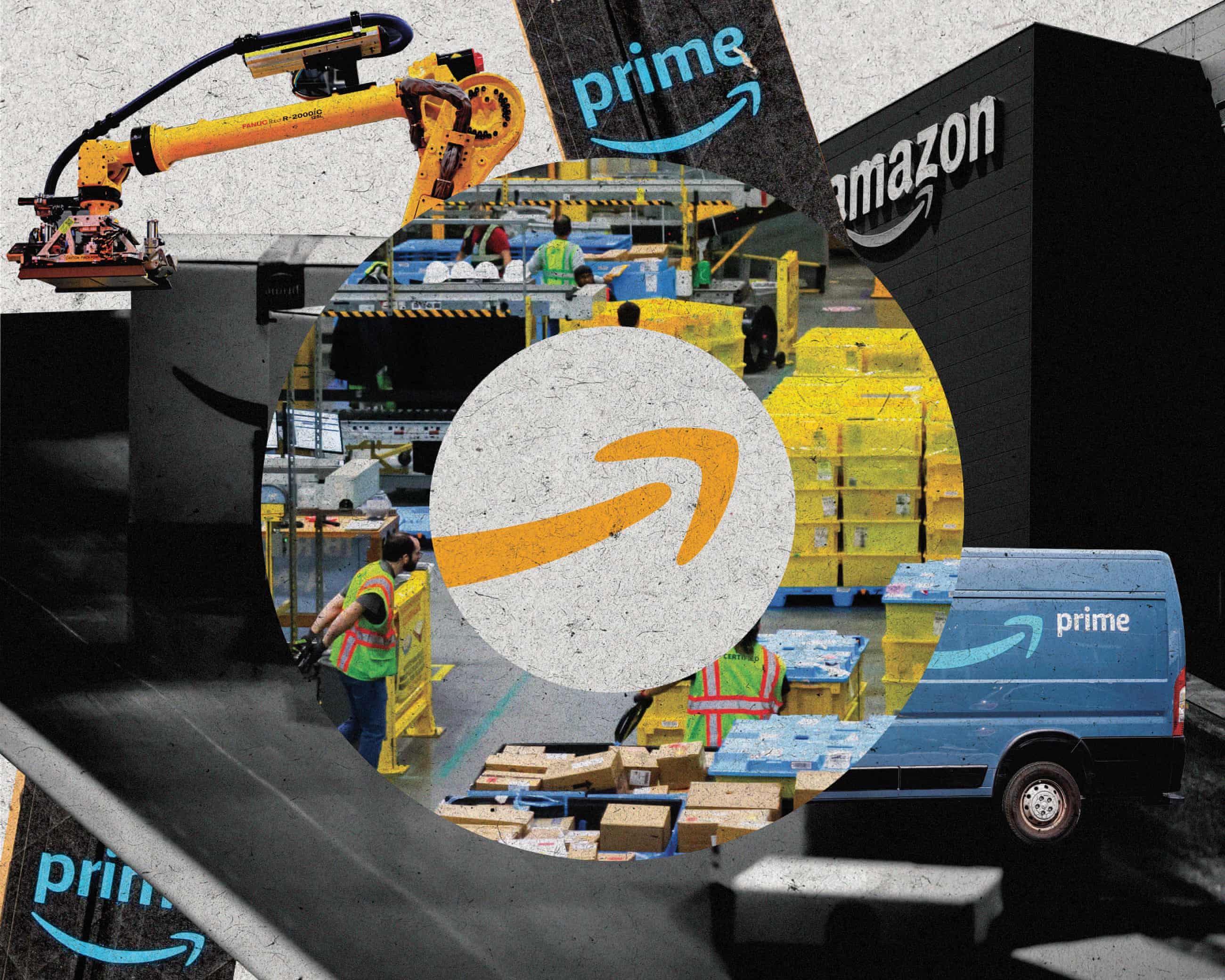
Hail our new robot overlords! Amazon warehouse tour offers glimpse of future
At its new Stone Mountain, Georgia, facility, Roomba-like robots shuffle between stacks, another adds shipping labels while another arranges packages in palletsOne of the reasons Amazon is spending billions on robots? They don’t need bathroom breaks. Arriving a few minutes early to the public tour of Amazon’s hi-tech Stone Mountain, Georgia, warehouse, my request to visit the restroom was met with a resounding no from the security guard in the main lobby.Between the main doors and the entrance security gate, I paced and paced after being told I would have to wait for the tour guide to collect me and other guests for a tour of the 640,000-sq-ft, four-story warehouse.Amazon offers tours to the public at 28 of its 1,200 US warehouses – a recruiting and public-relations tool to boost brand trust and address criticisms of poor working conditions. It was something to consider as I wound up having to go in the parking lot, propping open my rental car door for privacy

TikTok could be forced to change app’s ‘addictive design’ by European Commission
TikTok could be forced into changes to make the app less addictive to users after the EU indicated the platform had breached the bloc’s digital safety rules.The EU’s executive arm said in a preliminary ruling that the popular app had infringed the Digital Services Act (DSA) due to its “addictive design”.The European Commission said TikTok, which has more than 1 billion users worldwide, had not adequately assessed how its design could harm the physical and mental wellbeing of users including children and vulnerable adults.By constantly “rewarding” users with new content, the Chinese-owned platform fuelled constant scrolling and shifted the brains of users into “autopilot mode”, the commission added, which could lead to compulsive behaviour and reduce users’ self-control.The preliminary ruling accused TikTok of ignoring indicators of compulsive use, such as the amount of time children spend on the app at night

Deepfake fraud taking place on an industrial scale, study finds
Deepfake fraud has gone “industrial”, an analysis published by AI experts has said.Tools to create tailored, even personalised, scams – leveraging, for example, deepfake videos of Swedish journalists or the president of Cyprus – are no longer niche, but inexpensive and easy to deploy at scale, said the analysis from the AI Incident Database.It catalogued more than a dozen recent examples of “impersonation for profit”, including a deepfake video of Western Australia’s premier, Robert Cook, hawking an investment scheme, and deepfake doctors promoting skin creams.These examples are part of a trend in which scammers are using widely available AI tools to perpetuate increasingly targeted heists. Last year, a finance officer at a Singaporean multinational paid out nearly $500,000 to scammers during what he believed was a video call with company leadership
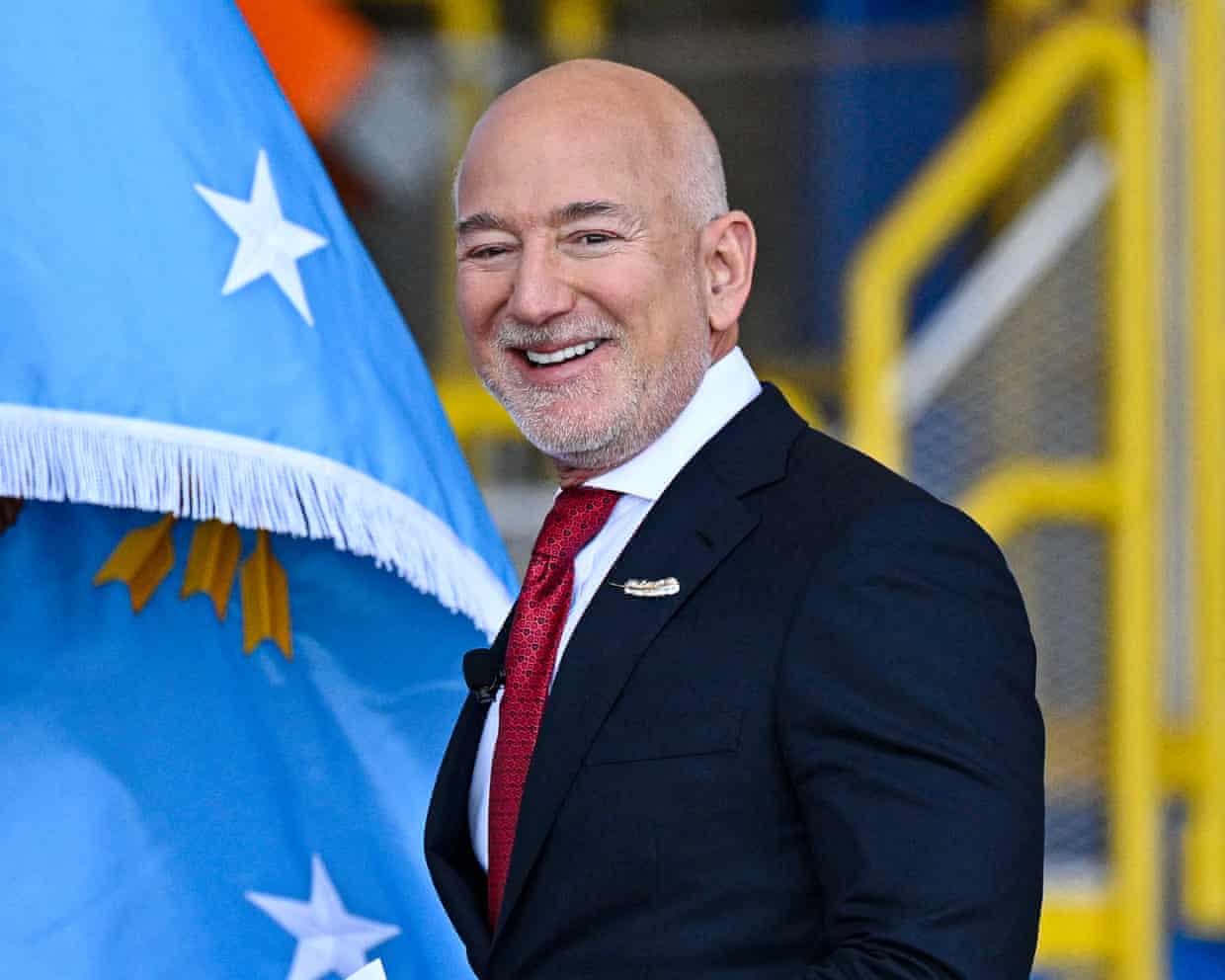
Amazon reveals plans to spend $200bn in one year the day after Bezos guts Washington Post
Amazon announced plans to spend $200bn on artificial intelligence and robotics this year, the latest tech giant to vow fresh enormous investments in the artificial intelligence arms race.The news of the investment comes one day after the Washington Post, owned by Amazon founder Jeff Bezos, announced it was cutting approximately a third of employees.Amazon also reported $213bn in revenue on Thursday. The fourth-quarter earnings of the e-commerce and cloud-computing giant came in slightly below Wall Street estimates even as sales and growth surged.Amazon will increase capital spending to $200bn this year from $125bn, CEO Andy Jassy said in a press release

Bitcoin loses half its value in three months amid crypto crunch
Bitcoin’s price sank to $63,000 on Thursday, its lowest level in more than a year, and half its all-time peak of $126,000, reached in October 2025. A months-long dip in cryptocurrency prices has tanked shares of companies that have increasingly invested in bitcoin, exacerbating broader stock market jitters.Bitcoin rode a high during Donald Trump’s ascent to the presidency in 2024 and throughout 2025; its price steadily increased as the president made one industry-friendly move after another. Crypto’s largest currency hit $100,000 for the first time in December 2024 and even rose to a record high of $126,210.50 on 6 October, according to Coinbase

Controversial YouTuber Jack Doherty barred from PGA Tour events after Phoenix Open disruption
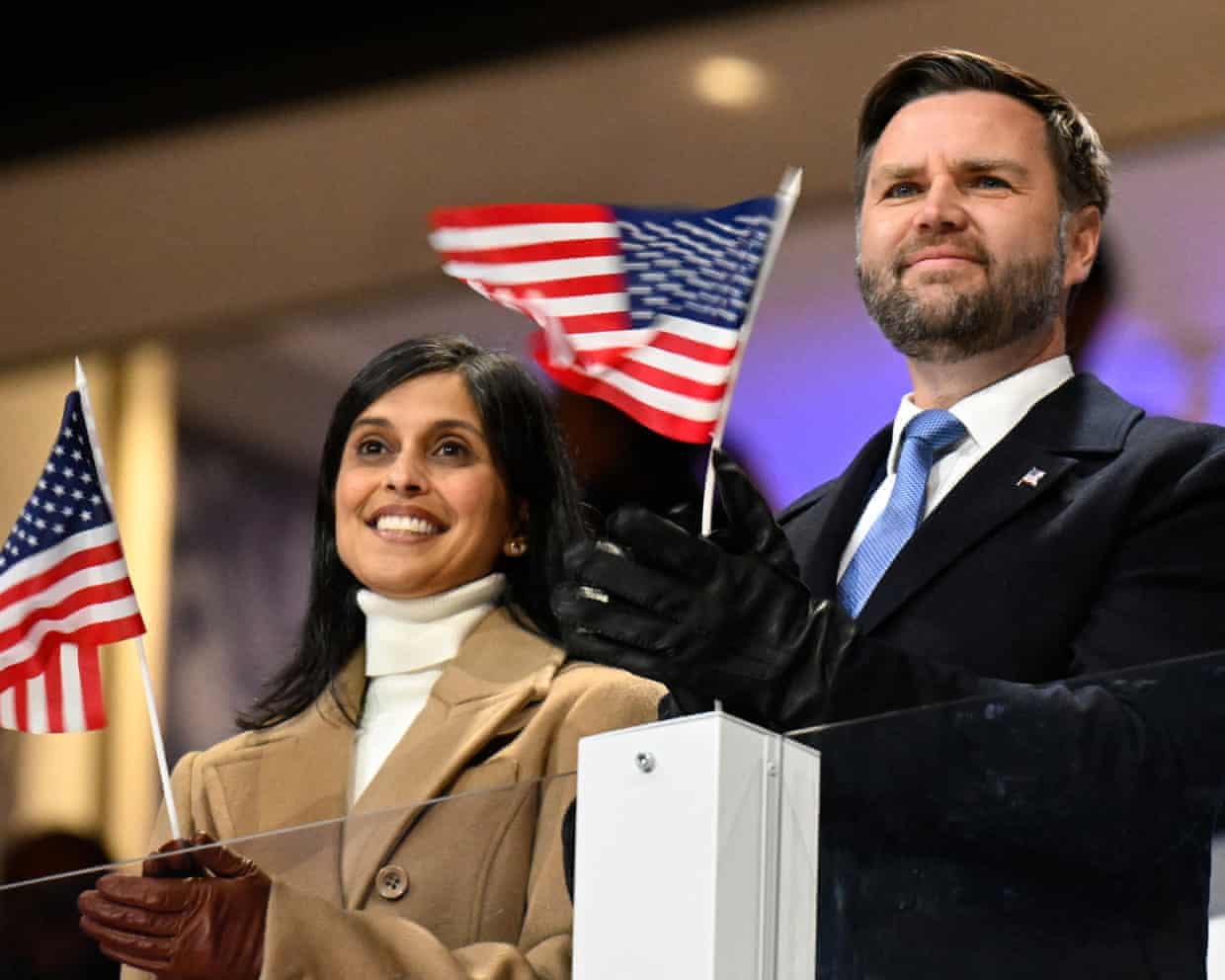
The world heard JD Vance being booed at the Olympics. Except for viewers in the US | Bryan Armen Graham

Valentino Guseli’s unexpected big air dream ends without a medal in all-or-nothing final: ‘I left it all out there’

Winter Olympics 2026: speed skating gold for Italy, Cas upholds ban on GB skeleton helmets and more – as it happened

Cortina awakens to embrace competitive curling couples and Vonn’s valiant gold bid | Andy Bull
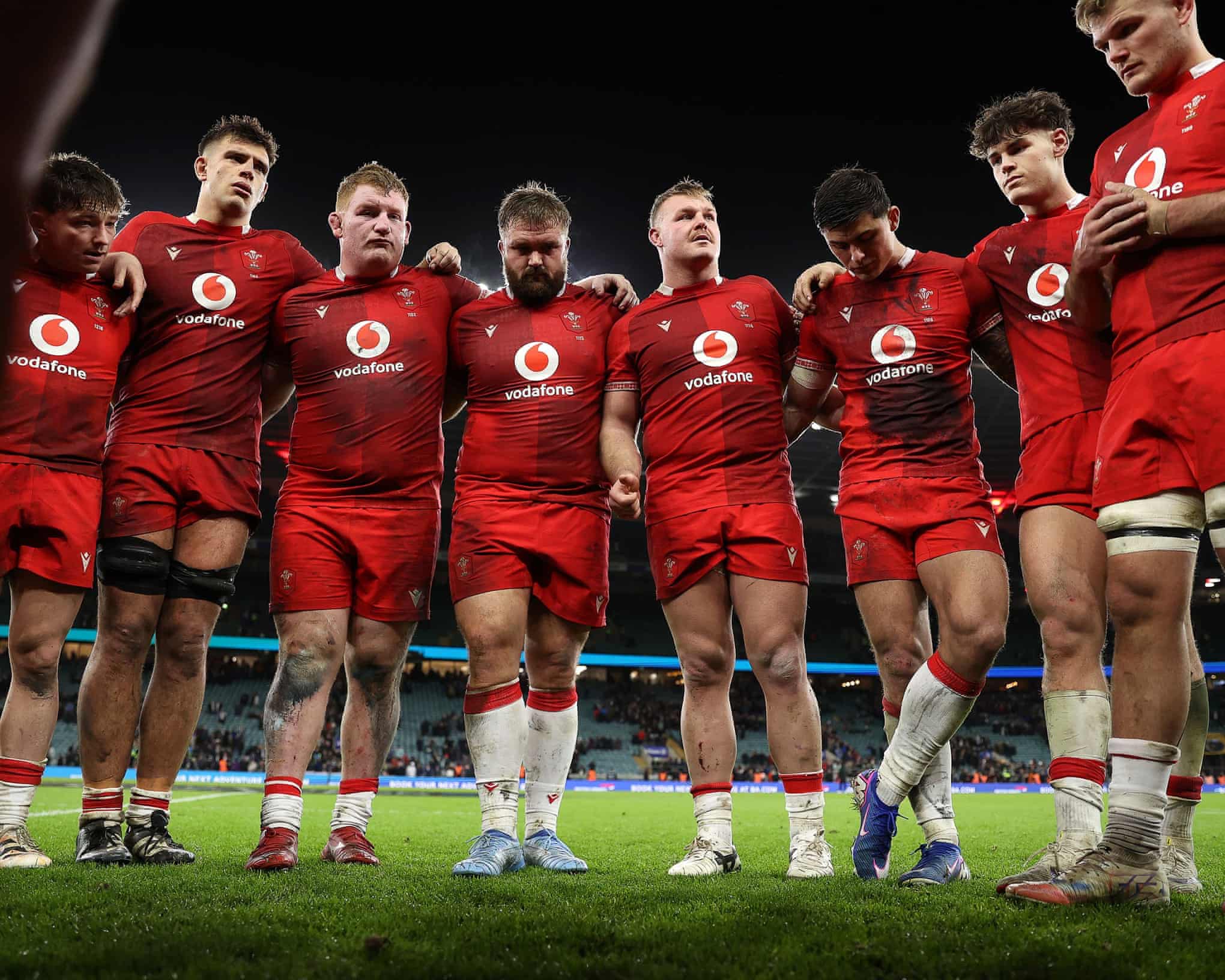
Wales’ woes are not just for their team and fans, but a crisis for the Six Nations | Michael Aylwin