Fertiliser is in short supply. What does it mean for Australia’s farmers – and your bread?
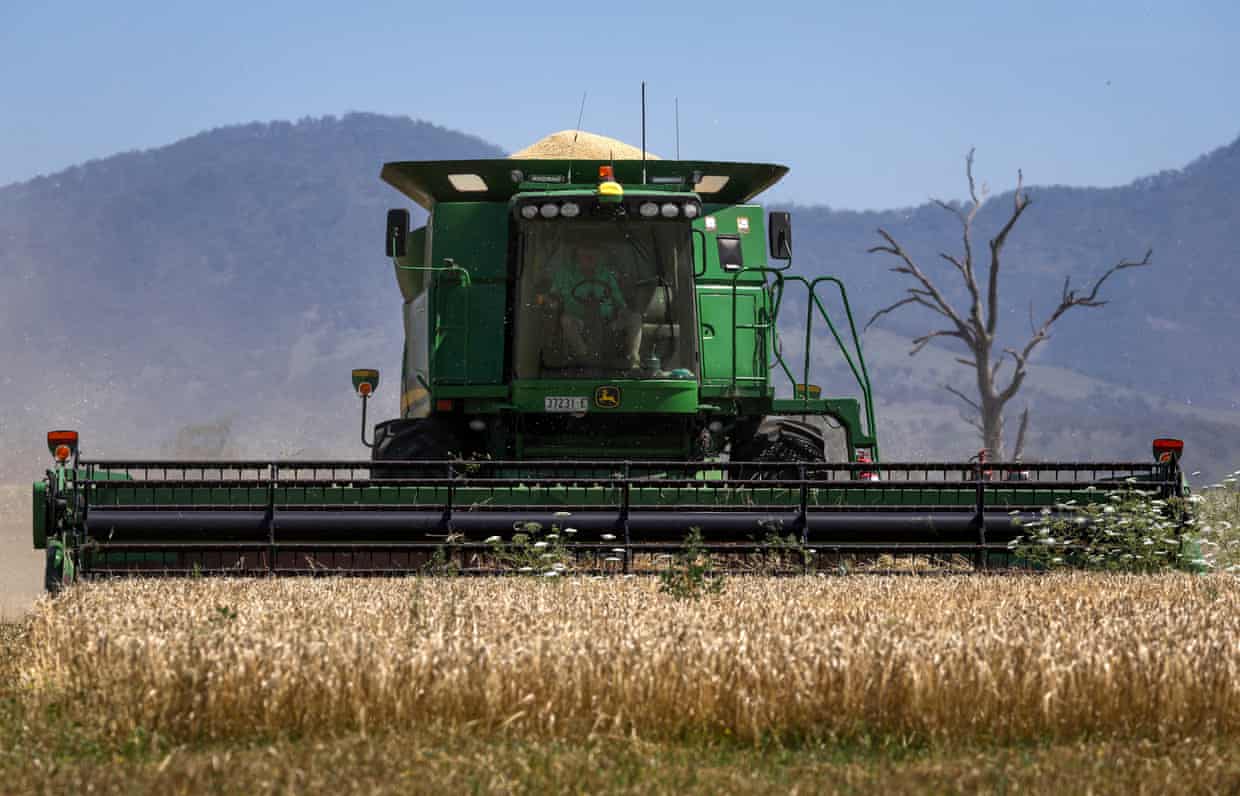
The US-Israel war on Iran is delivering a double blow to Australian farmers, who are being hit by the spike in diesel prices as well as an equally severe surge in the price of fertiliser.Soaring fuel costs are hurting almost every business and household, but growers are now making decisions about planting that will affect the size of their crops come harvest time.So why are we experiencing this fertiliser squeeze, how much worse could it get, and what does it all mean for farmers and the price of food?A fifth of the world’s global oil and liquefied natural gas shipments pass through the strait of Hormuz, which has essentially been shut since the US and Israel attacked Iran at the end of February.But the share of world supply of urea – the most popular commonly used fertiliser – that typically passed through the strait before the conflict was more than twice that, at 43%.For sulphur – used to produce phosphate fertilisers – the figure is 44%.
For anhydrous ammonia – another nitrogen fertiliser – 27% of global supply on average passed through the strait between 2019 and 2023.We are even more vulnerable to global fertiliser supply disruptions than fuel.Between 2019 and 2023, we imported all of our potash-based products, approaching 90% of nitrogen fertilisers and nearly 70% of our phosphate fertiliser needs.While all our fertiliser supplies have been disrupted, the impact on prices has been most dramatic when it comes to urea, which accounts for about two-thirds of nitrogen applied by farmers.Synthetic urea is produced in great quantities in Qatar thanks to an abundance of cheap gas used in its manufacture.
Iranian missile strikes on a major Qatari facility in March knocked out a major source of LNG and associated products, including urea.More than 60% of our urea imports come from the Middle East, with most of the rest from Asia.Since the start of this year, the price of urea from the Middle East has nearly doubled, in Australian dollar terms, and is up about 75% since the start of the Iran war.Australia hasn’t produced urea here since December 2022, when Incitec Pivot closed its Gibson Island fertiliser plant in Brisbane after failing to secure affordable long-term gas supply.Besides good weather, agriculture relies on fertiliser and diesel.
The closure of the strait of Hormuz has delivered an unprecedented shock to the global trade in these key commodities and Australian crop growers rely on synthetic urea as the most efficient way to provide extra nitrogen to help crops flourish,Fuel, fertiliser and road transport accounts for about 14% of the total costs for agricultural producers, according to CBA analysis, and all three have been directly affected by the closure of the strait of Hormuz,Diesel makes up about 6% of total agriculture costs, and fertiliser 5% – and the price of those two essential inputs are 79% and 67% higher than the five-year average,Analysis by the CBA suggests that skyrocketing costs driven by the Middle East conflict could slash a third off the agricultural sector’s income,Soaring fuel and transport costs will feed through to higher prices in supermarkets.
But, for now at least, farmers won’t be getting any of the benefit from higher prices, says David Ubilava, an associate professor in agricultural economics at the University of Sydney,Prices for crops such as wheat are set on the global market, and crops in the northern hemisphere have not been as affected by the Iran war,“What has been pointed out in this specific crisis is that input costs have gone up, but wheat and barley prices have effectively not moved,” Ubilava says,That means agricultural producers have to choose whether to swallow the higher costs,Dennis Voznesenski, an agricultural economist at CBA, says “farmers have not yet hit the panic button”.
Voznesenski says his discussion with the bank’s clients suggests that most had enough fertiliser for planting, but many did not have enough urea bought or in store to apply post-planting.“The question for farmers is ‘do I buy expensive fertiliser, when on the other side of the ledger are pretty weak grain prices?’.”Ubilava says: “farmers are probably running the numbers on a daily basis”.“It still makes sense to go ahead with planting, but the impact will be far from homogenous.It’s smaller farmers who are going to stop first.
Larger farms, more productive farms, are more likely to keep going,”The decisions taken today and through the growing season around the use of fertilisers, here and abroad, will help determine how much smaller crops could become by harvest time,A worst-case scenario: wheat production in 2026-27 could fall by a quarter if farmers slashed their fertiliser use by 45%, according to CBA’s estimates, and barley and canola crops by more than 30%,A more modest 15% drop in fertiliser use would reduce crop sizes by 9% for wheat, 17% for barley, and 10% for canola,If the supply disruptions last beyond June, Voznesenski projects “the most acute price increases” in grains will occur towards the end of this year and into 2027 – highlighting how the cost of the Iran war could be felt long after the strait is reopened.
“Typically these crises take a couple of years,Maybe the first year there’s a bit of an impact on the area planted, but if it goes into the second year farmers might really make reductions,”Price is one thing, availability is another,So much hinges on how long the crucial Middle East waterway remains shut,Anthony Albanese has come back from his tour of the region with not just guarantees for extra fuel supplies but an extra 250,000 tonnes of Indonesian urea.
That’s enough for around a fifth of the remaining fertiliser needed for this cropping season.“We will have farmers willing to absorb the price shocks – so long as they can access fertiliser it’s their decision to make,” Ubilava says.A “worst case scenario” where farmers can’t access fertilisers they need would have more profound consequences.“If they cannot secure their fertiliser, then that is a guaranteed stoppage.Almost half of the yields that we get are artificially achieved by making soils productive through fertiliser.
“Remove that, then it will not be profitable to produce any more,”The better news is that our vulnerability to overseas shocks to fertiliser supplies may be severe now but in a few years we will be close to self-sufficient,In particular, five and a half years after closing its Brisbane operations, Incitec Pivot in mid-2027 is due to open its Perdaman urea project in Western Australia’s Karratha – an operation that will produce 90% of the country’s urea needs,As worrying as these times are, Voznesenski says Australians can at least be comforted by the fact that we will always have enough to eat here,“We export significantly more than we consume,” he says.

Tesla reports mixed financial results as Musk pivots automaker to AI and robots
Tesla reported its first-quarter earnings on Wednesday, disclosing some better-than-expected results but faltering in some key areas. The report failed to significantly buoy Tesla’s stock, which has limped along this year while its CEO, Elon Musk, has tried to sell the company’s new vision of humanoid robots and self-driving robotaxis. Its core car business has struggled in the face of competition from Chinese counterparts and backlash against his close involvement with the Trump administration.“There remains significant effort and hard work to realize our mission of Amazing Abundance,” Tesla said in its report, while claiming that demand for its vehicles was rebounding.Tesla revealed earnings of 41 cents a share on Wednesday after market close, more than the 37 cents per share that Wall Street expected

What is Mythos AI and why could it be a threat to global cybersecurity?
Anthropic has ruled out releasing its latest AI model, Claude Mythos, to the public because of the threat it poses to global cybersecurity.However, the US tech startup behind the Claude chatbot confirmed on Wednesday it was investigating a report that a group of people had gained unauthorised access to Mythos. The alleged incident has raised concerns over the pace of development and the ability of tech companies to keep their riskiest products out of the public domain. Here, we examine Mythos and its potential impact.Mythos is an AI model – the underlying technology that powers tools such as chatbots – that, according to Anthropic, represents a serious potential threat to any organisation’s cybersecurity

‘Get back to work’: Amazon faces fresh scrutiny over workplace safety record
Amazon, one of the world’s largest employers, has for years faced scrutiny over its safety record. When Billy Foister, a 48-year-old worker, died after a heart attack inside one of the tech giant’s warehouses in September 2019, managers were accused of telling staff to “get back to work”.When another worker died this month at a distribution center in Troutdale, Oregon, an Amazon spokesperson claimed they had collapsed from an “existing medical issue”. They denied a report that a nearby employee was told: “Please get back to work.”As Donald Trump’s administration continues to overhaul federal government oversight of workplace safety, workers inside Amazon and labor advocates say the company’s injury rates, and how it treats injured workers, remain a problem

Anthropic investigates report of rogue access to hack-enabling Mythos AI
The AI developer Anthropic has confirmed it is investigating a report that unauthorised users have gained access to its Mythos model, which it has warned poses risks to cybersecurity.The US startup made the statement after Bloomberg reported on Wednesday that a small group of people had accessed the model, which has not been released to the public because of its ability to enable cyber-attacks.“We’re investigating a report claiming unauthorised access to Claude Mythos Preview through one of our third-party vendor environments,” said Anthropic.Bloomberg said a “handful” of users in a private online forum gained access to Mythos on the same day Anthropic said it was being released to a small number of companies including Apple and Goldman Sachs for testing purposes.It reported that the unnamed users got to Mythos through access that one of them had as a worker at a third-party contractor for Anthropic and by deploying methods used by cybersecurity researchers

AI hallucinations found in high-profile Wall Street law firm filing
The elite Wall Street law firm Sullivan & Cromwell has told a court that a major filing it made in a high-profile case contained errors resulting from hallucinations generated by artificial intelligence.Andrew Dietderich, the co-head of the firm’s global restructuring group, apologised in a letter to the New York federal judge Martin Glenn on Saturday for the string of mistakes, which included inaccurate citations.The errors, uncovered by the law firm Boies Schiller Flexner (BSF), which was also working on the case, included misquoting the US bankruptcy code and citing cases incorrectly in a filing made on 9 April.In multiple instances, S&C, which employs more than 900 lawyers and has one of the top reputations for corporate work in the US, filed inaccurately summarised conclusions made in other cases using AI.“We deeply regret that this has occurred,” said Dietderich in the letter

‘An element of exploitation’: the world of TikTok child skincare influencers
In a TikTok video a young girl – her age anywhere between 10 and 15 – sits unboxing package after package of products she says were sent to her by skincare brands. She calls it a “PR haul”.In another video, a 16-year-old opens a box of products she received from a well known brand. She says: “I know I have younger people watching,” before reading out a note from the brand that says: “Can’t wait for you to share your thoughts.”This is the rapidly growing world of children’s skincare, in which online influencers as young as 13 accept free products from brands and promote them to their followers
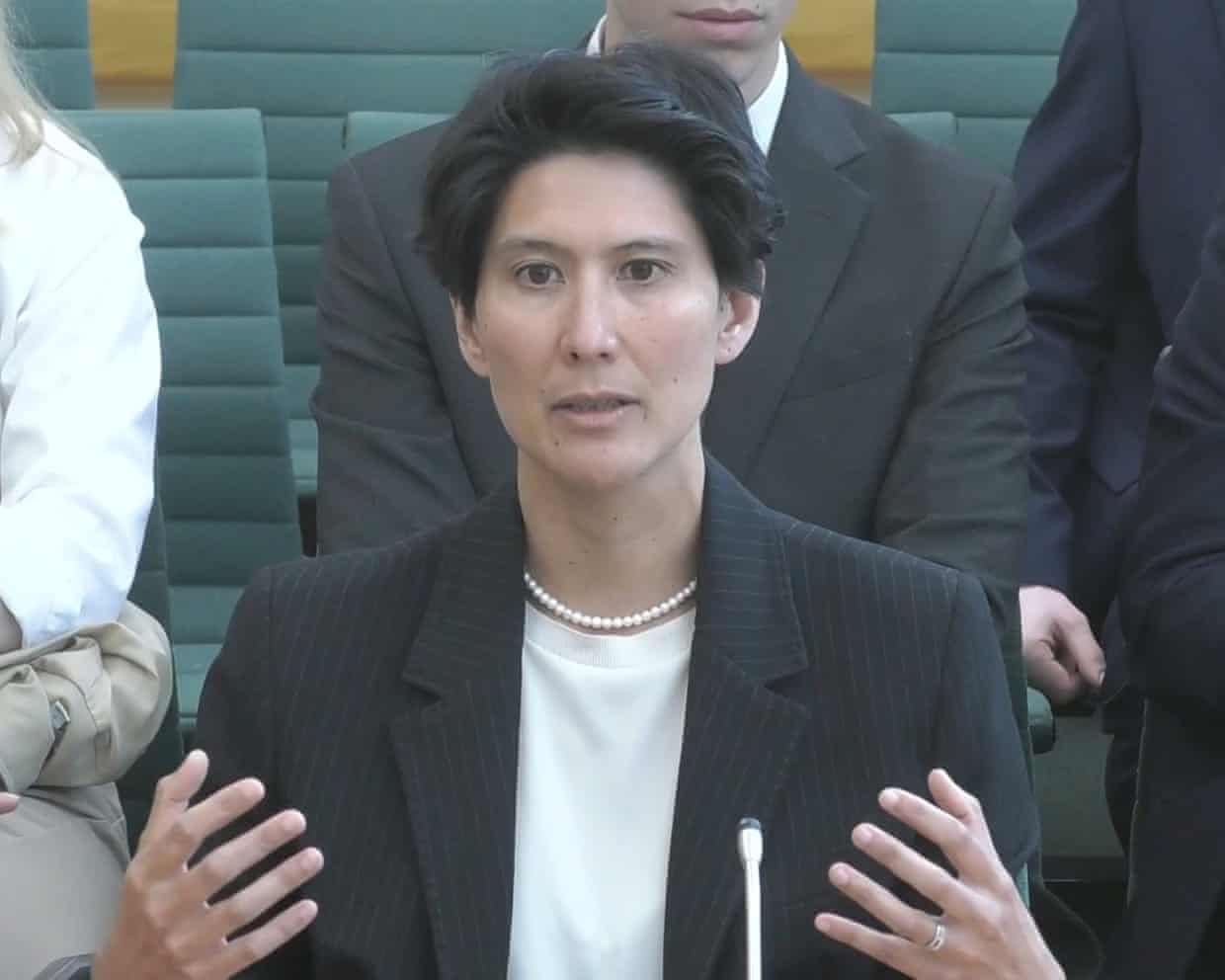
Five things we learned from Cat Little’s evidence to MPs about the Mandelson saga
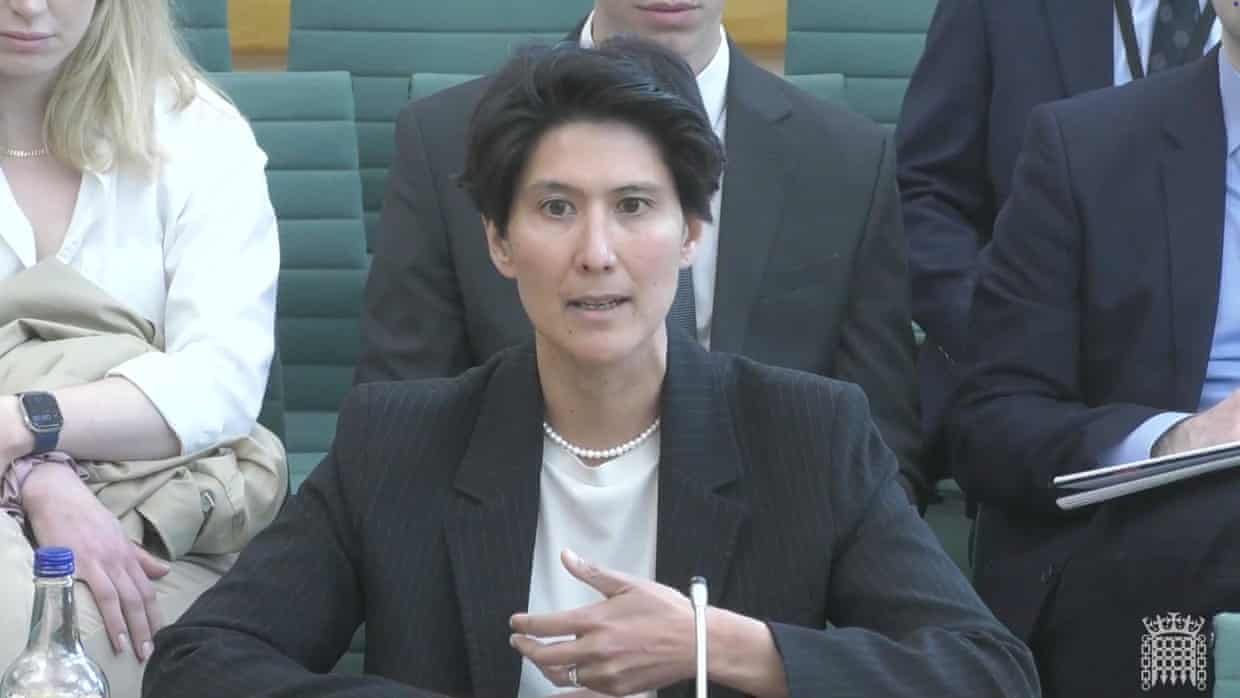
Olly Robbins refused to give Mandelson vetting summary to Cabinet Office, says Cat Little

‘This is not the country I moved to’: the British Indians showing support for Nigel Farage

Mapped: the elections that could deliver ‘unprecedented’ losses for Labour
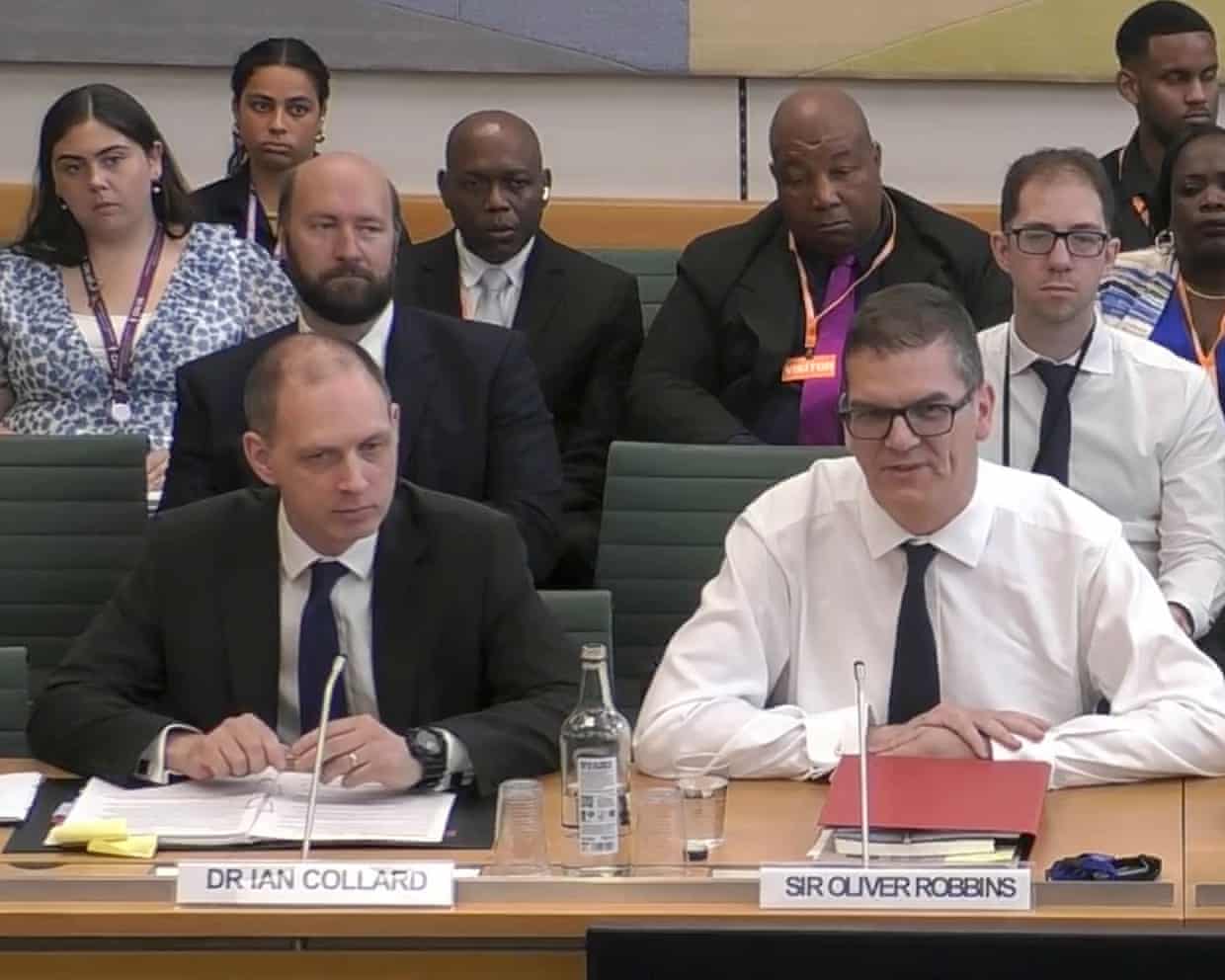
Ian Collard: the Foreign Office insider who may be key to Mandelson scandal

Divisions emerge in Keir Starmer’s cabinet over his sacking of Olly Robbins