‘Mental breakdown’: oil tanker workers stuck in Gulf for six weeks are reaching their limit
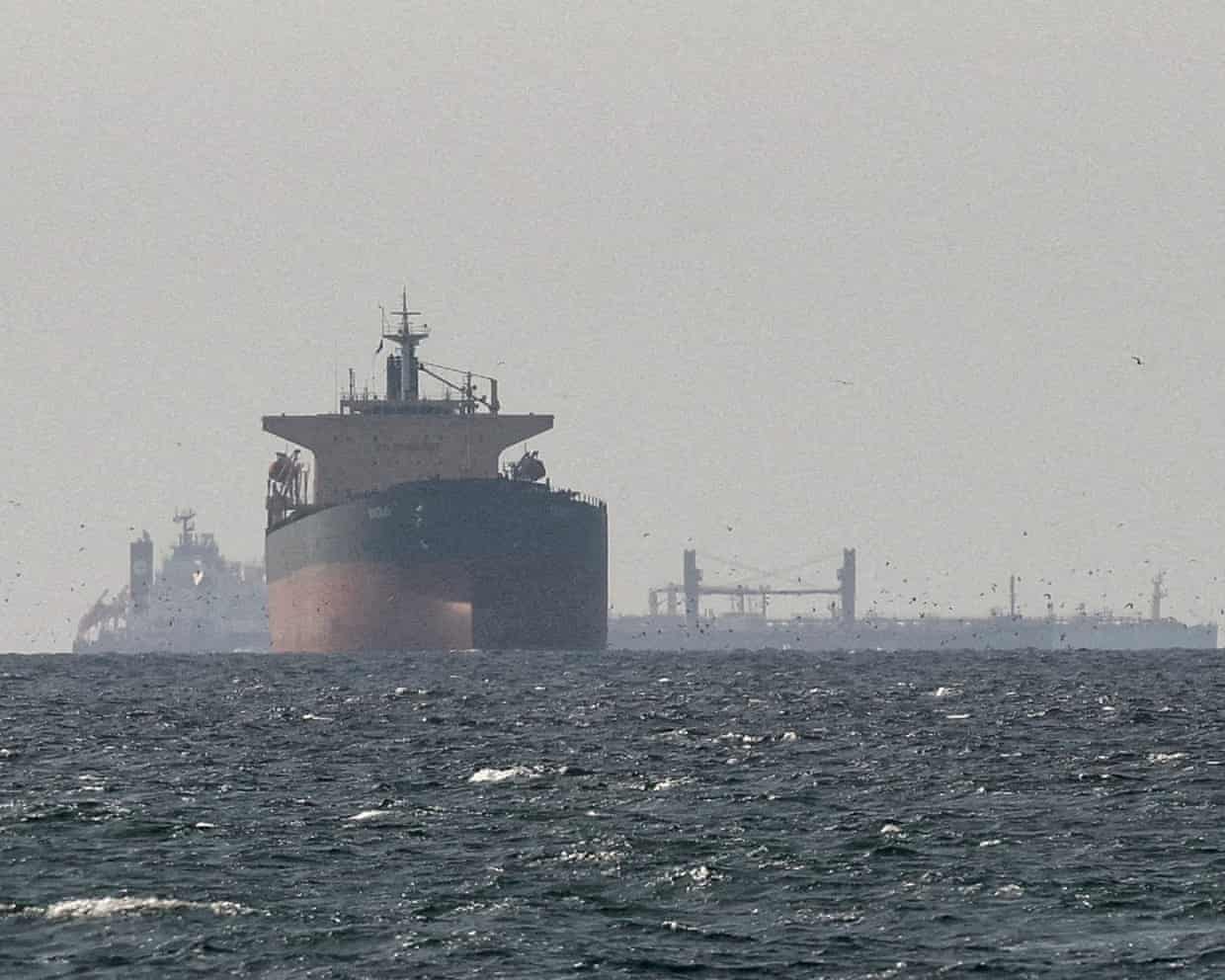
‘You can try to minimise the impact that this situation has on your mental health but it’s becoming impossible.” After six weeks stranded in the Gulf, one of the 20,000 seafarers trapped by Iran’s chokehold on the strait of Hormuz is reaching their limit.Yet with the fragile Middle East ceasefire already fraying, the oil tanker worker – who first spoke to the Guardian a month ago – said any hope they may soon be free to leave had already evaporated, if it ever felt real at all.“We’re at anchor, near dozens of loaded tankers.No one has moved an inch,” said the crew member, one of hundreds anchored off the coast of the United Arab Emirates with a clear view of the loaded Kuwaiti oil tanker set ablaze by an Iranian missile less than a fortnight ago.
Within hours of the ceasefire being agreed, the tell-tale plumes of intercepted missiles streaked the sky above their vessels.After a month and a half of drone attacks and reports of underwater mines, many seafarers feel unwilling and unable to traverse the strait – even if the ceasefire allowed them to do so.“I gave my notice exactly one month ago,” the seafarer said.“I’ve informed the master, I’m not willing to sail through the strait.It’s about safety, it’s all about safety.
”Aboard the same tanker, most of the crew feel the same, they added, saying about 90% of those on board want to exercise their right to refuse to sail.One crew member has suffered a “mental breakdown”, and is being checked on regularly by colleagues.“I’ve no doubt that this particular issue, this mental breakdown, is happening [on tankers] all around us from the stress of this situation.Seafarer support [phone] lines are trying to help, but from the beginning we have all known that it would not be enough,” the seafarer said.Since the start of the conflict, the trade union, the International Transport Workers’ Federation (ITF) has received about 1,000 inquiries from seafarers on 300 different vessels.
About 20% were from those seeking repatriation.Other concerns were about pay or access to essential supplies like fuel, food and water.After the recent attack on Kuwait’s Al-Salmi oil tanker just a few miles away, the seafarer called a helpline for the first time.“I was a bit overwhelmed and I wasn’t sure if I could handle how I was feeling.It’s important to me that others don’t see me cry.
It did help, just to vent out all the feelings to a stranger.”However, there is only so much that advice and reassurance from a distance can do, according to David Appleton, a senior leader at Nautilus, which represents ship staff.“Everyone does their best to assist, but really what you want to do is get people out of the situation,” he said.“In addition to the mental toll that the threat of violence takes on people – the fact that you’re sitting there almost as a sitting duck – there is also the uncertainty, and not knowing how long it’s going to go on,” Appleton added.The eroding mental health of those on board stranded tankers has reignited calls for shipowners to replace their crews with mariners willing to offer relief.
Under maritime regulations shipping companies cannot force seafarers to work in hazardous zones, but there will still be those desperate enough to take up the work.“Most of our potential relievers are Ukrainian seafarers; the ones who are away from their homes, spending money in foreign European countries because they can’t go back home,” the seafarer said.Shipping companies are required to offer double pay to crew working in hazardous areas.They are expected to find those interested in promotion and give them a higher rank to sign on.They will also be looking for those who have been ashore the longest and need the work.
The seafarer said: “The only difference between them and us is choice,At least they will be making a choice to come here, regardless of why they choose to do so,”They hope that within the coming weeks their tanker will be taken to anchorage to allow new crew to take the places of those unwilling or unable to carry on,“The captain had an informal conversation with our crew manager, who was trying to get the crew to stay aboard until we reach the discharge port but he immediately shut that down,” they said,“I’m in no mental condition to perform any intense task after all of this.
It is the hardest situation that I have ever been in,” the worker said.There is no guarantee they will ever return to the sea.“I have worked on tankers all my life.To go, means letting go of all I’ve accomplished.But to stay in this work, means there is a chance that I’ll have to return here eventually.
I will only be able to make that decision after a few months of being off this tanker.At home,” they said.
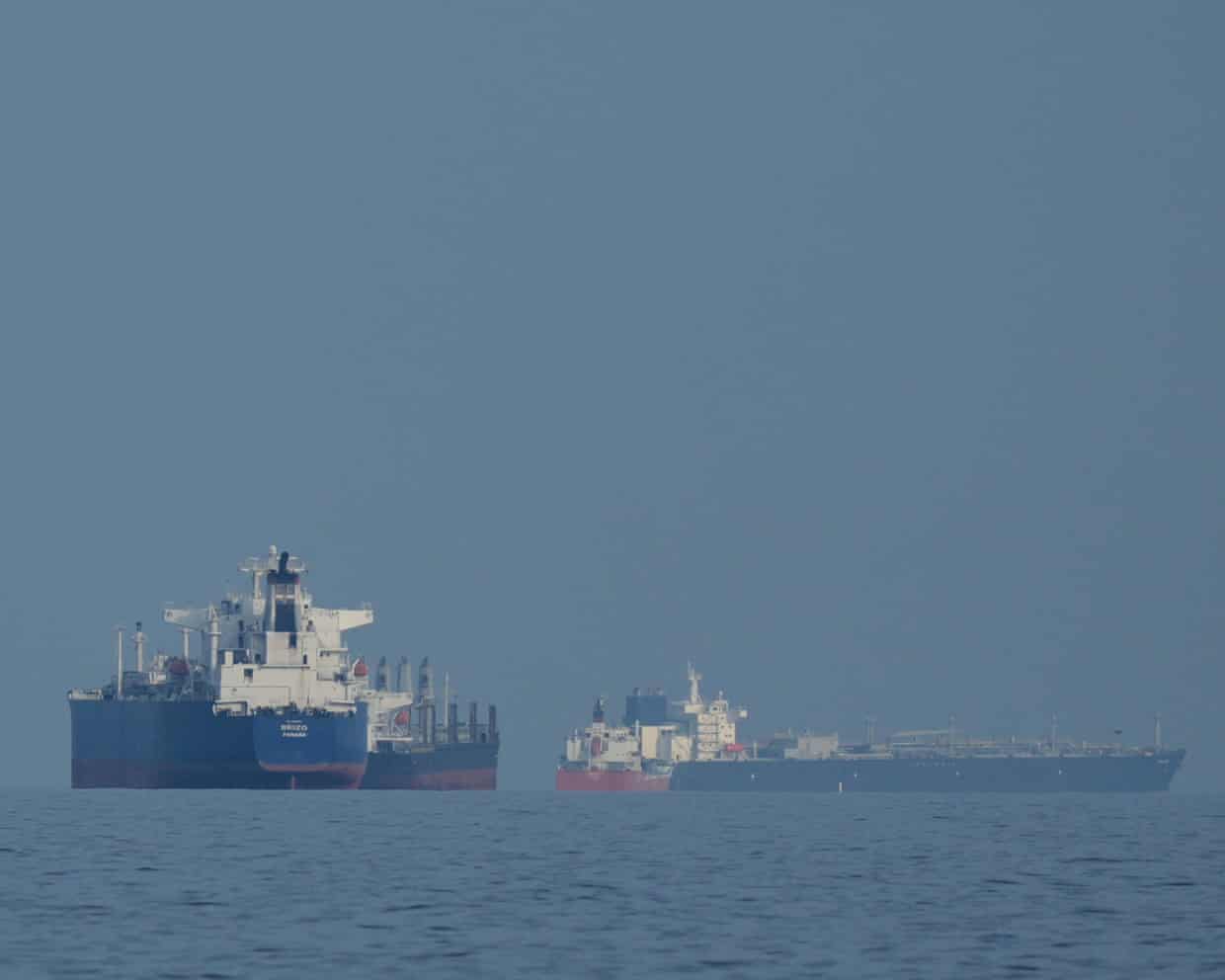
Oil prices tick up amid doubt on Iran war ceasefire; Chinese factory gate costs increase for first time in four years
The rise in the oil price is strengthening this morning, with Brent crude – the international benchmark – now up 1.9% to $97.79 a barrel.There is a cautious mood this morning in the European stock market, with some small rises across the board.The UK’s blue chip FTSE 100 is up very slightly by 0

Welcome to Y’all Street: bullish Dallas aims to steal New York’s financial crown
As the warm sun rises over the Dallas skyline, SUVs and pickup trucks whiz past an unassuming construction site that is helping cement the city’s Texas-sized financial ambitions.Nestled between towers claimed by Bank of America and JP Morgan, Goldman Sachs has cordoned off 800,000 sq ft for a new Dallas campus able to host more than 5,000 staff. But the $700m (£530m) project is more than a regional expansion plan by one of America’s largest banks. It is another win for the lobbyists behind Dallas’s “Y’all Street” – the Texan city’s aggressive push to steal New York’s financial crown.The Dallas-Fort Worth metro area, once a fly-in, fly-out stopover for bankers, has seen its financial sector workforce boom over the past decade, surging 40% to 386,000 staff

‘Irresponsible failure’: Google, Meta, Snap and Microsoft slam EU over child sexual abuse law lapse
The European parliament has blocked the extension of a law that permits big tech firms to scan for child sexual exploitation on their platforms, creating a legal gap that child safety experts say will lead to crimes going undetected.The law, which was a carve-out of the EU Privacy Act, was put in place in 2021 as a temporary measure allowing companies to use automated detection technologies to scan messages for harms, including child sexual abuse material (CSAM), grooming and sextortion. However, it expired on 3 April, and the EU parliament decided not to vote to extend it, amid privacy concerns from some lawmakers.The regulatory gap has created uncertainty for big tech companies, because while scanning for harms on their platforms is now illegal, they still remain liable to remove any illegal content hosted on their platforms under a different law, the Digital Services Act. Google, Meta, Snap and Microsoft said they would continue to voluntarily scan their platforms for CSAM, in a joint statement posted on a Google blog

Elon Musk’s xAI sues Colorado over new rules for artificial intelligence
Elon Musk’s artificial intelligence company, xAI, has filed a lawsuit against the state of Colorado over a new AI law set to take effect in June.The suit seeks to block the state from enforcing the law, which would impose new requirements on AI systems to protect state residents from “algorithmic discrimination” in sectors such as education, employment, healthcare, housing and financial services.Colorado was the first state to pass a comprehensive bill to regulate AI.The company claims the law infringes on its first amendment free-speech protections and would force xAI to “promote the state’s ideological views on various matters, racial justice in particular”, according to the Financial Times, which first reported the lawsuit. “Its provisions prohibit developers of AI systems from producing speech that the state of Colorado dislikes

Chess: Sindarov extends Candidates lead and heads for world title challenge
Javokhir Sindarov extended his lead at the world championship Candidates in Cyprus on Thursday when the 20-year-old Uzbek grandmaster won for the sixth time at the event to take his overall total to an unbeaten eight points out of 10, two ahead of his closest challenger, the Netherlands No 1, Anish Giri.India’s Praggnanandhaa Rameshbabu had prepared a sharp and complex defence to the Queen’s Gambit with an early push of his g and h pawns, but he blundered at move 22 and Sindarov was able to acquire a queen and several pawns for two ineffective rooks.In the previous round, Giri, 31, had established himself as Sindarov’s main rival when he defeated the pre-tournament favourite and US champion, Fabiano Caruana, in a game with a brilliant finish, where the exquisite sequence 42…f5+! 43 exf5 Kh6!! led to unavoidable checkmate or win of the queen.In the same round, Sindarov, after creating a winning attack against Matthias Blübaum’s king, miscalculated and allowed a queen exchange instead of converting by 24…Qb7!The last remaining obstacle for Sindarov may be in round 13, when he has Black against Giri. If he overcomes that, then it will be on to the best of 14 games world championship match later in 2026 against Gukesh Dommaraju
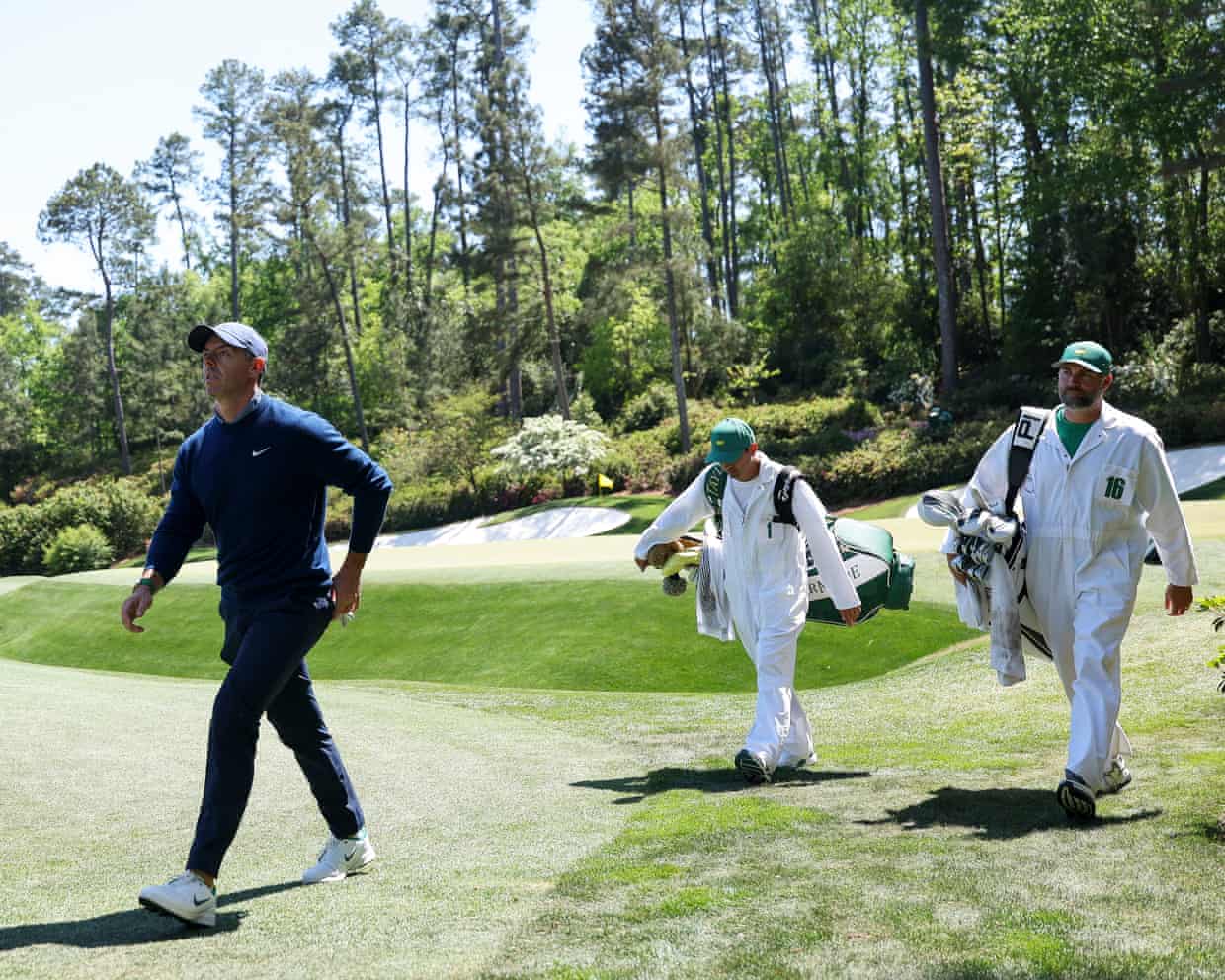
The Masters 2026: Rory McIlroy shares lead with Sam Burns after first round – as it happened
Thanks for reading and join us again for round two. Rory McIlroy has the opportunity to join a very elite club this week because only three men have successfully defended the Green Jacket. The three current members of that club are Jack Nicklaus, Nick Faldo and Tiger Woods. What an incentive and what a prospect. Here’s Ewan Murray’s report of the first round

‘For the first time I’m the hunter’: Fury relishes return to face Makhmudov

Andy Sutch obituary

Elliott targets Grand National with five runners after first-day Aintree double
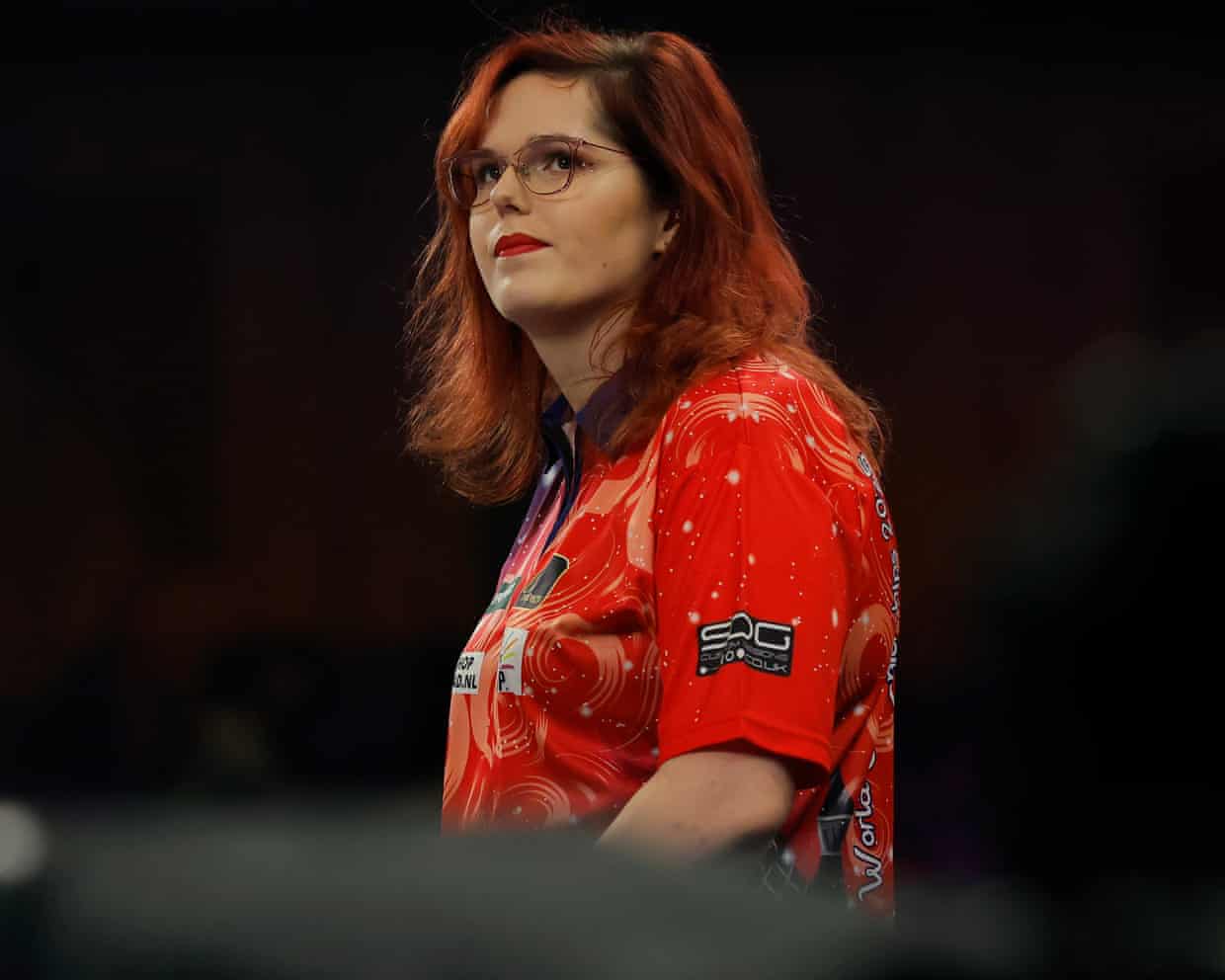
Noa-Lynn van Leuven banned from women-only darts events after transgender ruling

England absences mount for Six Nations opener after pregnancies and injuries

Gout and Kennedy renew rivalry, Hull eyes history as Australian athletics puts its best on show