NEWS NOT FOUND

My cultural awakening: a Rihanna song showed me how to live as a gay man in Iran
My sexuality had to be hidden from my friends, my parents, not to mention the authorities. Then I found freedom at house parties and one song that sums up me finally being able to be myselfI was raised in Tehran, under the Ayatollah’s sharia law and daily watch of Basij – the “morality police”. My parents fell in love with the Islamic Revolution when I was a baby and welcomed life under its strict religious rules. The Ayatollah’s face stared down from the walls at home, a daily reminder of what was expected and what was forbidden. This included being gay, but by my teenage years I knew I was different from my peers, and began hiding my sexuality from my parents and the world outside

From The Bride! to Harry Styles: your complete entertainment guide to the week ahead
Maggie Gyllenhaal gives us a new take on The Bride of Frankenstein, and the stadium-conquering pop prince is back with a new albumThe Bride!Out now Maggie Gyllenhaal directs this Chicago-set gothic romance starring Jessie Buckley and Christian Bale. Per James Whale’s 1935 classic Bride of Frankenstein, on which it is loosely based, a lonely monster wants a mate and taps up a scientist, Dr Euphronious (Annette Bening), to create her.Peaky Blinders: The Immortal ManOut now As The Rachel was to women who watched Friends in the 90s, so the Peaky Blinders mop chop was to male fans. Will the return of the Birmingham gang drama in feature film form prompt another wave of ill-advised dos? Only time will tell. Just remember, Cillian Murphy looking amazing with that haircut doesn’t mean it’s a good idea for absolutely everyone

Stephen Colbert on Kristi Noem: ‘A domestic terrorist who deserves to go to Gitmo’
On Thursday night, late night-hosts celebrated Kristi Noem’s firing, criticized Maga’s handling of the war in Iran and raised an eyebrow to Robert F Kennedy Jr taking issue with sugary Starbucks drinks.Stephen Colbert immediately brought up Kristi Noem’s firing in his monologue, saying that the former homeland secretary brought it on herself by “standing too close to that gravel pit”.The host then turned serious. “Before we get any more information about what happened, I just want to say with absolute certainty: she is a domestic terrorist who deserves to go to Gitmo.”On Truth Social, Donald Trump announced that Noem would be moved to a new role as “special envoy for the Shield of the Americas, our new security initiative in the western hemisphere”

Stephen Colbert on Republican double-speak for war in Iran: ‘A war that got a thesaurus for Christmas’
Late-night hosts unpacked the Orwellian double-speak of congressional Republicans trying to justify the Trump administration’s military strikes in Iran.“Folks, I really didn’t want to start the monologue by talking about the war, but in honor of this administration, I went into this without a plan,” said Stephen Colbert on Wednesday, five days after the US military, in conjunction with Israel, bombed Iran and killed its supreme leader, Ayatollah Ali Khamenei.“I say ‘war’,” he continued, “because it sure looks like a war, and Trump keeps calling it a war, but Congress never declared it a war, and Maga was promised no new wars, so the White House sent out a list of talking points to all the congressional Republicans telling them in no uncertain terms that if a reporter asked ‘Can you promise the American people this will not be a long-drawn out war?’, the answer to give is ‘These are targeted, major combat operations.’”“So … it’s worse than a war,” said Colbert. “It’s a war that got a thesaurus for Christmas

Nothing beats the smell of oil and steam | Brief letters
Re your article (T rex breath and Queen Elizabeth’s car: scientists creating ‘time machine for the nose’, 28 February), one of the great attractions about working steam museums is the whole sensory experience, including the smell of hot oil and steam, which is often mentioned by visitors. Non-working steam engines are, by comparison, lifeless, however well they are polished.John Freeman Trustee, Claymills Victorian Pumping Station My tried and trusted method of getting back to sleep (Letters, 25 February) involves me making the mental journey from my home in Kent to Lewis, including stocking up with groceries in Stornoway. I’m looking forward to making the trip for real in November. Out the door, turn right, right again…Ralph JonesRochester, Kent My twin sister and I shared a bed from the early 1950s

Seth Meyers on Trump spilling military secrets: ‘He’s so excited to bomb people, he can’t help himself’
Late-night hosts criticized Donald Trump’s attacks on Iran, the problem with advising Americans to evacuate the Middle East and the closure of many college students’ favorite pizza takeout spot.Seth Meyers discussed a recent Trump interview where the president described the Iran bombings as “knocking the crap” out of the country, adding: “We haven’t even started hitting them hard. The big wave hasn’t even happened, the big one is coming soon.”“Man, the commander in chief is supposed to be able to keep military secrets,” Meyers laughed. “He’s so excited to bomb people, he can’t help himself

Starmer warns of bigger impact on economy the longer Iran war continues - as it happened

Lengthy US-Iran war would affect ‘lives and households of everybody’, says Starmer

Nigel Farage invests £215,000 in Kwasi Kwarteng’s bitcoin firm

Labour in ‘deep trouble’ with Black voters, Operation Black Vote chair warns

Former Tory minister Zac Goldsmith to launch new sports radio station
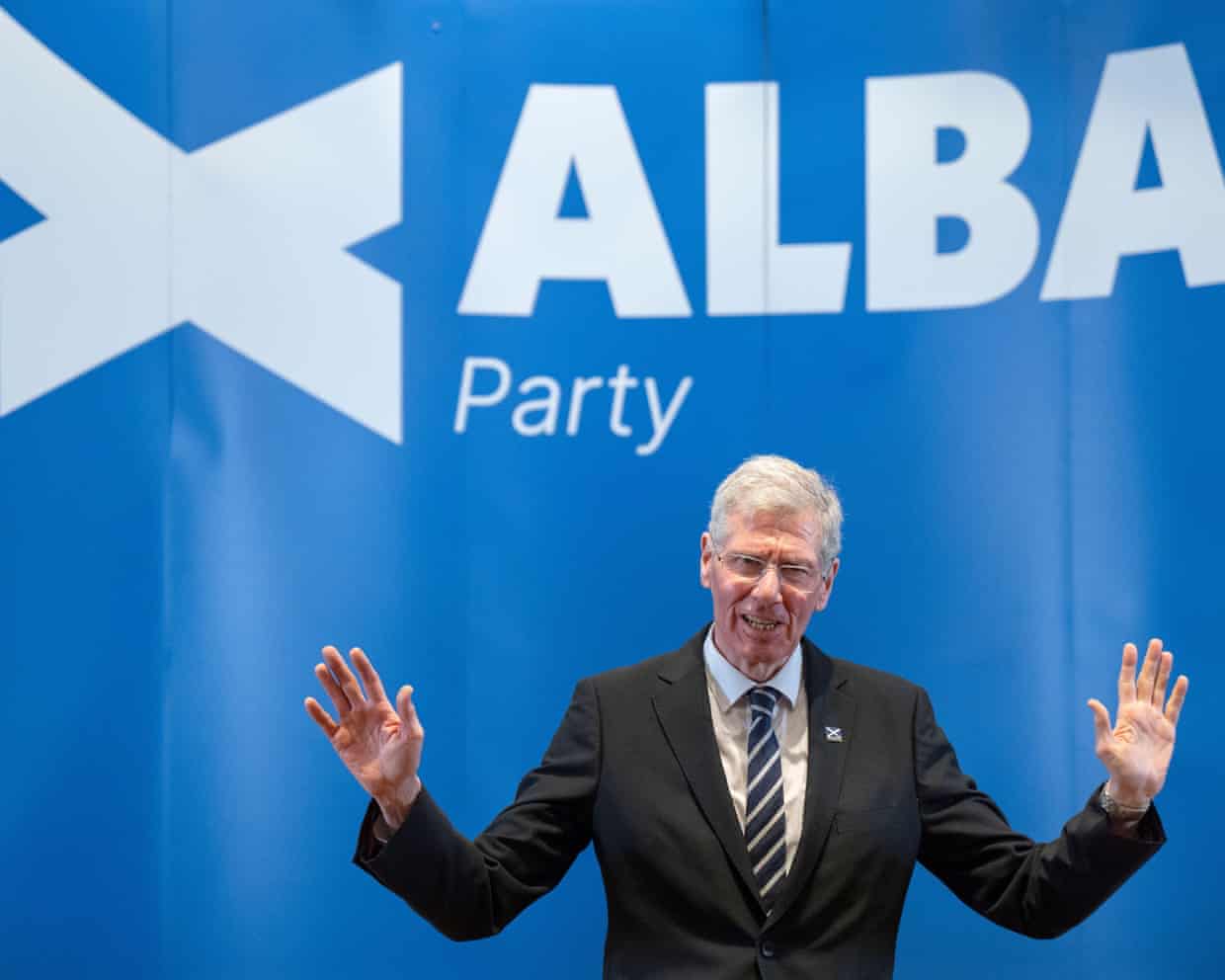
Alba party to wind up and not contest Scottish election